What Does a Solar Inverter Actually Do?
The inverter converts the DC electricity your panels make into the AC electricity your house runs on, and that headline job is only the start. It also hunts the panels' maximum output moment by moment, polices grid safety rules, shuts the system down instantly in a power cut, runs the monitoring you see on your phone, and, in hybrid form, manages the battery's every charge and discharge. Panels are the quiet workforce; the inverter is the working manager of the whole system, which is why its choice and siting matter more than most buyers realise.
In This Guide
Job one: conversion, the headline act
Solar cells produce direct current, electrons flowing one way, like a battery. Everything in your house expects alternating current, flipping direction fifty times a second, at 230 volts, in step with the national grid. The inverter sits between the two worlds and performs the translation continuously, switching the panels' DC thousands of times a second and shaping the result into a clean AC wave synchronised with the grid's. It is genuine power electronics doing hard work all day, which is why inverters run warm, why they have fans and heatsinks, and why they wear out before the panels do, the subject of our inverter lifespan guide. Where panels sit still for 25 years, the inverter earns its keep every daylight second.
Job two: hunting maximum power
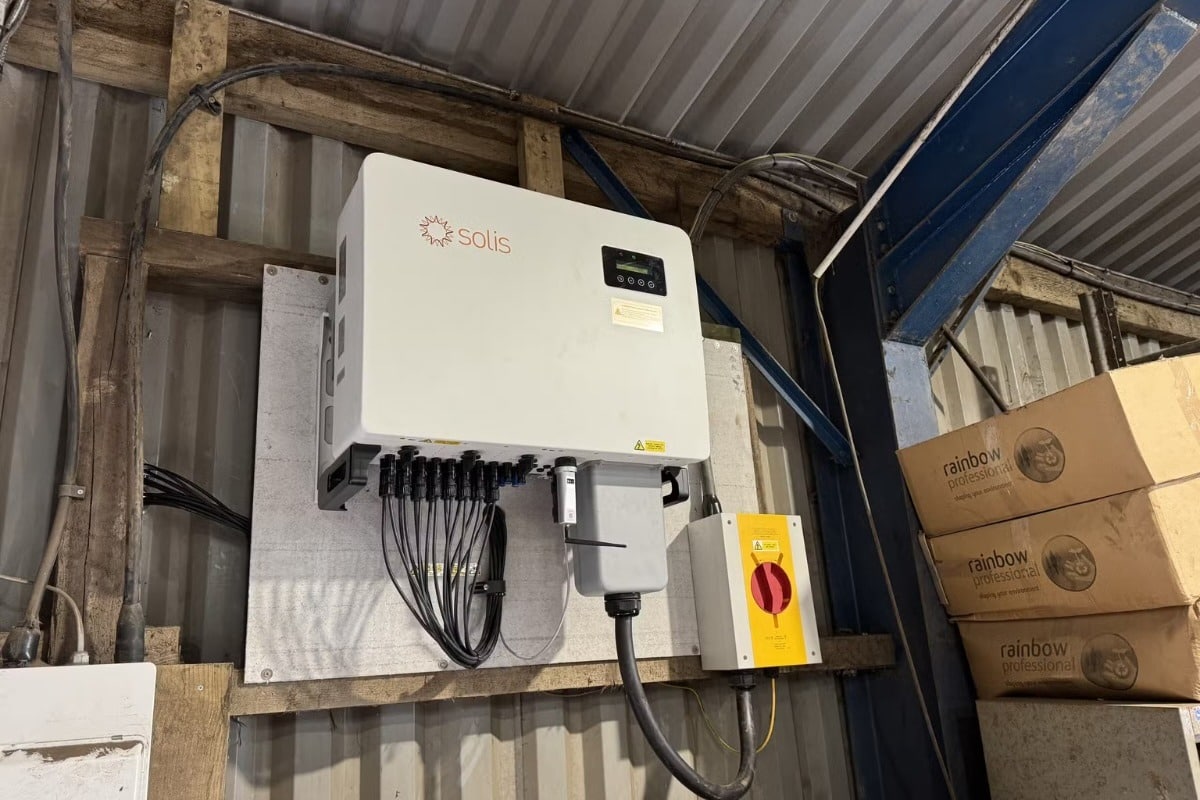
Panels have a quirk: at any moment of light and temperature there is one precise electrical operating point where they deliver their maximum, and it moves constantly as clouds pass and the day warms. The inverter chases it continuously through maximum power point tracking, MPPT, adjusting the load it presents to the panels many times a second so the array always works at its best. Units like the Solis hybrid pictured carry multiple independent trackers, which is why panels facing different directions get their own inputs: each group gets its own hunt. It is invisible, constant, and worth several percent of annual yield, the sort of engineering that separates a good system from a nameplate one.
Job three: safety and the grid
The least glamorous job is the most regulated. Your inverter is the system's legal interface with the national grid, and it enforces the connection rules automatically: staying synchronised with the grid's frequency and voltage, riding through minor disturbances, and, crucially, shutting down within moments if the grid goes dead. That last one surprises people, solar switching off in a power cut feels backwards, but it protects the engineers working on the fault from a line they believe is dead, and it is why backup power needs specific hardware, as our power cut guide explains. The same compliance machinery is what your network operator signs off through the G98 and G99 process; the inverter's certified settings are the thing being approved.
Job four: monitoring, the honest witness
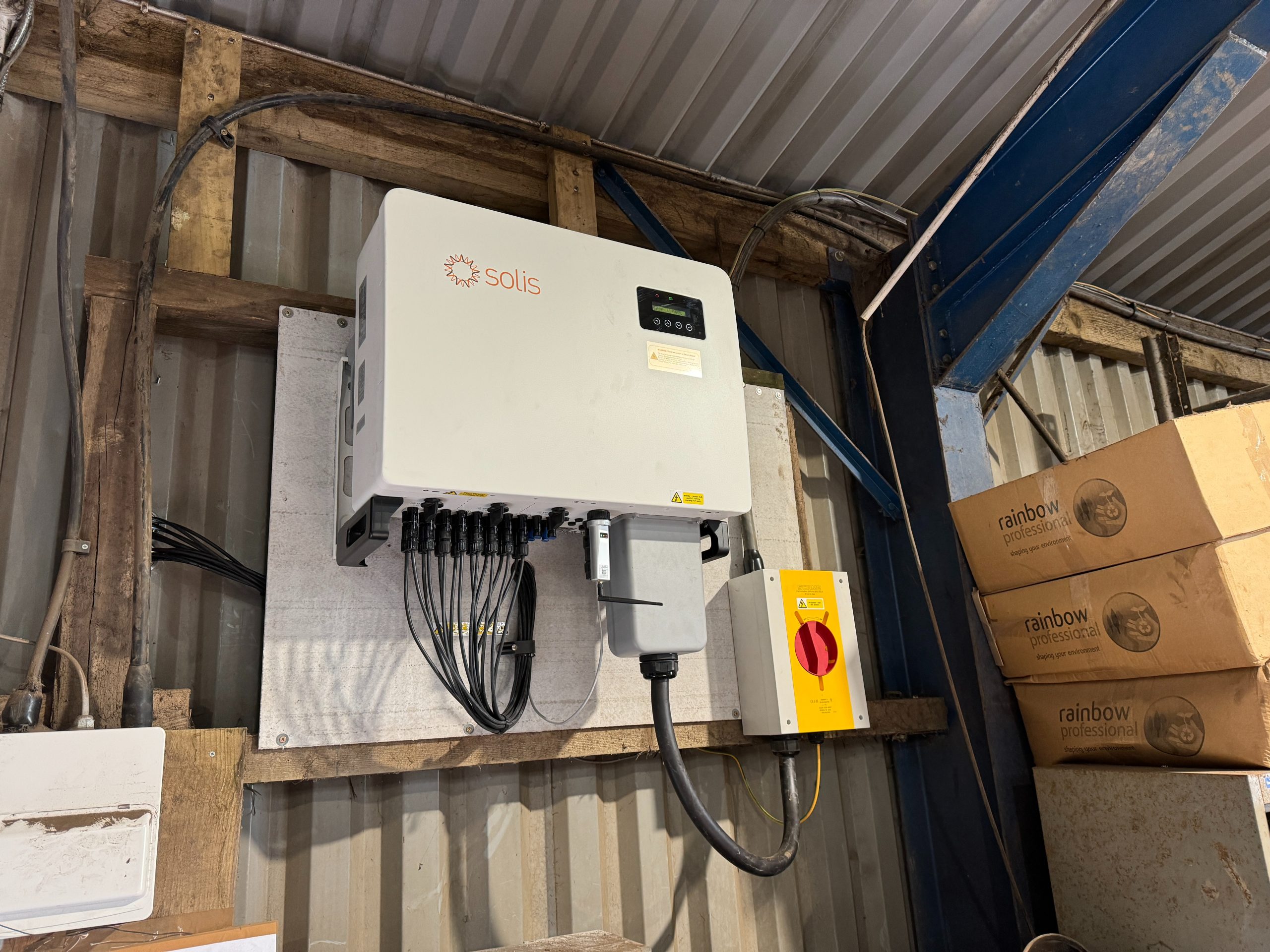
Because everything the system does flows through the inverter, it is also the system's bookkeeper: live generation, daily and lifetime totals, string voltages, temperatures and fault history, shown on the unit's own display like the one pictured and relayed to the app on your phone. That record is worth more than its novelty. A glance at generation against a similar day last year is the earliest warning of a developing problem, the first thing an engineer asks for on a service call, and the evidence that settles warranty conversations. When something does go wrong, the display speaks in codes, and our fault codes guide translates.
Job five: the battery, on hybrids
A hybrid inverter adds a fifth job that has become the most valuable of all: battery management. The hybrid decides, second by second, whether solar power goes to the house, the battery or the grid, and whether the house draws from panels, battery or grid, all according to the schedule that makes your tariff pay: storing summer surplus for the evening, charging cheap overnight units in winter, the whole time-shifting economy runs on the hybrid's decisions. It is why we fit hybrid inverters as standard even for buyers not taking a battery on day one, per our hybrid vs string guide: the fifth job stays available for the day you want it.
Want a system with the manager built in?
Free design and quote: Solis hybrid inverter and Fogstar battery sized to your usage, one all-in price. Design normally within 2 to 4 days depending on workload. Call 0115 773 7575, 8am to 8pm, Monday to Friday.
Get EstimateFrequently asked questions
What does a solar inverter do?
It converts the panels' DC electricity into the AC your home uses, while also tracking the panels' maximum output moment to moment, enforcing grid safety rules, recording all your generation data, and, on hybrid models, managing every charge and discharge of the battery.
Can a solar system work without an inverter?
No. Panels alone produce DC at varying voltage, which nothing in a normal home can use and the grid will not accept. Every grid-connected system converts through an inverter, whether one central unit, a hybrid with battery management, or micro-inverters mounted behind each panel.
Why does my inverter turn off in a power cut?
By design: grid rules require inverters to shut down when the grid goes dead, protecting engineers working on the fault from a line they believe is safe. Backup capability during outages needs specific hardware designed to island the house safely, specified at design time rather than assumed.
What is MPPT on an inverter?
Maximum power point tracking: the inverter continuously adjusts the electrical load it presents to the panels so they always operate at the point delivering their maximum output as light and temperature change. Multiple trackers let panel groups facing different directions each be optimised independently.
What is the difference between a hybrid and a standard inverter?
A hybrid adds battery management to the standard conversion jobs: it routes power between panels, battery, house and grid according to schedules that exploit your tariff. Standard string inverters convert only, so adding a battery later means an extra AC-coupled unit or an inverter swap.
Related reading
- How do solar panels work?
- Hybrid vs string inverters
- How long do solar inverters last?
- Inverter fault codes explained
- Solis inverter review
Systems run by inverters we trust
We are Spectrum Energy Systems, MCS certified (NIC200223), fitting Solis hybrid inverters across the East Midlands since 2011, registered warranties and our 5-year workmanship guarantee included. Call 0115 773 7575, 8am to 8pm, Monday to Friday.
Get in touch