How Do Solar Panels Work? The Plain English Guide
Solar panels turn daylight into DC electricity using silicon cells. An inverter converts that into the AC electricity your home runs on, your appliances use it first, and any surplus either charges a battery or exports to the grid for payment. No moving parts, no fuel, no noise, and nothing for you to operate.
In This Guide
What happens inside a panel
A solar panel is a sandwich of silicon cells behind toughened glass. Silicon is a semiconductor, and each cell is built from two treated layers that want to push electrons in one direction. When daylight hits the cell, the energy in the light knocks electrons loose, and the cell's structure sweeps them into an electrical current. That is the photovoltaic effect, and it is the entire trick: light in, current out, nothing mechanical in between.
One cell produces a small amount of power. A modern panel wires up dozens of cells and produces around 500W in decent conditions, which is why our standard installs use 500W panels. String ten or twelve panels together on a roof and you have a system that can run a home. The panels themselves are solid-state and startlingly durable: Tier 1 manufacturers back their output with 25-year performance warranties, and our guide to panel lifespan covers what happens over the decades.
From roof to kettle, step by step
1. Daylight hits the panels
The cells generate DC electricity continuously whenever there is light. Brighter light means more power, but generation starts at dawn, not just in sunshine.
2. The inverter converts DC to AC
Your home runs on AC at 230 volts. The inverter converts the panels' DC output into synchronised AC, matched precisely to the grid's frequency.
3. Your home uses solar first
Electricity takes the shortest path. Anything running in the house draws from the panels before it draws from the grid, which is what shrinks your bill.
4. Surplus charges the battery
On systems with storage, spare generation fills the battery next, saving the evening's electricity in advance.
5. What is left exports for payment
Genuine surplus flows to the grid through your meter, and a Smart Export Guarantee tariff pays you for every kWh of it.
Why the inverter matters more than people think
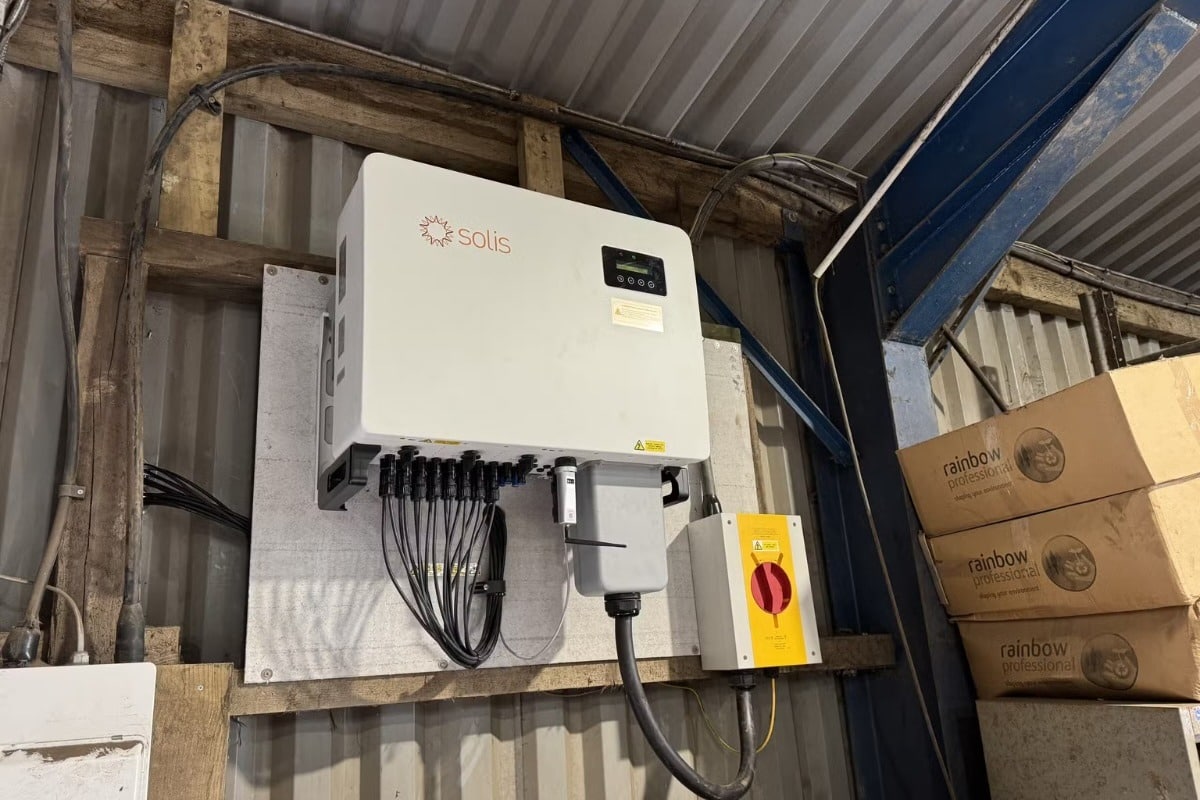
The photo shows a Solis inverter on one of our installs, with its isolator switch alongside. The inverter is the hardest working component in the system. It converts DC to AC, obviously, but it also hunts the panels' maximum output as light changes second by second, manages the battery on hybrid models, shuts the system down instantly in a power cut to protect engineers working on the lines, and reports everything to the monitoring app on your phone.
All that work takes its toll. Panels last decades; the inverter is the part most likely to need replacing once in a system's life, which is worth knowing when you compare quotes. Our comparison of micro inverters and string inverters explains the main design choice.
kW, kWh and kWp, translated
| Term | What it means | Everyday example |
|---|---|---|
| kW (kilowatt) | Power: the rate electricity flows right now | A kettle draws about 3kW while boiling |
| kWh (kilowatt hour) | Energy: power sustained for an hour. This is what you buy and sell | That kettle running for 20 minutes uses 1 kWh |
| kWp (kilowatt peak) | A solar system's rated output in ideal test conditions | A 5.7kWp system peaks near 5.7kW on a perfect day |
The useful rule of thumb for our region: each kWp of well-placed panels generates roughly 900 to 1,050 kWh per year in the East Midlands (MCS-standard methodology). So a typical 5 to 6kWp domestic system produces around 5,100 to 6,000 kWh annually, roughly double what Ofgem says a typical household uses. The per-panel detail is in our guide to how many kWh a panel produces, and how many panels you need covers sizing.
Where the spare power goes
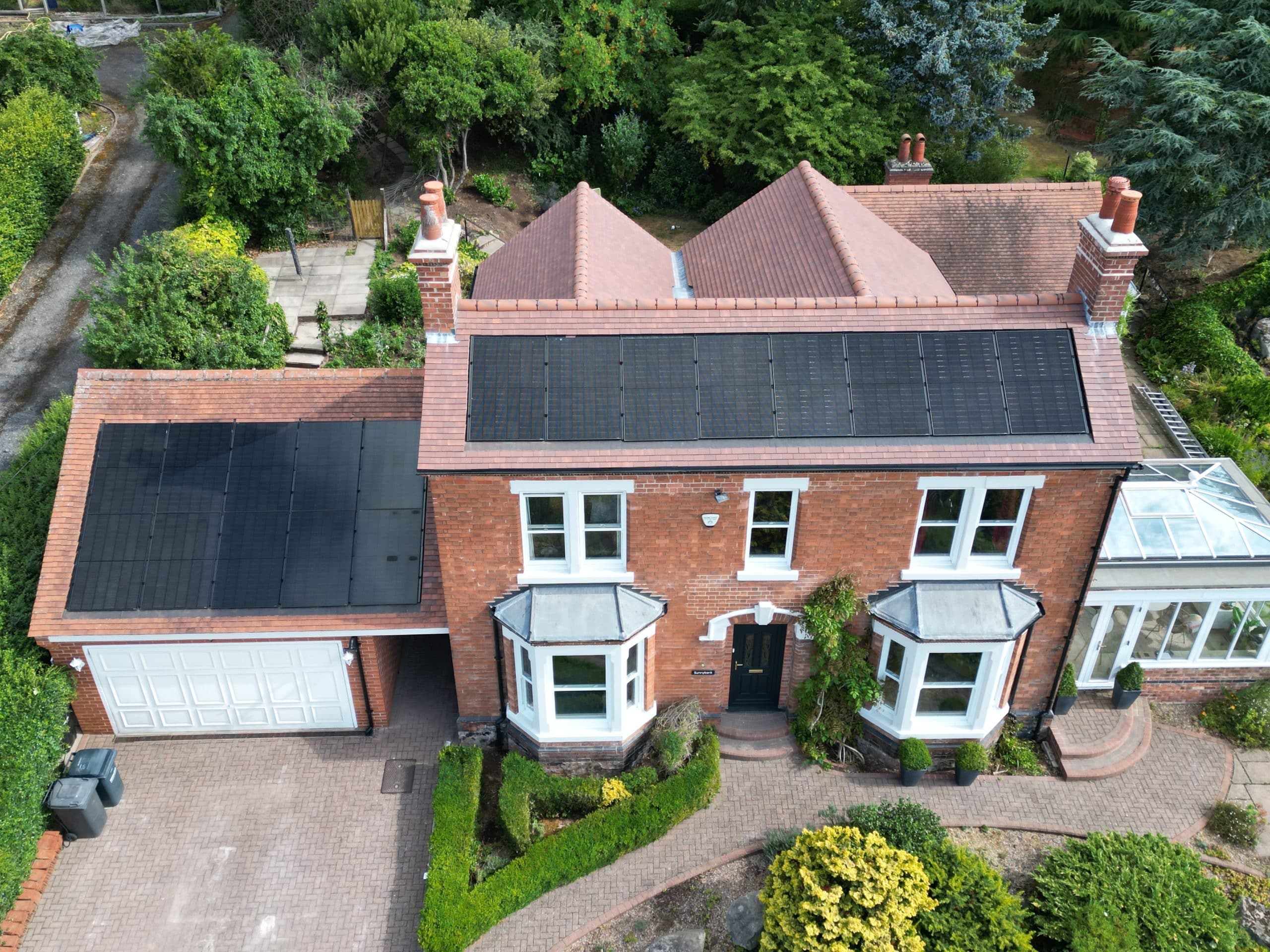
The array in the photo spans a house and its garage, and on a summer day it will generate far more than the household can use at lunchtime. Three things can happen to that surplus, and a well-designed system uses all three in order:
- The battery banks itStored for the evening, which is where most household usage lives. The case for storage is in our battery-or-not guide.
- A diverter heats waterAn optional extra that turns leftover surplus into a tank of hot water.
- The grid buys the restExport payments via a SEG tariff turn genuine excess into income.
Weather, seasons and daylight
Panels run on light, not heat, which produces some counterintuitive facts. A crisp, bright spring day can out-generate a sweltering August afternoon, because silicon cells actually work slightly better cool. Cloud reduces output rather than stopping it, since diffuse daylight still carries energy. And the seasonal swing is real: a UK system produces several times more in June than in December, which is exactly why batteries and smart tariffs carry the winter. The detail is in our guide to solar performance in winter, and panel efficiency covers what the percentage figures actually mean.
Curious what your roof would actually generate?
A feasibility assessment turns this theory into your numbers: panel count, expected generation, and what it does to your bill. No pressure, just the figures. Over 1,000 installs across the East Midlands since 2011.
Book a feasibility assessmentFrequently asked questions
Do solar panels work at night?
No. Panels need light, so generation stops after dusk. That is not the problem it sounds: a battery charged during the day, or charged cheaply overnight on a two-rate tariff, runs the house through the dark hours. Homes without a battery simply draw from the grid as normal overnight.
Do solar panels work on cloudy days?
Yes, at reduced output. Diffuse daylight through cloud still carries energy, so a grey day generates meaningfully more than nothing, typically a fraction of a clear day's output depending on cloud thickness. UK solar economics are built on real UK weather data, clouds included, not on Mediterranean assumptions.
Do I have to switch anything on or operate the system?
No. The system is fully automatic: it wakes with the light, powers the house, manages the battery and exports surplus without any input from you. Your involvement is a monitoring app if you enjoy the numbers, and an isolator switch you will likely never touch.
How is the electricity connected to my house?
The inverter feeds into your consumer unit through a dedicated protected circuit, installed with DC and AC isolation and a generation meter. From the consumer unit it behaves exactly like grid electricity. The installation is certified electrical work, which is part of what MCS certification covers.
Do I need a smart meter for solar panels?
You need one to be paid for export, because Smart Export Guarantee tariffs meter what you send out in half-hour periods. The panels generate and the house uses solar perfectly well without one, but without a smart meter your surplus exports unpaid, so getting one fitted is worth it.
What happens in a power cut?
A standard grid-tied system shuts down automatically to protect engineers working on the network, so panels alone do not keep the lights on. Systems can be designed with backup so the battery powers essential circuits during an outage, which needs specifying at design time rather than bolting on later.
Related reading
- How many kWh does a solar panel produce?
- How efficient are solar panels?
- How many solar panels do I need?
- Do solar panels work in winter?
- How much do solar panels cost in the UK in 2026?
Explained by people who fit them
We are an MCS certified installer (NIC200223) based in Bulwell, Nottingham. If anything here left a question, ask the engineers rather than a search engine. Call 0115 773 7575, 8am to 8pm, Monday to Friday.
Get in touch