Solar Panels Without a Battery: When It Makes Sense
Yes, solar panels work perfectly well without a battery, and a panels-only system costs a few thousand pounds less. The catch is timing: panels generate in the day, homes use most electricity in the evening. Without storage you sell your surplus cheap and buy your evenings at full price. For most homes we fit, the battery earns its keep.
In This Guide
How panels work without a battery
A panels-only system is the original solar setup, and there is nothing wrong with it technically. Panels feed an inverter, the inverter feeds your home, and your appliances use solar first whenever the sun is generating. Anything you do not use at that moment exports to the grid. On an MCS certified install you get paid for that export through a Smart Export Guarantee tariff.
Nothing about skipping the battery affects how the panels themselves perform. The question is purely economic: what happens to the electricity you generate but cannot use at the time?
The timing problem, in numbers
Look at the gap between those last two numbers. Every kWh you export instead of using costs you the difference between the export rate and the price you later pay to buy electricity back. And the timing works against you: panels peak at midday, while a working household's use peaks between 5pm and 10pm. In our installs, a home without storage typically uses only around a third of what its panels generate directly. The rest exports at the low rate, then the household buys its evening electricity back at 26p.
That is the whole argument in one paragraph. Panels without a battery still save money. They just leave a large slice of the saving on the table in most homes.
When panels alone genuinely make sense
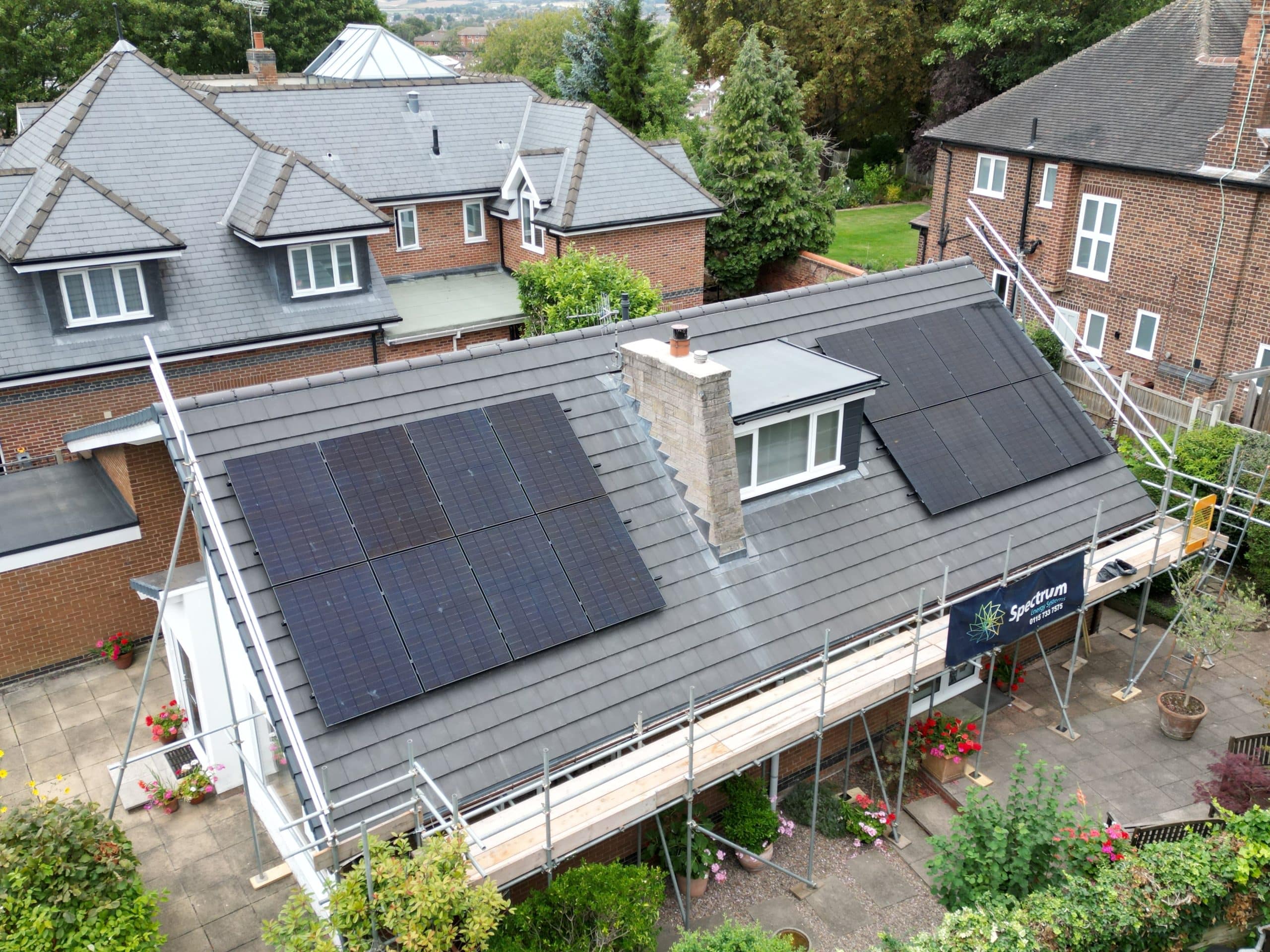
We do fit panels-only systems, and for some households it is the right call:
- You are home all dayRetired couples and home workers who run washing, cooking and heating in daylight hours can use most of the generation directly.
- Heavy daytime loadsA hot tub, a pool pump, air conditioning or an EV charged at home in the day soaks up the midday peak.
- A locked-in high export rateA few suppliers offer premium export rates that narrow the gap enough to change the maths.
- Budget is the hard limitIf the choice is panels now or nothing for years, panels now wins. Storage can follow later.
What the battery changes
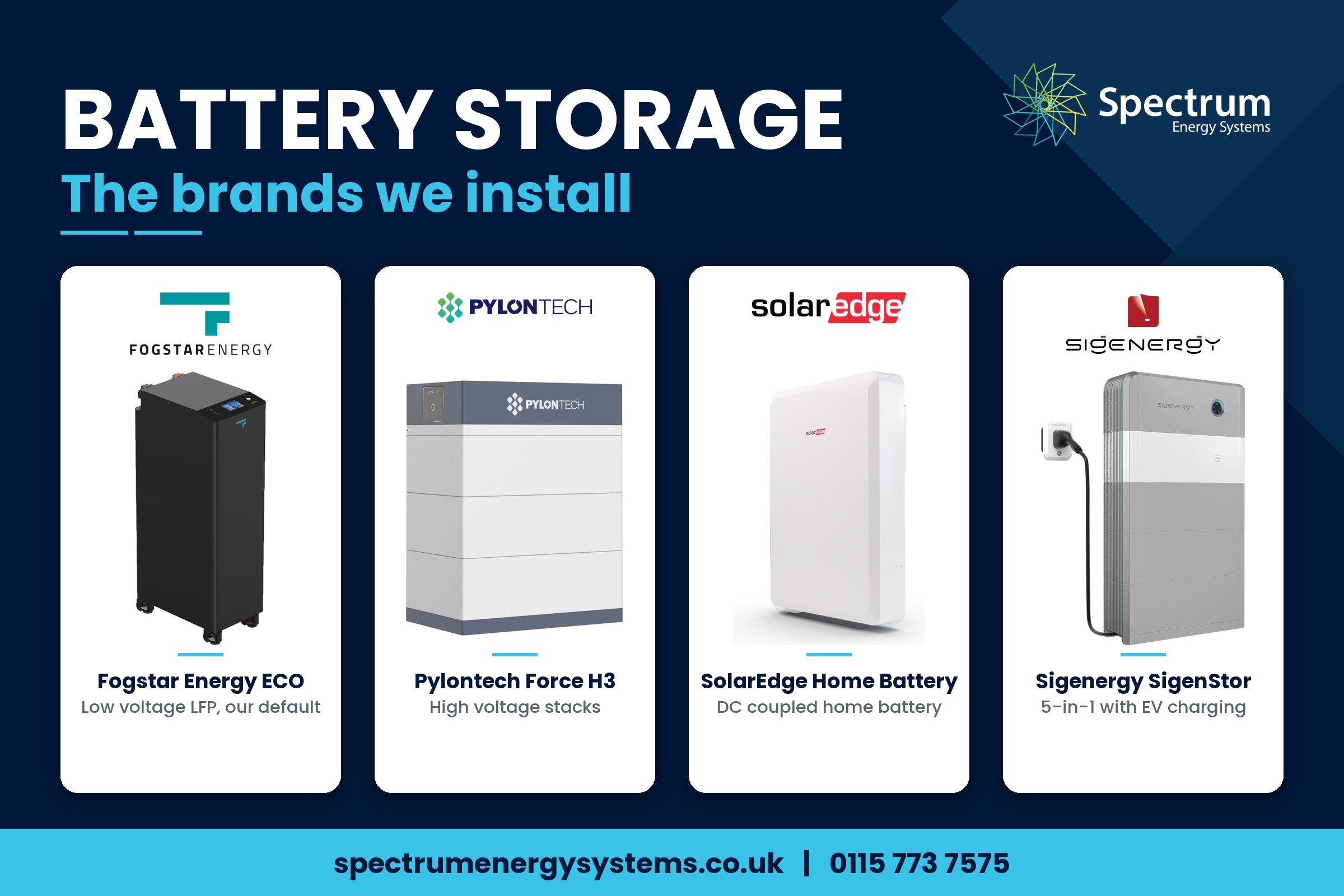
A battery does two jobs. The obvious one: it stores your midday surplus so the evening runs on your own solar instead of grid electricity. The less obvious one is what makes the modern case so strong: on a two-rate tariff the battery also charges cheaply overnight in winter, when the panels contribute little, so you shift even your winter evenings off the peak rate. Our guide to battery storage benefits covers both jobs in detail, and our sizing guide covers how many kWh suit your usage.
✓ Panels plus battery
- Evenings and much of the night run on stored solar
- Cheap overnight charging carries winter
- Self-use rises from roughly a third to most of your generation
- Optional backup for power cuts with the right setup
✗ Panels only
- Several thousand pounds cheaper up front
- Surplus exports at a fraction of the buy price
- Evenings and winter stay on full-price grid electricity
- No power cut protection
Cost comparison: real installed prices
These are the all-in prices we install at, with 0% VAT already reflected and nothing to add:
| System | All-in price |
|---|---|
| 4kWp east west + 10kWh battery | £9,000 |
| 5 to 6kWp + 16.1kWh battery | £9,995 |
A panels-only version of the same roof comes in a few thousand pounds under the battery system, with the exact figure depending on your roof and quoted at survey. In a typical evening-heavy household, the extra self-use plus cheap-rate winter charging repays the battery's share of the cost well within its warranty period. Payback on the full £9,995 system works out at circa 8 years at current cap rates, illustrative rather than guaranteed. Details and worked assumptions are in our UK cost guide and our battery payback analysis.
Adding a battery later
Plenty of customers phase it: panels now, battery in a year or two. It works, with two things to know. First, ask for a hybrid inverter on day one. A hybrid inverter manages panels and a future battery from the same unit, so the battery becomes a bolt-on rather than a re-engineering job. We fit Solis hybrid inverters as standard partly for this reason. Second, the 0% VAT relief currently covers battery retrofits too, but that relief is scheduled to end on 31 March 2027, which is worth factoring into the timing. The detail is in our zero VAT guide.
Not sure which way your numbers point?
Tell us how your household uses electricity and we will design for it: panels only, panels plus battery, or panels ready for a battery later. A feasibility assessment gives you the real figures for your roof. Over 1,000 installs across the East Midlands since 2011.
Book a feasibility assessmentFrequently asked questions
Do solar panels work without a battery?
Yes, completely. Panels feed your home directly through the inverter and any surplus exports to the grid. A battery changes the economics, not the function. Without one, you use solar while the sun generates and grid electricity the rest of the time, earning export payments on what you send out.
Is it worth getting solar panels without a battery?
It can be, particularly if someone is home through the day, you run heavy daytime loads, or budget rules the battery out for now. Panels alone still cut your bill and earn export payments. Most evening-heavy households get a meaningfully better return with storage, which is why the majority of our installs include it.
How much cheaper is a system without a battery?
Skipping the battery typically takes a few thousand pounds off a domestic install. Our most installed full system, 5 to 6kWp with a 16.1kWh battery, is £9,995 all-in, and the panels-only equivalent is priced at survey for your specific roof. Every figure carries 0% VAT until 31 March 2027 with scaffolding and electrical work included.
Can I add a battery to my solar panels later?
Yes. The clean route is a hybrid inverter fitted with the original panels, which accepts a battery later without reworking the system. AC-coupled batteries can retrofit to almost any existing system too. If you are phasing the spend, tell your installer at the design stage so the inverter choice supports the plan.
What happens to unused solar power without a battery?
It flows to the grid automatically. On an MCS certified installation with a Smart Export Guarantee tariff you get paid for every exported kWh, though export rates sit well below the price you pay to import. Without a SEG tariff in place, the surplus still exports, just unpaid, so signing up matters.
Do I still get export payments if I have a battery?
Yes. The battery fills first, then genuine surplus exports and earns as normal. A well-sized battery does not eliminate export income, it just means the electricity you export is the true excess rather than power you will want back at 6pm. Some tariffs even reward exporting from the battery at peak times.
Related reading
- How much battery storage do I need?
- Solar battery payback time in the UK
- The benefits of solar battery storage
- How much do solar panels cost in the UK in 2026?
- Best SEG rates compared for 2026
Designed around how you actually live
We are an MCS certified installer (NIC200223) based in Bulwell, Nottingham. Every system starts with your usage, not a standard package. Call 0115 773 7575, 8am to 8pm, Monday to Friday.
Get in touch