
Hybrid Inverter vs String Inverter Explained
A hybrid inverter handles solar PV and battery storage in a single box. A plain string inverter only handles solar PV; if you want batteries you add a separate AC-coupled battery inverter. For any new install where you’re fitting a battery now or might add one within the next 5 years, the hybrid inverter is the right call. Plain string inverters now only make sense on commercial roofs where no battery is planned, or as a cheap solar-only install that you accept will need rework when battery is added later.
Five years ago most UK solar installs were string-inverter-only. Batteries were rare. Then prices fell, time-of-use tariffs arrived, and batteries became standard. The industry shifted to hybrid inverters as the natural fit. In 2026 a Spectrum domestic install with no battery is the exception, not the rule - and that’s why we specify hybrid as default.
What each one does
String inverter. Converts DC from solar panels into AC for the home and grid. That’s its job. If you add a battery later, you bolt on a separate battery inverter that converts AC from the home back into DC to charge the battery, then DC to AC again on discharge. Two conversion stages, two pieces of kit.
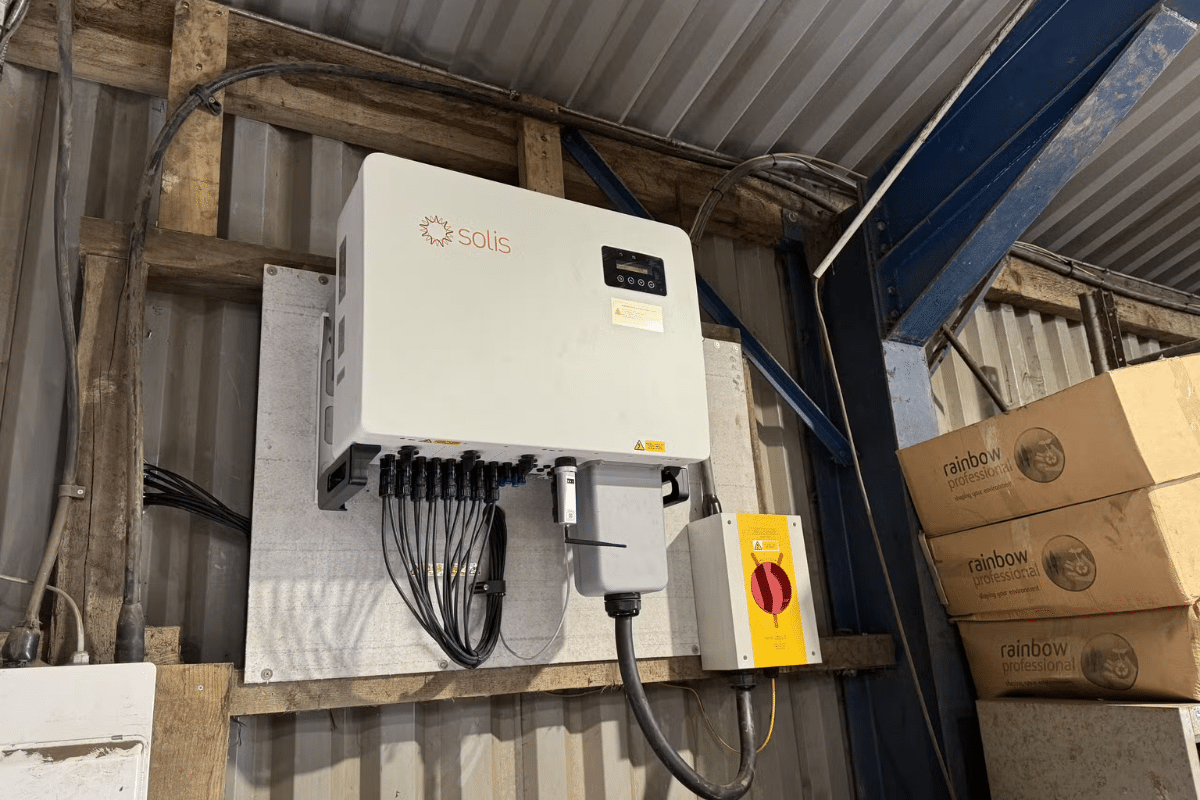
Hybrid inverter. Combines solar inverter and battery inverter in one box on a shared DC bus. Panels charge the battery directly DC-to-DC (single conversion stage) and the battery discharges DC-to-AC when needed. More efficient, simpler installation, single warranty.
Why hybrid wins on a battery install
| Metric | String + AC-coupled battery | Hybrid (DC-coupled) |
|---|---|---|
| Conversion stages, solar to battery | 2 (DC - AC - DC) | 1 (DC - DC) |
| Round-trip efficiency | ~85% | ~92% |
| Hardware boxes on wall | 2 (PV inverter + battery inverter) | 1 |
| Commissioning time | Longer | Shorter |
| Single point of warranty | No (two manufacturers) | Yes |
| Backup capability | Possible with changeover switch | Possible with changeover switch |
| Best fit | Retrofit battery to existing string PV | New install or full system upgrade |
When string inverters still make sense
- Commercial-scale installs over 50kW. Many large commercial inverters are string (or central) units; battery is often optional, sometimes added later. Solis 25kW and 50kW HV inverters on our commercial installs are string units - with separate HV battery integration when battery is in scope.
- Solar-only domestic. No battery planned, no plan to add one. Increasingly rare in 2026 but it happens (very low energy use, holiday home, sub-3kW system).
- Retrofit battery to a 10-year-old solar system. The existing string inverter might be working fine. Add an AC-coupled battery rather than ripping out the whole inverter.
What Spectrum fits
Domestic 4-15kW. Solis 5/6/8/10/15kW LV hybrid + Fogstar battery. Default specification.
Domestic with battery upgrade later. Hybrid from day one. Sizing the inverter for both PV and future battery is far easier upfront than rework.
Commercial 25-100kW. Solis 25/50kW HV three-phase string inverter (one or several in parallel) plus separate Pylontech battery management where battery is in scope.
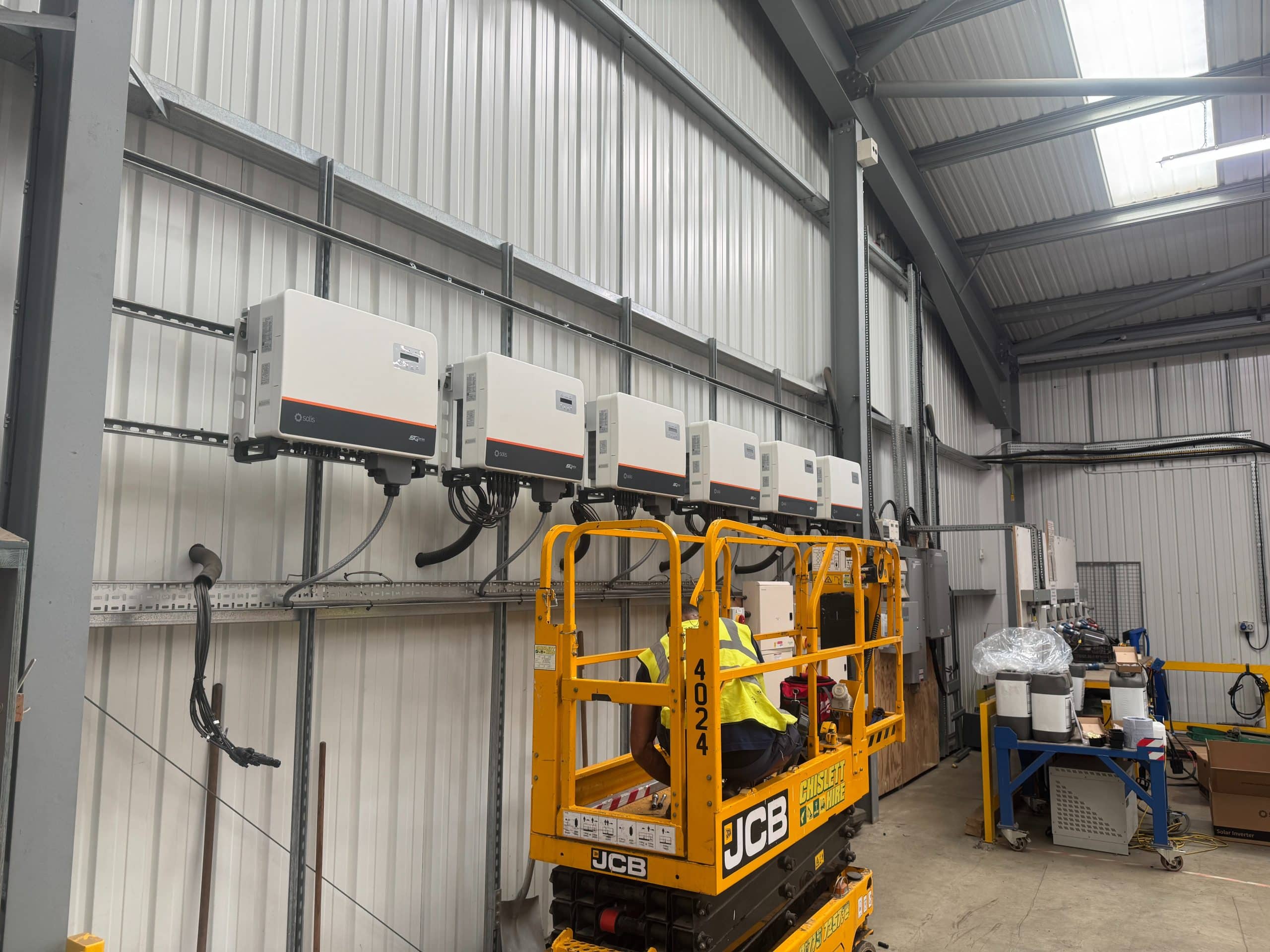
Commercial 100kW+. Multiple parallel Solis 25/50kW HV units. Large commercial roofs - Elsoms Seeds 177kWp Spalding- use 6 × Solis 25kW in parallel.
Specifying the right inverter for the next 10 years
If there’s any chance of adding battery later, plan for hybrid from day one. We’ll quote both options and you can decide on full information.
Request a QuoteAlready running a string inverter that has failed? Replacing a failed inverter is the natural moment to go hybrid: one visit, one recommissioning.
The retrofit headache (and how to avoid it)
The common scenario: you fit a string inverter today to save £500 versus the hybrid alternative. Three years later you want a battery. You add an AC-coupled battery inverter (£1,000 - £1,500), reconfigure the consumer unit, accept a 7% efficiency hit on every kWh moving between PV, battery and home. Net result £1,500+ more spent and worse system performance than if you’d specified hybrid on day one. We see this on takeover-servicing customers regularly.
If there’s a non-trivial chance you’ll add battery within 5 years, the hybrid premium pays back the day you commission the battery.
Three-phase vs single-phase inverters
Domestic UK is single-phase. Solis 5kW/6kW/8kW LV hybrids are all single-phase products. Commercial sites are typically three-phase and need a three-phase inverter - Solis 25kW/50kW HV products are three-phase. Mixing the wrong inverter to the wrong supply is a non-starter for DNO approval. We confirm at site survey.
What about microinverters?
Microinverters (Enphase being the dominant brand) put a small AC inverter under each panel, much like SolarEdge optimisers but with full DC-to-AC conversion per panel. Excellent for very shaded or complex roofs, but cost premium is high and the architecture doesn’t pair as cleanly with battery storage as a hybrid. We rarely specify microinverters for UK domestic in 2026.
FAQs
Can I add a battery to a string inverter later?
Yes - via an AC-coupled battery inverter (a second inverter that handles battery charge/discharge). It works fine but is less efficient than a DC-coupled hybrid setup, requires extra wall space and consumer-unit reconfiguration, and adds cost. Cheaper net over 25 years to specify hybrid on day one if battery is on the roadmap.
Are hybrid inverters more expensive?
Marginally - typically £400 - £700 more than an equivalent string inverter for a 5kW domestic unit. The premium pays back the moment battery is added: a hybrid doesn’t need a second AC-coupled battery inverter. Over 25-year system life the maths is strongly in favour of hybrid.
Can a Solis hybrid run without a battery?
Yes - a Solis hybrid operates as a standard string inverter on a solar-only install, and the battery side sits dormant until you connect a battery. This is the ‘future-proof’ option for customers who want solar now and battery later.
What size hybrid inverter do I need?
For domestic 4-6kWp PV, a Solis 5kW LV hybrid is the standard pairing. For 6-8kWp PV add headroom with a Solis 6kW. Above 10kWp the calculation moves to a Solis 10kW LV or 15kW LV. Inverter sizing also depends on planned battery size and any future expansion - we model both at quote stage.
Do hybrid inverters work with all batteries?
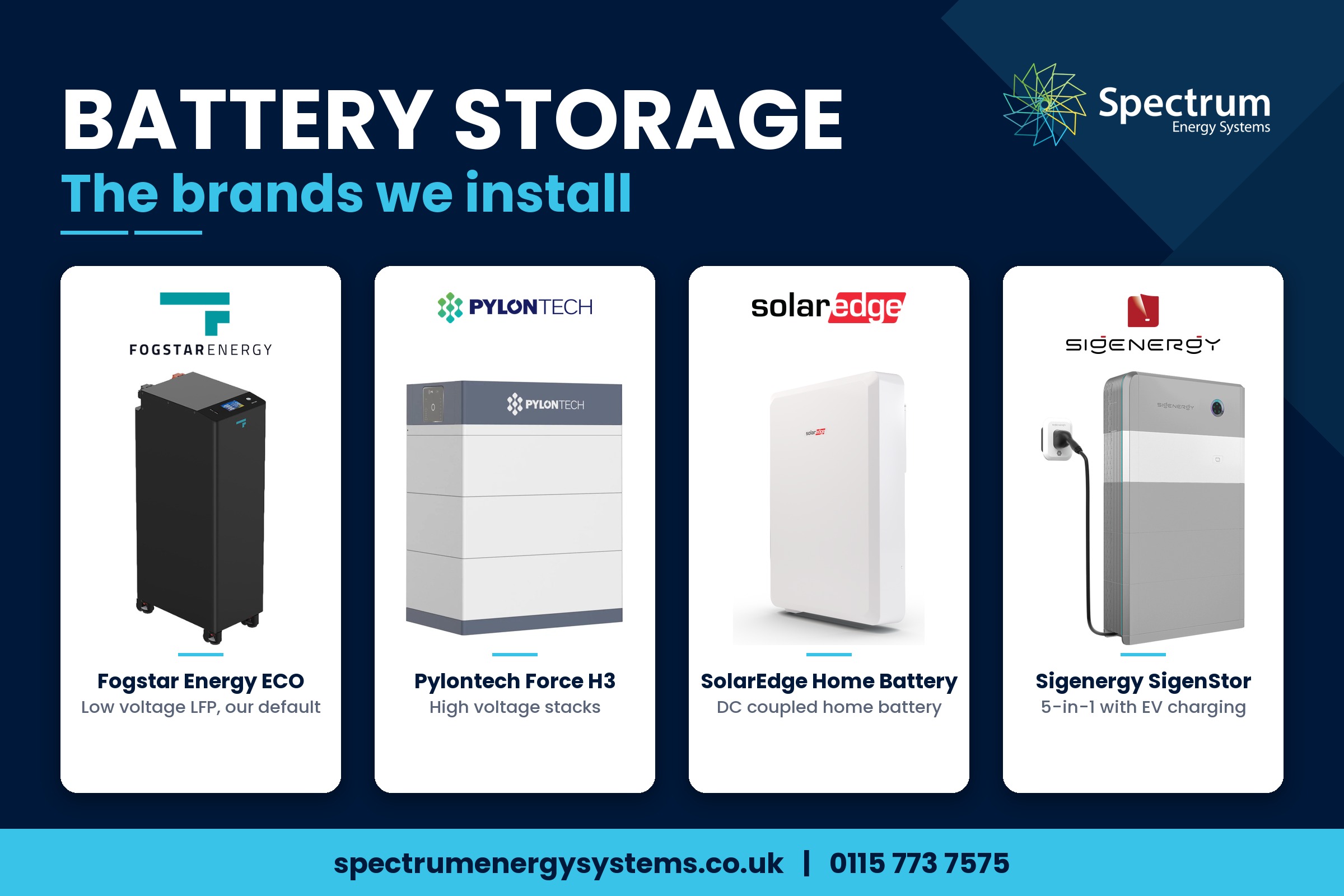
No - battery compatibility depends on voltage class and BMS communication. Solis LV hybrids pair with Fogstar (and other 48-51.2V LV batteries on the Solis certified list). Solis HV hybrids pair with Pylontech Force H3 (and other HV-rated stacks). Mixing voltage classes will fail to commission. We confirm pairings against the live certified list before quoting.
Are hybrid inverters louder than string inverters?
Marginally. Hybrid inverters carry slightly more cooling load because they handle two functions simultaneously, so the fan runs a touch more often. In a garage or utility room install, neither hybrid nor string inverter is audible from inside the house. Outdoor installs in still gardens, you’ll just notice fan cycling on hot summer days.
Can I use one inverter for two solar arrays on different roofs?
Yes, via the inverter’s separate MPPT inputs. Solis hybrids have 2 MPPT inputs (some models 3), each handling its own string. Two roofs of different orientations or pitches each connect to their own MPPT and the inverter optimises them independently. This is a common Spectrum pattern on dormer or L-shaped roofs.
Related reading
- Solis vs SolarEdge inverter comparison
- Fogstar vs Pylontech: which solar battery is right for you?
- How much solar battery storage do I need?
For the full Spectrum service overview see domestic solar overview.
Speak to Spectrum Energy Systems
MCS NIC200223. We’ll size the right hybrid inverter for your roof and your battery roadmap - not just today’s install.
Request a Quote