Three-Phase Power and Solar: What UK Homes Need to Know
Most UK homes have a single-phase electricity supply, which caps how much solar can connect without prior grid approval at 3.68kW of inverter output. A three-phase supply triples that headroom to just over 11kW, which is why larger homes, farms and homes running heat pumps and electric cars benefit from it. You can check which you have at your meter cupboard in ten seconds: one main fuse means single-phase, three means three-phase. Either way, solar works, the design just changes.
In This Guide
Single-phase vs three-phase, plainly
Electricity leaves the substation on three live conductors, three "phases". A standard UK home gets a connection to one of them: single-phase, 230V, perfectly adequate for a house full of normal appliances. Larger properties, farms, workshops and most commercial buildings get all three: three-phase, 400V between phases, roughly triple the capacity through the same style of connection.
For decades this distinction barely mattered to homeowners. Then heat pumps, electric car chargers and bigger solar arrays arrived, all hungry for capacity, and suddenly which supply you have shapes what your home can do.
How to check which supply you have
- Look at your main fuseOpen the meter cupboard. One black cutout fuse before the meter means single-phase. Three fuses, or one wide unit clearly feeding three sets of tails, means three-phase.
- Count the meter tailsSingle-phase: one live (brown or red) plus neutral. Three-phase: three lives plus neutral, often colour-coded brown, black and grey.
- Ask your DNOYour distribution network operator holds the record for your address. Across the East Midlands that is National Grid Electricity Distribution, and our grid connection guide explains who does what.
We confirm the supply type on every site survey anyway, it is one of the first things checked, because the answer sets the grid paperwork route for the whole job.
Why three-phase changes a solar design
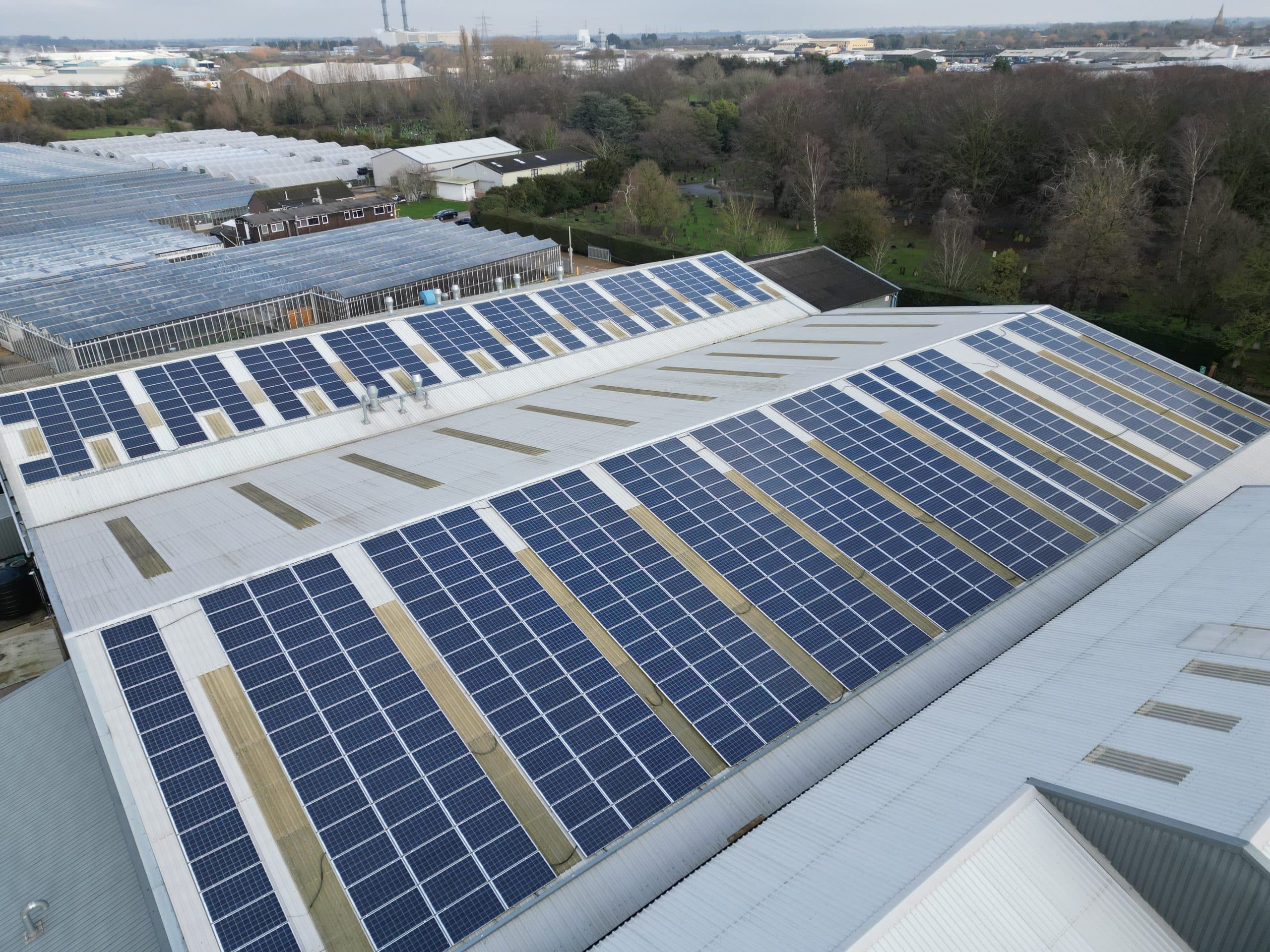
The grid rules allow 3.68kW of inverter output per phase to connect under G98, the notify-afterwards route. On single-phase, that is your ceiling before a G99 application (approval first, which can take weeks) enters the picture. On three-phase, the same rule gives you just over 11kW of headroom, enough for a very large domestic array or a modest commercial one like the roof pictured, without waiting for approval. The application process itself, and when G99 still applies, is covered in our G98 and G99 guide; the practical takeaway is that three-phase homes get bigger systems connected faster.
Inverters and batteries on three-phase
A three-phase property has two sensible design routes, and the survey picks between them:
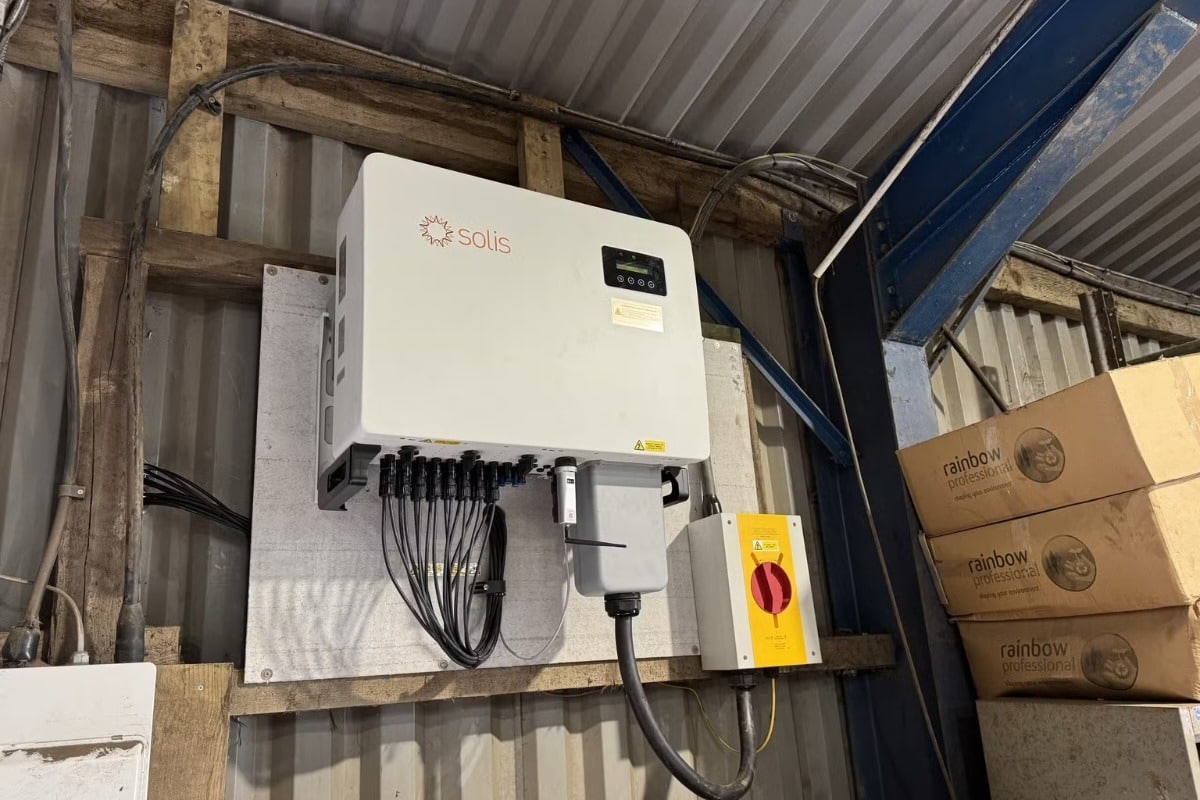
- A three-phase inverterSpreads generation evenly across all three phases. The natural choice for larger arrays, and our standard Solis range includes three-phase hybrid models, so battery storage stays on the table.
- A single-phase inverter on one phasePerfectly legitimate for smaller systems: the inverter sits on one phase, sized within that phase's limit. Common where a three-phase property only wants a domestic-scale array.
The question people then ask is what happens when the solar generates on one phase while the kettle draws from another. In practice, billing sorts itself out: modern smart meters register the net flow across the phases, so as far as your bill is concerned, generation on one phase offsets consumption on another. Batteries follow similar logic, and our battery time-shifting guide covers how storage earns its keep on any supply type.
Upgrading to three-phase: worth it?
Some homeowners planning solar, a heat pump and one or two car chargers ask about upgrading their single-phase supply. It is your DNO's job, not your installer's: they quote it after assessing the work between your home and their network, and costs vary enormously depending on whether the street cable already carries three phases past your door or new cable needs laying. For most homes fitting a standard solar and battery system, the upgrade is unnecessary, a properly sized system fits comfortably within single-phase limits. Where total electrification is the plan and the loads genuinely stack up, it is worth pricing early, because it is far easier before everything else is designed around the old supply.
Not sure what your supply allows?
Free site survey: we identify your supply type, size the system to it and handle the G98 or G99 paperwork whichever way it falls. Design normally within 2 to 4 days depending on workload. Call 0115 773 7575, 8am to 8pm, Monday to Friday.
Book a feasibility assessmentFrequently asked questions
Can I have solar panels on a three-phase supply?
Yes, and it is an advantage: three-phase supplies allow up to 11.04kW of inverter output to connect under the fast G98 route, three times the single-phase limit. The design choice is between a three-phase inverter spreading generation across all phases or a single-phase inverter on one, which the site survey settles.
How do I know if my house has three-phase power?
Check the meter cupboard: one main cutout fuse before the meter means single-phase, three fuses (or three sets of meter tails) means three-phase. Most UK homes are single-phase; three-phase is more common in large houses, farms, converted commercial buildings and some newer developments.
Do I need a special inverter for three-phase solar?
For larger arrays, a three-phase inverter is the right tool, spreading output evenly across the phases, and three-phase hybrid models keep battery storage available. Smaller systems can legitimately use a standard single-phase inverter on one phase. Both are routine installs for an MCS installer.
What does it cost to upgrade to three-phase?
Your distribution network operator quotes it case by case, and the range is wide because it depends on the cable already in your street. If three-phase runs past the property, the work is modest; if new cable must be laid, it is not. Request a quote from your DNO before designing anything around it.
Does solar on one phase offset usage on another?
For billing purposes, yes in practice: modern smart meters register the net flow across the phases, so exported power on one phase offsets imported power on another as far as your bill and export payments are concerned. Your installer still balances the design sensibly across phases.
Related reading
- G98 and G99 grid connections explained
- How many solar panels do I need?
- Hybrid vs string inverters
- Adding solar panels to an existing system
- Commercial solar payback periods
Domestic and commercial, single or three-phase
We are Spectrum Energy Systems, MCS certified (NIC200223), installing solar across the East Midlands since 2011, from single-phase semis to three-phase farms and warehouses. Call 0115 773 7575, 8am to 8pm, Monday to Friday.
Get in touch