
Commercial Solar Payback Period UK: The Real Numbers
A well-designed commercial rooftop solar system in the UK typically pays for itself in circa 5 years. Our own quotes bear that out: a 49.68kWp system with battery storage we priced at £37,000 plus VAT showed a payback of circa 4 years. Businesses beat domestic payback because they use power exactly when the sun generates it.
In This Guide
A real project, with the numbers
Payback claims are cheap. Real quotes are evidence, so let us start with one of ours. We quoted a commercial customer for a 49.68kWp rooftop array paired with 51.2kWh of Pylontech battery storage on a Solis 40kW inverter. The all-in price was £37,000 plus VAT, and on the site's consumption the proposal showed a payback of circa 4 years.
Your number will differ, because payback is driven by how your building uses electricity. That is the honest caveat, and the rest of this guide shows you exactly which levers move it. For full project pricing across system sizes, our commercial solar cost guide has the detail.
Why businesses beat domestic payback
A house generates at noon and uses power at 7pm, which is why domestic systems need batteries to shine. Most businesses do the opposite: machines, refrigeration, compressors, servers and lighting run precisely when the panels generate. That alignment means a commercial building typically uses the large majority of its solar directly, and every self-consumed kWh replaces electricity bought at your full business rate.
Add scale economics: cost per installed kWp falls as systems grow, because scaffolding, design and grid application costs spread across more panels. A 50kWp system does not cost ten times a 5kWp domestic install. Those two facts together are the whole story of why commercial payback runs years ahead of domestic.
What moves your payback
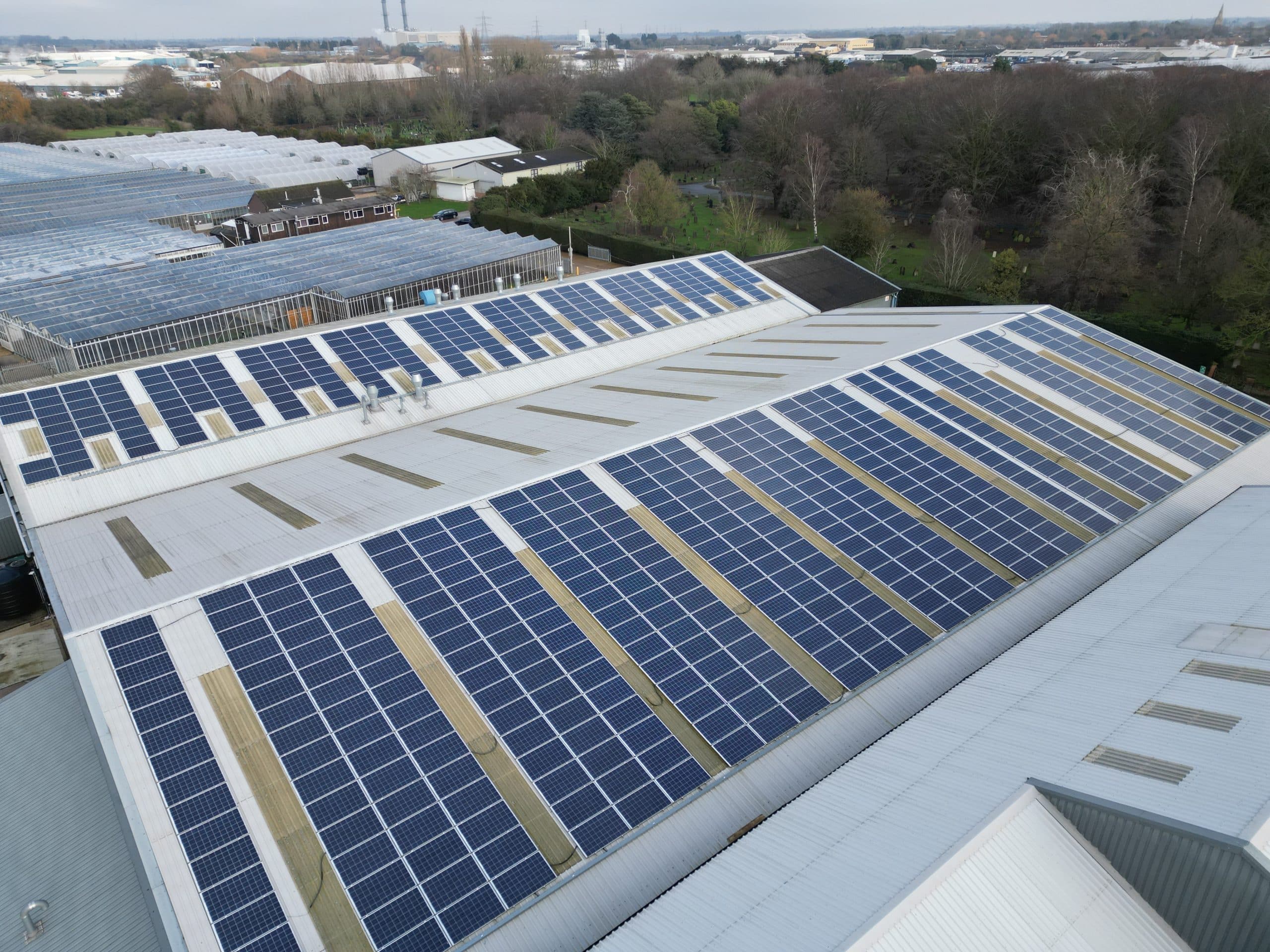
The 177kWp array in the photo spans several warehouse roofs feeding one energy-hungry operation. When we model payback for a site like this, five inputs decide the answer:
- Self-consumption shareThe portion of generation your operation uses directly. Seven-day operations sit highest.
- Your unit rateThe more you pay per kWh, the faster solar repays. Businesses on high tariffs see the quickest returns.
- Roof and install costA clean steel portal frame roof installs cheaply. Complex roofs, ballast systems or reinforcement add cost and months to payback.
- Weekend shutdownsA five-day operation exports its weekend generation at a lower value unless a battery captures it.
- Tax treatmentCapital allowances materially shorten real-world payback, covered next.
Tax relief speeds it up
Solar plant qualifies for capital allowances, which let a company set the system cost against taxable profits. Depending on your circumstances and the allowance route used, the tax saving effectively discounts a meaningful slice of the project cost, and that discount lands early, exactly where payback maths is most sensitive. We are installers rather than tax advisers, so treat this as signposting rather than advice: the mechanics, worked examples and current rates are in our guide to capital allowances on solar PV, and your accountant should confirm your position.
Where batteries fit the commercial case
Commercial batteries used to be a luxury. On sites with evening shifts, weekend operations or punchy peak-rate charges they now routinely earn their place: the battery banks surplus from quiet generation hours and discharges it when the operation, or the tariff, demands. Our 49.68kWp quote above included 51.2kWh of storage for exactly this reason, and payback still came out at circa 4 years. The full picture, including when we advise against storage, is in our commercial battery storage guide.
What happens after payback
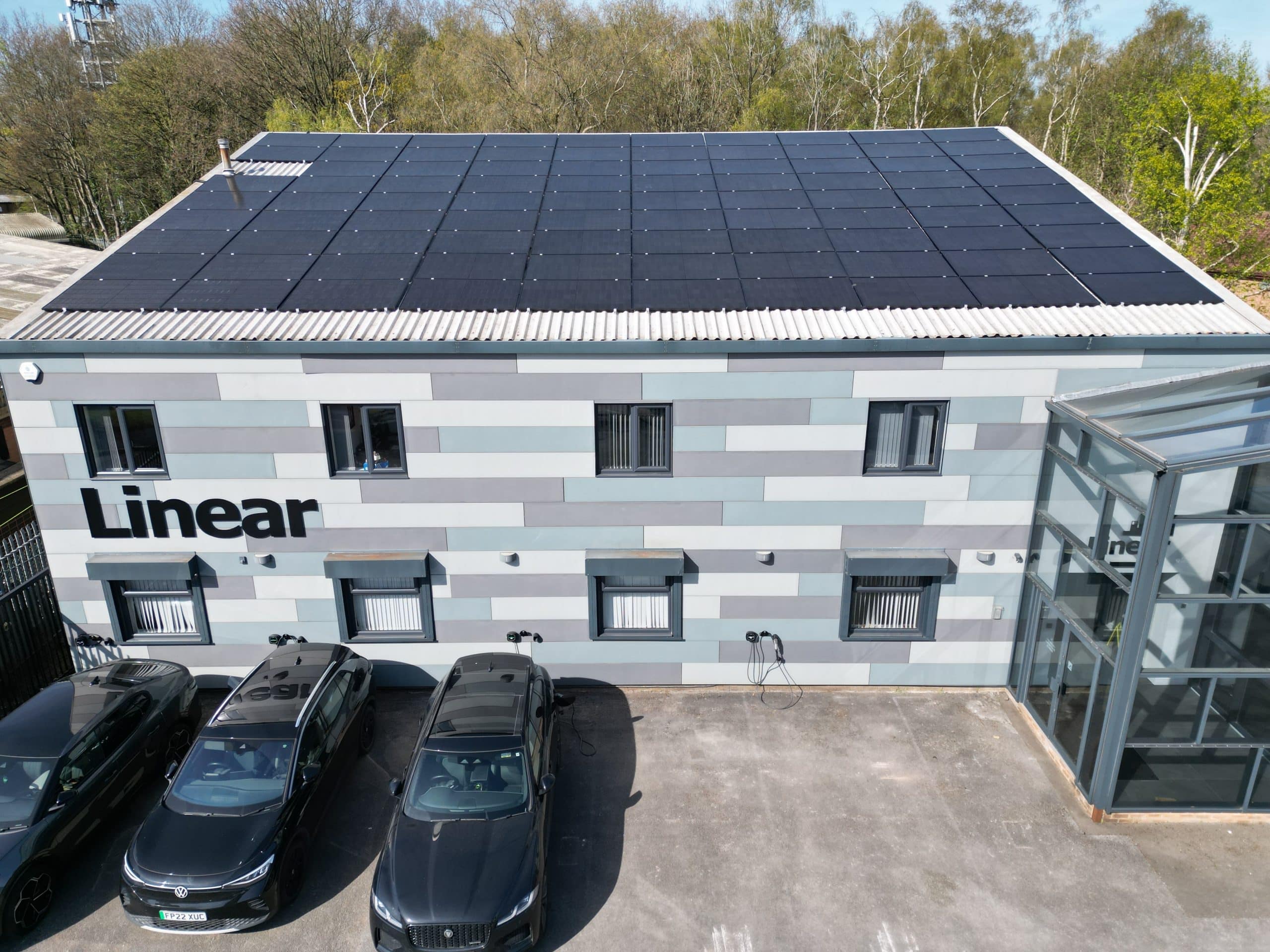
The photo shows our 66.85kW solar panel installation in Nottingham at Linear Insulation, one of the East Midlands businesses now on the far side of the payback question. Once a system has repaid itself, the economics change character entirely: Tier 1 panels carry 25 to 30 year performance warranties, so a system that repays in circa 5 years then delivers roughly two decades of electricity at close to zero marginal cost.
That long tail is what makes commercial solar a fabric-of-the-building investment rather than a gadget. It also strengthens ESG reporting and, for energy-intensive sites, insulates the operation against future price spikes.
Want your building's actual payback number?
Send us a recent electricity bill and we will model your site properly: consumption profile, roof, system size and the honest payback figure. It starts with a free remote roof and energy assessment, so we can see what fits and give you an idea of costs. Prefer us to visit first? We can do that too. Spectrum has completed over 1,000 installs since 2011, working from our own Bulwell HQ with in-house crews.
Book a feasibility assessmentFrequently asked questions
What is the average payback period for commercial solar in the UK?
A well-designed commercial rooftop system typically repays in circa 5 years, with high daytime consumption sites doing better. Our 49.68kWp quote with battery storage modelled at circa 4 years on the customer's real usage. Sites with low daytime demand or difficult roofs sit slower, which honest modelling shows upfront.
Why is commercial solar payback faster than domestic?
Alignment and scale. A business consumes electricity during generating hours, so most solar replaces full-price grid power directly, while a home exports its midday surplus unless a battery stores it. Cost per kWp also falls as systems grow, since fixed project costs spread across far more panels.
How much does a 50kW commercial solar system cost?
We quoted a 49.68kWp system, including 51.2kWh of Pylontech battery storage and a Solis 40kW inverter, at £37,000 plus VAT. Panels-only versions cost less. Commercial pricing is always plus VAT, and every project is priced from the building's roof and consumption rather than a rate card.
Do capital allowances really change the payback?
Yes, materially. Setting the system cost against taxable profits returns a slice of the spend through tax relief early in the project's life, which is where payback arithmetic is most sensitive. The current mechanics are in our capital allowances guide, and your accountant confirms what applies to your company.
Is commercial solar still worth it if we close at weekends?
Usually, yes. Weekend generation exports at a lower value than weekday self-use, which stretches payback somewhat, and a battery can bank weekend energy for Monday's peak instead. We model five-day operations with and without storage so you can see both paybacks before deciding anything.
What maintenance costs should we budget after install?
Commercial solar is low-maintenance rather than no-maintenance: periodic panel cleaning, an inverter replacement at some point in the system's long life, and an annual health check to catch faults early. These costs are small against generation value and belong in any honest payback model, including ours.
Related reading
- Commercial solar panel costs: real project numbers
- Are commercial solar panels worth it?
- Capital allowances on solar PV
- Commercial solar battery storage UK
- Solar panels for business premises: an owner's guide
Talk to the team that installs what it models
We are an MCS certified installer (NIC200223) with in-house commercial crews based in Bulwell, Nottingham. Explore the commercial solar overview or call 0115 773 7575, 8am to 8pm, Monday to Friday.
Get in touch