
Do Solar Panels Work in Hot Weather, or Do They Overheat?
Panels work fine in hot weather; they just work slightly less efficiently. Silicon converts light, not heat, and every degree above the testing standard trims a fraction of output, a few tenths of a percent per degree on typical datasheets. A heatwave day still generates strongly because the light is superb. Overheating to the point of danger is not how healthy panels fail.
In This Guide
Light powers panels, heat taxes them
The confusion is natural: hot days feel like peak solar conditions. But panels convert light, and heat is a separate, slightly unhelpful passenger. Silicon's electrical properties shift as cells warm, so panel datasheets quote a temperature coefficient: for typical modern panels, output falls by a few tenths of a percent for every degree the cell rises above the 25 degree testing standard. On a scorching roof, cells run well above air temperature, so a heatwave afternoon gives up a modest slice of the output that its brilliant light would otherwise deliver.
Run the two effects together and the seeming paradox resolves: a blazing July day out-generates a mild March one because summer light is vastly stronger and longer, but a bright, cool, breezy day is when panels are at their absolute happiest. Cold and bright beats hot and bright, which is also why crisp winter days punch above their weight.
What a heatwave really costs, and how installs manage it
The design already fights the heat for you:
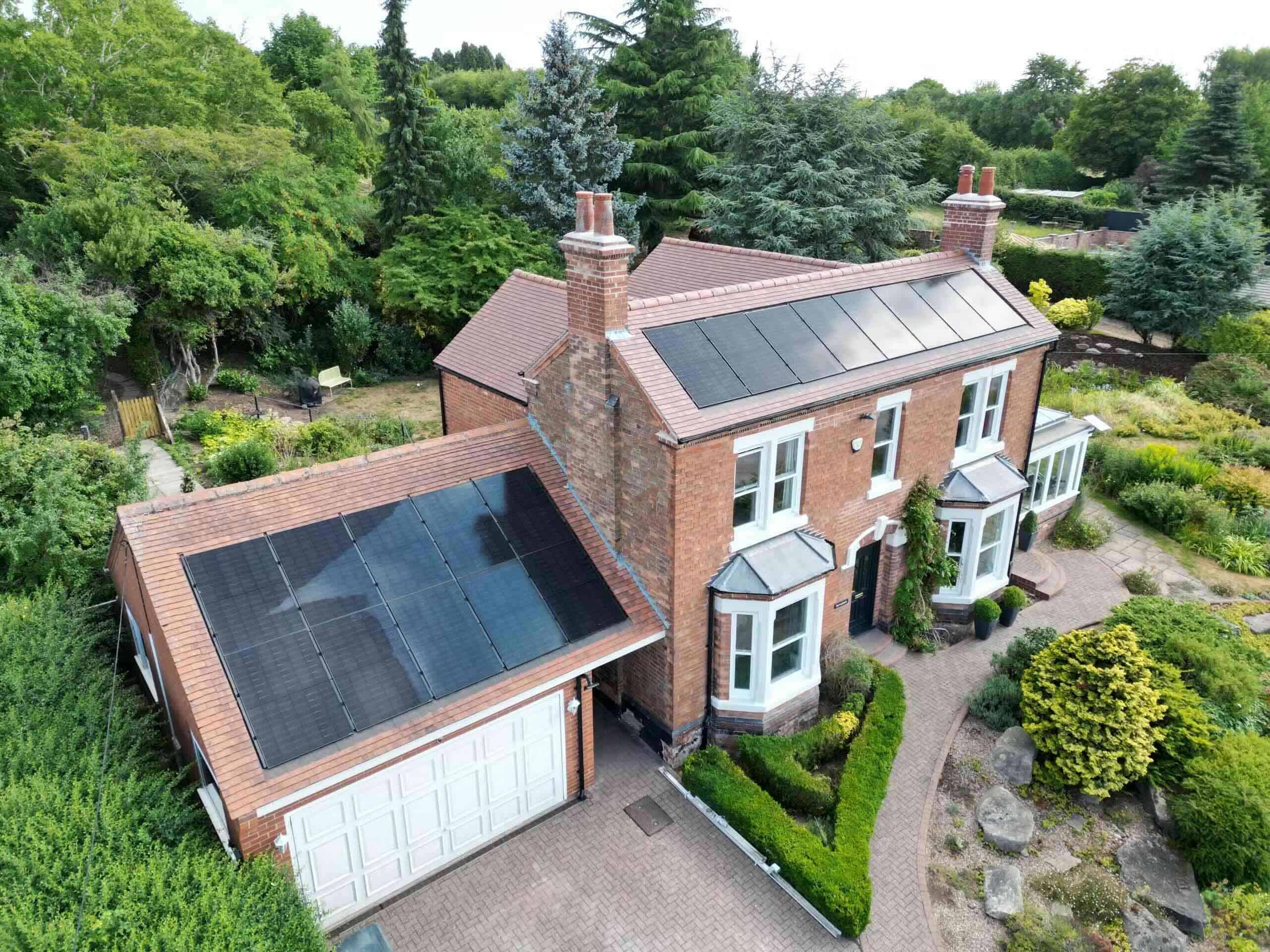
- The air gapOn-roof mounting like the array pictured leaves a ventilation channel beneath the panels, letting airflow carry heat away. It is one of the quiet jobs the mounting system does.
- N-type cells age well in heatThe modern cell technologies in Tier 1 panels carry better temperature behaviour than older generations, part of why efficiency figures keep improving.
- Inverters protect themselvesMounted somewhere shaded and ventilated at install, an inverter derates gracefully on extreme days rather than suffering, which is a placement decision we make on every job.
- Never block the airflowThe one owner-side rule: solid barriers under panels cook them, which is why proper bird proofing uses mesh, never sheeting.
Making the most of summer
The heat tax is small; the summer surplus is enormous. Long days mean a 5 to 6kWp system regularly generates far beyond a household's daytime needs, and the game becomes capturing rather than generating. The battery banks the excess for the evening, a diverter turns what is left into hot water, and a decent export tariff pays for the genuine surplus, per our SEG comparison. Households with air conditioning or a hot tub get the tidiest match of all: their biggest loads land exactly when the roof is at full song.
One caveat worth naming honestly: if your monitoring shows output collapsing on hot days rather than dipping gently, that is not the temperature coefficient, that is a fault flushed out by thermal stress, commonly a tired connection or a struggling inverter. Heat exposes marginal components before it harms healthy ones. A summer slump beyond a few percent deserves a look, and our problems guide covers the diagnosis order before you call anyone.
Summer output looking odd?
A health check inspects the connections and components that heat stresses first, on our installs or anyone else's. Call 0115 773 7575, 8am to 8pm, Monday to Friday.
See our servicing optionsFrequently asked questions
Do solar panels stop working if they get too hot?
No. Output declines gently as cells warm, a few tenths of a percent per degree above the 25 degree rating point on typical datasheets, and that is the whole effect on a healthy system. Panels are tested far beyond UK temperatures; a heatwave trims the peak rather than threatening the equipment.
Which is better for solar panels, hot or cold weather?
Bright and cool is the ideal: maximum light with minimum heat tax. Summer still wins overall because its light is stronger for longer, but a crisp sunny spring day frequently posts the year's best instantaneous outputs. Darkness is the enemy, never temperature.
Can a heatwave damage my solar panels?
Healthy panels, no: they are engineered and tested for far harsher conditions than a British heatwave. What heat does do is expose already-weak connections and tired inverters, so a dramatic hot-day output collapse is a fault signal worth investigating rather than weather to shrug at.
Why is my generation lower on very hot days than warm ones?
The temperature coefficient at work: cell temperature climbs well above air temperature on still, scorching afternoons, shaving output even as the light stays strong. A modest dip is physics behaving normally. Anything beyond a few percent, or sudden cut-outs, points at the inverter or connections instead.
Do solar panels need cooling systems in the UK?
No. The ventilation gap beneath on-roof panels does the cooling passively, and UK temperatures never justify active cooling. What matters is not defeating that design: keep the under-panel airflow clear, use mesh rather than solid barriers for bird proofing, and let the breeze do its job.
Is summer surplus worth anything if I am out all day?
Very much, with the right setup: a battery banks it for your evening, a diverter turns spare into hot water, and export payments collect on the rest. An empty house under a generating roof is the textbook case for storage, which is why we size batteries around usage patterns rather than roof size alone.
Related reading
- Do solar panels work in winter?
- Do solar panels work on cloudy days?
- How efficient are solar panels?
- Common solar panel problems and fixes
- Can solar panels heat your water?
Systems designed for every British season
We are an MCS certified installer (NIC200223) based in Bulwell, Nottingham. Ventilated mounting, sensible inverter placement, honest seasonal numbers. Call 0115 773 7575, 8am to 8pm, Monday to Friday.
Book a feasibility assessment