Bird Proofing Solar Panels: Costs, Options and Mistakes to Avoid
Bird proofing solar panels typically costs £300 to £1,000 in the UK, with most domestic jobs landing between £500 and £900 depending on panel count and access. The fix that works is stainless steel mesh clipped around the panel perimeter, fitted without drilling anything. Done properly, it ends the pigeon problem for the life of the system.
In This Guide
Why pigeons love solar panels
On-roof solar panels sit on rails around 10 to 15cm above the tiles. To a feral pigeon that gap is a dream home: sheltered from rain and wind, warmed from above when the panels run, safe from every predator that cannot fit underneath. Once one pair moves in and nests, others follow, and a roof that hosted two pigeons in spring can host a colony by autumn.
We should say clearly: this is a feature of how on-roof mounting works, not a defect in your installation. In-roof arrays, where panels sit flush within the roof covering, have no gap and no pigeon problem, which is one of several reasons some customers choose them. If your panels are on-roof and pigeons have found them, you are dealing with one of the most common aftercare issues in UK solar.
What the birds actually damage
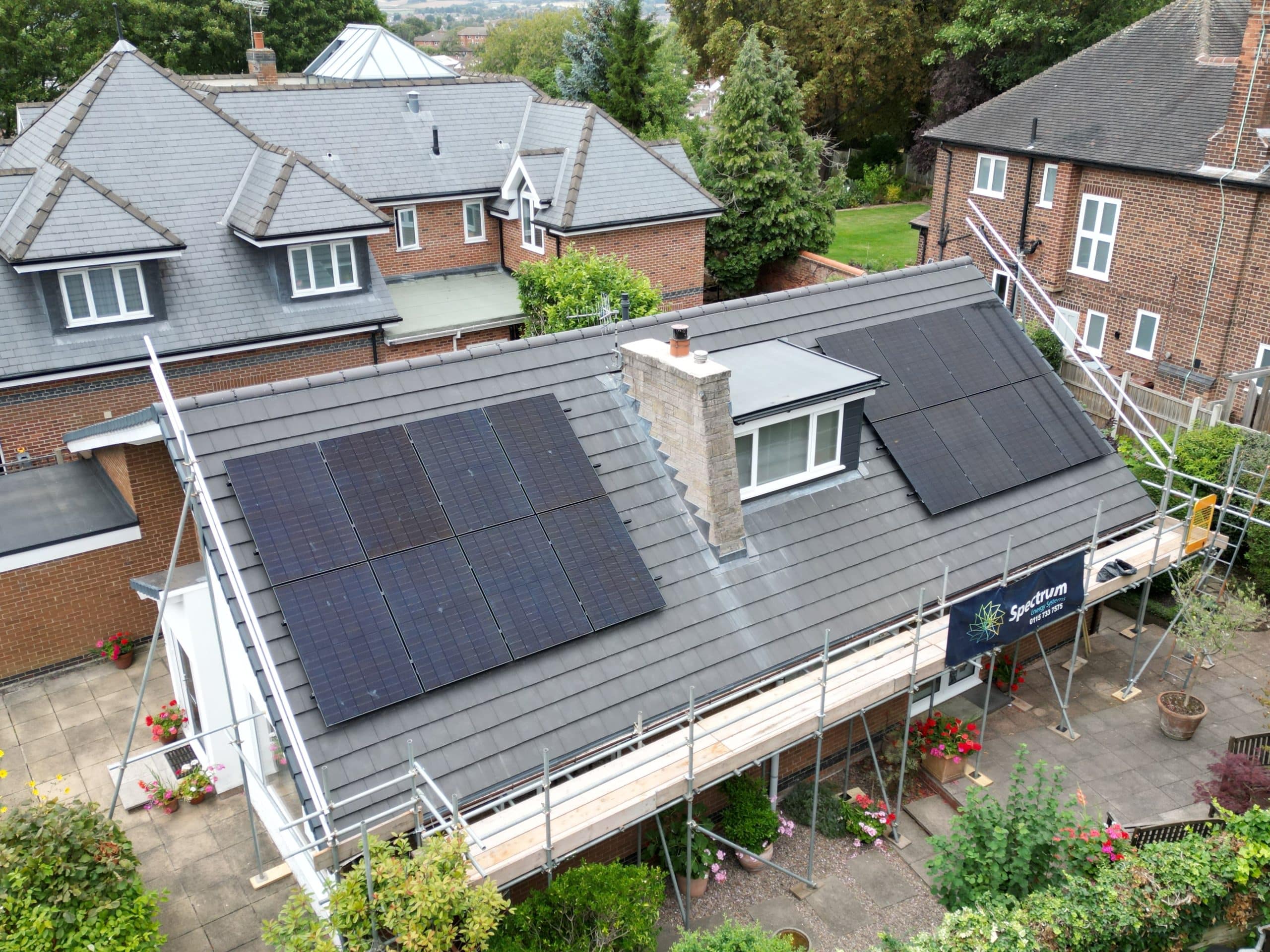
The gap under an array like this one is what proofing seals off. Left alone, an established colony causes real, compounding problems:
- Droppings on the glassPigeon droppings are acidic and stubborn. A soiled panel generates less, and heavy soiling can mark the glass permanently.
- Nesting debris under the arrayTwigs and detritus pack against cabling and connectors, trapping damp against components designed to stay ventilated.
- Pecked and dislodged cablingRare but expensive when it happens.
- Blocked guttersNest material and droppings wash down with every rain.
- The noiseAnyone who has lived under a pigeon colony at 5am does not need this explaining.
The options that work, and the ones that do not
✓ What works
- Stainless steel mesh skirtThe industry standard. UV-stable coated mesh clipped to the panel frames around the whole perimeter, sealing the gap while keeping airflow. No drilling, removable for maintenance.
- Prevention at install timeFitting mesh while the scaffold is already up costs a fraction of a return visit. Worth discussing on any new install near trees or an existing pigeon population.
- In-roof mountingChosen at design stage, it removes the habitat entirely.
✗ What does not
- Plastic nettingDegrades in UV, sags, and traps birds inside the array, which creates a worse problem than it solves.
- Spikes on the panelsSpikes belong on ledges, not arrays. They do nothing about the gap underneath.
- Decoy owls and reflectorsPigeons work out the owl is plastic in about a day.
- Waiting for them to leaveThey will not. Colonies grow.
What bird proofing costs
| Job | Typical cost |
|---|---|
| Per panel, mesh supplied and fitted | £40 to £60 |
| Typical 10 to 12 panel domestic array | £500 to £900 |
| Full range seen across UK jobs | £300 to £1,000 |
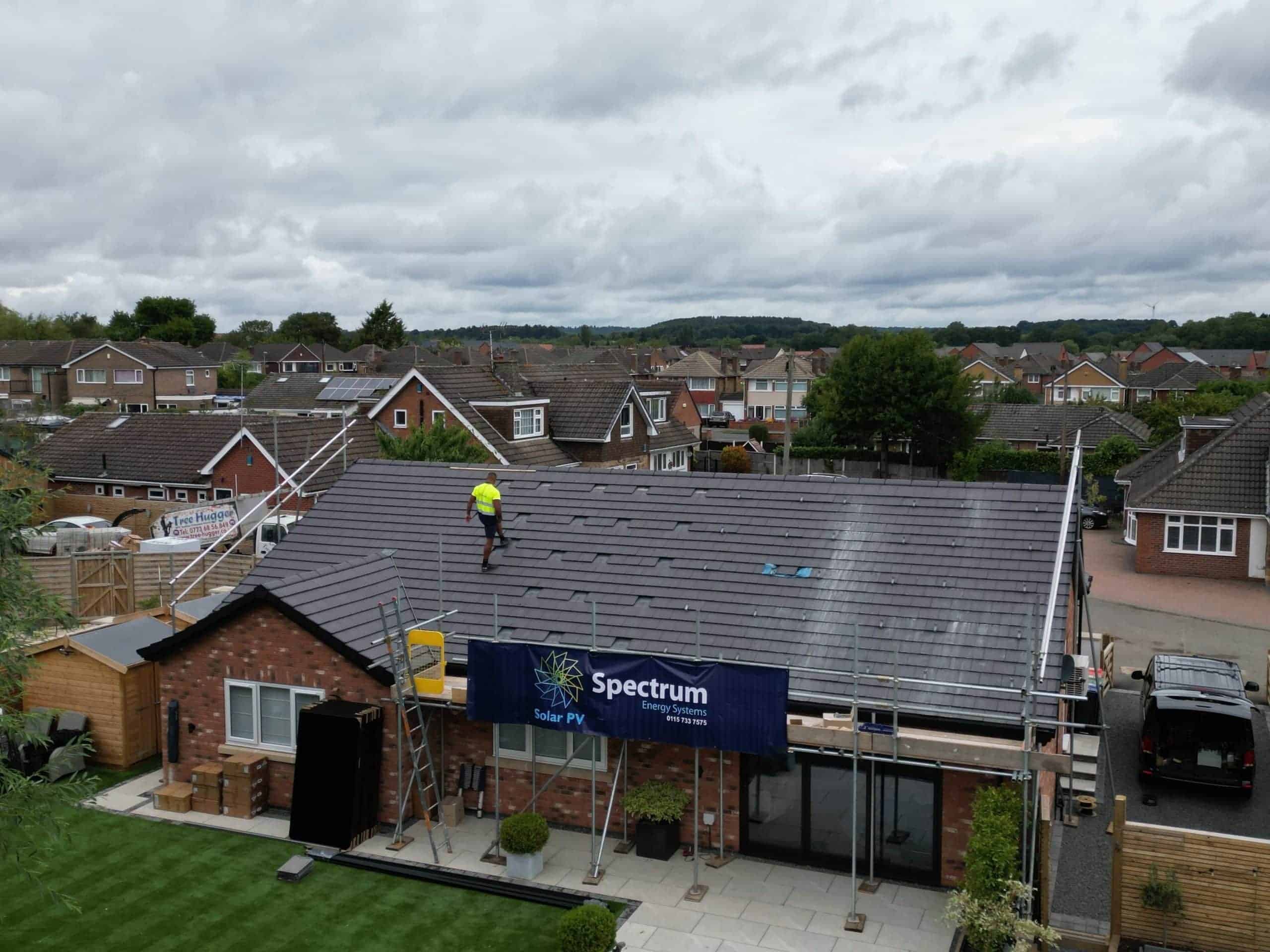
Figures are from published UK installer pricing and are illustrative. The swing factor is access, which the photo shows: a straightforward roof reachable from towers costs less than one needing full scaffold to two elevations. Cleaning off established soiling before the mesh goes on adds to the job, which is the financial argument for acting early rather than after a colony settles in.
Mistakes that void warranties
The proofing itself is simple. Doing it badly is expensive, and we see the aftermath of DIY and cut-price jobs at inspections:
- Drilling panel framesScrewing mesh into the panel frame can void the manufacturer's warranty in one hole. Proper mesh clips to the frame without a single fixing into it.
- Blocking ventilationPanels need airflow underneath to stay cool and efficient. Solid barriers cook the array. Mesh keeps air moving while keeping birds out.
- Walking an unfamiliar roofCracked tiles and worse. Roof work belongs with people carrying the right access kit and insurance.
- Sealing birds inMeshing an array with an active nest inside traps the birds, which is both cruel and illegal. Check first, always.
The legal bit about nests
All wild birds, their active nests and their eggs are protected under the Wildlife and Countryside Act 1981. In practice that means proofing work has to wait until a nest is no longer active, or the nest must be dealt with under the narrow rules that apply. A professional will check under the array before sealing anything and time the work accordingly. It is one more reason the cheap quote that promises to sort it tomorrow, no questions asked, deserves suspicion.
Pigeons moved in under your panels?
We fit bird proofing on our own installs and on systems fitted by other companies, with cleaning and a system health check in the same visit where wanted. Call 0115 773 7575, 8am to 8pm, Monday to Friday.
Get in touchFrequently asked questions
How much does it cost to pigeon proof solar panels?
Typically £300 to £1,000 in the UK, with most domestic arrays costing £500 to £900 based on published installer pricing, or roughly £40 to £60 per panel supplied and fitted. Access drives the variation: a roof needing full scaffold costs more than one reachable from a tower.
Does bird proofing damage the solar panels?
Properly fitted proofing does not touch the panels' integrity: stainless mesh clips onto the frames with purpose-made fixings and no drilling. What damages panels is bad proofing, particularly screws through frames and solid barriers that block the ventilation the array needs to stay cool.
Do pigeons under solar panels reduce performance?
Yes, mainly through droppings on the glass, which shade cells and cut output, and debris packed under the array trapping damp around cabling. The performance loss builds gradually, which is why monitoring dips plus visible birds usually means it is time to clean and proof.
Can I bird proof solar panels myself?
We would not recommend it. The work happens at roof edge height, the mesh must clip without drilling the frames, ventilation must stay clear, and an active nest makes the timing a legal question. Professionals carry the access equipment, the correct clips and the insurance for all of that.
Can birds get under in-roof solar panels?
No. In-roof systems sit flush within the roof covering, so the gap birds nest in does not exist. If you are choosing a new system in an area with a known pigeon population, that is worth weighing at design stage alongside the aesthetics that usually drive the in-roof choice.
When is the best time to bird proof?
Before birds settle, ideally at installation while scaffold is already up. Failing that, act at the first signs of interest, and outside active nesting: an occupied nest is legally protected, so established colonies need timing and checks a professional will handle as part of the job.
Related reading
- The complete solar panel maintenance guide
- How to clean solar panels properly
- Common solar panel problems and fixes
- Solar panel maintenance schedule
- Solar panel mounting systems explained
Aftercare from a local installer
We are MCS certified Nottingham solar installers (NIC200223), based in Bulwell, and we look after systems we did not originally fit as well as our own. Bird proofing, cleaning, health checks and repairs. Call 0115 773 7575, 8am to 8pm, Monday to Friday.
See our servicing options