
Can Solar Panels Run Air Conditioning in the UK?
Yes, and no other appliance in your home is better matched to solar. Air conditioning demand peaks on hot, cloudless afternoons, which are precisely the hours a solar array produces its maximum, so cooling is the rare load that lines up with generation almost perfectly. A typical domestic split unit draws a modest, steady load that a normally sized array covers with room to spare in the very weather that makes you switch it on. We install the solar side; the aircon itself comes from a cooling specialist, and the two systems need no special connection, just the same house.
In This Guide
The perfect-match argument
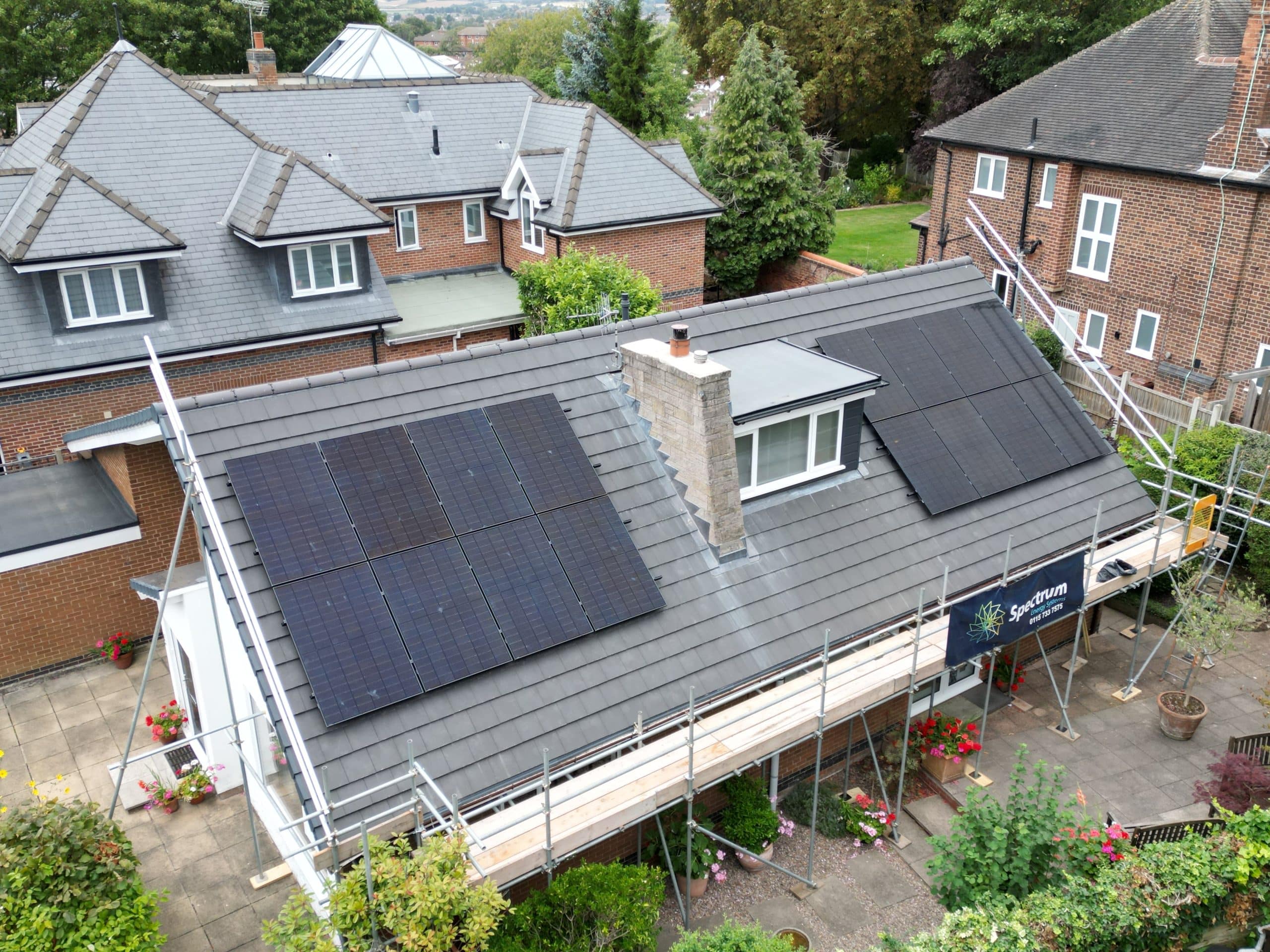
Most household loads fight solar's schedule: cooking, lighting and telly cluster in the evening, after generation fades, which is why batteries exist. Air conditioning is the glorious exception. The hotter and sunnier the afternoon, the harder the cooling works, and the harder the array works too, like the one pictured on a cloudless summer day. Demand and supply rise and fall together, hour by hour, which means aircon's electricity is consumed the moment it is generated at the full import-price value, no storage or shifting required. Engineers call this coincident load; owners call it free cooling. It is the same alignment our hot weather guide describes from the panel side, seen from the appliance side.
What UK aircon actually draws
British home cooling has grown fast, split-unit systems in bedrooms and living rooms, air-to-air heat pumps that cool in summer and heat in shoulder seasons, portable units dragged out each July, and the loads are smaller than the fear suggests:
- A modern split unitCommonly around a kilowatt while cooling, cycling down as the room settles, so an afternoon's comfort costs a handful of kilowatt-hours.
- Air-to-air heat pumpsSimilar draws with the efficiency of heat-pump technology, moving several units of heat per unit of electricity.
- Portable unitsThe thirstiest per degree of comfort, but still comfortably within an array's summer surplus.
Set against a domestic array producing its seasonal peak, often several kilowatts through a summer afternoon, the cooling load fits inside generation with margin.
The honest sums
Here is the arithmetic in its simplest honest form. On the summer afternoons that make you want cooling, a well-sized domestic array is usually generating more than the house is using, surplus that would otherwise export at the modest export rate. Running aircon redirects that surplus into comfort valued at the full import rate you would otherwise pay, which makes solar-powered cooling not just free-feeling but among the highest-value uses of your generation. The load also arrives in the season your system over-delivers: the same array that needs winter time-shifting tricks to cover December evenings shrugs off July's cooling without noticing. Aircon does not strain a solar home; it mops up the season's abundance.
Hot nights and the battery
The one place the perfect match slips: sticky summer nights, when the bedroom unit hums past midnight and the panels have long clocked off. This is ordinary battery territory, the day's surplus, banked in a home battery, carries the night's cooling the same way it carries the evening kettle, and summer is precisely when the battery fills easiest. A 16.1kWh unit holds far more than a night of bedroom cooling needs, so aircon households get the same answer as everyone else with evening loads: the battery completes what the coincident daytime match starts. The economics live in our battery guides, and the design conversation is one survey.
Planning solar with cooling in mind
If cooling is already in the house or on the wishlist, say so at survey, the same advice we give hot tub owners, because real consumption beats calculator averages. Cooling nudges the design toward the sunnier end of your roof's capacity and firms up the battery case for night use, both cheap adjustments while the install is happening anyway. One clean division of labour to keep in mind: we design and install the solar and battery side; the air conditioning itself is a refrigeration specialist's trade, and the two systems coexist without any special integration, the aircon simply plugs into a house whose electricity got cheaper. For homes electrifying on every front, our heat pump sequencing guide covers the heating half of the same journey.
Cooling the house on sunshine
Free design and quote: we size the array and battery around your real loads, cooling included, one all-in price. Design normally within 2 to 4 days depending on workload. Call 0115 773 7575, 8am to 8pm, Monday to Friday.
Get EstimateFrequently asked questions
Can solar panels power air conditioning?
Yes, and better than any other appliance: cooling demand peaks on the hot, bright afternoons when the array is at maximum output, so the aircon runs on surplus generation at the moment it is produced. A typical split unit's draw fits comfortably inside a normal domestic array's summer output.
How much electricity does home air conditioning use in the UK?
Modern split units commonly draw around a kilowatt while actively cooling and cycle down as the room settles, so an afternoon's comfort costs a handful of kilowatt-hours. Portable units are thirstier per degree; air-to-air heat pumps are the most efficient. Your own unit's plate and meter beat any average.
Do I need a battery to run aircon on solar?
Not for daytime cooling, which is when generation and demand coincide almost perfectly. For hot nights, yes in practice: the battery banks the day's surplus and carries the bedroom unit past midnight, and summer is the season it fills most easily.
Does Spectrum install air conditioning?
No, we design and install the solar and battery side; the air conditioning itself is a refrigeration specialist's trade. The two systems need no special connection, the aircon simply runs in a house whose daytime electricity now comes from the roof, so the projects can happen in either order.
Is aircon becoming common in UK homes?
Noticeably so: hotter summers have pushed split units and cooling-capable air-to-air heat pumps into ordinary housing, not just conservatory brochures. For solar owners the trend is friendly, since cooling is the one growing load that arrives exactly when the panels over-deliver.
Related reading
- Do solar panels work in hot weather?
- Can solar run a hot tub or pool?
- Battery time-shifting explained
- Solar panels or heat pump first?
- How many solar panels do I need?
Summer surplus, put to work
We are Spectrum Energy Systems, MCS certified (NIC200223), installing solar and battery systems across the East Midlands since 2011, sized for how your household actually lives. Call 0115 773 7575, 8am to 8pm, Monday to Friday.
Get in touch