
In-Roof vs On-Roof Solar Panels: Which Mounting Wins?
On-roof is the default: cheaper, cooler-running and fits any existing roof. In-roof sits flush within the roofline, looks superb, eliminates the pigeon gap, and comes into its own on new builds and re-roofs where the covering is off anyway. We fit both, and the right answer is mostly about your roof's timing and your taste.
In This Guide
The difference, physically
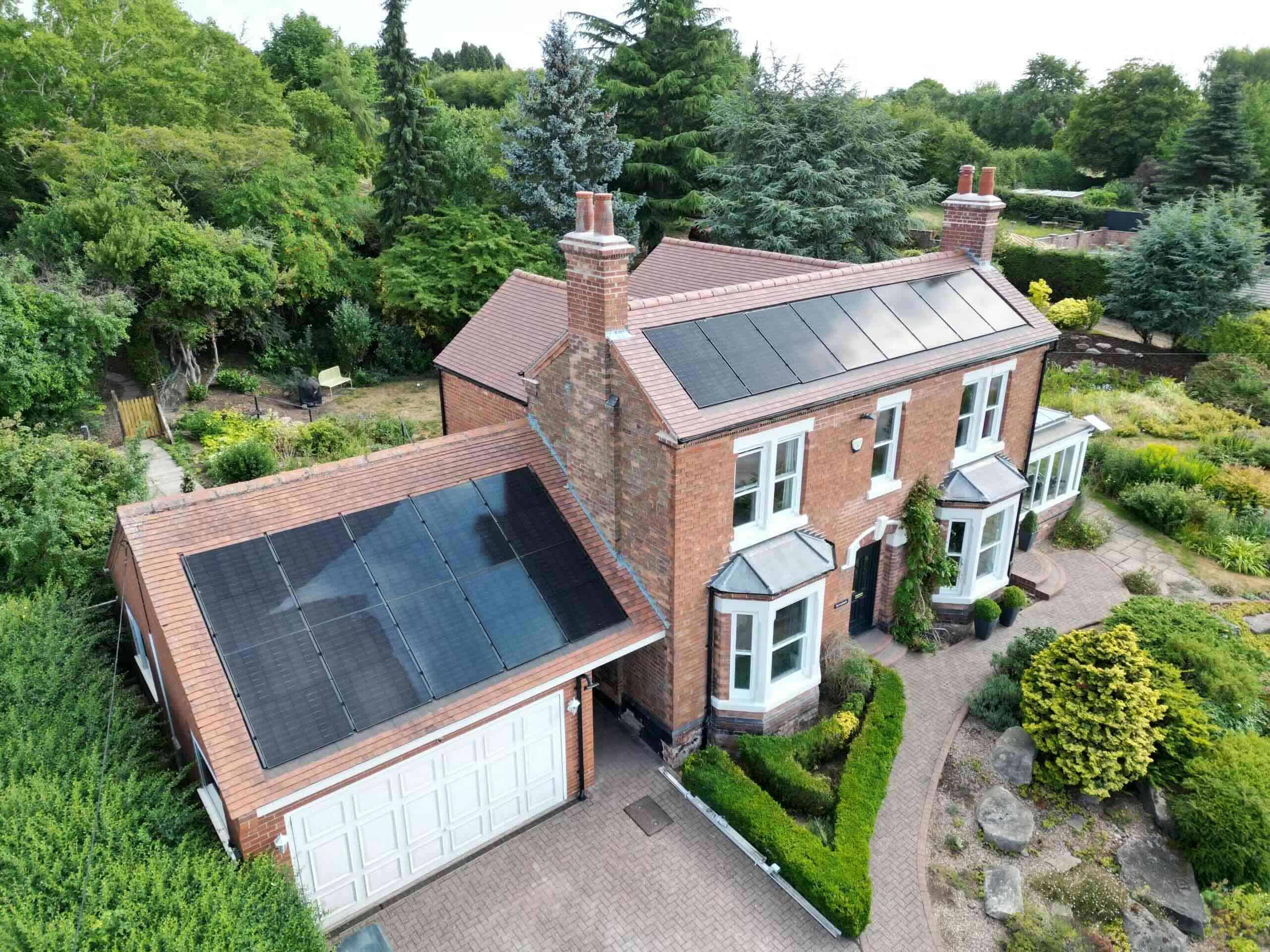
On-roof mounting fixes rails above the existing tiles and clamps panels to the rails, leaving a ventilation gap of roughly 10 to 15cm beneath the array. The roof covering stays complete underneath. In-roof mounting removes the tiles where the array will sit and fits panels into weatherproof trays that become part of the roof covering itself, finishing flush with the surrounding tiles like a large rooflight.
Same panels, same electrics, same generation physics. The mounting choice changes cost, looks, temperature behaviour and what lives underneath, which is the whole comparison.
The comparison, side by side
| On-roof | In-roof | |
|---|---|---|
| Cost | The benchmark | A modest premium for trays and flashing, smallest during a re-roof |
| Looks | Tidy, sits proud of the roof | Flush and integrated, the premium look |
| Panel temperature | Cooler: the air gap ventilates, helping output on hot days | Runs slightly warmer with less airflow, a small output cost |
| Pigeons | The gap can attract nesting; proofing solves it | No gap, no pigeons, nothing to proof |
| Roof condition needed | Any sound roof, fitted in a day or two | Best when tiles are coming up anyway: new build or re-roof |
| Weight on the roof | Panels plus rails on top of tiles | Often lighter overall: panels replace the tiles they displace |
The case for on-roof
✓ Why it is the default
- Cheapest route to generatingNo roof covering work, quickest install, best payback arithmetic.
- Fits the roof you already haveAny sound covering takes it without disturbance.
- Runs coolerThe ventilation gap earns a little extra output on warm days, per our hot weather guide.
- Easy maintenance accessPanels unclamp individually if one ever needs attention.
The case for in-roof
✓ Where flush wins
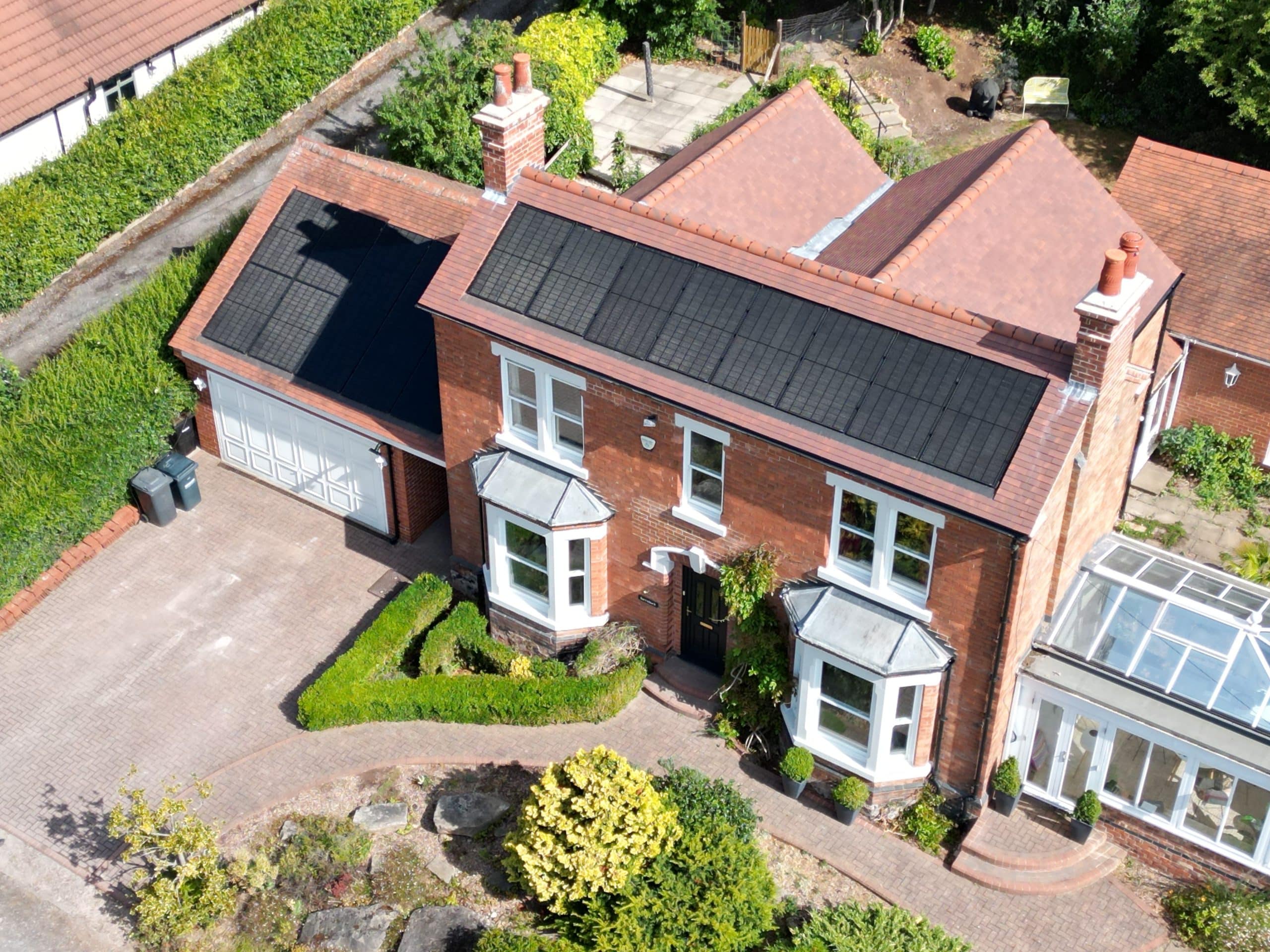
- The looksThe array in the photo reads as part of the architecture, which is why in-roof dominates premium builds and new-build solar.
- No pigeon hotelThe nesting gap simply does not exist.
- Planning-sensitive settingsThe lower profile helps in conservation areas and softens objections generally.
- Re-roof economicsWhen tiles are off anyway, the premium shrinks: the trays replace covering you were paying for regardless.
How we call it at survey
The honest decision tree is short. Building new or re-roofing soon: in-roof, almost always, because the premium is at its smallest and the result at its best. Existing roof with years of life left: on-roof, unless the flush look matters enough to you to pay for it, which is a taste judgement we price rather than argue with. Pigeon country: worth weighing in-roof or budgeting proofing with on-roof. And on shallow-pitch or complex roofs, tray systems have their own constraints the survey confirms either way. Both routes use the same Tier 1 panels with the same 25-year warranties, so nothing about the electricity cares which you choose; the full mounting menu, including flat-roof and ground options, is in our mounting systems guide.
Want both options priced on your actual roof?
A feasibility assessment gives you the on-roof and in-roof numbers side by side, with the honest recommendation for your roof's condition and timing. Over 1,000 installs across the East Midlands since 2011. Call 0115 773 7575, 8am to 8pm, Monday to Friday.
Book a feasibility assessmentFrequently asked questions
What is the difference between in-roof and on-roof solar panels?
On-roof panels mount on rails above the existing tiles with a ventilation gap beneath; in-roof panels sit in weatherproof trays that replace the tiles, finishing flush with the roof. Same panels and electrics either way; the choice affects cost, looks, temperature and the pigeon question.
Is in-roof solar more expensive?
Modestly, for the trays and flashing work on an existing roof. The premium shrinks sharply during a re-roof or new build, when the covering is off anyway and the trays replace tiles you were buying regardless, which is exactly when we most often recommend it.
Do in-roof panels generate less electricity?
Slightly, on warm days: less airflow beneath means warmer cells, and warmth trims output by the panel's temperature coefficient. Across a British year the difference is small, and for many owners the looks and the absence of nesting pigeons are worth more than the few kWh.
Are in-roof solar panels watertight?
Yes, properly fitted: the tray systems are engineered roof coverings with flashing kits, doing the same weatherproofing job as the tiles they replace. Fitting quality matters exactly as it does for any roof work, which is an installer-choice question rather than a technology worry.
Can birds nest under in-roof solar panels?
No. The nesting gap that pigeons exploit under on-roof arrays does not exist with in-roof mounting, which is one of its quiet selling points in pigeon-heavy areas. On-roof arrays in the same areas are best fitted with mesh proofing at install time.
Which is better for a new build or re-roof?
In-roof, almost always: the premium is smallest when the covering is off, the finished look is the best available, and new-build regulations are making integrated solar the norm. If your roof has years of life left, on-roof remains the value answer today.
Related reading
- Solar panel mounting systems explained
- Solar panels on new builds: the 2027 rules
- Bird proofing solar panels: costs and options
- Solar tiles vs solar panels
- Solar panel and battery package prices
Both done properly, either way
We are an MCS certified installer (NIC200223) based in Bulwell, Nottingham, fitting on-roof and in-roof systems across the East Midlands. Call 0115 773 7575, 8am to 8pm, Monday to Friday.
Get in touch