
Solar Panels on New Builds: What the Future Homes Standard Changes
From 24 March 2027, the Future Homes Standard makes solar panels the norm on new homes in England, alongside low carbon heating. The headline rule: solar PV equivalent to around 40% of the home's ground floor area, with limited exceptions such as heavily shaded roofs. If you are buying, building or developing, the details below matter now.
In This Guide
The rules, in plain English
The Future Homes Standard is the updated set of building regulations for new dwellings in England, and it finally answers a question buyers have asked for years: why did my brand new house come without solar panels? From its in-force date, it effectively will not.
The exceptions are narrow and sensible: heavily shaded roofs, some high rise buildings, and cases where the roof genuinely cannot host the required array. For the typical estate house, solar stops being an optional extra and becomes part of the building fabric, the way double glazing did a generation ago.
Who it applies to and when
| Situation | What applies |
|---|---|
| New dwellings approved after the standard takes effect | Full Future Homes Standard: solar plus low carbon heating |
| Sites with planning lodged under the old regulations | Transition window to 24 March 2028 to start under the old rules |
| Existing homes, extensions, conversions | Not covered by the new-build solar requirement |
| Scotland and Wales | Separate building regulations on their own timetables |
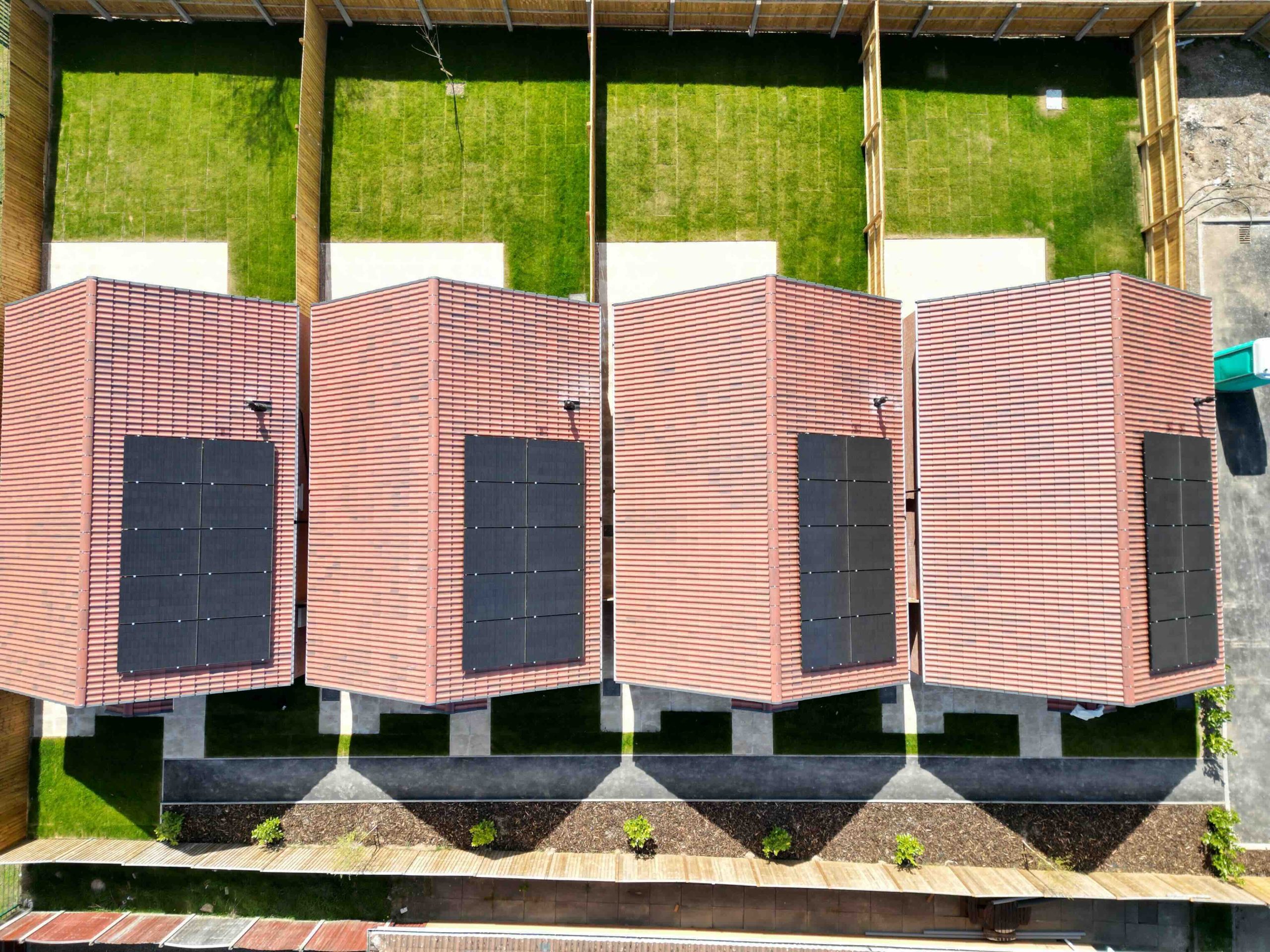
The transition explains what you will see on the ground through 2027 and 2028: two estates side by side, one with panels on every roof and one without, depending on when their permissions landed.
Buying a new build: what to check
Questions for the sales office
- What size is the system?Ask for kWp, not panel count. A minimal compliance array and a properly sized system look similar from the street.
- Is there a battery, or battery readiness?A hybrid inverter fitted on day one makes adding storage later cheap and clean.
- Who certified it and where is the paperwork?MCS certificate, electrical certificates and warranties should be in your completion pack, because export payments need them.
- Which export tariff can I join?The developer fits the kit; signing up for payment is yours to do on day one.
Upgrading a developer-spec system
Compliance and optimisation are different jobs. A developer fits what the regulations require; whether that array matches your household's actual usage is another question, and the gap is usually storage. A new build with panels but no battery exports its midday surplus cheaply and buys its evenings at full price, exactly the arithmetic in our battery-or-not guide. The good news: adding a battery to a new system is the easiest retrofit there is, especially where a hybrid inverter is already on the wall, and our retrofit guide walks through the routes. Some owners also add panels where the developer array under-uses the roof, covered in the sizing logic of how many panels you need.
Self-builders and small developers
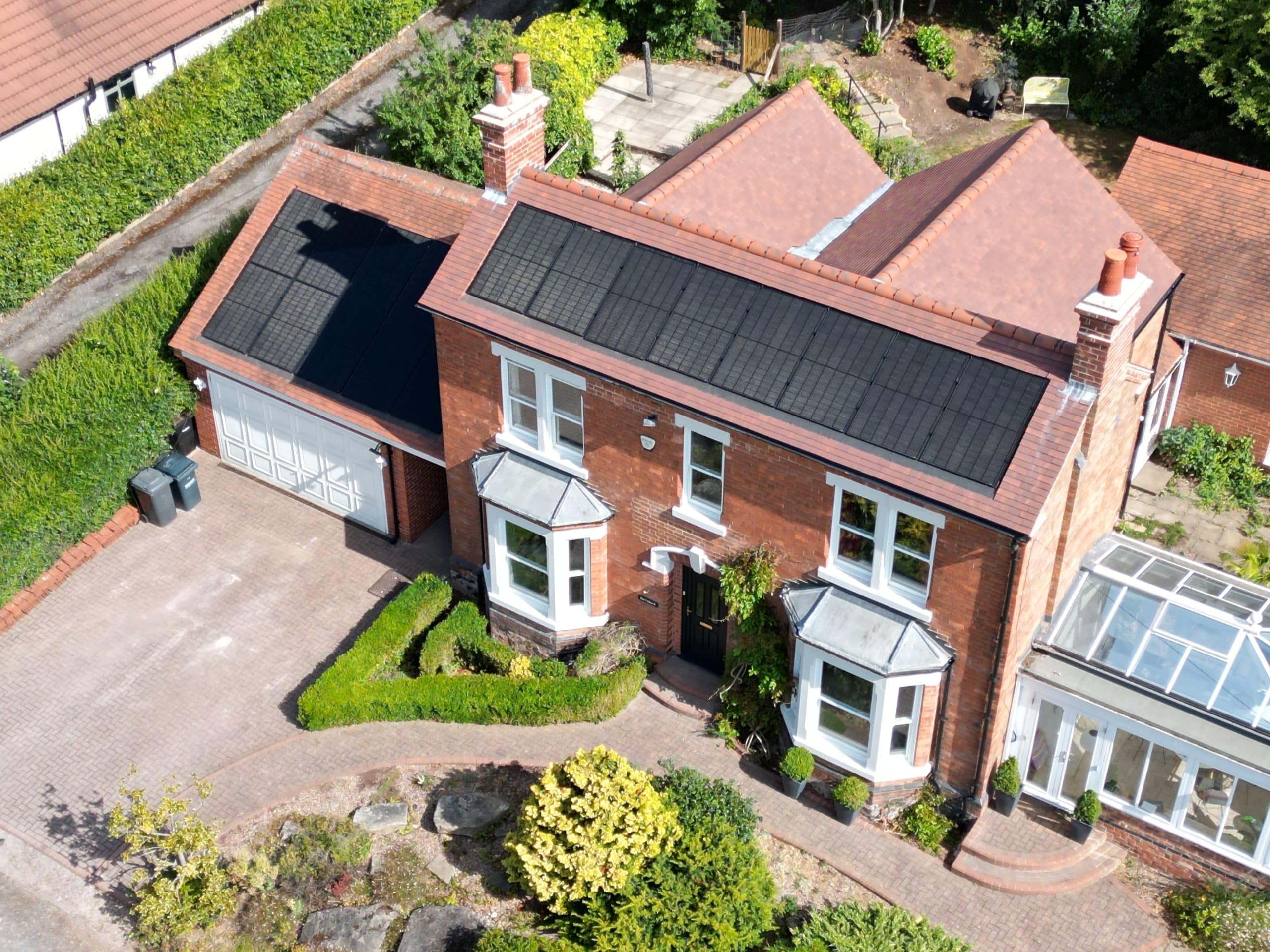
If you are building under the new standard, solar moves from afterthought to design input, and that is an opportunity rather than a burden. Designed in from the drawings, an in-roof array like the one pictured costs less than retrofitting, looks like part of the architecture, and removes the pigeon-gap problem entirely. The decisions worth making early: roof orientation and pitch while the plans can still move, in-roof versus on-roof mounting, cable routes and plant space for the inverter and a battery, and whether to exceed the minimum while the scaffold is up. We work with property developers on exactly this, from single plots to small sites.
Already own a new build without solar?
Homes completed before the standard bites are untouched by it, which leaves a cohort of nearly-new houses with excellent roofs and no panels. If that is you, you are arguably the ideal retrofit customer: modern trussed roof, clean electrics, decades ahead in the house. The standard install economics apply in full, including 0% VAT until 31 March 2027, and a modern roof usually makes for the cheapest kind of installation we do.
New build, new panels, or both?
Whether you are checking a developer's spec, upgrading a compliance-level system, or designing solar into a build, we will give you the straight answer. Over 1,000 installs across the East Midlands since 2011. Call 0115 773 7575, 8am to 8pm, 7 days.
Book a feasibility assessmentFrequently asked questions
Do new builds have to have solar panels?
From 24 March 2027 in England, yes in almost all cases: the Future Homes Standard requires new homes to include solar PV equivalent to around 40% of ground floor area, with narrow exceptions such as heavily shaded roofs and some high rise buildings. Sites permitted under the old rules have a transition window to March 2028.
Why does my brand new house not have solar panels?
Because it was permitted and built under the previous regulations, which never required them. Homes completing through 2027 and 2028 can legitimately fall either side of the line depending on when their site's planning landed. The upside: a nearly-new roof is about the easiest and cheapest retrofit a solar installer ever sees.
Will new build solar systems include a battery?
The standard's headline requirement is the solar generation itself; storage is not the mandated part. Some developers will fit or offer batteries, many will not. Ask whether the inverter is a hybrid model, because that single choice decides whether adding a battery later is a bolt-on or a bigger job.
Can I ask the developer for a bigger solar system?
Often, at the options stage: developers sell upgrades the way they sell kitchen choices, and extra panels while the roof is open cost less than the same panels retrofitted. If the developer will not budge, an independent installer can extend the system after completion, subject to the roof and grid paperwork.
Do I get paid for the electricity my new build exports?
Yes, but not automatically. Export payments need you to sign up to a Smart Export Guarantee tariff with a supplier, using the MCS certificate from your completion pack. Do it in week one, because until then your surplus exports unpaid. Our SEG comparison shows who pays what.
Does the Future Homes Standard apply to extensions or existing homes?
No. It governs new dwellings in England. Existing homes, extensions and conversions follow their own building regulations without the solar requirement, and any solar you add to an existing home remains a voluntary upgrade, currently helped by 0% VAT until 31 March 2027.
Related reading
- How much do solar panels cost in the UK in 2026?
- Adding a battery to an existing solar system
- How many solar panels do I need?
- Best SEG rates compared for 2026
- Solar panels and planning permission
Solar designed in, not bolted on
We are an MCS certified installer (NIC200223) based in Bulwell, Nottingham, working with homeowners, self-builders and developers across the East Midlands. Call 0115 773 7575, 8am to 8pm, 7 days.
Get in touch