Solar Panels for Poultry Farms: The Honest Case
Poultry units are among the best solar matches in agriculture, and the reason is the load profile: ventilation fans, lighting, feed lines, cooling and heat-lamp systems run all day, every day, through exactly the hours the panels generate, so the electricity gets used on site at full value rather than exported for pennies. Add the big, clean steel shed roofs poultry buildings sit under, and the pieces fit: a properly sized array can carve a large slice off one of the sector's heaviest input costs, with the same circa 4 year payback logic as our other high-daytime-load commercial work.
In This Guide
Why poultry loads suit solar
Solar pays best where the electricity gets used the moment it is made, and few businesses in any sector consume as relentlessly through daylight hours as a poultry unit. Ventilation runs continuously and climbs exactly when the sun does, hot bright days are peak fan days, which is a rare, genuinely elegant match between generation and demand. Lighting programmes, feed and egg-collection lines, cooling in summer and brooding heat in the early crop stages stack further load on top. Where a quiet warehouse might use a third of its solar generation directly, a busy poultry unit can absorb most of its array's output on site, and self-consumed kilowatt-hours offset full-price electricity, the arithmetic that drives every strong commercial payback.
The shed roof question
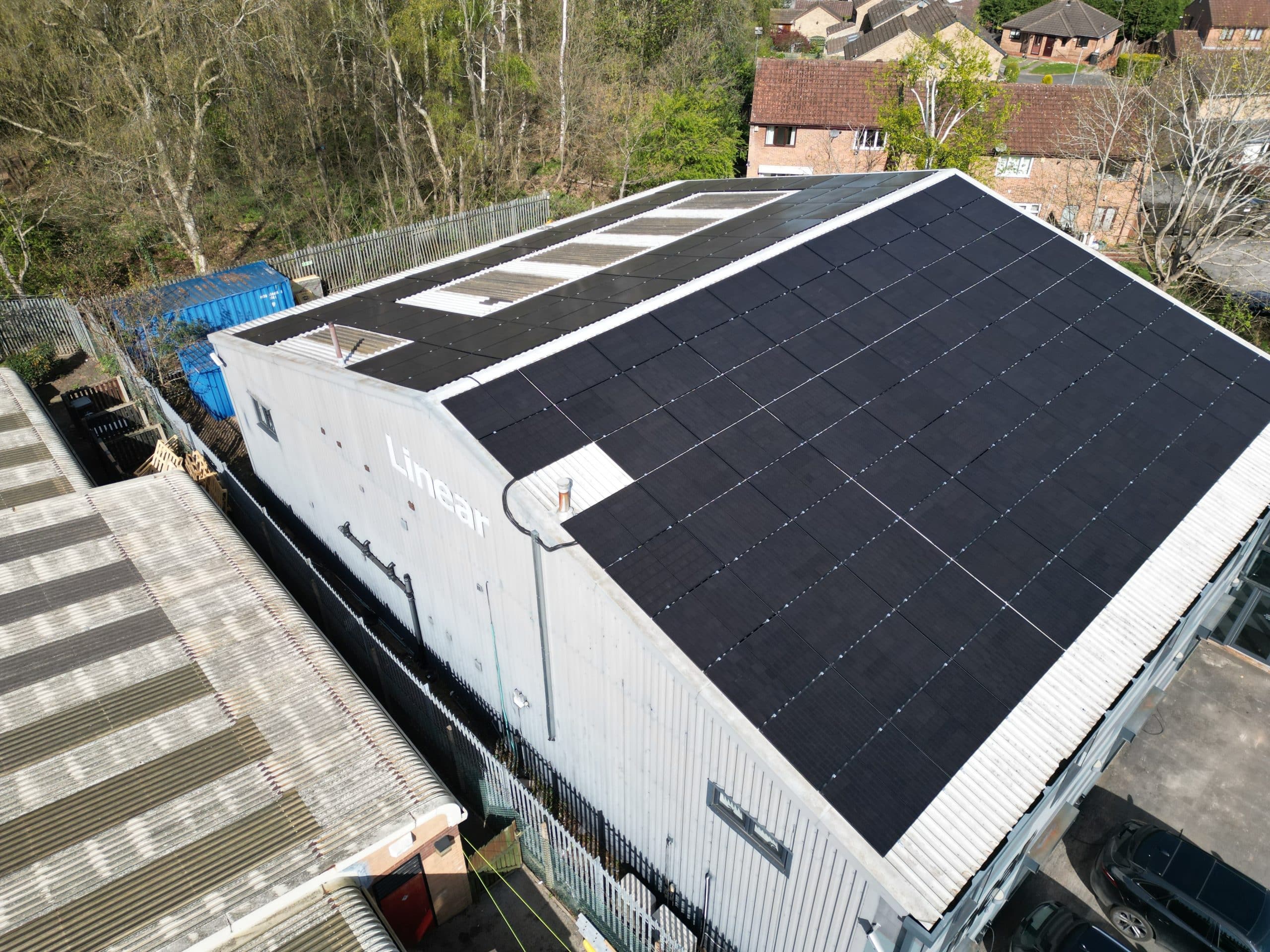
Modern poultry sheds are long steel-frame buildings under profiled metal sheet, structurally the same happy story as our barn install guide: direct fixing through the sheet into the purlins, no scaffolding-heavy tile work, and roof planes big enough for serious capacity, like the array pictured. The poultry-specific checks:
- Purlin capacity and roof ageChecked at survey as on any farm building; sheds built to tight budgets get the structural question asked properly.
- Ridge vents and extraction fansThe array is laid out around the ventilation hardware, not over it; airflow is the flock's lifeline and the design respects it absolutely.
- Corrosive atmospheresAmmonia-rich shed environments demand appropriately rated fixings and cable specifications, a detail generalist installers miss and poultry owners pay for a decade later.
Designing for a poultry unit
The design conversation on a poultry site starts with the meter data, because the load profile is unusually knowable: crop cycles, lighting programmes and ventilation curves make consumption predictable in a way most businesses cannot match. The array gets sized against that daytime baseload so generation displaces bought power rather than spilling to export; the G99 application goes in early, since sheds of this scale exceed fast-track thresholds and rural network capacity varies; and where the site runs heavy overnight loads too, brooding heat, winter ventilation, commercial battery storage is worth modelling against a two-rate supply. Multi-shed sites usually phase the work: first shed proves the numbers, the rest follow at the pace the returns justify.
The money side
A poultry array is a commercial purchase and collects the full commercial stack: capital allowances against the farming business's profits, the business rates exemption to 2035 where rates apply, and finance routes from cash to asset lending if working capital is better deployed in the flock. Sector grant schemes come and go by round, our farm funding guide tracks them, but the core case stands without them wherever the daytime load is real. Energy is one of poultry's heaviest and least controllable input costs; solar converts a slice of it into a fixed, owned asset with a 25-year life.
Practicalities around the birds
- Install scheduling around crop cyclesRoof work happens between crops or with strict noise-and-disturbance discipline during them; the flock's welfare and your assurance-scheme obligations set the timetable, and an agricultural installer plans around depopulation dates as standard.
- BiosecuritySite rules apply to installation crews like anyone else: designated access, boot dips, vehicle protocols. Say so at survey and it is built into the job plan.
- No interruption to critical systemsConnection work is sequenced so ventilation and alarms never lose supply with birds in the shed; changeover happens in planned windows with the generator or crop timing as backstop.
- Monitoring earns its keepA unit whose fans depend on electricity wants generation and supply visible in one place; modern inverter monitoring does it from the phone in the pickup.
Poultry shed roofs earning nothing?
Free farm design and quote: load analysis from your meter data, structural and ventilation-aware design, G99 checked early, one all-in price plus VAT. Call 0115 773 7575, 8am to 8pm, Monday to Friday.
Get EstimateFrequently asked questions
Are solar panels worth it for a poultry farm?
Among the strongest cases in agriculture: ventilation, lighting, feed lines and cooling run through daylight hours, so a well-sized array is consumed on site at full electricity value, driving commercial-grade paybacks. The load profile that makes summer expensive is the same one that makes solar pay.
Can poultry shed roofs take solar panels?
Steel-frame sheds under profiled metal sheet generally can, with the purlin capacity checked at survey and the array laid out around ridge vents and extraction fans rather than over them. Ammonia-resistant fixings and cabling matter in poultry environments and belong in the specification from day one.
Will installation disturb the birds?
It is planned not to: roof work is scheduled between crops where possible, biosecurity protocols apply to crews as to any visitor, and electrical changeover is sequenced so ventilation and alarm systems never lose supply with birds in the shed. The crop calendar sets the timetable.
Should a poultry unit add battery storage?
Worth modelling where overnight loads are heavy, brooding, winter ventilation, since a battery can carry stored solar or cheap-rate electricity into the dark hours. Many units do well with generation alone because the daytime match is already so strong; the meter data decides it.
What grants exist for poultry farm solar?
Schemes come and go by round rather than standing still, so we check the current position at quote time rather than promising yesterday's programme. The durable supports are structural: capital allowances, the business rates exemption to 2035, and payback economics that stand without a grant wherever daytime load is real.
Related reading
- Agricultural solar: the full guide
- Solar on steel-frame barns
- Commercial solar payback: real numbers
- Commercial solar battery storage
- SFI and farm solar funding
Agricultural solar that respects the flock
We are Spectrum Energy Systems, MCS certified (NIC200223), installing farm solar across the East Midlands since 2011, planned around crop cycles and biosecurity as standard. Call 0115 773 7575, 8am to 8pm, Monday to Friday.
Get in touch