
What the January 2027 Energy Price Increase Forecast Means for Solar
The next energy price increase is forecast for 1 January 2027, when the energy price cap is expected to rise by 26%, from £1,723 to £2,166 a year for a typical home. That is the final forecast from Cornwall Insight, the energy research firm whose price cap predictions the BBC and the Guardian report, and Ofgem is due to confirm the real figure by 25 November 2026. About two thirds of the rise is gas. Solar panels and a battery work on the electricity side, where the unit rate is forecast to go from 26.32p to 32.54p.
That would make each unit of your own solar worth about 6p more, and the more electricity your home uses, the more that adds up to. The 0% VAT on having solar or a battery installed at home ends on 31 March 2027.
In this guide
What is forecast to go up, and by how much
Ofgem sets the price cap every three months. It limits the unit rates and daily standing charges that suppliers can charge on standard variable tariffs. It does not limit your total bill, which depends on how much you use. The headline annual figure is for a home that uses 2,500 kWh of electricity and 9,500 kWh of gas a year and pays by Direct Debit.
| Now: 1 October to 31 December 2026 (Ofgem) | Forecast: 1 January to 31 March 2027 (Cornwall Insight, energy analysts) | |
|---|---|---|
| Typical annual bill | £1,723 | £2,166 |
| Electricity unit rate | 26.32p per kWh | 32.54p per kWh |
| Electricity standing charge | 54.83p a day | 56p a day |
| Gas unit rate | 7.97p per kWh | 10.90p per kWh |
| Gas standing charge | 29.68p a day | 31p a day |
Direct Debit, averaged across England, Scotland and Wales. Electricity carries no VAT at present and gas includes 5% VAT. Sources: Ofgem and Cornwall Insight's final forecast of 18 November 2026.
Split that typical bill by fuel and it looks different. On today's rates the electricity half comes to about £858 a year and the gas half to about £865. In Cornwall Insight's forecast, electricity is £1,017 and gas is £1,149. So of the £443 rise, roughly £160 is electricity and roughly £280 is gas. (The split of today's figure is our own arithmetic from Ofgem's rates. The forecast split is Cornwall Insight's.) The capped unit rate for every region is in our guide to electricity prices per kWh.
Other sources point the same way. The BBC and the Guardian both reported the £2,166 forecast on 18 November, Which? carries the same 26% prediction, and MoneySavingExpert's table of supplier forecasts from EDF, British Gas and E.ON Next averages £2,185. It is still a forecast, and the House of Commons Library's September briefing makes the general point that cap forecasts are uncertain.
Why energy prices are expected to go up
Ofgem put October's 4% rise down to higher wholesale gas prices caused by the conflict in the Middle East. Cornwall Insight gives the same cause for January: gas exports have been disrupted and European gas storage went into winter at record lows. Gas pushes electricity up as well. The government's Budget explainer makes the link itself: its long-term aim is for expensive gas to set the price of electricity less often.
This is the second run of rising prices in five years. According to the House of Commons Library, prices peaked in the energy crisis of 2022 and 2023, fell back but stayed well above their earlier level, and started rising again after the conflict in the Middle East began in February 2026. Its September briefing put gas unit prices around 140% above their mid-2021 level and electricity around 40% above. Where prices go after March is anybody's guess. Cornwall Insight's early view for April is a small fall, the supplier forecasts on MoneySavingExpert sit close to January's level, and MoneySavingExpert labels anything that far ahead "crystal-ball gazing".
Where solar helps
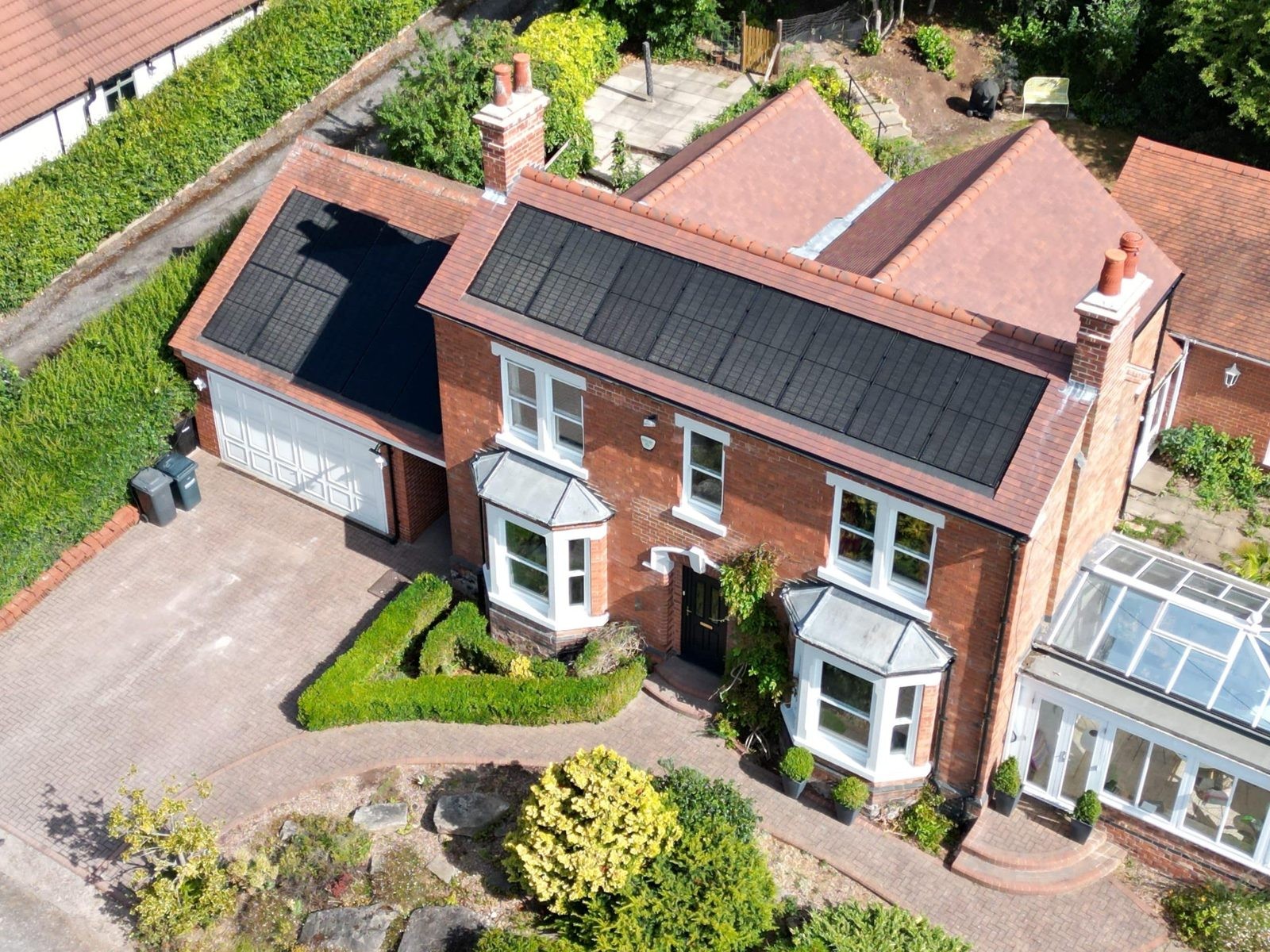
Solar panels cut the number of electricity units you buy from the grid. So the forecast rise matters to a solar owner in one specific way: every unit of your own power that you use at home replaces a unit that is forecast to cost more.
How much that is worth depends on how many units your home can use from its own roof, which is why two neighbours can get very different answers.
Four ways a system works against a higher unit rate
- Every unit you use from your own roof is one you do not buy. That unit costs 26.32p at today's cap and 32.54p in the January forecast.
- A battery keeps daytime solar for the evening, so more of what you generate replaces grid power.
- On a tariff with a cheap overnight rate, a battery can charge at night and run the house the next day, winter included.
- If you have a hot water cylinder, a solar diverter can send spare power to the immersion heater, so the boiler has less water to heat.
The table shows what the solar you use at home is worth in a year at each unit rate.
| Your own solar used at home each year | Worth at 26.32p (cap now) | Worth at 32.54p (January forecast) | Difference |
|---|---|---|---|
| 2,000 kWh | £526.40 | £650.80 | £124.40 |
| 3,000 kWh | £789.60 | £976.20 | £186.60 |
| 4,000 kWh | £1,052.80 | £1,301.60 | £248.80 |
Our arithmetic: units multiplied by the unit rate. The real design below uses about 3,760 kWh of its own solar a year.
The last column is the extra the same solar would be worth: between about £120 and £250 a year if the January rate lasted a full year. The cap is reset every three months, so treat it as a guide. For how panels cut a bill in the first place, see our guide to how solar panels lower your electricity bills.
A real design at three unit rates
This is a design and quote we produced in September 2026. Two people work from home and the house uses about 4,850 kWh of electricity a year, nearly twice Ofgem's typical figure. We designed 13 panels (6.37 kWp) on one south-east roof with a 16 kWh battery. The simulation showed the roof generating 5,969 kWh a year, with 3,758 kWh of that used in the home. That is 77% of the household's electricity coming from its own roof.
| Same design, same roof | 23.90p (the rate in the proposal) | 26.32p (cap now) | 32.54p (January forecast) |
|---|---|---|---|
| Value of the solar used at home | about £875 | about £965 | about £1,190 |
| Export income at 12p a unit | about £260 | about £260 | about £260 |
| First-year total | about £1,135 | about £1,225 | about £1,450 |
| Payback on the price we quoted | circa 10 years | circa 9 years | circa 8 years |
The first column is what the proposal showed, with panel degradation applied. The other two are our arithmetic on the same design with only the unit rate changed. Illustrative, not a guarantee. We assume 12p a unit for export in proposals, and what you are paid depends on the export tariff you choose.
Across those three unit rates the payback on this roof moves by about two years. Read the third column as a what-if, though, because it applies a forecast for one quarter to a whole year.
The unit rate on your own bill is the number that matters, and it varies more than the headline suggests. The 26.32p figure is the average across Great Britain, and the cap is set region by region. On more than 50 home quotes we produced between September and mid-November where the customer gave us a single unit rate, it ran from about 18p to 33p, with about 25p in the middle. That is why we ask for your rate and your yearly usage before we design anything.
For an outside view, the New Economics Foundation, a charitable think tank, estimated in May 2026 that a 2,700 kWh home with a south-facing 4 kWp system and a 5 kWh battery on a smart tariff could save £823 a year, measured against the July to September cap.
For the wider question, see our article on whether solar panels are worth it.
See the figures for your own roof
Tell us your address and your yearly electricity use. We design the system on your roof remotely and send one all-in price, subject to site survey, with the figures behind it. Design and quote takes 1 to 3 days.
Get Estimate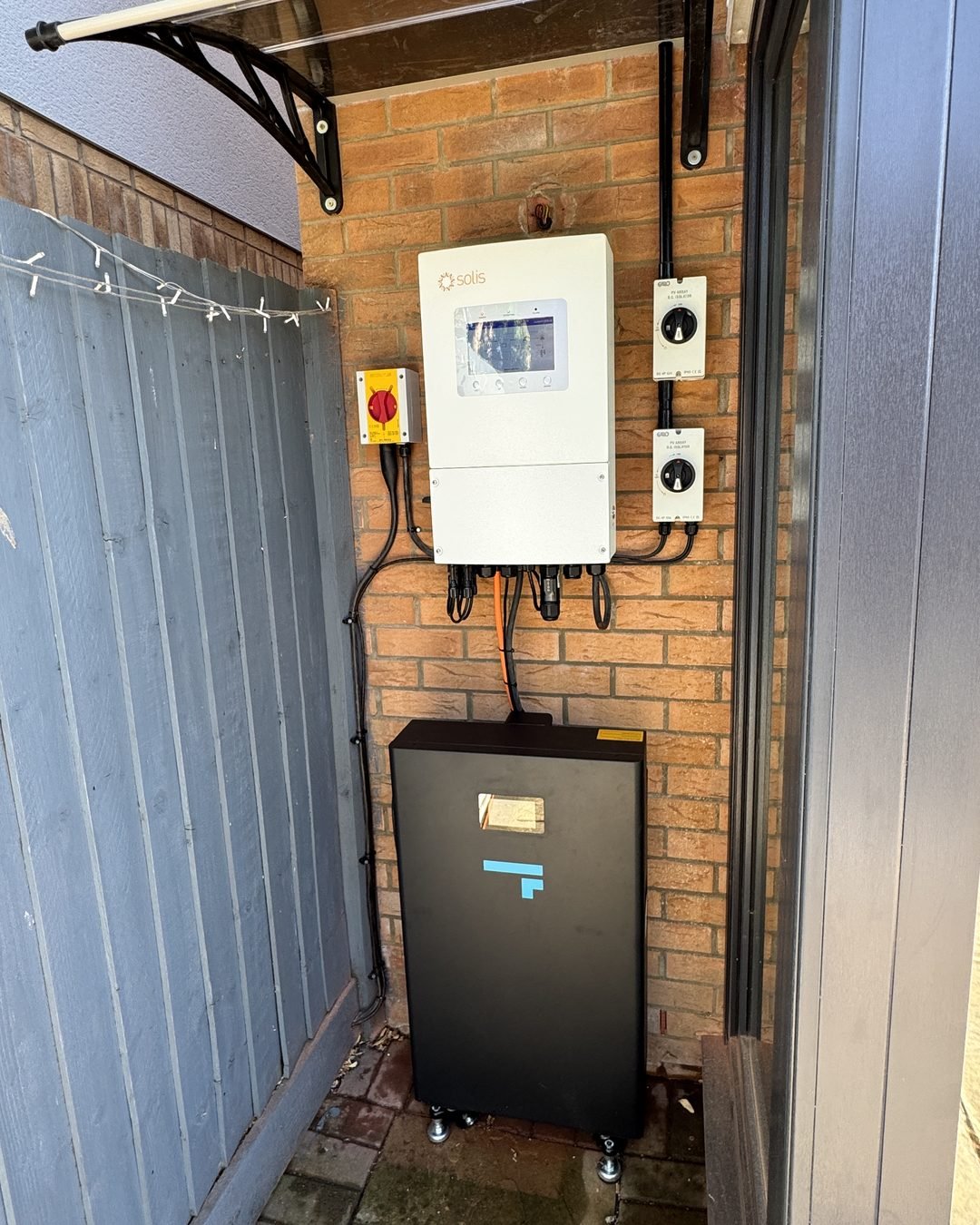
How a battery helps in winter
Panels generate less in the darker months, so in winter the battery does more of the work. Our article on whether solar panels work in winter has the detail.
On a tariff with a cheap overnight rate, the battery fills up at night at the low rate and runs the house through the day, so less of your winter electricity is bought at the full day rate. We have written up how battery time-shifting works and the kind of two-rate tariff it needs. The photo shows the kit we fit as standard for it: a Solis hybrid inverter with a Fogstar battery.
The help already announced
Three pieces of government help apply this winter and a fourth is planned for later. All four are covered in the Budget explainer on GOV.UK.
- There has been no VAT on household electricity since 1 October 2026, and the Budget on 28 October extended that to the end of June 2027. The government puts the saving at about £45 a year on average. It is already included in the forecast.
- A one-off £100 Household Energy Payment will go to homes in council tax bands A to D in England from January 2027. It is paid through the council tax system: GOV.UK says that if you pay by Direct Debit you do not need to do anything, and otherwise your council will invite you to apply.
- The £150 Warm Home Discount continues for eligible households on means-tested benefits.
- Planned for later: gas standing charges, about £108 a year for a typical home, are to be abolished. The government has asked Ofgem to do it by the end of 2027 or as soon as possible after, with the cost moving onto the gas unit rate.
Cornwall Insight's view of the £100 payment and the VAT cut is that they only take the edge off. The £100 payment sits outside the cap, so it does not change the unit rate you pay for electricity in January, and that rate is what solar works against.
Two VAT cuts that are easy to mix up
Two separate VAT reliefs are in the news, and they end on different dates.
The first is VAT on your electricity bill. It has been 0% since 1 October 2026 and the Budget extended it to 30 June 2027.
The second is VAT on having solar panels or a battery installed at your home. That has been 0% since April 2022 for panels, and batteries fitted on their own or added to an existing system have been included since 1 February 2024. HMRC's VAT Notice 708/6 says the zero rate runs to 31 March 2027, and the Budget 2026 tax documents confirm it will end then as planned.
The rate is set by when the job is done and paid for, not when it is quoted, so the install would need to be completed by 31 March 2027.
The Guardian reported on 9 November that industry bodies, Solar Energy UK among them, are pressing the government to reverse the change and expect a rush for installers before April. The published position had not changed by 19 November, so we plan on 31 March. Our guide to 0% VAT on solar panels covers what qualifies.
If you want it fitted before 31 March
These are the steps between an enquiry and a working system, with the times we give customers.
1. Design and quote
We design the system on your roof remotely, from your address and your yearly usage, and send one all-in price, subject to site survey. That takes 1 to 3 days.
2. Site survey
Once you are happy with the proposal we survey the property and confirm the design.
3. Grid application
Adding a battery means an application to the network operator, which we handle. Where the inverter is bigger than 3.68kW the operator has to approve it before we install. It can be a fortnight, it can be 6 weeks, and the timing is theirs. Where the operator charges its own application fee, £153 plus VAT, that is on top of our price.
4. Installation
The installation itself takes 1 to 2 days, 3 to 5 days in all with scaffolding.
Work back from 31 March through those steps and the grid application is the one to allow for. That means starting a few months ahead, and we will tell you at the quote stage which route your system needs. There is more on the two routes in G98 and G99 explained.
What to do this week
Four checks that cost nothing
- Find your unit rate and your yearly kWh on a bill. Everything above depends on those two numbers.
- If you are on a standard variable tariff, compare fixed deals. The Guardian, citing Uswitch, reported fixes up to £407 below the forecast cap on 18 November.
- Check your council tax band for the £100 payment, and whether you qualify for the Warm Home Discount.
- Get a design done so you can see real figures for your own roof and usage.
FAQs
When will the January 2027 energy price cap be confirmed?
Ofgem is due to announce the cap for 1 January to 31 March 2027 by 25 November 2026. Until then the £2,166 figure is Cornwall Insight's forecast, published on 18 November. The next announcements after that are due by 23 February 2027 for the April cap and by 26 May 2027 for the July cap.
How much will energy bills go up in January 2027?
Cornwall Insight forecasts a 26% rise, taking the cap from £1,723 to £2,166 a year for a typical home using 2,500 kWh of electricity and 9,500 kWh of gas. The forecast electricity unit rate is 32.54p per kWh, up from 26.32p, and the gas unit rate is 10.90p, up from 7.97p.
Do solar panels protect you from energy price rises?
Yes, for the electricity you generate and use yourself. Each unit of your own solar is one you do not buy, so its value rises with the unit rate, and a battery lets you use more of it. Solar works on the electricity side of the bill, so the more electricity your home uses, the more protection it gives.
How does a solar and battery system help in winter?
Panels generate less in the darker months, so in winter the battery does more of the work. On a tariff with a cheap overnight rate it can charge at night and run the house by day, so less of your electricity is bought at the full day rate. From spring the panels take over.
When does 0% VAT on solar panels and batteries end?
HMRC's VAT Notice 708/6 says the zero rate for installing solar panels and batteries in homes runs to 31 March 2027. For our jobs the rate is set by when the work is done and paid for, not when it is quoted, so the install would need to be completed by then, which means starting a few months ahead.
Is the VAT cut on electricity bills the same as the VAT cut on solar?
No. VAT on household electricity bills has been 0% since 1 October 2026, and the Budget extended that to 30 June 2027. VAT on installing solar panels and batteries at home is a separate relief with its own end date, 31 March 2027. One is about what you pay your supplier, the other about what you pay an installer.
How much more would my own solar be worth at the January rate?
At today's capped average of 26.32p, 3,000 kWh of your own solar used at home is worth £789.60 a year. At the forecast January rate of 32.54p it would be worth £976.20, which is £186.60 more. The January figure is a forecast until Ofgem announces, and the cap is reset every three months.
Will energy prices come down again in 2027?
Nobody knows. Cornwall Insight's early view for April 2027 is a small fall, while the supplier forecasts collected by MoneySavingExpert sit close to January's level for April and lower for July. The cap is reset every three months, and MoneySavingExpert treats forecasts that far ahead as guesswork.
Sources
Every external figure in this article comes from one of these pages, all read on 18 and 19 November 2026.
- Ofgem: Changes to energy price cap between 1 October and 31 December 2026 (26 August 2026)
- Ofgem: Energy price cap unit rates and standing charges
- Cornwall Insight: Energy Bills Set for Steep Rise in January (18 November 2026)
- GOV.UK: What the Autumn Budget 2026 means for your energy bills (28 October 2026)
- GOV.UK: Chancellor abolishes standing charges on gas bills (28 October 2026)
- HMRC: Budget 2026, Overview of tax legislation and rates, sections 2.20 and 2.22 (updated 5 November 2026)
- HMRC: Energy-saving materials and heating equipment (VAT Notice 708/6)
- House of Commons Library: Domestic energy prices, in short (21 September 2026)
- BBC News: Typical energy bill forecast to go up by £443 a year from January (18 November 2026)
- The Guardian: Energy bills in Great Britain forecast to rise by 26% (18 November 2026)
- The Guardian: Energy price cap rise, how to switch providers (18 November 2026)
- The Guardian: UK households face rush to find green energy installer to beat April VAT hike (9 November 2026)
- Which?: What is the energy price cap?
- MoneySavingExpert: How will energy prices change?
- New Economics Foundation: Households could save £823 a year (27 May 2026)
The worked design and the range of unit rates come from our own quotes and simulations between September and November 2026.
Related reading
- Should you wait to buy solar panels?
- Battery storage without solar panels
- Why is my electric bill so high with solar panels?
- Octopus Flux explained
For the systems themselves, see home solar panel installation and home battery storage.
Spectrum Energy Systems has been fitting solar since 2011 from our base in Bulwell, Nottingham, with our own installation crew. We work across Nottinghamshire, Derbyshire, Leicestershire and Lincolnshire, and further afield.
Get the numbers for your own home
Send us your address and yearly usage and we will design a system on your roof and send one all-in price, subject to site survey, in 1 to 3 days. NICEIC Reg. 3182878 · MCS #NIC200223.
Get Estimate