
Ground-Mounted Solar on Farmland: Rules and Returns
Ground-mounted solar makes sense on a farm when the roofs have run out, or were never suitable, and there is low-grade land near the connection point. Frames on driven posts or ballast carry the same panels a barn roof would, angled and spaced for maximum yield, at the cost of planning permission, which ground arrays over the small-scale thresholds generally need, and land given over for decades. The honest hierarchy: fill the good roofs first, then weigh a ground array against what that land otherwise earns. For farms with hungry daytime loads and spare paddock corners, the arithmetic frequently works.
In This Guide
When ground beats roof
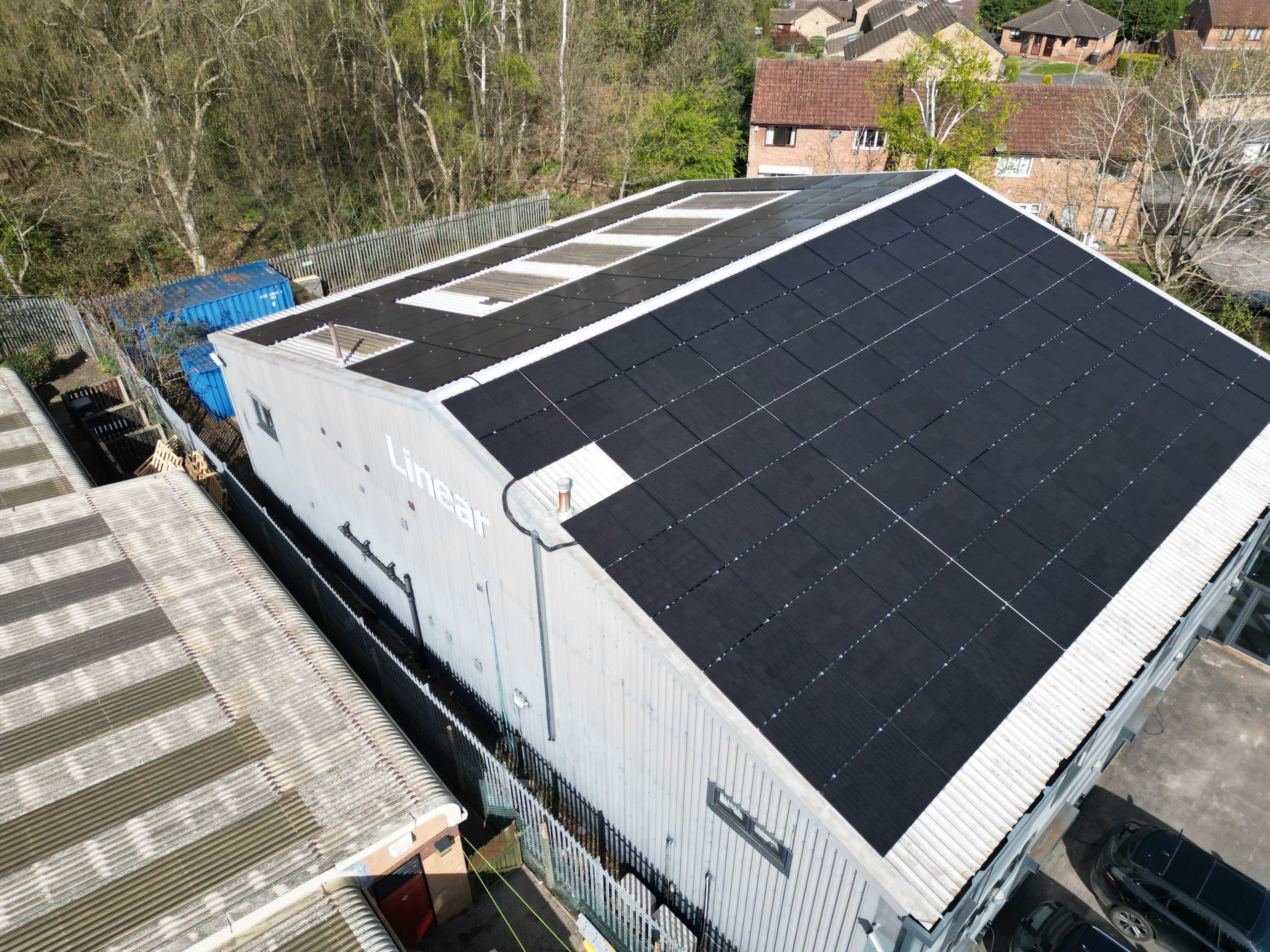
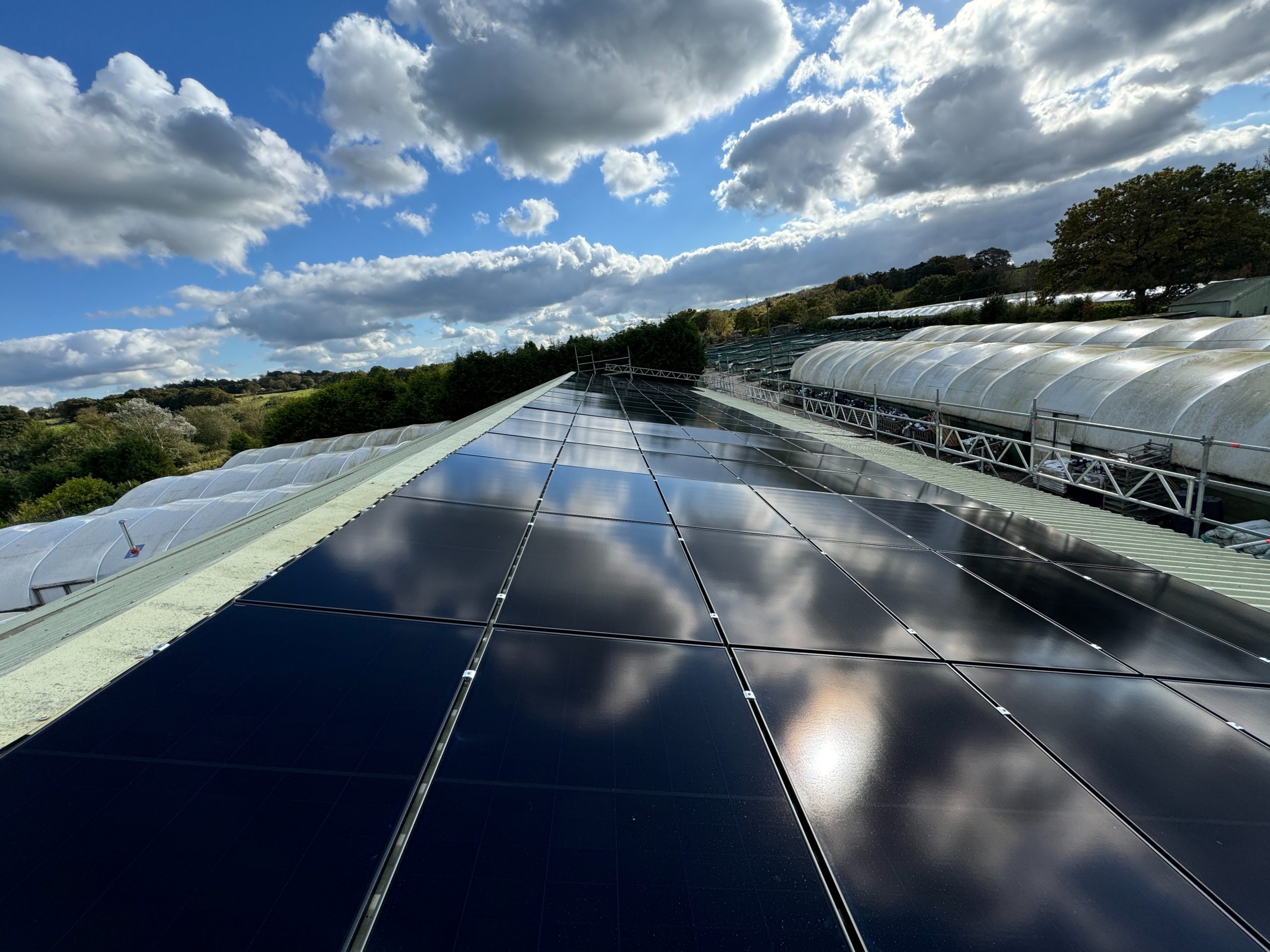
Our first answer on any farm is the unfashionable one: the roof, if you have a good one. A sound steel-frame barn roof, like the ones pictured through this guide, hosts the same panels with no land take, no planning application in most cases, and mounting costs a field cannot match; our barn install guide covers that route. Ground mounting earns its place when the roofs are unsuitable, fragile fibre cement, wrong orientation, structurally marginal, or simply full, and the demand justifies more generation. Its advantages are real: perfect orientation and tilt rather than whatever the builder chose, capacity limited by land and grid rather than purlins, and easy maintenance access at boot height. The costs are equally real: groundworks and frames, planning, fencing and cable runs, and land committed for 25-plus years.
Planning: the honest picture
- Small domestic-scale ground arraysEnjoy limited permitted development rights within tight size limits; anything farm-scale is beyond them.
- Farm-scale arrays need planning permissionA full application, where the persuasive cases are self-consumption arrays on lower-grade land near existing buildings. Councils distinguish sharply between a farm powering itself and a speculative field-scale export scheme.
- Land grade mattersProposals on poorer agricultural land travel far more easily than on best-and-most-versatile ground, where policy and public mood both push back.
- Sensitive designationsGreen belt, AONB-equivalents and heritage settings raise the bar; a pre-application conversation with the council is cheap insurance before design money is spent.
What a ground array involves
The engineering is pleasingly straightforward. Frames, galvanised steel on posts driven or screwed into the ground, or ballasted where ground conditions demand, carry the panels at an optimised tilt facing due south (or an east-west arrangement where land shape favours it, per the same logic as our orientation guide). Rows are spaced against self-shading, the land between and beneath commonly stays in use for sheep grazing, the classic dual-use, and the array is fenced for security and livestock. DC cabling runs to inverters, then a buried AC run to the connection point, and it is that cable run, not the frames, that often decides the array's location: a field corner near the farm's supply beats a better field half a mile away, every time.
Grid connection at field scale
Every ground array of farm scale is a G99 application, and on rural networks the grid is frequently the binding constraint before land or budget: long single-phase spurs and lightly built rural circuits can cap what the network will accept, or price reinforcement into the project. The professional sequence is therefore grid first: a budget enquiry to the network operator early, shaping the array size to the connection that is actually available, rather than designing the dream array and discovering the connection cost last. A three-phase supply at the farm makes everything easier; where there is not one, the connection conversation and the array design happen together.
The returns arithmetic
A self-consumption ground array runs the same commercial logic as any farm solar: generation offsetting bought electricity at full price is what pays, so the array earns best sized against the farm's real daytime loads, refrigeration, dairy, drying, with exports as the margin on top, per the mechanics in our commercial payback guide. Against that return, weigh what the land itself would otherwise earn, on the low-grade corners that suit ground mount best, often very little, and the diversification value of a stable, decades-long reduction in one of farming's nastier input costs. Capital allowances apply to the farm business's purchase as usual. The projects that disappoint are the ones built for export income alone at today's rates; the ones that quietly thrive are powering their own grain store.
Roofs full, or no roofs worth using?
Free farm design and quote: we assess roofs and ground options together, check the grid position early, and design against your actual loads, one all-in price plus VAT. Call 0115 773 7575, 8am to 8pm, Monday to Friday.
Get EstimateFrequently asked questions
Can I put solar panels in a field?
Yes, on ground-mounted frames, and farm-scale arrays generally need planning permission, with self-consumption schemes on lower-grade land near existing buildings the easiest cases. Small garden-scale ground arrays have limited permitted development rights; anything serving a farm business goes through an application.
Is ground-mounted solar better than roof-mounted?
It yields better per panel, perfect tilt and orientation, easy servicing, but costs more to build and needs planning and land. The sensible hierarchy on a farm: fill the sound roofs first, then extend to ground where demand justifies it and a suitable low-grade corner sits near the connection point.
Can livestock graze under ground-mounted panels?
Sheep grazing between and beneath panel rows is standard dual-use practice: the land keeps an agricultural function, the grass gets managed, and planning applications read better for it. Cattle and panel frames mix less happily, so the stock plan is part of the design conversation.
How much land does a ground array need?
As a working rule of thumb, meaningful farm-scale arrays fit in fractions of an acre to a few acres depending on capacity, with row spacing against self-shading the main consumer of space. The binding constraints are usually the grid connection and planning rather than acreage, which is why those get checked first.
Does ground-mounted solar need a grid application?
At farm scale, yes: a G99 application to the network operator, approved before connection, and on rural circuits the available capacity often shapes the array size. A budget enquiry early in the project, before design money is spent, is the professional sequence and the one we follow.
Related reading
- Agricultural solar: the full guide
- Solar on steel-frame barns
- SFI and farm solar funding
- Commercial solar payback: real numbers
- G98 and G99 grid connections
Farm solar, roofs and fields alike
We are Spectrum Energy Systems, MCS certified (NIC200223), designing agricultural solar across the East Midlands since 2011, with the grid checked before the drawing starts. Call 0115 773 7575, 8am to 8pm, Monday to Friday.
Get in touch