
Solar Battery Prices UK: What Storage Really Costs
The clearest way to price a solar battery in the UK is inside a package, because that is how most are bought: our complete solar-and-battery systems run from £8,500 with a 10kWh battery to £9,995 with 16.1kWh, all-in. The step between those two packages tells you what moving up 6kWh of capacity really costs when the installation is happening anyway. Retrofit batteries onto existing solar are priced at survey, since the inverter you already own decides most of the job, and 0% VAT covers battery installations, standalone included, until 31 March 2027.
In This Guide
Real package prices
Most batteries in the UK are fitted alongside panels, and package pricing is the honest lens because it reflects what buyers actually pay:
| Package | Battery included | All-in installed price |
|---|---|---|
| 2.7kWp solar system | 10kWh | £8,500 |
| 4kWp east west solar system | 10kWh | £9,000 |
| 5 to 6kWp solar system | 16.1kWh | £9,995. Our most installed package |
| 7kWp solar system | 16.1kWh | £11,800 |
Notice what the table quietly tells you: the jump from the 10kWh packages to the 16.1kWh ones is modest relative to the extra storage, because the labour, scaffolding and electrical work are already on site. Capacity is cheap once the van is parked outside. The full package breakdown lives in our panel and battery cost guide.
What moves a battery price
- Capacity, obviously but not linearlyCells are only part of the invoice. Install labour, electrical work and commissioning barely change between a small battery and a large one, which is why bigger units cost less per kilowatt-hour.
- Whether an inverter comes with itA battery on a new hybrid inverter, like the Solis units we fit, costs more than one joining an existing hybrid system, and less trouble than one needing a separate AC-coupled unit bolted on. This single variable explains most quote-to-quote variation.
- Location and cablingA garage wall near the consumer unit is the easy case. Long cable runs, loft installs and external enclosures add labour, and the PAS 63100 location rules narrow the options in some homes.
- Chemistry and brandLiFePO4, the safer, longer-cycling chemistry used by the Fogstar units we install, is now the domestic standard, so paying premium-brand prices buys badge and app polish more than better cells.
Retrofit pricing, honestly
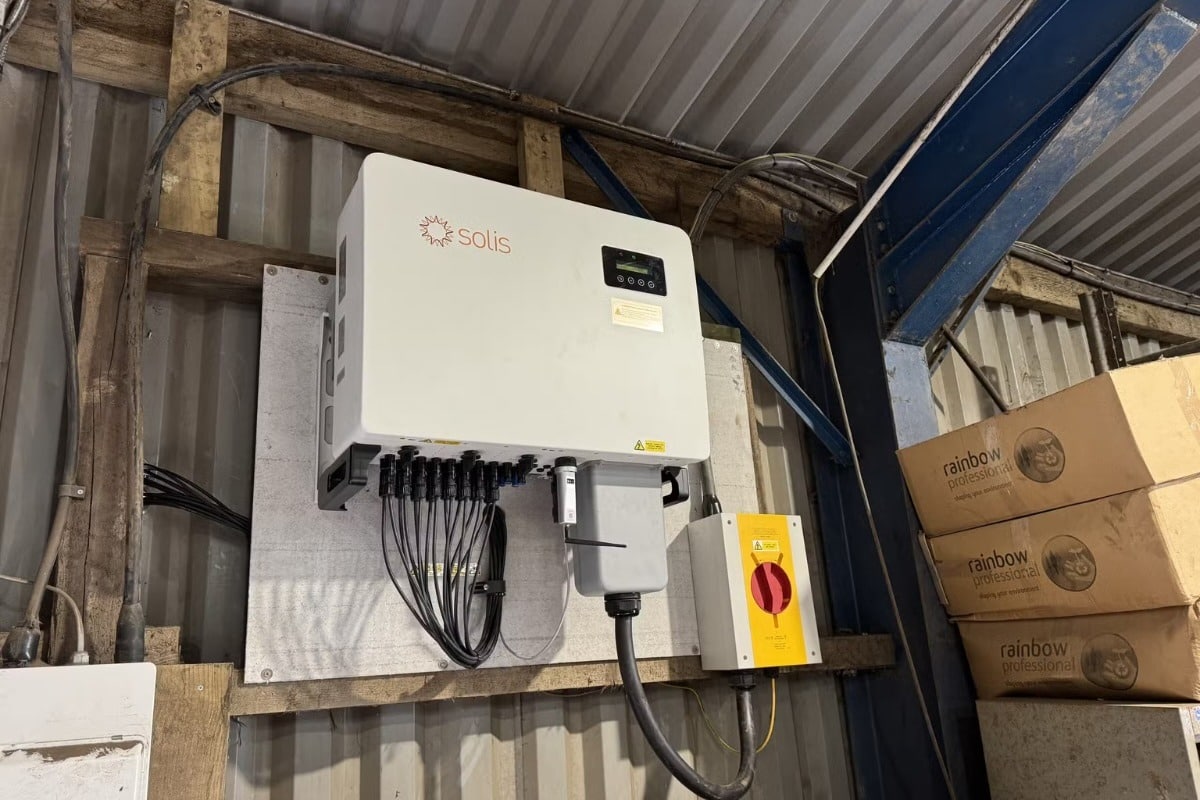
Adding a battery to solar you already own is the fastest-growing corner of this market, and the honest answer on price is: it depends on your inverter, which is why we price retrofits at survey rather than from a rate card. A hybrid inverter with a free battery port, like the one pictured, makes the job small. A string inverter means choosing between an AC-coupled battery alongside it or upgrading to a hybrid, two genuinely different invoices. Our retrofit guide walks through the routes so a quote makes sense before you get one.
Why per-kWh cost keeps falling
Battery storage has followed the same curve solar panels did a decade earlier: global manufacturing scale, driven mostly by electric vehicles, has pushed lithium cell prices down year after year, and home batteries have roughly tracked it. A capacity that looked like luxury five years ago is now the sensible default, and it is why our most installed package carries 16.1kWh rather than the small units that defined the early market. We deliberately avoid printing per-kWh market figures here because they date within months; the durable fact is the direction, and it has been down for years. If you are wondering whether to wait for cheaper still, our should-you-wait guide covers why waiting usually costs more than it saves once forgone savings are counted.
Cost vs value: sizing it right
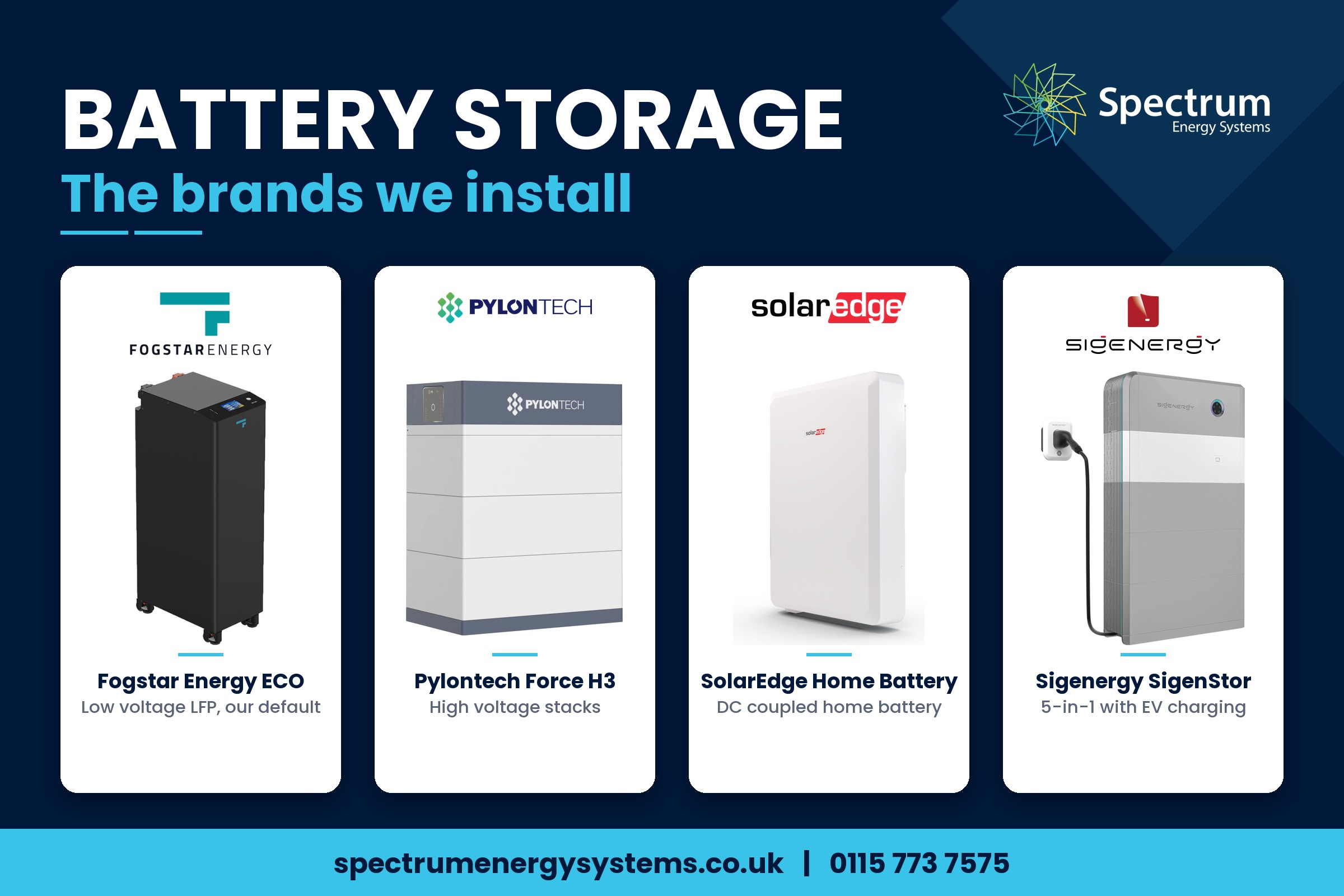
The right question is not "what does a battery cost" but "what does the right-sized battery return". Too small and it empties before bedtime, leaving you importing at peak rates anyway. Too large for your usage and the extra capacity sits idle. The right-size logic for most family homes lands on a battery that covers the evening and overnight with a margin for cheap-rate charging, which is what the 16.1kWh unit pictured does, and why it anchors our most installed package. The earning side of the equation, self-consumption plus time-shifting on a two-rate tariff, is the other half of the value case, and battery lifespan stretches the return across well over a decade.
Want a battery priced for your actual home?
Free survey, battery sized from your real usage, one all-in figure with nothing surfacing later. Design normally within 2 to 4 days depending on workload. Call 0115 773 7575, 8am to 8pm, Monday to Friday.
Book a feasibility assessmentFrequently asked questions
How much does a solar battery cost in the UK?
Inside a package, which is how most are bought: our complete systems run £8,500 to £11,800 all-in, carrying 10kWh or 16.1kWh batteries. Retrofits onto existing solar are priced at survey because your current inverter decides most of the job. 0% VAT applies to battery installations until 31 March 2027.
Is a bigger battery worth the extra cost?
Usually, up to the point where capacity outruns your usage. The install costs barely change with size, so the incremental kilowatt-hours are the cheapest ones, and a battery that covers your whole evening plus cheap-rate charging headroom earns on every front. Past that point, extra capacity sits idle.
Do solar batteries qualify for 0% VAT?
Yes. The zero rate covers battery storage installed with solar and, since February 2024, standalone and retrofit battery installations too. The relief runs until 31 March 2027, after which the reduced rate is due to return, one honest reason not to sit on the decision for years.
Why do battery quotes vary so much between installers?
Mostly scope: some quotes include the inverter work, electrical upgrades and commissioning, others surface them later as extras. Compare all-in figures for the same capacity and inverter route, check the brand of cells being fitted, and be suspicious of any quote produced without seeing your consumption data.
Are cheap batteries a false economy?
Not automatically. Modern LiFePO4 cells are a mature commodity, so mid-market brands with solid warranties, like the Fogstar units we fit, deliver the same chemistry as premium badges at a better price per kilowatt-hour. What is a false economy: unknown brands with thin warranties, or installs done without proper certification.
Related reading
- Solar panel and battery package prices
- Adding a battery to existing solar
- Battery storage without solar
- How long do solar batteries last?
- Battery time-shifting explained
Storage at honest prices
We are Spectrum Energy Systems, MCS certified (NIC200223), fitting Fogstar batteries on Solis hybrid inverters across the East Midlands since 2011, one all-inclusive price every time. Call 0115 773 7575, 8am to 8pm, Monday to Friday.
Get in touch