
How Long Do Solar Batteries Last?
A modern LFP home battery is built for well over a decade of daily use. Manufacturers rate the chemistry for thousands of full cycles and back it with warranties typically around ten years, which at one cycle a day is the design life being guaranteed, not hoped for. Batteries fade gradually rather than dying, keeping most of their capacity for years beyond the warranty.
In This Guide
Cycles: how battery life is really measured
Battery lifespan is counted in cycles, one cycle being a full charge and discharge of the battery's capacity. The LFP chemistry we fit, lithium iron phosphate, is the long-distance runner of home storage: manufacturers rate current cells for thousands of full cycles, commonly six thousand and up. Run the arithmetic and the marketing turns into a calendar: a battery cycling once a day does 365 cycles a year, so a six-thousand-cycle rating is over sixteen years of daily work. Even a battery worked hard, cycling more than once daily on a busy tariff strategy, has a decade-plus of design life in the chemistry.
Fading, not failing
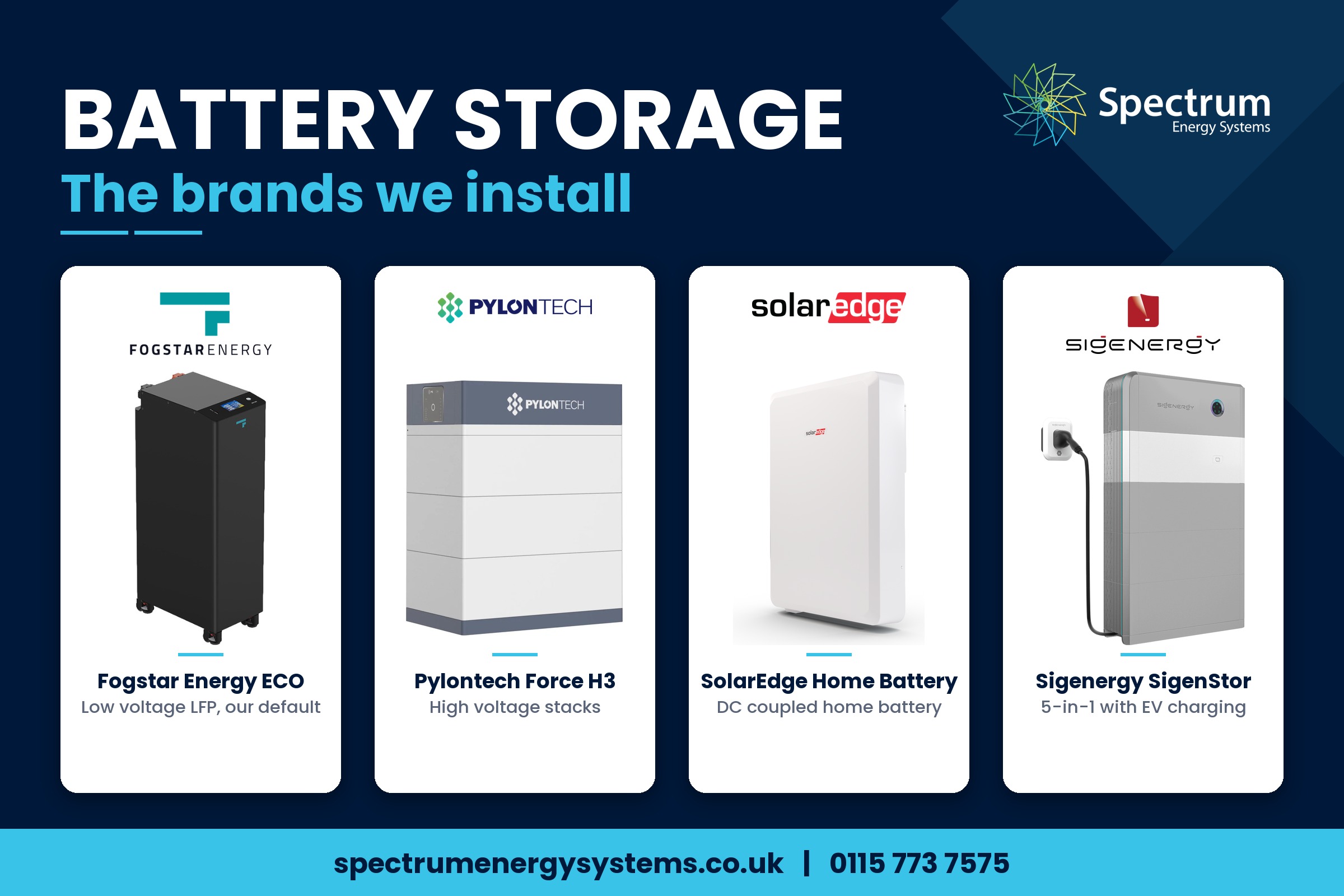
The most useful thing to understand about battery ageing: it is a fade, not a failure. A battery does not work perfectly for ten years and then stop. It loses a little usable capacity each year, so the 16.1kWh unit pictured might behave like a 14-and-something kWh battery some years in, then a 13kWh one some years after that, still cycling away usefully.
That is why warranties are written the way they are: they typically guarantee the battery retains a stated share of its original capacity, often around 70 to 80%, by the end of the warranty period. The battery that reaches that point is not dead; it is a smaller battery, and for many households still a perfectly useful one for years more.
What actually wears a battery
- Cycle countThe base currency of wear. Every full charge and discharge takes its tiny toll, which the cycle ratings already price in.
- HeatThe silent ager. Batteries live longest at stable, moderate temperatures, which is why placement in garages and utility spaces beats hot conservatories and sun-baked outbuildings.
- Sitting at extremesChemistries dislike being held at 100% or near-empty for long periods. Modern battery management systems handle this automatically, keeping the cells in their comfortable band.
- Cheap cells and poor managementThe wear factor you choose at purchase. Quality LFP cells with a proper battery management system age gracefully; bargain imports age however they feel like.
Notice what is not on the list: daily use itself. A battery cycling every day on a time-shifting tariff strategy is doing exactly what it was engineered for. Leaving a battery idle to preserve it is like never driving a car to protect the engine.
What warranties promise, in plain terms
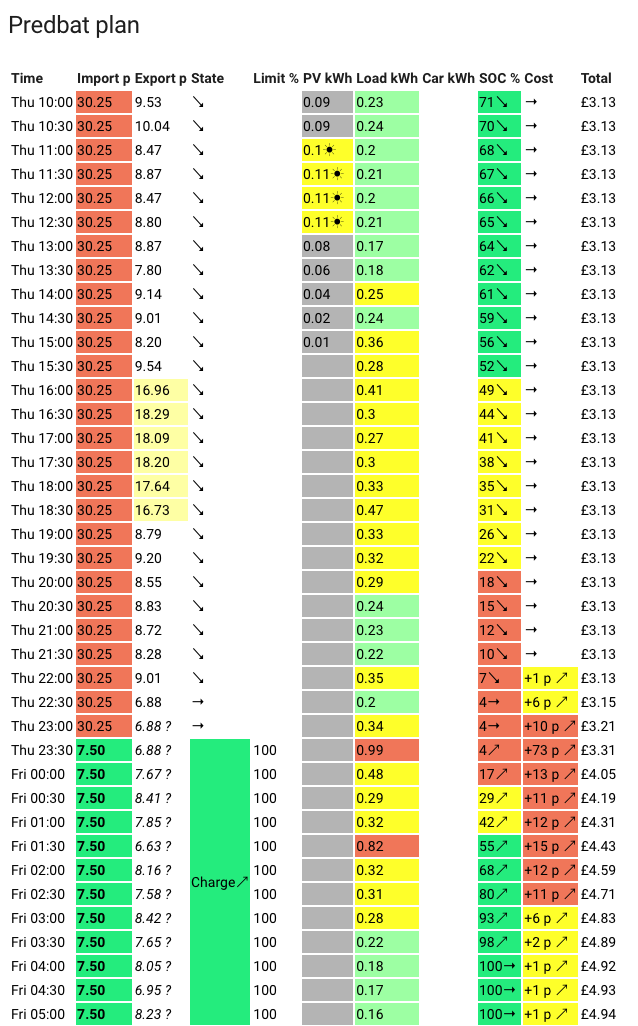
Home battery warranties typically pair a period, commonly around ten years, with either a cycle count or an energy throughput figure, whichever arrives first, and a guaranteed retained capacity at the end. The daily plan in the screenshot, a full cheap-rate overnight charge on one of our customers' systems, is exactly the duty the warranty maths anticipates.
When comparing batteries, read three lines: the years, the cycles or throughput, and the retained-capacity percentage. A long period with a weak retention promise is a worse warranty than a shorter one guaranteeing more capacity. Chemistry detail sits in our LFP vs NMC comparison, and brand-level warranty terms in choosing the right battery.
Getting the most life out of yours
The honest news is that most of the levers are set on installation day rather than pulled daily by you. Sensible placement away from heat, quality cells, a proper battery management system, and correct commissioning do the heavy lifting. What remains for the owner: keep ventilation around the unit clear, glance at the monitoring app so a fault gets caught early, and include the battery in the periodic system health check alongside the panels and inverter. Batteries reward being used and resent being cooked, and that is most of the manual.
Batteries chosen for the long haul
We fit LFP batteries sized to your usage, placed to last, and set up to earn on your tariff from day one. Over 1,000 installs across the East Midlands since 2011. Call 0115 773 7575, 8am to 8pm, Monday to Friday.
Book a feasibility assessmentFrequently asked questions
How long does a solar battery last in the UK?
Design life comfortably exceeds a decade for modern LFP batteries: manufacturers rate the cells for thousands of daily cycles and warranty them for around ten years with a guaranteed retained capacity. After that the battery keeps working at gradually reduced capacity rather than stopping.
Do solar batteries wear out faster if used every day?
Daily cycling is the designed duty, already priced into the cycle ratings and warranty terms. A battery charging cheaply overnight and discharging through the day is doing its job, not abusing itself. Heat and poor-quality cells age batteries; honest daily work does not, beyond the rated wear.
Will my battery still work after the warranty ends?
Almost certainly, at reduced capacity. Warranties typically guarantee around 70 to 80% retained capacity at expiry, and the fade continues gradually rather than ending in failure. Many households run post-warranty batteries for years, simply getting fewer stored kWh per cycle than when new.
Do batteries last longer than solar panels?
No, panels win. Tier 1 panels carry 25-year performance warranties and degrade very slowly, so a typical system sees one battery replacement, and likely one inverter replacement, within the panels' working life. Budgeting for that sequencing is part of honest system planning.
Where should a battery be installed to last longest?
Somewhere with stable, moderate temperatures and decent ventilation: garages and utility areas are the classic homes, and current installation guidance also favours these locations for safety reasons. Avoid heat-trap spaces. Placement gets decided at survey, and it genuinely affects how the cells age.
Is LFP really longer lasting than other battery types?
Cycle-life is LFP's signature strength, alongside its thermal stability, which is why it dominates home storage and why we fit it. Other chemistries trade some longevity for energy density, a sensible trade in a car and a poor one bolted to a garage wall. Our LFP vs NMC guide has the detail.
Related reading
- LFP vs NMC solar batteries
- How to choose the right solar battery
- Battery time-shifting: the other half of the value
- Adding a battery to an existing solar system
- How long do solar panels last in the UK?
Built to cycle, backed properly
We are an MCS certified installer (NIC200223) based in Bulwell, Nottingham, fitting LFP storage with warranties worth reading. Call 0115 773 7575, 8am to 8pm, Monday to Friday.
Get in touch