
Solar Panel Sizes, Dimensions and Weight: The UK Guide
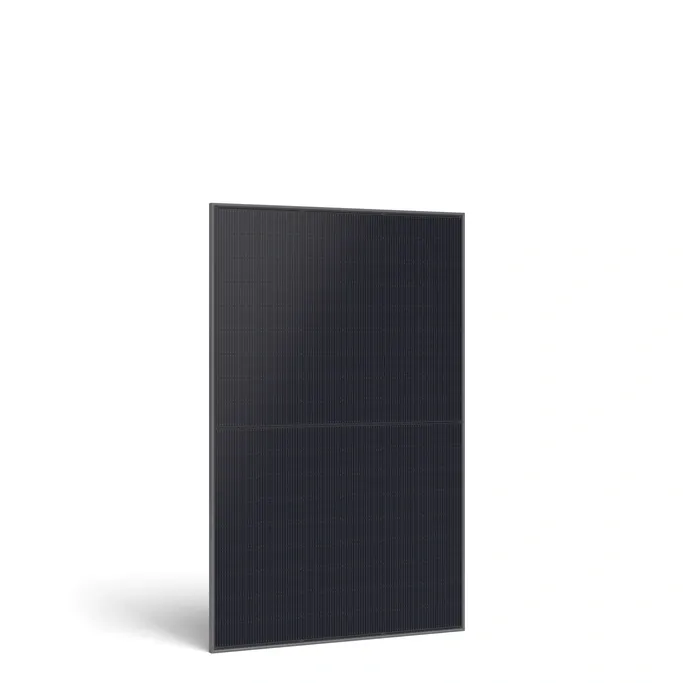
A modern residential solar panel measures around 1.7m by 1.1m, covers roughly two square metres, and weighs around 21 to 22kg. Most UK homes take 10 to 12 panels, needing about 20 to 25 square metres of clear roof. Spread across the mounting rails, the load sits comfortably within what a sound roof carries.
In This Guide
Standard panel dimensions in 2026
Panel sizes have standardised around two formats, and nearly everything quoted for a UK home or business in 2026 is one of them:
| Format | Typical dimensions | Typical output | Typical weight | Used on |
|---|---|---|---|---|
| Residential (54 cell) | Around 1.72m x 1.13m | 440W to 500W | Around 21 to 22kg | Houses and bungalows |
| Commercial (72 cell) | Around 2.3m x 1.13m | 560W to 620W | Around 28 to 32kg | Warehouses, barns, flat commercial roofs |
Our standard domestic install uses 500W panels from Tier 1 manufacturers, dropping to 450 or 475W formats where a roof's dimensions fit them better. The figures above are typical for the current generation of panels; every quote we issue names the exact panel and its datasheet dimensions, because on a tight roof a few centimetres decides whether a third row fits.
Weight, and what your roof actually carries
A 21 to 22kg panel sounds heavy until you spread it out. Mounted on rails, the load distributes across the rafters at a rate a structurally sound roof handles comfortably, mounting hardware included. The questions that matter at survey are about condition rather than the panels:
- Roof structure and ageWe check the timbers, battens and covering at survey. Sound roofs, even older ones, rarely present a problem.
- The coveringSlate and old clay tiles need more careful handling than concrete tile, which shows up in labour, not feasibility.
- Genuine structural doubtsRare, and where they exist we say so before anyone pays for anything. A structural engineer's view costs far less than guessing.
How much roof space an array needs
Work on roughly two square metres per residential panel once edge clearances are counted, so the arrays we most commonly fit need:
| System | Panels at 500W | Roof area needed |
|---|---|---|
| 2.7kWp | 6 | Around 12m² |
| 4kWp | 8 | Around 16m², often split across two faces |
| 5 to 6kWp | 10 to 12 | Around 20 to 25m² |
| 7kWp | 14 | Around 28m², larger detached roofs |
Panels keep a margin from ridges, edges and gutters, partly for wind loading and partly for safe fixing, which is why a roof's usable area is always smaller than its total area. Chimneys, velux windows, vent pipes and dormers all carve pieces out of the layout. What that means for your bill is a sizing question rather than a dimensions one: our guide to how many panels you need starts from your usage, and each panel's output covers the generation side.
Fitting panels around real roofs
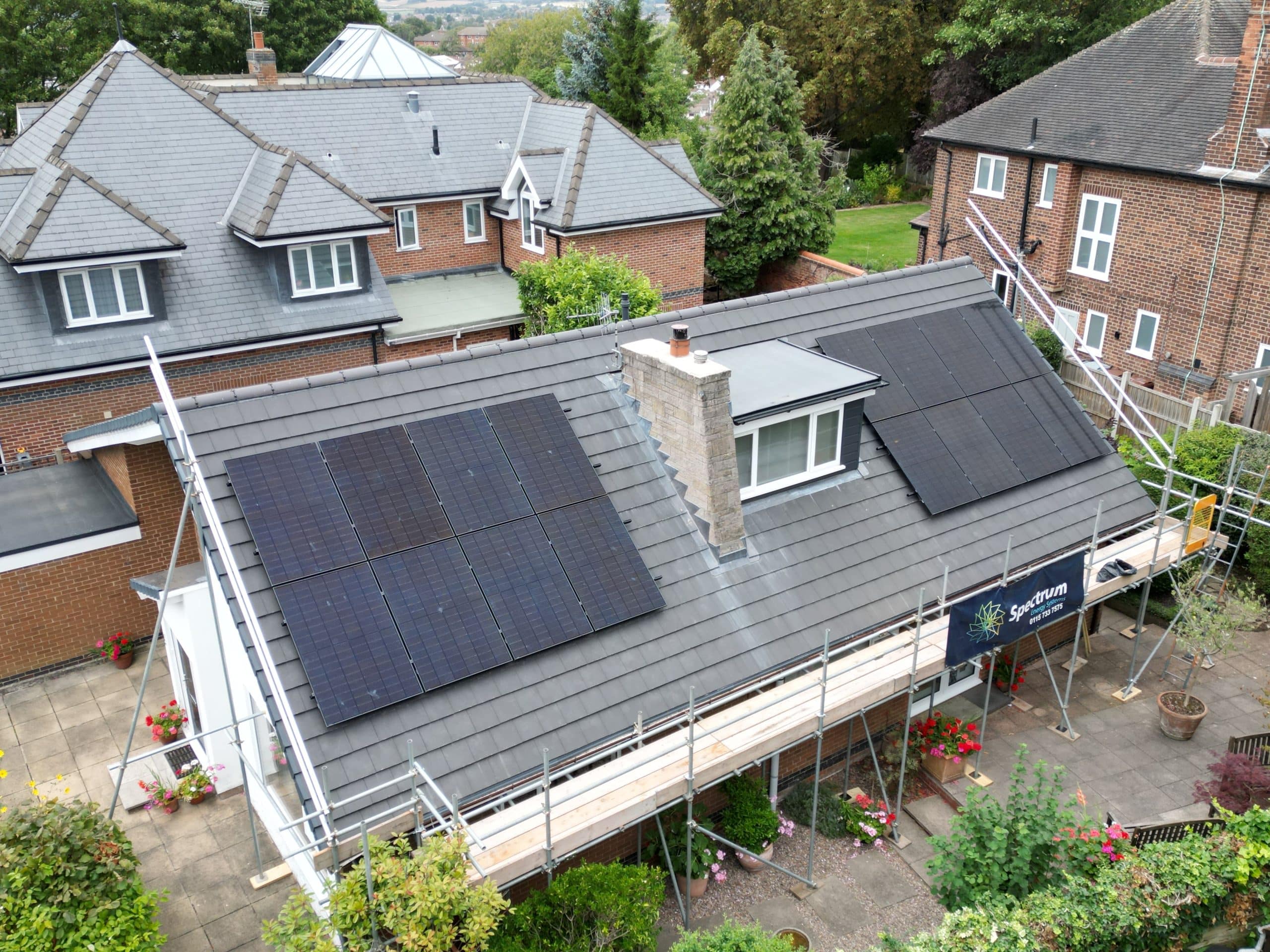
The Sherwood install in the photo shows what layout work looks like in practice: two arrays worked around a chimney and a dormer rather than one uninterrupted block. This is where design earns its keep. Portrait against landscape orientation, splitting strings across roof faces, stepping around obstructions: the difference between a lazy layout and a considered one is often two or three extra panels on exactly the same roof.
We design from the survey and quote from the design, which is why our quotes take a little longer than an online postcode estimate and fit your actual roof rather than a theoretical one.
Bigger panels vs more panels
Manufacturers keep nudging panel sizes and outputs upward, and the temptation is to assume bigger is better. The honest answer is that the roof decides. A larger 72-cell format can waste space on a domestic roof if its dimensions strand half a row, while a 450W panel that fits three rows where a 500W format fits two can win on total output. This is also why we hold 450, 475 and 500W options rather than forcing one panel onto every roof. On commercial buildings the calculus flips: big roofs with few obstructions suit the larger format's better economics, which is how systems like our commercial projects get their scale.
Want to know what your roof can hold?
A feasibility assessment maps your actual roof: usable faces, obstructions, panel count and the generation figure that follows. Design and quote normally within 2 to 4 days depending on workload. Over 1,000 installs across the East Midlands since 2011.
Book a feasibility assessmentFrequently asked questions
What size is a standard solar panel in the UK?
Around 1.72m long by 1.13m wide for the residential 54-cell format that dominates UK homes in 2026, covering roughly two square metres and producing 440W to 500W. Commercial 72-cell panels run around 2.3m long at the same width, with outputs approaching 600W.
How heavy is a solar panel?
Around 21 to 22kg for a residential panel and 28 to 32kg for the larger commercial format. Distributed across mounting rails and rafters, the load per square metre is modest, and a structurally sound roof carries a full array comfortably. Roof condition gets checked at survey regardless.
How much roof space do I need for solar panels?
Roughly two square metres per panel including clearances. A typical 10 to 12 panel system therefore needs 20 to 25 square metres of usable roof, which most 3-bed semis have across one or two faces. Chimneys, velux windows and edge margins all reduce the usable figure, which design works around.
Are bigger solar panels better?
Only when they fit. A bigger panel wastes roof if its dimensions strand a row, and a smaller format that packs the roof more completely can deliver more total power. The right answer comes from laying out your actual roof, which is why we design before we quote rather than quoting a standard package.
Will my roof need strengthening for solar panels?
Rarely. Sound roofs, including most older ones, take a distributed array load without modification. Where a survey raises genuine structural doubt, we say so and recommend a structural engineer's assessment before any money changes hands. What needs more attention in practice is the covering: slate and fragile old tiles need careful handling.
Do solar panels come in different sizes for different houses?
Yes, within the standard formats. We fit 500W panels as standard, stepping to 450 or 475W where those dimensions use a roof better, and the larger commercial format on big open roofs. The system is sized to your usage and your roof together, not picked off a shelf.
Related reading
- How many solar panels do I need?
- How many kWh does a solar panel produce?
- Solar panel mounting systems explained
- How do solar panels work?
- How much do solar panels cost in the UK in 2026?
Measured properly, designed properly
We are an MCS certified installer (NIC200223) based in Bulwell, Nottingham. Every system starts with a real survey of your real roof. Call 0115 773 7575, 8am to 8pm, 7 days.
Get in touch