
Solar for Self-Storage and Cold-Storage Facilities
Cold-storage and self-storage facilities are among the strongest UK commercial solar candidates. Cold storage runs 24/7 refrigeration load (50-80% of total site electricity); self-storage typically has lighter daytime load and large unobstructed warehouse roofs. Typical install sizes 50-500kWp depending on facility scale, paired with 30-150kWh battery for cold storage. AIA-supported payback typically 3-5 years. Octopus Shape Shifters integration extends savings beyond simple self-consumption.
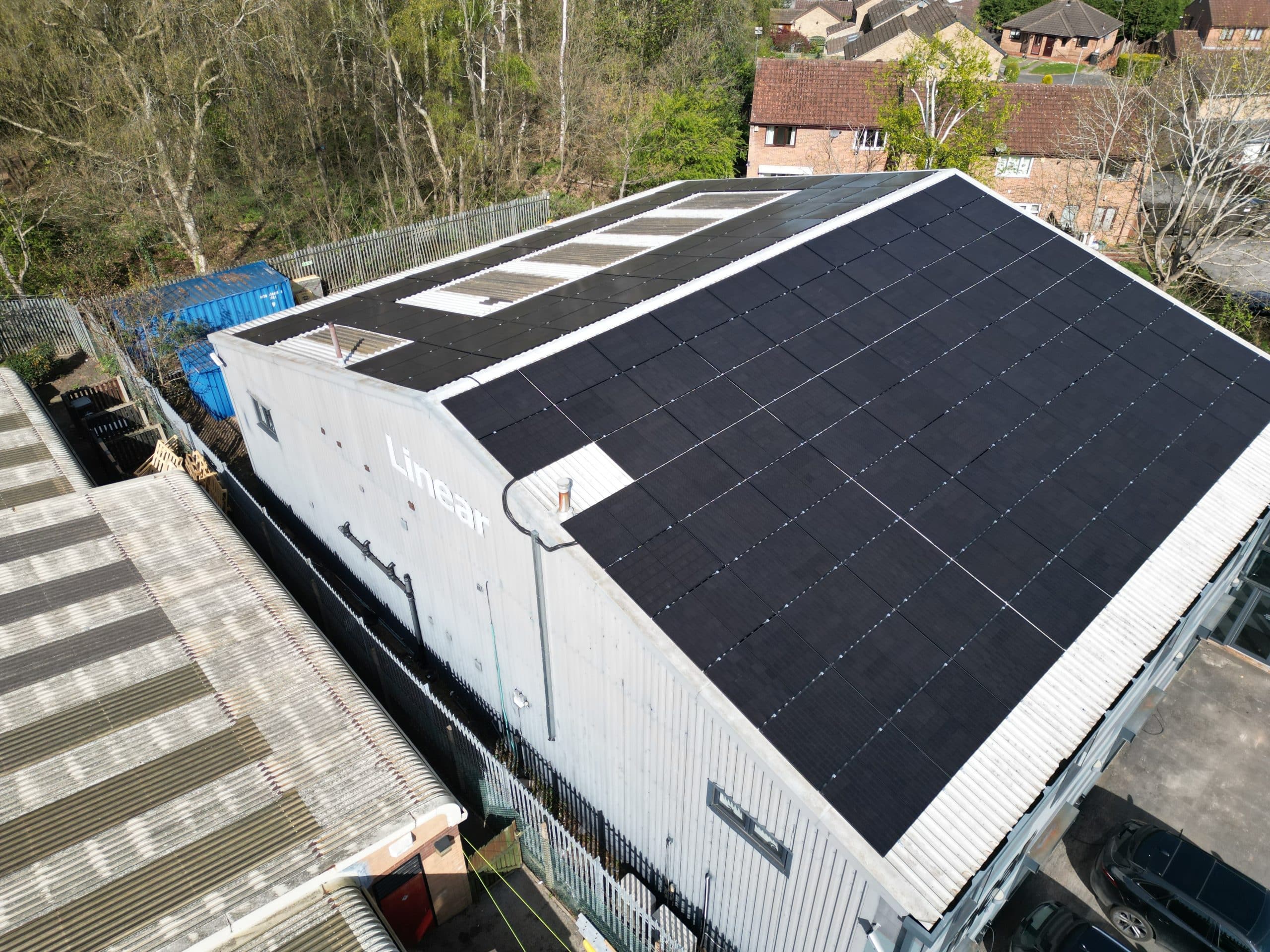
Two adjacent sectors with different solar profiles: self-storage (daytime business hours, low ambient load) and cold storage (24/7 refrigeration). Both share the structural advantage of large flat or low-pitched warehouse roofs - perfect canvases for commercial-scale solar PV. The 177kWp Elsoms Seeds install in Spalding is a representative example of this kind of large warehouse roof opportunity.
Cold storage load profile
| Load | Share of facility electricity | Time of day |
|---|---|---|
| Refrigeration / freezer compressors | 50-75% | 24/7 (peaks during daytime ambient temperature) |
| Lighting | 10-15% | Working hours |
| Door operations, conveyors, ancillary | 5-15% | Working hours |
| Heat-recovery and HVAC | 5-10% | 24/7 with daytime peaks |
| Office, security, ancillary | 5-10% | Various |
Why cold storage works for solar
- Daytime ambient temperature drives refrigeration demand. Refrigeration compressors work harder when it’s warmer - which is exactly when solar generates most. Demand and supply curves align.
- 24/7 base load. Even at night, refrigeration runs continuously. Battery storage covers night demand using stored daytime solar.
- Large flat warehouse roofs. Often hundreds of square metres of unbroken roof space. Ideal for high-kWp installs.
- Predictable consumption. Cold storage facilities run consistent year-round load profiles. Sizing is easy.
- Long-term operations. Cold-storage facilities are rarely demolished or repurposed. A 25-year solar asset matches operational horizon.
Typical cold-storage sizing
| Facility size | Annual kWh | Recommended kWp | Battery |
|---|---|---|---|
| Small cold store (1,000m²) | 150,000-300,000 | 80-150kWp | 30-50kWh |
| Medium (3,000m²) | 500,000-1,000,000 | 200-400kWp | 80-150kWh |
| Large (10,000m²+) | 1,500,000-3,500,000+ | 500kWp - 1.5MW+ | 200-500kWh+ |
Self-storage load profile (different from cold storage)
Self-storage facilities have much lighter electrical load - mostly lighting, climate control on the heated/AC sections, security and office. Typical annual consumption per 1,000 sq ft of facility is much lower than cold storage. Solar PV still works well, but the value comes more from:
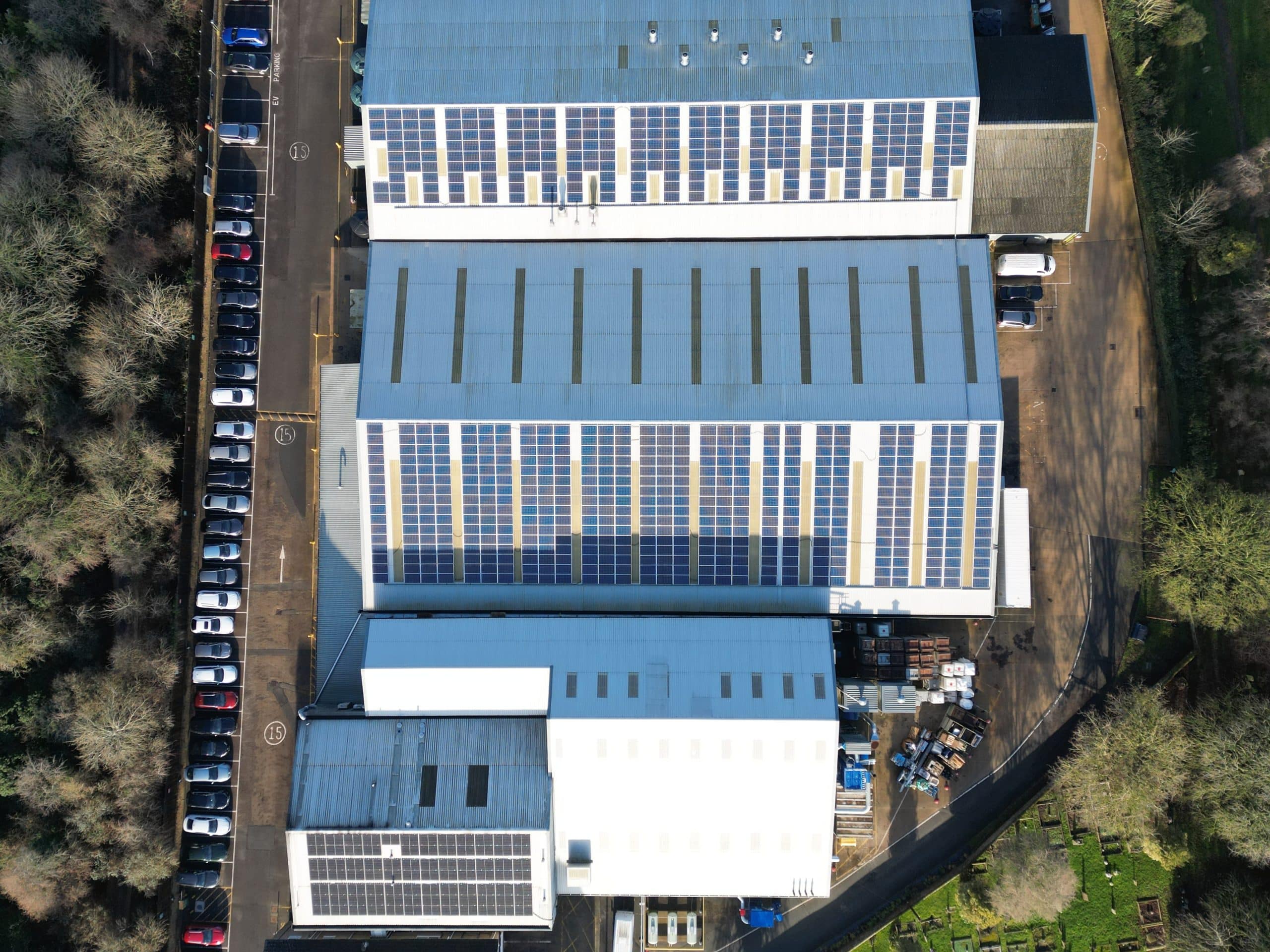
- Strong export income (low daytime self-consumption + plenty of roof area = lots of export)
- Energy independence on a sector where business interruption from grid faults can damage customer trust
- ESG narrative for B2C customers
- Asset valuation uplift (sustainable-buildings premium in commercial property)
The Spectrum specification for these facilities
- Panels: JA Solar or Aiko panels (typically 500W, up to 540W) on Esdec flat-roof mounting (non-penetrating ballasted) or Renusol MetaSol on low-pitch metal roofs
- Inverters: Multiple Solis 50kW HV three-phase string inverters in parallel for larger arrays. Six 25kW Solis units at our Elsoms Seeds Spalding 177kWp install demonstrate the pattern.
- Battery: Pylontech Force H3 HV stack for cold-storage smoothing; optional for self-storage where load doesn’t justify
- Monitoring: SolisCloud commercial dashboard plus Home Assistant + Predbat for facilities on Octopus Shape Shifters
Solar for your cold-store or self-storage facility?
We’ve installed up to 177kWp arrays on commercial warehouse roofs in Spalding. Same crew, same kit, same engineering for your site.
Speak to Our TeamShape Shifters integration for cold storage
Octopus Shape Shifters is the half-hourly commercial tariff that pairs well with cold-storage solar. With a battery stack and Predbat configured for Shape Shifters, the facility’s refrigeration runs preferentially in cheap import windows and the battery rides peak windows. Incremental savings vs a flat tariff can be substantial on a properly configured cold-storage system. See our Shape Shifters article.
Capital allowances
Cold storage and self-storage businesses claim AIA on the full install cost up to £1m per accounting period. For a 200kWp install costing £180,000, that’s £45,000 tax saving for a 25% CT-band company, dropping net cost to £135,000. Combined with displaced import and SEG income, payback typically lands at 3-5 years. See our capital allowances article.
Refrigeration efficiency tied to solar
An often-overlooked benefit on cold-storage solar installs: the solar array on the roof reduces direct sunlight load on the building, which marginally reduces internal cooling demand. The effect is modest (a marginal share of refrigeration load) but compounds with the solar self-consumption to deliver better-than-headline savings. Spectrum’s sizing models capture this where relevant.
DNO considerations on warehouse sites
Industrial estates often have three-phase commercial supply with reasonable network capacity. Larger installs (150kWp+) typically trigger paid network studies, occasionally reinforcement. For cold-storage operators with multiple sites, our £500 refundable standalone DNO application service helps confirm capacity before committing to a full design at each site.
FAQs
Can a cold-storage facility run on solar alone?
Not entirely - refrigeration runs 24/7 and solar only generates during daylight. A typical cold-storage solar install covers 40-65% of annual consumption, with the rest still drawn from grid. Adding battery storage shifts more solar to night-time refrigeration but doesn’t eliminate grid dependence.
What size solar for a 3,000m² cold store?
Typically 200-400kWp with 80-150kWh battery storage. Exact sizing depends on the refrigeration tonnage, internal temperature targets and operating schedule. Spectrum models against actual half-hourly meter data and refrigeration specification at site survey.
Does the solar add to cooling load by shading the roof?
The opposite, slightly. The solar array shades the roof from direct sunlight, marginally reducing solar heat gain into the building interior. The effect is small (a marginal reduction) but it’s a net positive on cold-storage refrigeration load.
Can I install solar on a leased warehouse?
Yes with landlord consent. Most commercial leases now include green-improvement clauses or are amenable to negotiation. Some leases allow solar with tenant ownership; others require landlord ownership with shared benefit. Get the lease clauses checked before committing to install design.
What payback should I expect on cold-storage solar?
3-5 years on AIA-supported installs for typical cold-storage businesses on competitive commercial tariffs. Larger installs (300kWp+) tend toward the lower end of that range due to scale economies. Shape Shifters tariff plus battery storage can pull payback below 4 years.
Does solar interfere with refrigeration controls or refrigerant systems?
No - solar PV produces standard 50Hz AC electricity that’s identical to grid supply from the refrigeration system’s perspective. Refrigeration controls don’t care where the electricity comes from. No additional commissioning or refrigeration interface is required.
How long does a cold-storage solar install take?
Site-dependent. A 100kWp install typically takes 4-6 weeks. A 300kWp install runs 8-12 weeks. Larger 500kWp+ installs need 12-20 weeks. Most install work happens outside the cold-store interior, so refrigeration operations continue normally. Brief power-downs for AC connection are scheduled with operational team.
Related reading
- Solar PV capital allowances: 25% tax relief for businesses
- Octopus Shape Shifters commercial tariff + Solar
- Solar for dairy farms UK: sizing for milking and refrigeration
For the full Spectrum service overview see commercial solar overview.
Speak to Spectrum Energy Systems
MCS NIC200223. Commercial and industrial solar installs across the East Midlands. We’ve delivered up to 177kWp on warehouse roofs - same in-house crews for your site.
Speak to Our Team