Solar for Dairy Farms UK: Sizing for Milking and Refrigeration
A typical 200-head UK dairy farm runs 80,000-120,000 kWh/year on milking parlour, bulk tank refrigeration, hot water, lighting and ancillary load. A 50-100kWp solar PV array on barn roofs covers 50-70% of daytime consumption. Adding 20-40kWh of battery storage smooths overnight refrigeration. Typical install cost £45,000 - £85,000 ex-VAT, payback 4-6 years after Annual Investment Allowance. SFI doesn’t fund the install directly but AIA does.
Dairy farms are among the strongest commercial solar PV candidates in the UK. Daytime milking + 24-hour refrigeration creates predictable load that aligns well with daylight generation, the barn roofs are often large and well-orientated, and capital allowances make the financials work cleanly. We’ve installed across mixed agricultural sites in Nottinghamshire, Derbyshire, Leicestershire and Lincolnshire and the dairy-farm pattern is one of the most consistent.
Where dairy farms use electricity
| Load | Typical share of farm electricity | Time of day |
|---|---|---|
| Milking parlour (vacuum pumps, motors) | 30-40% | Twice daily, ~3 hours each |
| Bulk tank refrigeration | 20-30% | 24/7 cycling |
| Hot water (cleaning, sterilising) | 10-15% | After each milking |
| Lighting | 5-10% | Seasonal, mornings & evenings |
| Feed augers, ventilation | 5-15% | Various |
| Office, dwelling, ancillary | 5-10% | Various |
Why this profile is ideal for solar
Milking morning and afternoon catches solar generation peaks. Refrigeration cycles 24/7 with the highest demand during daytime ambient temperatures - again aligned with solar. Hot water tanks can be over-heated during the day to coast through the evening. Lighting is shoulder-period and easy to displace with battery. Overall self-consumption ratio on a properly sized dairy solar system is typically high - frequently the majority of generation is used on site, well above the 25-30% achieved on a typical domestic install.
Sizing rule of thumb
| Herd size | Annual kWh | Recommended kWp | Recommended battery |
|---|---|---|---|
| 50-100 head | 30,000-60,000 | 30-50kWp | 10-20kWh |
| 100-200 head | 60,000-120,000 | 50-100kWp | 20-40kWh |
| 200-400 head | 120,000-250,000 | 100-200kWp | 40-80kWh |
| 400-800 head | 250,000-500,000 | 200-400kWp | 80-200kWh |
The exact sizing depends on local conditions - we model it against your actual half-hourly consumption data at site survey.
The Spectrum dairy farm specification
- Panels: JA Solar or Aiko panels (typically 500W, up to 540W on larger barn roofs) on trapezoidal/corrugated metal using Renusol MetaSol mounting
- Inverter: Solis 25kW or 50kW HV three-phase string inverter (paralleled for larger arrays)
- Battery: Pylontech Force H3 HV stack, sized to smooth overnight refrigeration
- Mounting kit: Renusol MetaSol non-penetrating where structurally appropriate, Renusol VarioSol on penetrating mounts
- Monitoring: SolisCloud commercial dashboard with optional Home Assistant + Predbat for Shape Shifters-compatible farms
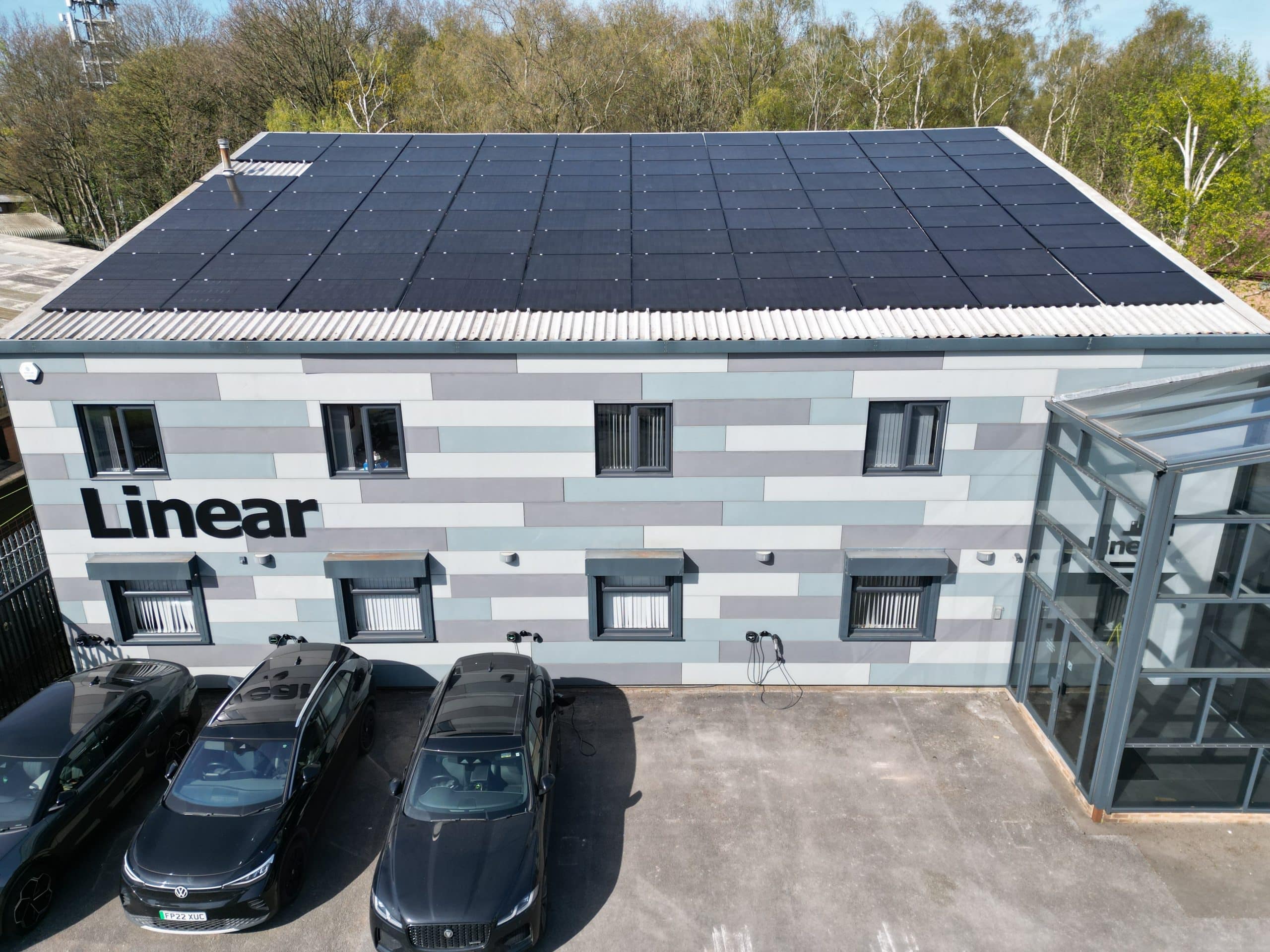
Our 67kW Linear Insulation install in Nottingham, while not a dairy site, uses comparable kit and roof structure - see the Linear Insulation case study.
Capital allowances make the numbers work
A trading dairy farm in the 25% corporation tax band (limited company structure) gets full first-year deduction on the install via Annual Investment Allowance. For a £65,000 system, that’s £16,250 tax saving in year one, dropping effective cost to £48,750. Combined with displaced electricity import and any SEG export income, payback typically runs 4-6 years on a properly sized dairy install. See our capital allowances article for the detail.
Solar for your dairy farm?
We’ll model against your half-hourly bill, design the system, file G99 with the DNO and install with one in-house team. It starts with a free remote roof and energy assessment, so we can see what fits and give you an idea of costs. Prefer us to visit first? We can do that too. MCS NIC200223.
 Request a Quote
DNO approval on rural dairy sites
Rural feeders often have limited capacity. A 50kWp+ solar install nearly always needs G99 approval (see our G99 article). Common outcomes on rural East Midlands dairy sites:
- Full approval at full export - common on sites with healthy network feed
- Approval with export limiting - common where local cable is older or rural transformer is approaching capacity
- Reinforcement cost quoted - mainly on larger installs (200kWp+) where the DNO needs a transformer change
For dairy customers wanting confidence on the grid-capacity question before committing, Spectrum’s £500 refundable DNO application service runs the G99 application first - you know the DNO answer before signing for a full install.
How dairy solar is funded
There’s no direct grant for a farm solar install. SFI doesn’t fund solar PV capital costs (see our SFI article), and the Farming Equipment and Technology Fund (FETF) funds specific listed equipment - slurry, productivity and animal-welfare items - not general rooftop solar PV. So the financial case for most dairy farms is built on Annual Investment Allowance tax relief plus SEG export income, with the install self-funded. Always check the live FETF eligible-items list on gov.uk rather than assume solar qualifies.
Three things that go wrong on dairy solar
- Over-sizing. A 200kWp install on a 100kWp-consumption farm spends a lot of time exporting at low SEG rates. Right-sizing matters - we model carefully on actual half-hourly data.
- Ignoring DNO limits. Rural feeders constrain export. Designing on assumption then redesigning post-refusal wastes time and money.
- Structural roof check. Older barns aren’t always rated for the load + wind uplift of a full panel array. Structural assessment is standard on every Spectrum agricultural install.
FAQs
How much solar can a dairy farm use?
Self-consumption ratios on properly sized dairy installs are typically high - frequently most of the generation is used on site, well above domestic levels. The combination of daytime milking, 24/7 refrigeration and hot-water buffering means most of the solar generation is used on site rather than exported. Battery storage smooths the rest.
What size solar PV for a 200-head dairy?
Typical sizing for a 200-head dairy farm in the East Midlands is 50-100kWp solar PV plus 20-40kWh battery storage. Exact sizing depends on parlour type, refrigeration load, and ancillary site activity. We model against half-hourly data from the existing electricity bill.
Can I install solar on a dairy barn roof?
Yes - trapezoidal and corrugated metal barn roofs are well suited. Renusol MetaSol mounting kit (or equivalent) attaches without penetrating the roof in most cases. Structural assessment confirms the roof can carry the additional load before install.
What payback should I expect on dairy solar?
Typical payback range is 4-6 years for a well-sized dairy solar install with AIA claimed. Without AIA, 5-7 years. The payback range is wider for smaller farms where the fixed costs of install (scaffolding, DNO works) are a larger share of the system cost.
Does solar affect milk supply contracts or quality?
No - solar PV is a parallel electricity source. The supply contract and bulk tank refrigeration continue normally. Some milk buyers explicitly value low-carbon supplier credentials, where on-site solar can support sustainability reporting.
Can I add solar to an existing tenanted dairy farm?
Yes with landlord consent, which is the practical hurdle. Many agricultural tenancies cover renewable energy retrofitting via a Farm Business Tenancy (FBT). Talk to your land agent before commissioning. Spectrum has supported tenanted-farm installs where landlord and tenant cost-share or revenue-share arrangements work.
Is solar suitable for grass-fed organic dairy?
Yes - solar PV on barn roof has no agricultural land impact, supports organic certification narrative, and reduces operational carbon intensity. Organic milk buyers (Yeo Valley, Arla’s 360 programme, Müller’s organic tier) often consider on-farm renewables in supplier scoring.
We fit dairy and arable systems across Lincolnshire - see solar panels Lincoln for local coverage.
Related reading
- benefits of installing solar panels on your farm
- SFI funding for agricultural solar
- Solar PV capital allowances: 25% tax relief for businesses
- Solar for self-storage and cold-storage facilities
For the full Spectrum service overview see agricultural solar.
Speak to Spectrum Energy Systems
MCS NIC200223. Agricultural and commercial solar installs across the East Midlands. We design, install, commission and service in-house.
Request a Quote