Monocrystalline vs Polycrystalline Solar Panels: The 2026 UK Verdict
This used to be the central panel-choice decision. Today it isn't. Monocrystalline has effectively won- the global Tier 1 supply chain (JA Solar, Aiko, Longi) consolidated almost entirely around n-type monocrystalline cells, and polycrystalline panels are essentially absent from new UK residential installs in 2026. Modern mono panels hit 22-25% efficiency vs the 15-17% typical of legacy poly. Aesthetics, low-light performance, temperature coefficient and warranty terms all favour mono too. Spectrum doesn't quote polycrystalline.
Why this comparison still gets searched
2015-2020 era installation guides made polycrystalline the value option. The price gap closed around 2020, manufacturing shifted to mono almost entirely by 2022, and by 2026 you simply can't get a sensible new domestic install in polycrystalline from a UK Tier 1 supplier. The comparison hasn't gone away in search results - but the right answer to "which should I install today?" is monocrystalline, full stop.

In This Guide
Monocrystalline solar panels - what they are
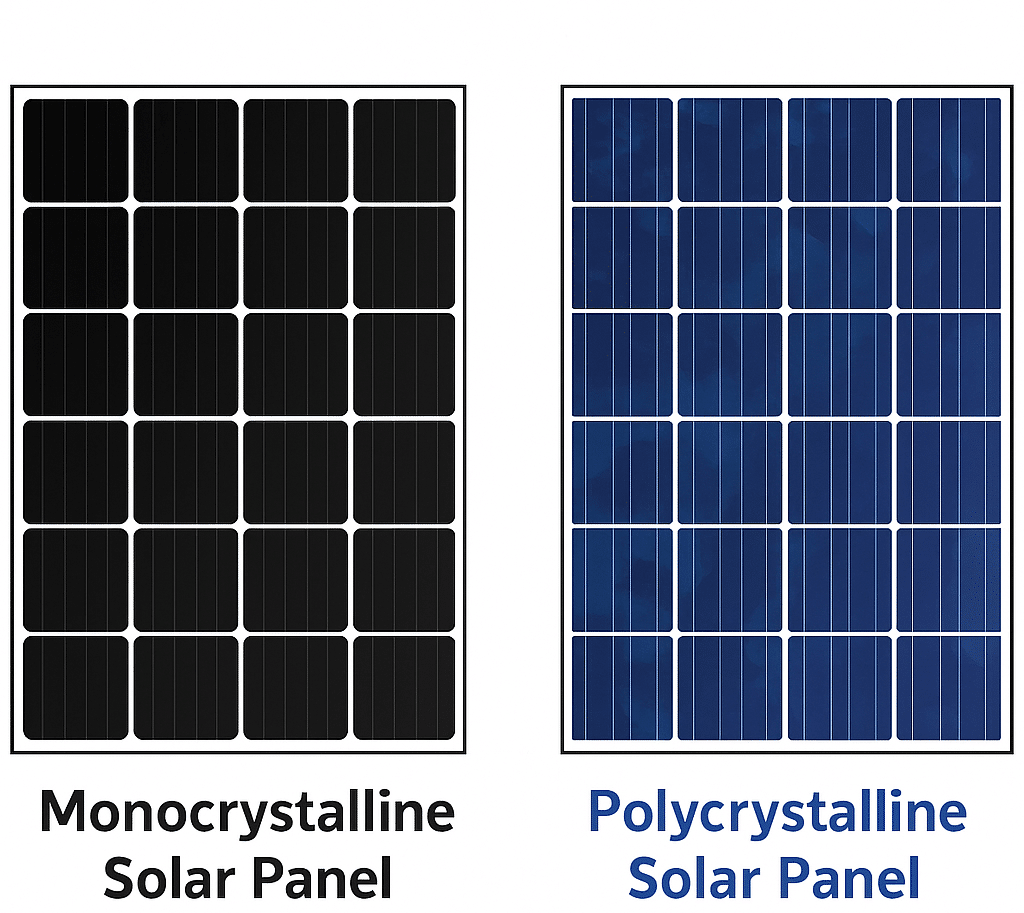
Monocrystalline panels use silicon cells grown from a single, continuous silicon crystal (the Czochralski process). The result is a uniform, high-purity wafer that converts sunlight to electricity more efficiently than alternatives. Visually: uniform black cells, often with rounded corners, set in a black or silver frame.
Modern monocrystalline subtypes - PERC, TOPCon, HJT, and Aiko's All-Back-Contact (ABC) - refine the cell architecture for higher efficiency. The Tier 1 panels Spectrum fits in 2026 sit in the 22-25% efficiency band.
Polycrystalline solar panels - what they were
Polycrystalline (also called “multi-crystalline”) panels were manufactured by melting multiple silicon crystals together. Cheaper to produce than mono, with a distinctive mottled blue appearance. Efficiency was lower because the boundaries between crystals impede electron flow.
In their heyday (roughly 2010-2018) polycrystalline panels dominated UK residential solar on price. As mono manufacturing scaled, mono costs fell below poly, and the market shifted decisively. By 2022 most Tier 1 manufacturers had ended polycrystalline production for new lines. By 2026 they're effectively legacy stock only.
Side-by-side comparison
| Factor | Monocrystalline (2026) | Polycrystalline (legacy) |
|---|---|---|
| Efficiency (STC) | 22-25% | 15-17% |
| Cost per kWp (UK 2026) | £1,200 - £1,800 | n/a - not commercially available new |
| Appearance | Uniform black | Mottled blue |
| Low-light performance | Excellent (UK climate friendly) | Mediocre |
| Temperature coefficient | -0.27% to -0.32%/°C | -0.35% to -0.45%/°C |
| Roof area for 4kWp | ~16-20 m² | ~24-30 m² |
| Warranty terms | 25-30 years | 20-25 years (existing) |
| Spectrum fits? | YES - JA Solar, Aiko, Longi | NO - not specified for new installs |

Why monocrystalline won
Where mono is better
- Higher efficiency - more kWp from limited roof area
- Better low-light performance for diffuse UK conditions
- Lower temperature coefficient - less summer derating
- Uniform black aesthetic - preferred for residential
- Longer warranties from Tier 1 manufacturers
- Tighter manufacturing tolerances, lower defect rates
What poly used to offer (no longer)
- Lower £/kWp - this advantage has gone
- Simpler manufacturing - mono manufacturing has caught up
- Wider supply chain - the inverse is now true
- Acceptable warranty - mono now exceeds it
The price gap closed years ago
The historical poly cost advantage was the main reason it dominated 2010-2018. By 2020 monocrystalline manufacturing scale had pulled cost-per-watt below polycrystalline. Today, mono is both cheaper AND better. There's no commercial reason to install poly on a new UK roof.
UK 2026 context
UK residential solar in 2026 effectively means monocrystalline. The PV*SOL design models we run for every Spectrum quote use Tier 1 mono panels exclusively. The MCS-accredited supply chain has consolidated around mono. Even the price-sensitive end of the market - PERC-cell mono - outperforms what polycrystalline could offer at the same price.
Customers who specifically ask about polycrystalline are usually one of two cases:
- They have existing poly panels from a 2015-era install and are asking whether to retain or replace
- They've read older comparison guides and assume poly is still a viable budget option
Both groups get the same answer: keep working poly running until it stops earning, and specify mono for any new install.
What Spectrum fits
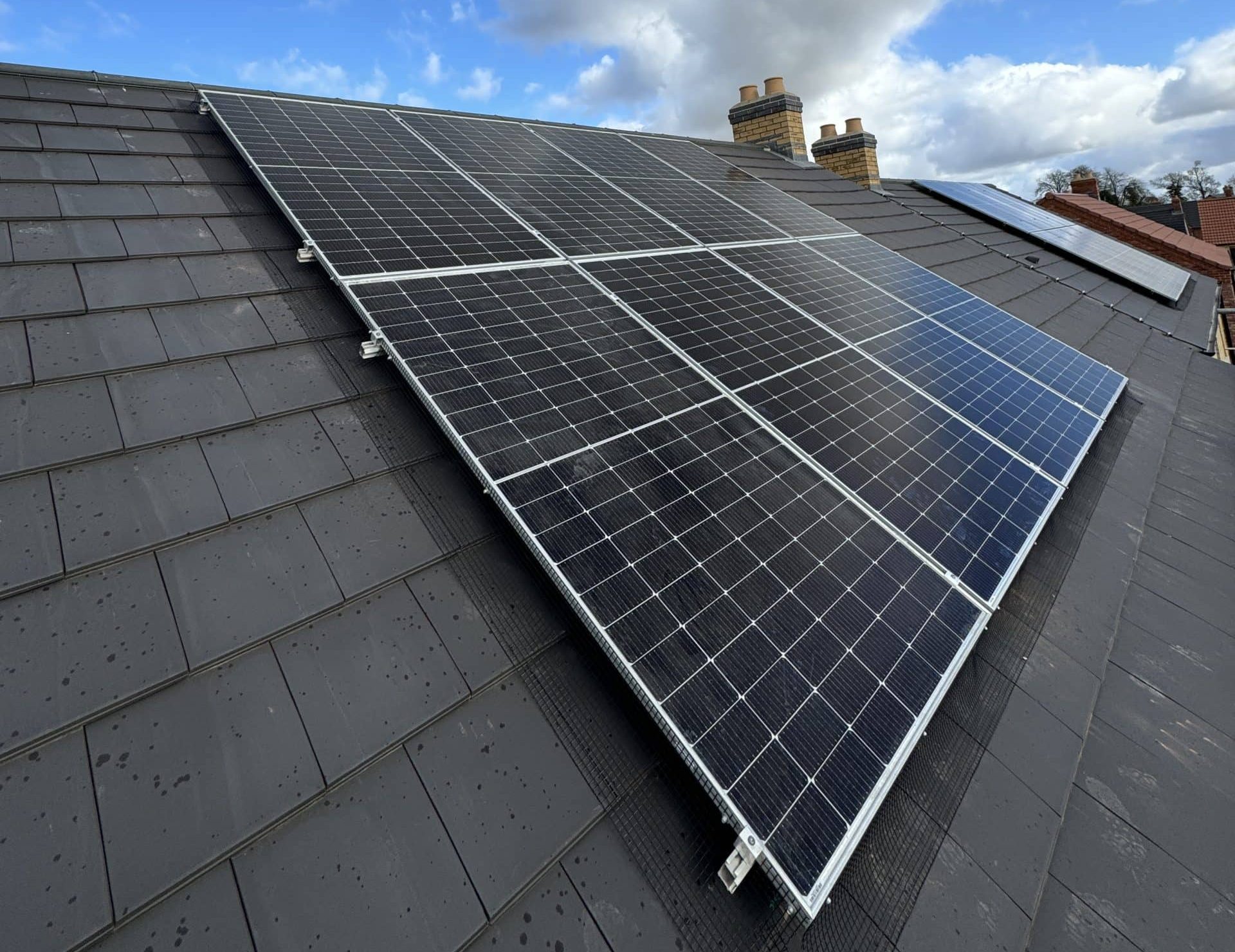
- JA Solar DeepBlue n-type TOPCon- our default volume panel. 22.5-23.6% efficiency, 500-550W wattage range, 30-year linear power warranty.
- Aiko N-Type ABC- the premium option. 23.5-24.2% efficiency, all-black aesthetic, excellent diffuse-light performance. Fitted on roofs where space is tight or aesthetics matter.
- Longi TOPCon- available on request. Tier 1 with strong supply chain and a 25-year warranty.
All three pair with a Solis hybrid inverter and a Fogstar (LV) or Pylontech Force H3 (HV) battery, with optional Home Assistant + Predbat for tariff automation. See our 2026 solar panel technology trends article for the deeper kit overview.
Should you replace existing polycrystalline panels?
Generally, no - if your poly system is generating in line with its PV*SOL forecast and the panels look visually intact, leave them. The economics of replacing working panels rarely work out. Where replacement makes sense:
- Panels are 10+ years old and visibly degraded (yellowing backsheet, cracked glass)
- You need significantly more generation than the existing system delivers and the roof is full
- You're re-roofing anyway and the panels need to come down
- Multiple panels have already failed and warranty claims aren't paying out
If you're in any of these cases, we can quote both retrofit-additions and full-replacement options after a site visit.
Want a 2026-spec install on your home?
Spectrum Energy Systems - MCS NIC200223. Tier 1 monocrystalline panels, Solis hybrid inverters, Fogstar/Pylontech LFP batteries. Honest payback ranges, no upsell to polycrystalline you don't need.
Request a feasibility assessmentFAQs
Are polycrystalline solar panels still made in 2026?
Barely. Global PV manufacturing has shifted almost entirely to monocrystalline silicon. Polycrystalline panels are essentially absent from new UK residential installs in 2026 - Tier 1 manufacturers (JA Solar, Aiko, Longi) consolidated their production lines around n-type monocrystalline cells years ago. You'll still find polycrystalline on existing 2015-2018 era installs but you can't sensibly buy them new at scale.
Which is better, monocrystalline or polycrystalline?
Monocrystalline wins on every metric that matters in 2026: efficiency (22-25% vs 15-17%), aesthetic (uniform black vs mottled blue), low-light performance (better diffuse-light handling), temperature coefficient (better summer performance), and warranty terms (25-30 years standard vs 20-25 years for older poly). The price gap that historically favoured polycrystalline disappeared around 2020 - mono is now both better AND cheaper per kWp.
What does Spectrum install?
Tier 1 monocrystalline panels exclusively - JA Solar DeepBlue, Aiko N-Type ABC, or Longi TOPCon depending on customer preference and roof constraints. We don't quote polycrystalline because the supply chain has moved on and we couldn't honestly recommend a 2026 install at 16% efficiency when 23% is the new standard. Paired with Solis hybrid inverters and Fogstar (LV) or Pylontech (HV) batteries.
Should I replace my polycrystalline panels with monocrystalline?
Generally no - if your existing poly system is generating in line with its original PV*SOL forecast, leave it. The economics of replacing working panels rarely work. Where replacement makes sense: panels are 10+ years old and visibly degraded, you need more capacity than the existing roof has, or you're re-roofing anyway. We can quote both retrofit and full-replacement options after a site visit.
Related reading
- Types of solar panels
- Aiko N-Type ABC panel review
- New solar panel technology trends 2026
- How efficient are solar panels in 2026?
- Black vs blue solar panels
Speak to Spectrum Energy Systems
MCS NIC200223. We design, install and warranty solar PV across the East Midlands. Tier 1 monocrystalline by default.
Request a feasibility assessment