
Is SEG Income Taxable? Solar Export Payments and Tax
For the typical homeowner, no: UK tax law carries a specific exemption for income from domestic microgeneration, and Smart Export Guarantee payments from a normally sized system on the home you live in sit inside it. The exemption has two conditions worth knowing, the system is on your own home, and it is not deliberately oversized to generate significantly more than the household uses, and separate rules apply to landlords, businesses and export-led arrays. We are installers, not tax advisers, so treat this as the map and your accountant as the authority on your own case.
In This Guide
The domestic exemption
Parliament decided years ago, back in the Feed-in Tariff era, that it made no sense to tax households for generating their own electricity, so the legislation contains a targeted income tax exemption for domestic microgeneration. Its effect, as HMRC's guidance describes it, is that income a household receives from a small-scale generation system on its own home, which today means Smart Export Guarantee payments and legacy FiT payments alike, is simply not taxable income for the ordinary owner-occupier. No declaration, no self-assessment entry, no slice for the Treasury: the export credits on your energy account are yours. It is one of the quieter advantages of the domestic solar framework, sitting alongside 0% VAT on installation.
The two conditions
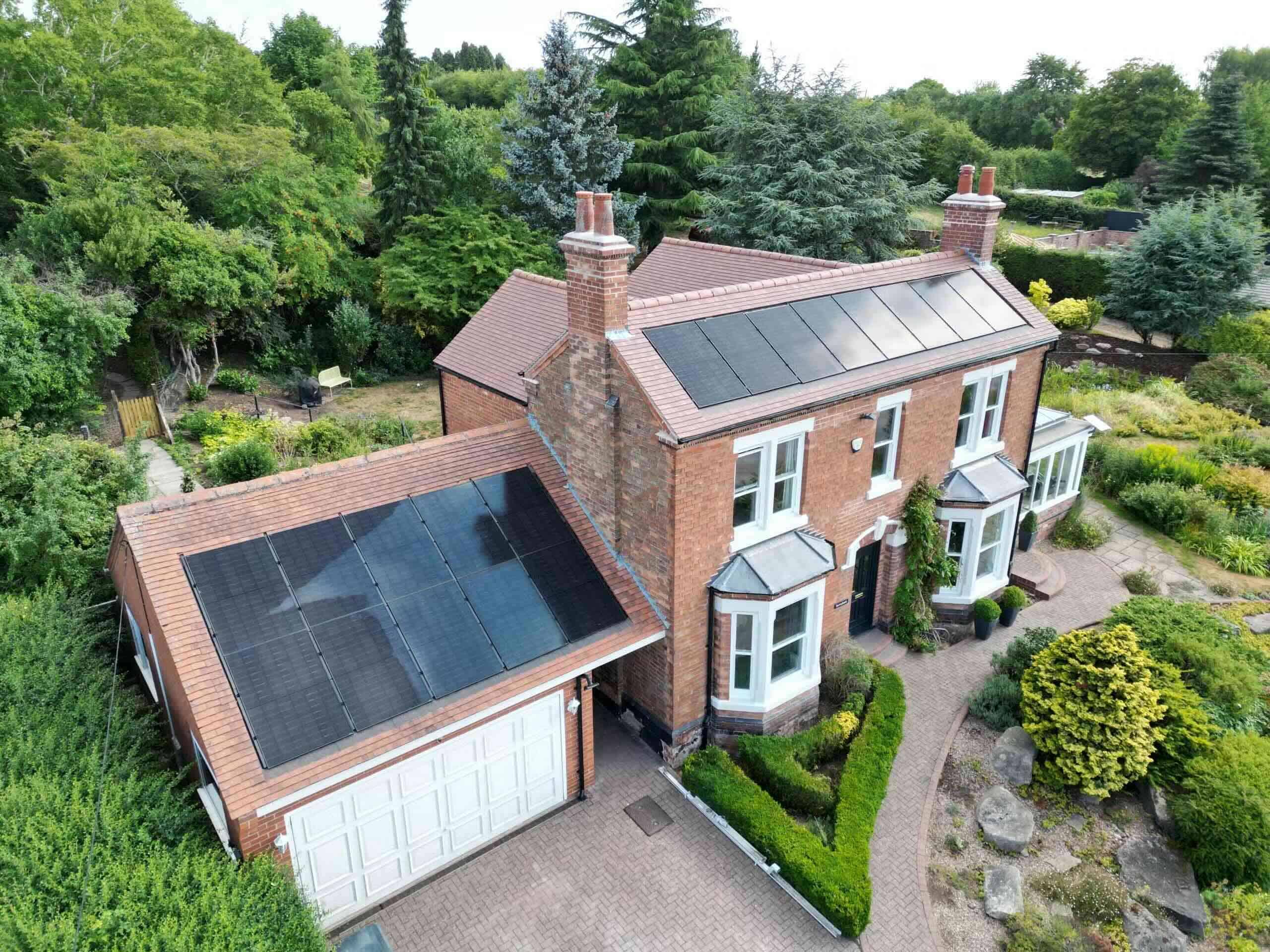
- The system is on the home you occupyThe exemption is for householders generating at, or near, their own residence, like the owner-occupied install pictured. Panels on a property you rent out are a different tax animal, below.
- It is not significantly oversizedThe exemption assumes you installed to power your home, not to run a micro power station. HMRC's guidance frames this as the system not being intended to generate significantly more electricity than the household consumes, a test a normally designed domestic system passes comfortably, since proper sizing works from your usage in the first place.
Meet both, and the ordinary homeowner's SEG income sits outside income tax entirely.
The trading allowance backstop
Even where someone's circumstances put them at the edges of the exemption, a second cushion exists: the trading and miscellaneous income allowance lets individuals receive up to £1,000 of such income per tax year tax-free, no declaration needed. Typical domestic export earnings, a few hundred pounds a year for most systems, per the going rates in our SEG comparison, sit well under that ceiling. The practical upshot: for the overwhelming majority of households the tax answer is doubly settled, exempt under the microgeneration rules, and beneath the allowance even if they were not. Where a battery-equipped home on a time-of-use tariff pushes export income toward four figures, that is the moment to have the five-minute conversation with an accountant rather than assume.

When solar income IS taxable
- Rental propertiesA landlord receiving export income from panels on a tenanted property is outside the owner-occupier exemption; it is property business income territory, covered in principle in our landlord guide and in detail by an accountant.
- BusinessesCommercial generation income is business income, taxed normally, with capital allowances working the other side of the ledger.
- Export-led home arraysDeliberately oversize a domestic system to farm export income and you step outside the exemption's intent; the income becomes potentially taxable, which is worth knowing before chasing that design.
- Farms and diversification schemesGeneration as an enterprise follows business rules, per our farm income guide.
What to actually do
For the standard case, nothing: an owner-occupier with a normally sized system has no solar entry to make on any tax return, and no records HMRC requires beyond what your energy supplier already issues. Sensible hygiene still applies, keep your SEG statements with the system paperwork, since they double as the performance record our house-sale guides recommend keeping anyway. Talk to an adviser if any of the exception categories above describes you, if your export income is heading past a few hundred pounds a year, or if your circumstances are simply unusual; tax questions are cheap to ask early and expensive to ignore late. And if you are still at the planning stage, note the pleasing symmetry: the same right-sizing that makes a system pay best also keeps its income squarely inside the exemption.
Systems sized right from the start
Free design and quote: a system designed from your actual usage, one all-in price, with the export paperwork handled at commissioning. Call 0115 773 7575, 8am to 8pm, Monday to Friday.
Get EstimateFrequently asked questions
Do I pay tax on SEG payments?
For the ordinary owner-occupier with a normally sized system, no: a specific exemption for domestic microgeneration keeps SEG income outside income tax, with the £1,000 trading allowance as a further backstop. Landlords, businesses and deliberately oversized systems sit outside the exemption and should take advice.
Do I need to declare solar income on my tax return?
Not in the standard domestic case: exempt income needs no declaration, and most households have nothing to enter. Keep your SEG statements with the system paperwork as a record, and speak to an accountant if you fall into one of the exception categories, such as renting the property out.
What makes a solar system too big for the tax exemption?
The guidance frames it as intent: the exemption covers systems installed to supply the household, not to generate significantly more than it consumes. A normally designed system sized from your usage passes comfortably. A deliberately export-led array can step outside it, worth knowing before commissioning that design.
Is Feed-in Tariff income taxable?
Legacy FiT payments to owner-occupiers sit under the same domestic microgeneration exemption as SEG, so the ordinary household pays no tax on them. The same exceptions apply: rental properties and business generation follow their own rules, where an accountant earns their fee.
Do landlords pay tax on solar export income?
Generally yes, the owner-occupier exemption does not cover panels on a property you let, and export income joins the property business calculation, with allowable costs on the other side. The overall investment can still stack up well; it just needs an accountant's structuring rather than assumption.
Related reading
- Selling electricity back to the grid
- SEG rates comparison
- Solar panels for landlords
- Solar and capital allowances (business)
- 0% VAT on solar explained
Straight answers, sized-right systems
We are Spectrum Energy Systems, MCS certified (NIC200223), installing solar across the East Midlands since 2011, designed from your usage so the numbers work on every front. Call 0115 773 7575, 8am to 8pm, Monday to Friday.
Get in touch