Debunking 8 Common Myths About Solar Power
Solar energy has become one of the fastest-growing renewable energy sources worldwide, with UK installations reaching record levels. Yet despite proven technology and thousands of successful installations, outdated misconceptions continue to discourage homeowners from exploring solar power.
From concerns about cloudy British weather to questions about solar panel lifespan and roof damage, these solar power myths often stem from outdated information or simple misunderstandings. Are solar panels expensive? Are solar panels bad for the environment? Do solar panels increase property value? The truth about solar panels tells a very different story—one of reliable performance, minimal maintenance, and genuine long-term value.
The Facts About Solar: Modern solar panels work effectively even on cloudy days, last 25-30+ years with minimal maintenance, require no moving parts, and can increase property value whilst generating clean, renewable electricity. Many common myths about solar power stem from outdated technology concerns that no longer apply to today's advanced systems.
This guide addresses the most persistent solar panel myths and solar energy myths we encounter, providing factual information to help you make an informed decision about solar energy for your home.
Myth #1: Solar Panels Only Work in Sunny Climates
"The UK is too cloudy for solar panels to work effectively. You need constant sunshine for solar power to be worthwhile."
The TruthSolar panels generate electricity from daylight, not direct sunlight. Whilst output is higher on bright sunny days, panels continue producing energy throughout overcast conditions—typically 10-25% of peak capacity on cloudy days. This makes solar panels highly effective in the UK climate.
Consider this: Germany, with weather patterns similar to the UK, consistently ranks among Europe's top solar energy producers. The UK's moderate temperatures actually benefit solar panel performance, as solar panel efficiency decreases in extreme heat. Cooler British conditions often mean better energy conversion than scorching Mediterranean summers.
Modern solar panel technology has advanced significantly. Contemporary panels feature improved low-light performance, capturing diffuse light that penetrates cloud cover. A properly designed system accounts for UK weather patterns, sizing panels and inverter configurations to maximise annual generation rather than peak sunny-day output.
East Midlands installations typically generate 850-1,000 kWh per kWp annually—enough to meaningfully offset household electricity consumption regardless of our famously unpredictable weather.
Myth #2: Solar Panels Aren't Accessible for Most Homeowners
"Solar panel installation is only practical for certain types of homes or specific situations."
The TruthSolar technology has advanced significantly, making installations viable for a wide range of UK properties. Modern panel designs, flexible mounting systems, and improved efficiency mean most homes can benefit from solar energy generation.
Today's solar systems accommodate diverse property types. Whether you have a pitched roof, flat roof, or limited space, professional installers can design solutions that maximise energy generation for your specific situation. Solar panels lasting 25-30+ years provide decades of reliable performance.
Several factors have expanded solar accessibility:
- Improved panel efficiency: Modern panels generate more power from the same roof area
- Flexible mounting options: Solutions for various roof types, orientations, and conditions
- Government support: Solar incentives for homeowners encourage adoption
- Smart Export Guarantee: Recognition for excess energy exported to the grid
- Battery integration: Home battery storage maximises self-consumption
Each property has unique characteristics affecting solar suitability. A professional assessment evaluates your specific circumstances—roof condition, orientation, shading, and energy usage—to determine the optimal system design for your home.
Myth #3: Solar Panels Damage Your Roof
"Installing solar panels will damage my roof, cause leaks, and lead to repair problems."
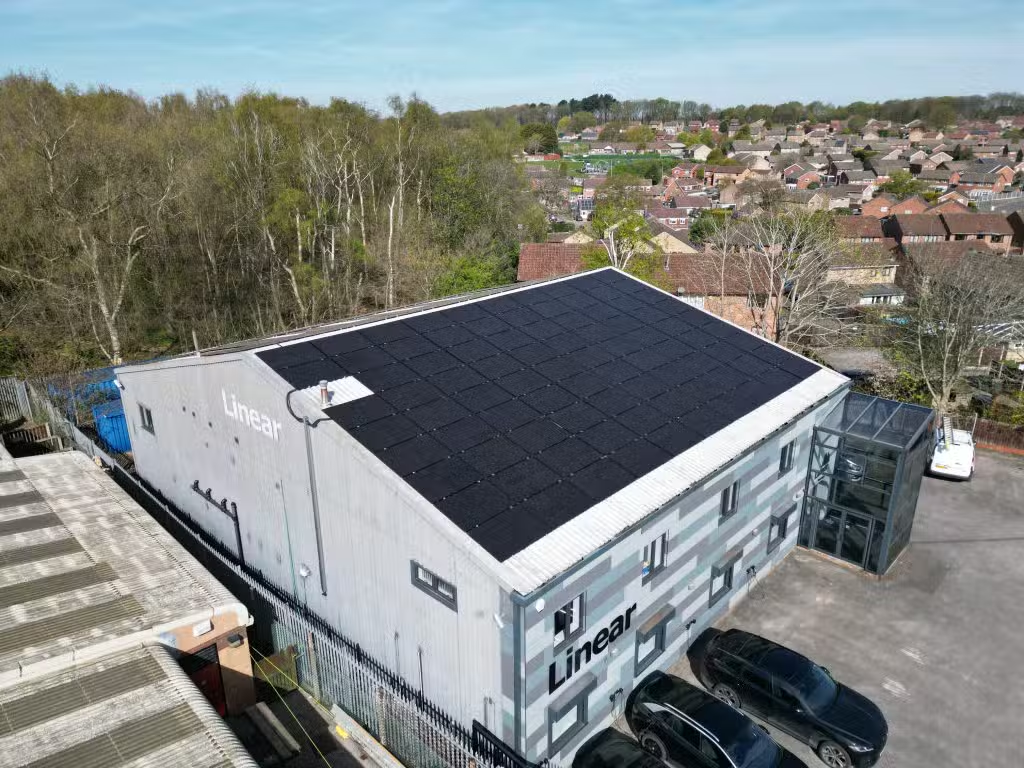
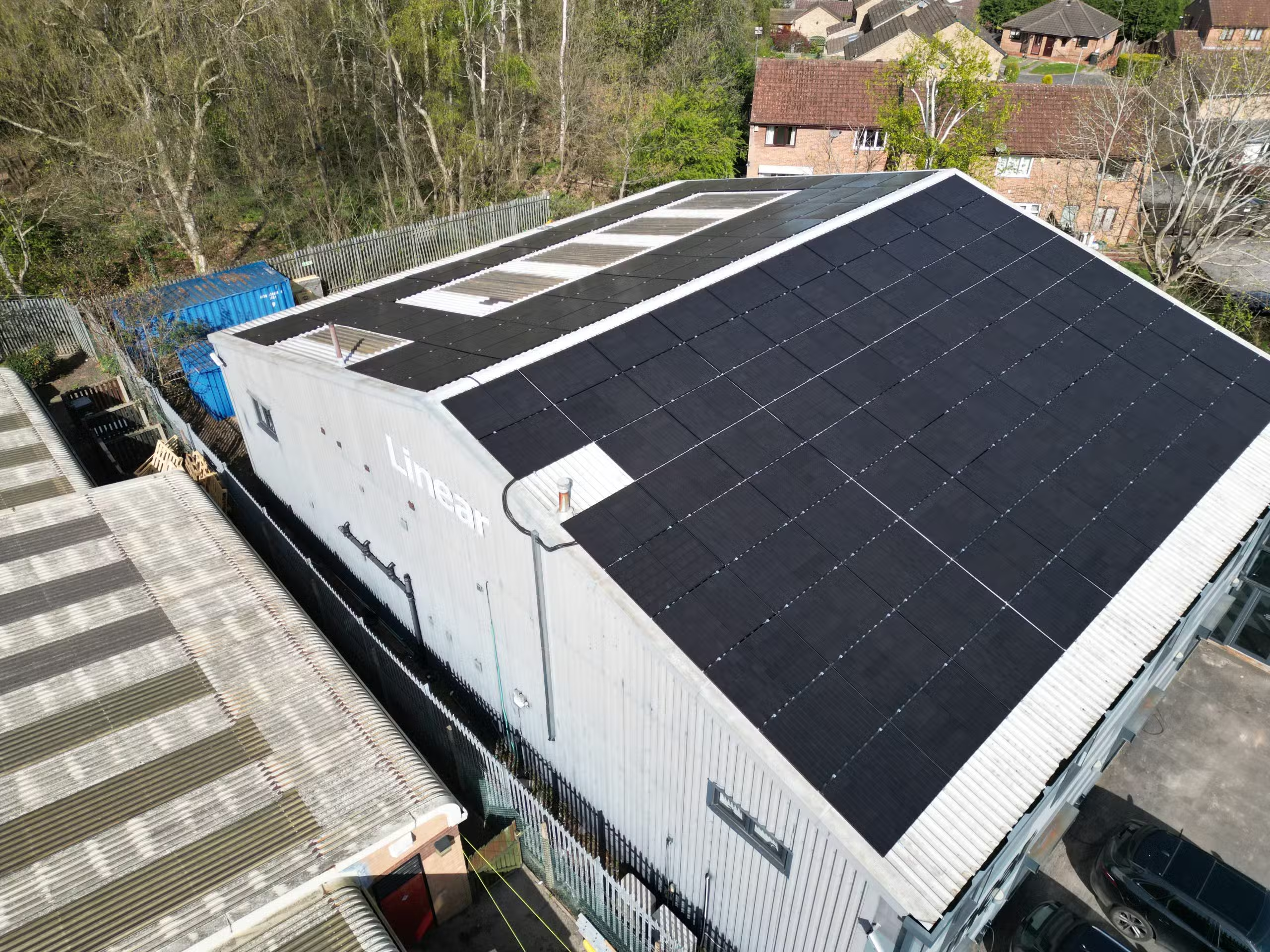
The TruthProfessional solar installation actually protects your roof. Modern mounting systems are designed to maintain roof integrity, and panels shield covered areas from UV degradation, rain, and weather exposure.
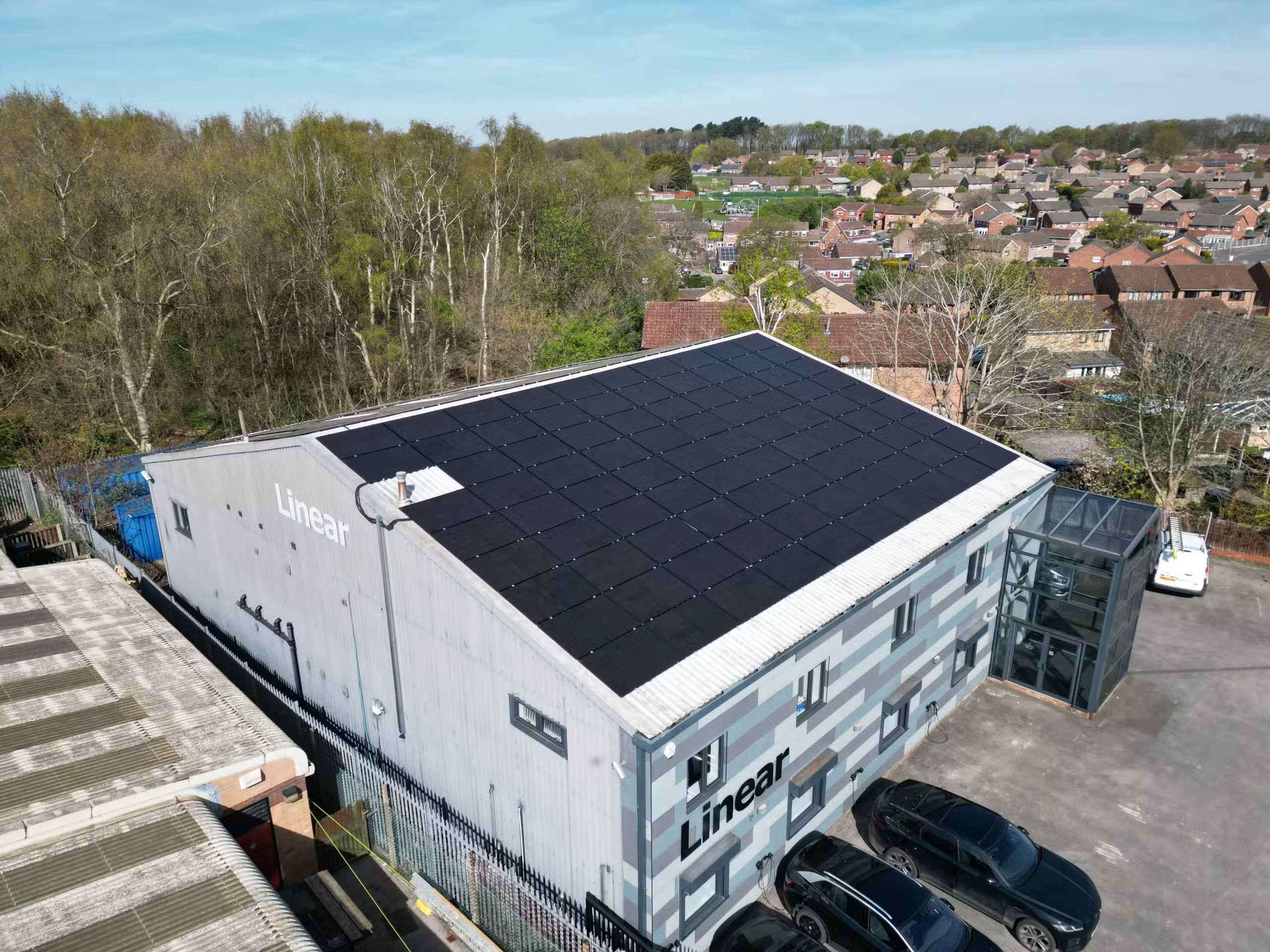
MCS-accredited installers follow rigorous standards ensuring safe, warranty-protected installations. Expert solar installation services include thorough roof assessment before work begins, identifying any existing issues requiring attention.
Modern mounting approaches include:
- Rail-mounted systems: Secure brackets anchored to roof rafters with weatherproof seals
- In-roof systems: Panels integrated flush with tiles for modern construction projects
- Ballasted systems: Non-penetrative options for flat roofs using weighted frames
Quality installers provide workmanship guarantees covering installation integrity. The structural assessment conducted before installation ensures your roof can safely support panel weight and that mounting positions avoid vulnerable areas. Learn more in our step-by-step solar installation guide.
Important: Always use MCS-accredited installers. This certification ensures adherence to industry standards, protects warranties, and maintains eligibility for government incentives. Learn about our accreditations and why they matter for your installation.
Myth #4: Solar Panels Are Inefficient
"Solar panels waste most of the sunlight they receive. The technology is too inefficient to be practical."
The TruthModern solar panels routinely achieve 20%+ efficiency—converting one-fifth or more of sunlight into usable electricity. Premium panels exceed 22% efficiency, and technology continues advancing.
Understanding solar panel efficiency requires context. Whilst 20% might seem modest compared to other technologies, it represents remarkable performance given solar energy is free and abundant. A typical domestic system generates thousands of kilowatt-hours annually from a relatively small roof area.
Several technologies enhance modern panel performance:
- PERC cells: Passivated Emitter Rear Contact technology captures more light
- TOPCon technology: Tunnel Oxide Passivated Contact cells achieve 24-26% efficiency
- Half-cut cells: Reduced resistance losses improve output
- Bifacial panels: Capture reflected light from both sides
System design matters as much as panel efficiency. Proper sizing, optimal inverter selection, and professional installation ensure maximum energy harvest. Next-generation solar technology continues pushing efficiency boundaries.
Compare today's monocrystalline panels to systems from a decade ago—efficiency improvements of 25-30% demonstrate rapid technological progress that shows no signs of slowing.
Myth #5: Solar Panels Require Constant Maintenance
"Solar panels need frequent, intensive maintenance. The ongoing hassle outweighs any benefits."
The TruthSolar panels have no moving parts and require minimal maintenance. Most systems operate reliably for decades with just occasional cleaning and periodic professional checks.
The simplicity of solar technology is its maintenance advantage. Unlike mechanical systems with bearings, belts, or filters, solar panels simply sit quietly converting sunlight to electricity. UK rainfall often provides natural cleaning, washing away dust and debris.
Recommended solar panel maintenance typically includes:
- Visual inspection: Annual check for obvious damage or debris accumulation
- Occasional cleaning: Remove stubborn dirt, bird droppings, or fallen leaves
- Monitoring review: Check system output matches expected generation
- Professional service: Periodic inspection of electrical connections and mounting
Solar system health check servicing provides peace of mind whilst identifying any issues before they affect performance. Modern monitoring systems alert you to output anomalies, enabling prompt attention to genuine problems. Explore our comprehensive solar panel maintenance support and cleaning guide.
Myth #6: Solar Panels Are Bad for the Environment
"Manufacturing solar panels creates more pollution than they ever offset. The environmental footprint makes them pointless."
The TruthSolar panels typically offset their manufacturing carbon footprint within 1-3 years of operation, then generate clean electricity for 25+ additional years. Lifecycle analysis consistently shows substantial net environmental benefit.
The carbon payback period—time required to offset the energy consumed in manufacturing—has shortened dramatically as production efficiency improves. Modern panels offset their manufacturing energy within 1-3 years, then deliver decades of zero-emission electricity generation.
Environmental benefits compound over time:
- Zero operational emissions: No carbon dioxide, particulates, or pollutants during generation
- Reduced grid demand: Less reliance on fossil fuel power stations
- Manufacturing improvements: Cleaner production processes as the industry matures
- Recyclability: End-of-life panels processed for material recovery
Pairing solar with home battery storage maximises self-consumption, reducing grid dependence further. Adding smart EV charging multiplies environmental benefits by powering electric vehicles with your own clean energy.
Myth #7: Solar Panels Lower Property Value
"Solar panels make homes harder to sell. Buyers don't want them, and they reduce property value."
The TruthResearch consistently demonstrates that solar installations increase property value. Energy-efficient homes attract buyers seeking sustainability and reduced environmental impact.
Modern buyers increasingly prioritise energy efficiency and environmental responsibility. Properties with renewable energy infrastructure appeal to forward-thinking purchasers who value sustainability and energy independence.
Value-adding factors include:
- Energy generation: On-site renewable electricity production appeals to environmentally-aware buyers
- Energy independence: Reduced reliance on the national grid
- Environmental credentials: Appeal to eco-conscious purchasers
- Modern infrastructure: Ready for EV charging and smart home energy systems
Properties with solar often sell faster than comparable non-solar homes. The transferable warranty and demonstrated performance history provide buyers confidence in the installation's quality and longevity. View our home solar transformation case studies showing real installations across the region.
Myth #8: Solar Panels Cannot Be Recycled
"Solar panels end up in landfill after their useful life. They create electronic waste that can't be processed."
The TruthSolar panels are highly recyclable, with 85-95% of materials recoverable for reuse. The UK's solar recycling infrastructure continues expanding to handle increasing panel volumes.
Panel composition favours recycling:
- Glass: Approximately 75% by weight, readily recyclable
- Aluminium frame: 8-10%, infinitely recyclable metal
- Silicon cells: 3-5%, recoverable for reuse
- Copper wiring: Valuable recyclable metal
- Plastics: Backsheet and encapsulation materials
European WEEE regulations require manufacturers to fund end-of-life recycling, ensuring responsible disposal. Specialist recyclers extract valuable materials for reuse in new panels or other products. As early UK installations reach end-of-life, recycling capacity expands accordingly.
The environmental benefits of solar panels extend through their full lifecycle, from manufacturing through operation to responsible end-of-life processing.
Curious About Solar for Your Home?
Now you know the truth about solar panels, why not explore what solar could do for your property? Our team provides honest, no-obligation assessments tailored to your specific circumstances.
Get Your Free Quote Read Our Homeowner's GuideWhy Solar Energy Is More Reliable Than Ever
Understanding these solar panel misconceptions reveals a technology that has matured significantly. Today's solar installations benefit from decades of refinement, proven performance, and robust component supply chains.
Key reliability improvements include:
- Panel durability: 25-30 year warranties reflect manufacturer confidence in longevity
- Inverter technology: Modern inverters offer 10-25 year lifespans with excellent reliability
- Monitoring systems: Real-time performance tracking identifies issues immediately
- Installation standards: MCS accreditation ensures consistent quality across installers
- Grid integration: Mature G98/G99 processes streamline connection approvals
The UK solar industry has installed millions of panels since 2010, building extensive experience and proven track records. Commercial and residential installations across diverse properties demonstrate adaptability to varying requirements.
Integration with complementary technologies enhances solar's value further. Battery storage benefits include storing daytime generation for evening use, whilst solar-powered EV charging maximises self-consumption.
Is Solar Power Right for Your Home?
With common solar energy myths addressed, the practical question remains: does solar make sense for your specific property? Several factors influence solar suitability and potential benefits.
Solar Suitability Factors
- Roof orientation: South-facing roofs maximise generation, though east/west orientations work well
- Shading: Nearby trees, buildings, or chimneys affecting sunlight access
- Roof condition: Structurally sound with sufficient remaining lifespan
- Available space: Roof area for desired system capacity
- Energy consumption: Higher usage typically increases self-consumption benefits
- Daytime usage patterns: When you consume most electricity
Properties with challenging characteristics may still benefit from solar with appropriate system design. Shading can be addressed through microinverter technology, whilst multi-aspect roofs can accommodate split arrays.
Professional site assessment evaluates all relevant factors, providing realistic generation estimates and system recommendations. Our ultimate guide to installing solar PV covers the complete installation process from initial enquiry to commissioning.
For commercial properties, similar considerations apply at larger scale. Commercial solar installation offers particularly strong benefits where daytime energy consumption aligns with generation profiles. Explore our complete business solar guide for comprehensive commercial information.
Frequently Asked Questions
Ready to Explore Solar for Your Home?
Spectrum Energy Systems has helped homeowners across Nottingham, Derby, Leicester, Lincoln, and the wider East Midlands since 2011. Our MCS-accredited team provides honest assessments and quality installations backed by comprehensive warranties.
Request Your Free Assessment Contact Our Team