Commercial Solar PV Panels: What They Are and Why They Matter for Your Business
Commercial solar PV panels convert sunlight directly into electricity, enabling UK businesses to generate their own power and reduce dependence on grid supply. The technology is proven, well-understood, and delivers predictable returns when systems are properly designed and installed.
This guide explains how commercial solar PV works, what distinguishes commercial systems from domestic installations, and why panel quality and installer expertise both matter for long-term performance. Whether you're exploring solar for the first time or comparing options before committing, understanding the fundamentals helps you make informed decisions.
In This Guide
Ready to Explore Commercial Solar for Your Business?
Our MCS-accredited team provides free feasibility assessments, helping you understand what's achievable for your specific site and energy requirements.
Get Your Free Assessment Speak to Our TeamWhat Are Commercial Solar PV Panels?
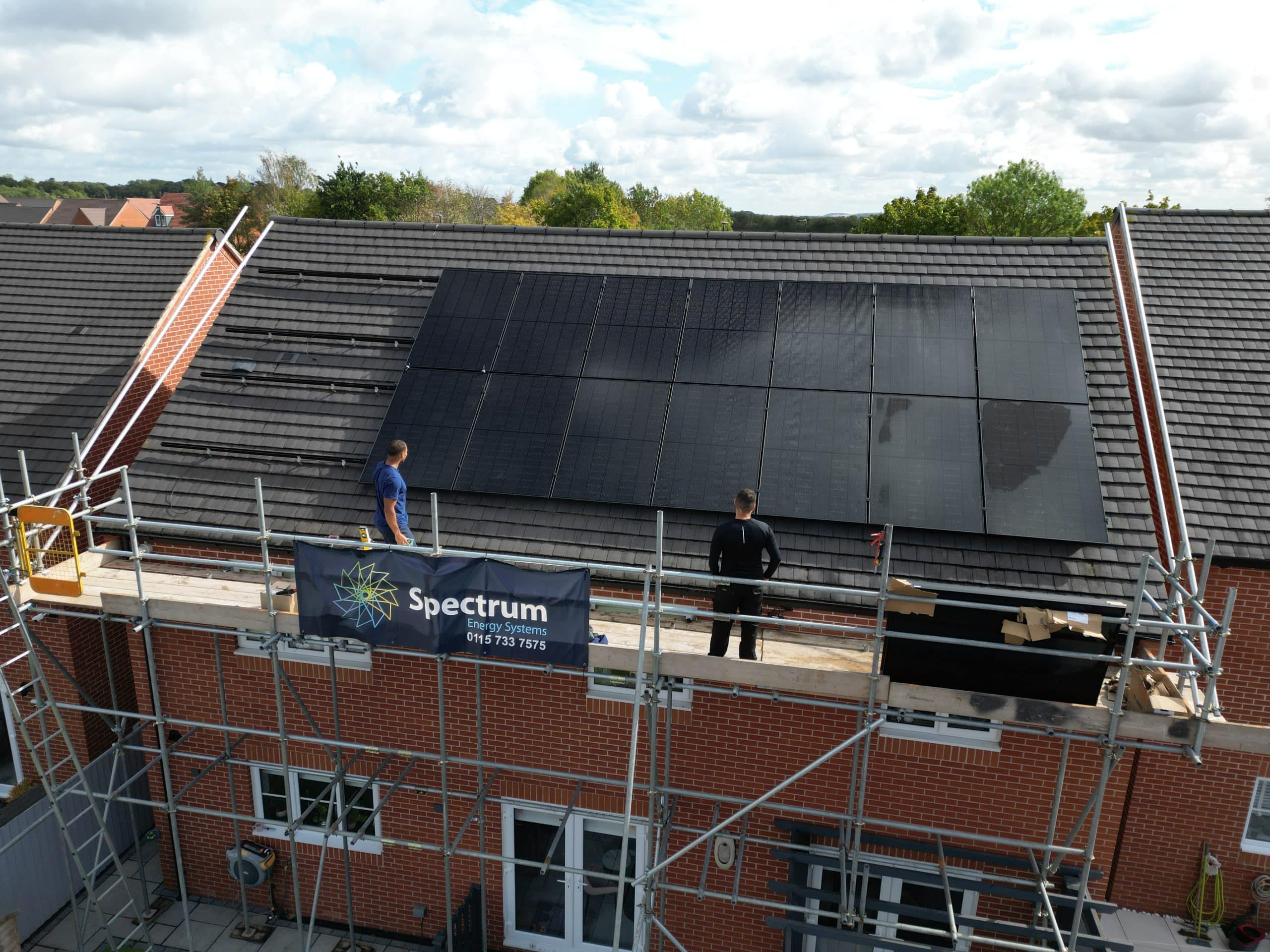
Commercial solar PV (photovoltaic) panels are electricity-generating modules designed for business premises, scaled to match the higher energy demands and larger roof areas typical of warehouses, factories, offices, and retail buildings. Also known as commercial photovoltaic panels in the UK, these systems use the same core technology as domestic panels—silicon cells that convert light energy into electrical current—but differ significantly in scale, specification, and installation complexity. Understanding how commercial solar PV panels work helps businesses make informed decisions about solar PV for commercial buildings.
Understanding how efficient solar panels are helps set realistic expectations. Modern commercial panels typically achieve 20-23% efficiency, meaning they convert that percentage of incoming sunlight into usable electricity. Whilst this might seem modest, it represents remarkable technological progress and delivers substantial energy generation across commercial roof areas.
The Science in Plain English
Solar PV panels contain multiple photovoltaic cells made from specially treated silicon. When sunlight strikes these cells, it knocks electrons loose from silicon atoms, creating an electrical current. This process—the photovoltaic effect—generates direct current (DC) electricity.
Since UK buildings use alternating current (AC), an inverter converts the DC output to grid-compatible AC power. The electricity then flows to your distribution board, powering equipment and lighting throughout your premises. Any surplus can export to the grid or charge battery storage systems.
Importantly, panels generate electricity from light, not heat. They work on cloudy days—albeit at reduced output—and actually perform more efficiently in cooler temperatures. The UK's temperate climate suits solar PV well, contrary to common assumptions.
How a Commercial Solar PV System Is Structured
A complete commercial solar PV system UK businesses install comprises several integrated components working together. When evaluating solar PV panels for business UK installations, understanding this structure helps you assess proposals effectively:
- Solar panels: The generation source, forming a solar PV array for business premises, typically arranged in strings across your roof area
- Inverters: Convert DC to AC electricity—string inverters for smaller systems, central inverters for larger arrays
- Mounting systems: Secure panels to your roof structure, designed for your specific roof type and load requirements
- Monitoring equipment: Tracks generation, consumption, and system health in real-time
- Electrical infrastructure: Cabling, isolators, and grid connection equipment
Commercial buildings typically require three-phase electrical connections, unlike the single-phase supply common in homes. Larger installations may need coordination with existing HV/LV transformers. Your installer handles these technical requirements as part of the professional solar fitting process.
Optional additions: Many commercial systems incorporate battery storage to capture surplus generation for use outside daylight hours, and export metering to track electricity sold back to the grid under the Smart Export Guarantee.
How Commercial Solar PV Panels Differ from Domestic Systems
Whilst the underlying technology is the same, commercial solar installations differ substantially from residential systems in scale, specification, and complexity. Understanding these differences helps explain why commercial projects require specialist expertise.
Scale and Output
The most obvious difference is system size. A typical domestic installation ranges from 3-6kW, generating enough to offset household electricity use. Commercial systems commonly span 50kW to 500kW, with large scale solar PV UK installations for industrial facilities exceeding 1MW. Industrial solar PV panels UK projects require specialist engineering to handle these increased capacities.
| Characteristic | Domestic System | Commercial System |
|---|---|---|
| Typical system size | 3-6 kW | 50 kW – 1 MW+ |
| Number of panels | 8-16 panels | 100-2,500+ panels |
| Annual generation | 2,500-5,500 kWh | 45,000-900,000+ kWh |
| Electrical connection | Single-phase | Three-phase |
| Grid approval | G98 notification | G99 pre-approval required |
| Design complexity | Standard configurations | Bespoke engineering design |
This scale means commercial systems can offset a meaningful percentage of business energy consumption—often 30-50% or more depending on your load profile and operating hours. Commercial solar PV wattage UK businesses typically install ranges from 50kW for smaller premises to 500kW+ for large warehouses. Explore our complete business solar guide for detailed planning information.
Equipment Specification
Commercial installations specify higher-grade components designed for demanding environments and extended operational life:
- Panels: High-efficiency monocrystalline panels with 25-30 year warranties from tier-one manufacturers
- Inverters: Industrial-grade units with advanced monitoring, remote diagnostics, and extended warranties
- Mounting: Robust systems engineered for specific roof types, wind loads, and structural requirements
- Cabling: Higher-rated cables and switchgear appropriate for commercial electrical loads
Electrical Infrastructure Requirements
Commercial solar connections involve regulatory processes that domestic installations typically avoid. Systems above 3.68kW per phase require Distribution Network Operator (DNO) notification. Installations exceeding 50kW need formal G99 applications and approval before connection—a process your installer manages but which adds project timeline.
Learn more about grid-tied vs off-grid solar systems and how commercial connections work.
Design Complexity
Commercial roofs present challenges rarely encountered in domestic work: structural load assessments across large spans, shading analysis from parapets and plant equipment, load profile matching to maximise self-consumption, and coordination with existing electrical infrastructure.
This complexity explains why commercial solar requires professional design and installation. A system that looks straightforward on paper may involve significant engineering to deliver optimal performance.
Types of Solar PV Panels Used in Commercial Installations
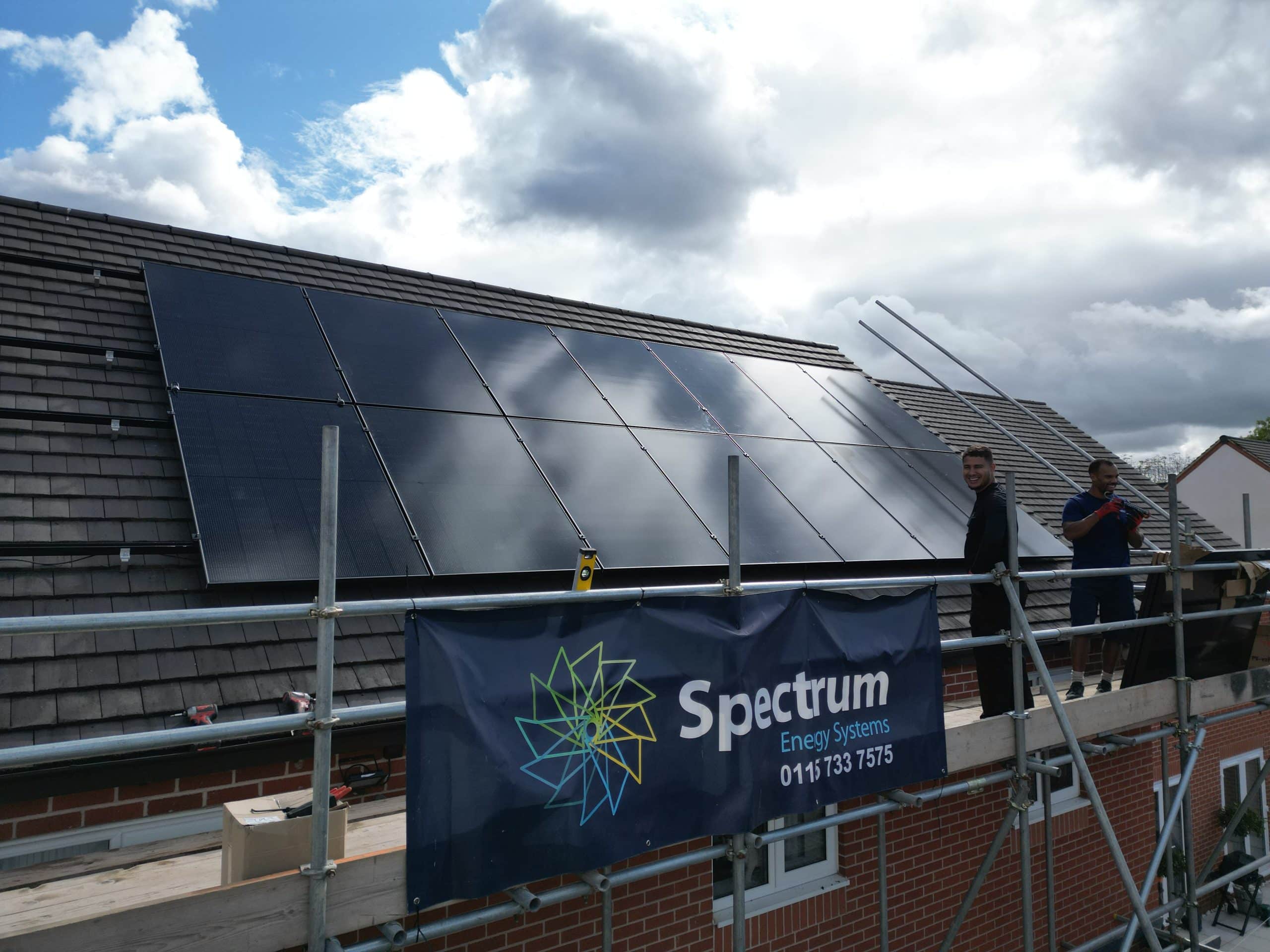
Understanding different types of solar panels helps you evaluate proposals and understand why installers recommend specific products.
Monocrystalline Panels
Monocrystalline solar panels commercial UK installations predominantly use dominate the market and represent the standard specification for new projects. Cut from single silicon crystals, they achieve the highest efficiency ratings (20-23%) and best performance per square metre.
Key advantages for commercial use:
- Maximum output from available roof space
- Superior low-light and high-temperature performance
- Lower degradation rates (typically 0.3-0.5% annually for tier-one panels)
- Extended warranties from established manufacturers
For most commercial projects, monocrystalline panels represent the default choice unless specific circumstances suggest alternatives.
Polycrystalline Panels
Polycrystalline panels use multi-crystal silicon structures achieving 15-18% efficiency. Production has largely ceased as manufacturing advances made monocrystalline the preferred choice whilst offering superior efficiency.
You may encounter polycrystalline panels in older installations, but they're increasingly rare in new commercial projects. Our monocrystalline vs polycrystalline comparison explains the technical differences.
Bifacial Panels
Bifacial panels generate electricity from both front and rear surfaces, capturing light reflected from the roof or ground beneath. They're particularly effective on flat commercial roofs with light-coloured membranes or ground-mount installations with reflective surfaces.
Yield improvements of 5-15% over standard panels are achievable in optimal conditions, though benefits depend heavily on installation specifics. Bifacial technology is growing in UK commercial applications, particularly for large commercial building installations.
Half-Cut and Multi-Busbar Technology
Modern panels incorporate cell-level improvements that enhance real-world performance:
- Half-cut cells: Reduce resistive losses and improve shade tolerance
- Multi-busbar designs: Better current collection and crack resistance
- PERC technology: Enhanced light capture through rear-side passivation
These features are now standard across tier-one manufacturers, meaning you benefit automatically when specifying quality panels. Learn more about next-generation solar technology developments.
How Commercial Solar PV Panels Perform in the UK
The UK receives less sunshine than Mediterranean countries, but commercial solar PV efficiency makes these systems highly viable for British businesses. Understanding realistic performance expectations helps you evaluate proposals and financial projections accurately.
UK Solar Irradiance: Better Than You Might Think
The UK receives 60-70% of the solar irradiance that southern European countries enjoy—sufficient for commercially attractive returns. Annual peak sun hours vary by region:
Seasonal variation is significant—summer months generate 4-5 times winter output—but annual totals remain predictable year-on-year. System design accounts for this variation when modelling financial returns.
Realistic Generation Figures for Commercial Systems
A well-designed 100kW commercial system in the East Midlands typically generates 90,000-100,000 kWh annually. Commercial solar panel output UK businesses can expect depends significantly on your self-consumption ratio—the percentage of solar PV generation commercial property owners use on-site versus what's exported to the grid.
Businesses operating primarily during daylight hours achieve the highest self-consumption ratios. A solar PV system for warehouse UK operations typically achieves 70-90% self-consumption, as does office building solar PV UK installations. Operations running 24/7 may achieve even higher ratios when combined with commercial battery storage.
System modelling: Accurate projections require detailed load profiling—matching your half-hourly consumption data against predicted generation patterns. This analysis forms part of our commercial solar assessment process.
Factors That Affect Panel Performance
Several variables influence real-world output from your commercial solar PV system:
- Roof orientation: South-facing is optimal; east/west orientations generate 80-85% of south-facing output
- Roof pitch: 30-40 degrees is ideal for UK latitudes; flat roof systems use tilted frames
- Shading: Even partial shading significantly reduces output—proper analysis is essential
- Temperature: Panels lose efficiency in heat (0.3-0.5% per degree above 25°C)—UK climate is advantageous
- Soiling: Dust and debris reduce output 2-5% without regular cleaning
- Degradation: Quality monocrystalline panels lose 0.3-0.5% efficiency annually—factored into long-term projections
Professional installers conduct detailed site assessments covering all these factors. Learn about common solar panel problems and how proper design prevents them.
Key Components That Work Alongside the Panels
Solar panels are just one element of a complete commercial PV system. The supporting components significantly influence performance, reliability, and long-term value.
Commercial Inverters
Commercial solar PV inverter UK installations use convert DC panel output to grid-compatible AC electricity. Selecting the right inverter type is crucial for system performance:
- String inverters: Well-suited for systems up to 100kW with unshaded arrays
- Central inverters: Efficient for larger installations with consistent conditions
- Microinverters: Panel-level conversion—ideal for complex roofs or shading issues
- Power optimisers: Panel-level DC optimisation with string inverter conversion
Our micro inverter vs string inverter comparison explains when each technology is appropriate.
Mounting and Racking Systems
Commercial rooftop solar PV UK installations require mounting systems that secure panels against wind loads whilst minimising roof stress and protecting waterproofing. Options include:
- Ballasted systems: Weighted frames for flat membrane roofs—no penetrations required
- Rail-mounted systems: Fixed to pitched roof structures via appropriate fixings
- Ground-mount frames: For sites with available land adjacent to buildings
Structural engineers calculate load requirements as part of the design process, ensuring your roof safely supports the installation throughout its operational life.
Monitoring and Performance Management
Commercial systems include monitoring platforms that track:
- Real-time generation and consumption data
- Individual string or panel performance
- Environmental conditions affecting output
- Fault detection with automated alerts
This visibility ensures problems are identified quickly, minimising generation losses. Monitoring data also verifies system performance against projections—important for confirming your system is operating as designed. Our solar maintenance services use monitoring data to optimise system performance.
Battery Storage Integration
Adding battery storage to commercial solar PV systems extends the value of your generation by:
- Storing surplus daytime generation for evening/night use
- Reducing peak demand charges through load shifting
- Providing backup power during grid outages
- Enabling participation in grid services and demand response
Battery storage can be incorporated into new installations or retrofitted to existing systems. The benefits of solar panel battery storage are particularly compelling for businesses with evening operations or high peak demand charges.
Understand What's Possible for Your Site
Every commercial property is different. Our feasibility assessments evaluate your roof, energy consumption, and objectives to recommend the optimal system configuration.
Request Your Free AssessmentWhy Panel Quality and Installer Expertise Both Matter
Commercial solar systems have a 25-30+ year operational horizon. Both panel quality and installation expertise profoundly influence long-term performance and reliability.
Not All Panels Are Equal
Panel quality varies substantially between manufacturers. When selecting the best solar panels for businesses UK operations require long-term reliability, so key indicators include:
- Tier-one status: Manufacturers meeting Bloomberg New Energy Finance criteria for bankability
- Warranty terms: Product warranties (10-15 years) and performance guarantees (25-30 years)
- Degradation rates: Quality panels guarantee higher output retention over time
- Track record: Manufacturers with proven UK installations and service networks
Panels from unknown manufacturers risk underperformance, early failure, or warranty claims against companies that no longer exist. Our guide to choosing solar panels explains what to look for.
The Installer Makes the Difference
Even premium panels underperform if poorly designed or installed. Critical installer qualities include:
- MCS certification: The minimum standard for commercial solar work in the UK
- Commercial experience: Understanding of three-phase systems, DNO processes, and industrial requirements
- Design accuracy: Proper shading analysis, load profiling, and component matching
- Installation quality: Workmanship that protects your roof and electrical systems
- Ongoing support: Monitoring, maintenance, and warranty management throughout operational life
Spectrum Energy Systems has delivered commercial solar installations since 2011, bringing over a decade of experience to every project. Learn more about our team and approach.
Commercial Solar PV Panels and UK Regulations
Commercial solar installations involve regulatory requirements that differ from domestic projects. Understanding these helps you anticipate timelines and documentation needs.
Planning Permission Considerations
Many commercial rooftop installations qualify as permitted development, requiring no planning application. However, planning consent is typically needed for:
- Listed buildings and scheduled monuments
- Properties in conservation areas or Areas of Outstanding Natural Beauty
- Ground-mounted systems
- Systems affecting the external appearance of buildings in certain contexts
Your installer should confirm planning requirements during feasibility assessment, before detailed design work begins.
Grid Connection and Export
Commercial systems require DNO (Distribution Network Operator) engagement:
- G98 (up to 3.68kW per phase): Notification to DNO within 28 days of commissioning—no pre-approval required
- G99 (above 3.68kW per phase): Pre-installation application and DNO approval required before commissioning
- Larger G99 systems (above 50kW): More detailed application with additional technical documentation
Most commercial installations exceed the G98 threshold and require G99 applications, which typically take 4-12 weeks for assessment. Larger or more complex applications may take longer if network reinforcement is required. This timeline should be factored into project planning.
Surplus electricity can be sold under the Smart Export Guarantee (SEG), though commercial self-consumption typically delivers better value than export rates. Some installations include export limitation to simplify grid connection where export capacity is constrained.
MCS Certification and Compliance
MCS (Microgeneration Certification Scheme) certification is essential for commercial installations. It ensures:
- Installer competence verified through independent assessment
- Design and installation meet defined standards
- Eligibility for SEG payments on exported electricity
- Valid warranties and insurance coverage
- Compliance with building regulations and electrical standards
Commercial installations also fall under CDM (Construction Design and Management) regulations, requiring proper health and safety management throughout the project.
What to Expect from a Commercial Solar PV Installation
Understanding the business solar PV installation process helps you plan effectively and set realistic expectations for timelines and business disruption.
The Assessment and Design Stage
Professional commercial solar projects begin with comprehensive assessment:
- Site survey: Roof inspection, structural assessment, shading analysis
- Energy analysis: Review of consumption data and load profiles
- System design: Panel layout, inverter selection, mounting specification
- Generation modelling: Predicted output based on site-specific factors
This stage typically takes 2-4 weeks depending on site complexity and data availability. Our ultimate guide to installing solar PV covers the process in detail.
Installation and Commissioning
Installation timelines vary with system size:
- 50-100kW systems: Typically 1-2 weeks on-site
- 100-250kW systems: Usually 2-4 weeks
- 250kW+ systems: 4-8+ weeks depending on complexity
Experienced installers minimise business disruption through careful scheduling, often working around operational hours. Health and safety management follows CDM requirements throughout.
Commissioning includes comprehensive testing, DNO connection sign-off, and monitoring system setup. You'll receive full documentation including warranties, test certificates, and operating instructions.
After Installation
Quality installations include thorough handover covering system operation, monitoring access, and maintenance requirements. Ongoing support should include:
- Regular monitoring review and performance reporting
- Scheduled maintenance and cleaning
- Warranty management and manufacturer liaison
- Technical support for any issues arising
Our commercial solar maintenance packages ensure your system continues performing optimally throughout its operational life.
Frequently Asked Questions
Conclusion: Proven Technology, Professional Installation
Commercial solar PV is a mature, well-proven technology delivering predictable returns for UK businesses. Panels from tier-one manufacturers offer 25-30+ year operational lives with guaranteed performance levels, whilst modern inverters and monitoring systems ensure reliable, optimised generation throughout.
However, technology alone doesn't guarantee success. Panel quality and installer expertise are equally important—a poorly designed or installed system underperforms regardless of component quality. Working with experienced, MCS-accredited installers ensures your system delivers the performance it should.
The right commercial solar PV system, correctly designed and professionally installed, provides decades of reliable electricity generation, reduced grid dependence, and genuine environmental benefits. For UK businesses serious about energy security and sustainability, commercial solar represents a compelling long-term solution.
Start Your Commercial Solar Journey
Ready to explore what commercial solar PV could deliver for your business? Our team provides free, no-obligation feasibility assessments covering your roof, energy consumption, and potential generation. We've been helping UK businesses harness solar energy since 2011.
Get Your Free Assessment Speak to Our ExpertsAbout Spectrum Energy Systems: Established in 2011, we're MCS-accredited commercial solar specialists serving businesses across the East Midlands and UK-wide for suitable projects. Our experienced team designs and installs tailored commercial solar PV systems for warehouses and industrial buildings, offices, retail premises, agricultural operations, and educational facilities. Learn more about our expertise or explore our commercial solar case studies to see our work in action.