
Best Solar Batteries UK: An Installer's Honest Take
There is no single best solar battery, there are best answers to different questions. Best engineering per pound: Fogstar, which is why we fit it. Best modular flexibility: Pylontech's stackable racks. Best-known premium ecosystem: Tesla's Powerwall, if the badge and the app matter more than capacity per pound. Underneath the brand debate, the honest secret of this market is that most quality units now share the same LiFePO4 chemistry and similar cells, so the deciding factors are capacity for your money, inverter pairing, warranty, and who installs it.
In This Guide
What every good battery now shares
Roundups love to manufacture drama, so start with the honest baseline: the quality end of the UK home battery market has converged. LiFePO4 chemistry, the stable, long-cycling member of the lithium family, is now near-universal. Cells come from a handful of major manufacturers whatever the badge on the case. Battery management systems police every cell as standard. Warranties cluster around eight to twelve years. The gap between a good battery and a great one is far smaller than the gap between a good battery badly installed and a good battery installed properly, a point our battery safety article makes from the fire-safety angle and this one makes from the performance angle.
The picks, by use case
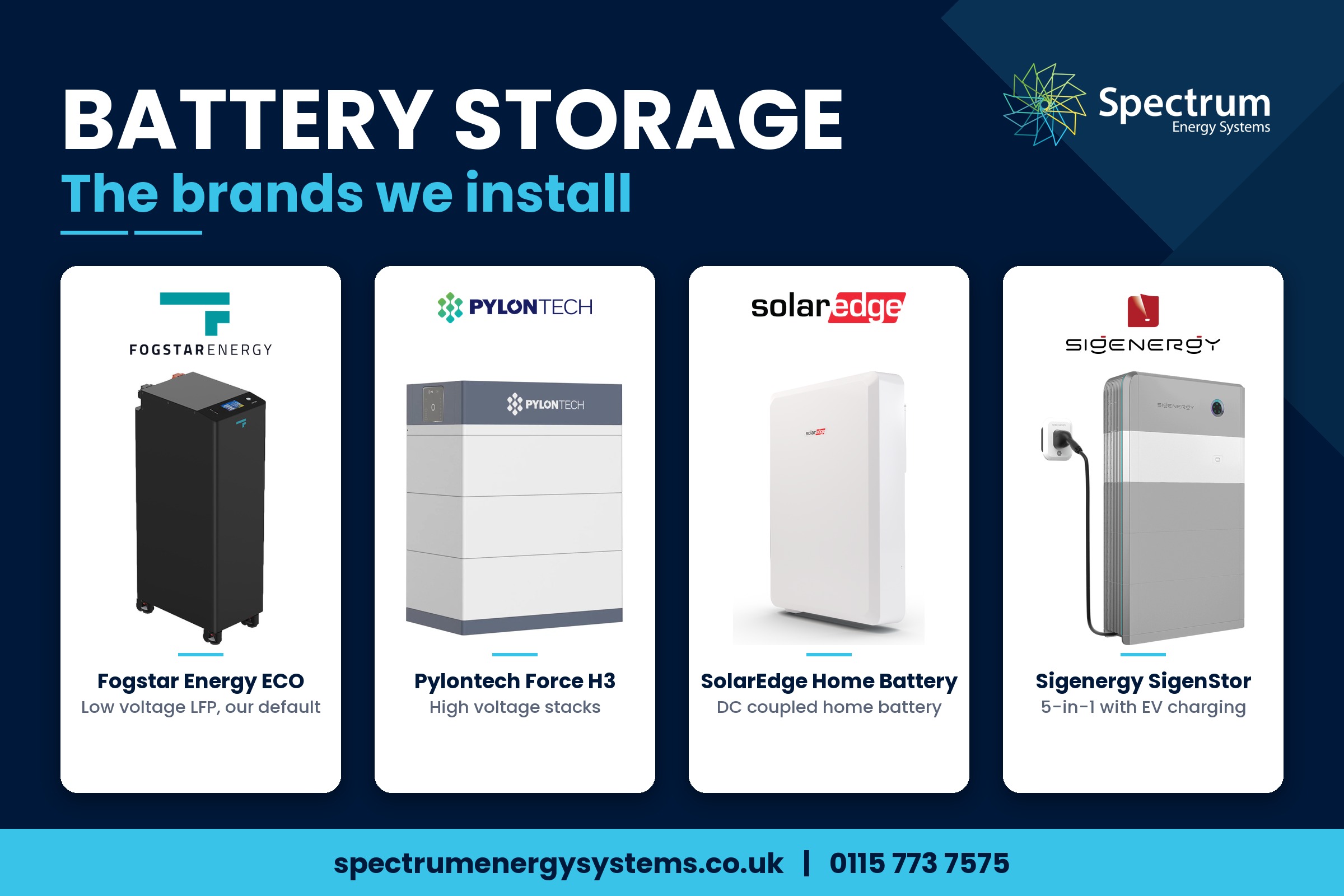
- Best engineering per pound: FogstarGrade A cells, active balancing, an 8-year warranty and serious capacity at a price the badges do not match, which is why the 16.1kWh unit pictured anchors our most installed package. Full detail in our Fogstar review. Declared interest: we fit these, for exactly these reasons.
- Best modular flexibility: PylontechThe rack-mounted stalwart of the industry: start small, stack more modules as needs grow. Solid, proven, everywhere, and the head-to-head with Fogstar is in our comparison piece.
- Best-known premium ecosystem: Tesla PowerwallMuch more expensive per kilowatt-hour than the value brands, and you are paying for the badge as much as the cells. What the premium buys: the slickest app experience and tight ecosystem integration. A legitimate choice when the ecosystem is the point rather than maximum storage per pound.
Side by side
| Pick | Strongest for | The trade-off |
|---|---|---|
| Fogstar | Capacity and cell quality per pound; UK-based support | Less badge recognition, functional rather than glossy app |
| Pylontech | Modular expansion, long industry track record | Rack format suits garages and plant spaces better than hallway walls |
| Tesla Powerwall | Ecosystem polish, brand familiarity, backup integration | Premium price per kilowatt-hour; you fund the badge |
We have deliberately left out pricing figures for other brands, they move with the market and any number printed here would mislead within months, and we have limited claims to what their public reputations and our trade experience support. For our own kit, the packages are on the record: from £8,500 all-in with panels in our package price guide.
What actually decides performance
Whichever badge wins your shortlist, four things decide how the battery performs in your house, and none of them is the logo:
- Capacity matched to your eveningsA battery that covers dinner-to-bedtime with headroom for cheap-rate charging earns on every front; one that empties by 8pm does not.
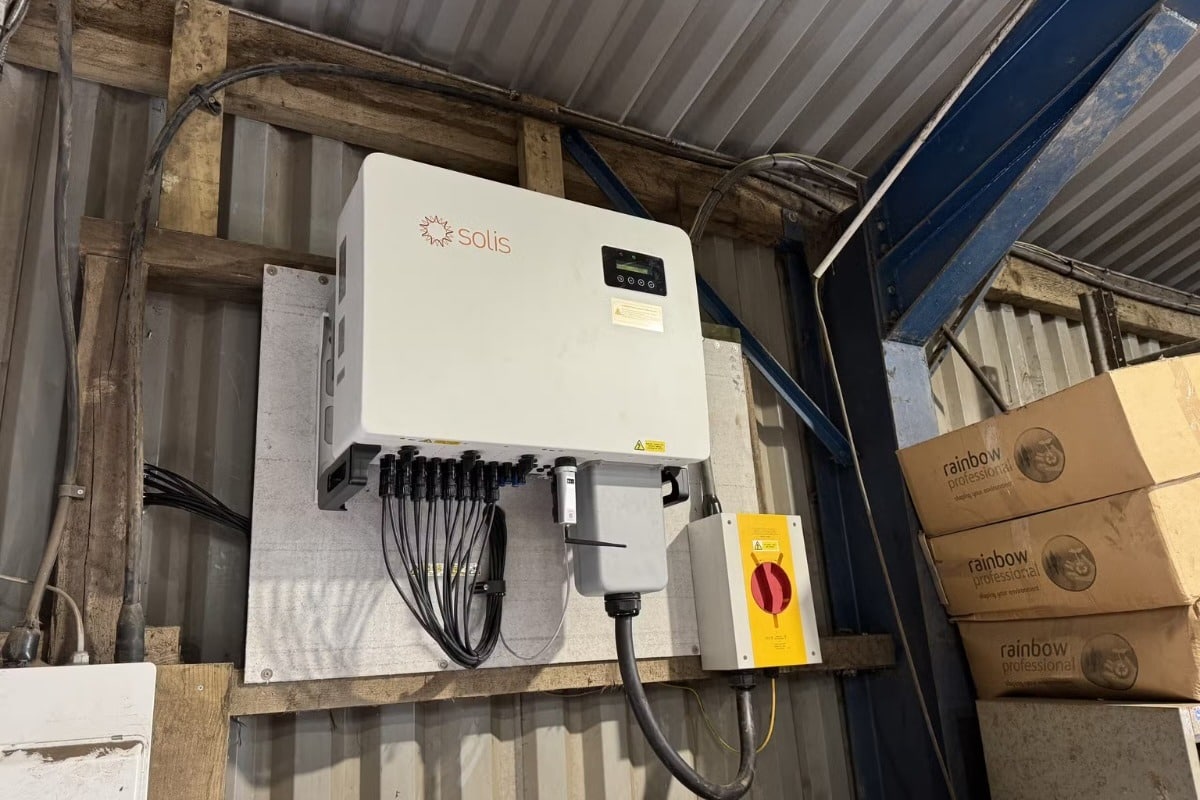
- Inverter pairingThe hybrid inverter, like the Solis unit pictured, runs the schedules that make time-shifting pay. Battery and inverter are a system, not separate purchases.
- Warranty and support realityYears on paper matter less than whether claims get honoured promptly; installer-backed guarantees add a second line of defence.
- Installation qualitySiting to PAS 63100, correct protection, proper commissioning. The best battery badly installed is the worst value in this article.
Our verdict
If you want the most well-engineered storage for your money, which is the question most households are actually asking, Fogstar is our answer, and we back that opinion by fitting it and guaranteeing the work. If modular growth or a premium ecosystem is your priority, Pylontech and Powerwall are honest alternatives at their respective price points. What we would steer anyone away from: unknown badges with thin warranties, batteries bought separately from the inverter that must manage them, and any quote produced without seeing your consumption data. The brand is the third most important decision, after size and installer.
Get the right battery, sized properly
Free survey: battery capacity from your actual usage, paired with the right inverter, one all-in price. Design normally within 2 to 4 days depending on workload. Call 0115 773 7575, 8am to 8pm, Monday to Friday.
Book a feasibility assessmentFrequently asked questions
What is the best solar battery in the UK?
By use case: Fogstar for engineering and capacity per pound (our pick, and the one we fit), Pylontech for modular rack systems that grow with you, and Tesla Powerwall only if you accept that it is much more expensive per kilowatt-hour for the sake of ecosystem polish. Quality units now share LiFePO4 chemistry and similar cells, so sizing and installation matter more than the badge.
What size solar battery is best?
The one matched to your evening and overnight usage with headroom for cheap-rate charging, which for most three and four bed family homes lands around 16.1kWh, and around 10kWh for smaller households. Size from consumption data, not rules of thumb; oversizing parks money in capacity you never cycle.
Is Tesla Powerwall worth the premium?
It sits in a much higher price band than the value brands, so only if the ecosystem, app experience and brand familiarity are worth that premium to you. It is a well-made product and a fair choice on those terms. If maximum useful storage for the budget is the goal, the value brands deliver the same chemistry and more capacity for the money.
Do all solar batteries use the same chemistry?
The quality end of the domestic market has standardised on LiFePO4, chosen for thermal stability and long cycle life, with cells sourced from a handful of major manufacturers regardless of the case badge. That convergence is why the practical differences are capacity, warranty, format and integration rather than chemistry.
Should I buy the battery and inverter separately?
No, treat them as one system. The inverter manages every charge and discharge the battery ever performs, and mismatched pairings cause the compatibility headaches that fill solar forums. A good installer specifies both together, sized to each other and to your usage.
Related reading
- Fogstar battery review: why we fit them
- Fogstar vs Pylontech compared
- Best battery for Octopus Agile
- Solar battery prices UK
- How long do solar batteries last?
- How to choose the right solar panel battery
Advice from people who fit them
We are Spectrum Energy Systems, MCS certified (NIC200223), installing battery storage across the East Midlands since 2011, recommendations backed by our own 5-year workmanship guarantee. Call 0115 773 7575, 8am to 8pm, Monday to Friday.
Get in touch