
Solar and SECR/ESG Reporting: The Carbon Numbers That Move
Rooftop solar moves the carbon lines businesses actually have to report. Under SECR, larger UK companies disclose their energy use and emissions annually, and every kilowatt-hour your roof generates is a kilowatt-hour of grid electricity, and its associated emissions, that leaves the report, calculated with the government's published conversion factors and evidenced by your own meters. For the growing crowd of smaller firms asked for carbon numbers by big customers' procurement teams, the same maths applies without the statutory duty. On-site generation is the most audit-proof carbon reduction a building can buy, because the evidence is a meter, not a certificate.
In This Guide
SECR in one section
Streamlined Energy and Carbon Reporting is the UK's mandatory disclosure regime for larger companies: quoted companies and unquoted ones over the size thresholds report their annual energy consumption, the emissions arising from it, an intensity metric, and the efficiency measures taken that year, inside the directors' report where auditors and investors read it. The mechanics matter less here than the consequence: energy stopped being a private operational cost and became a published number, compared year on year, by people whose opinions affect your cost of capital. A rooftop array is one of the few investments that improves that published number while also cutting the bill behind it, the double effect the rest of this article unpacks. Companies under the thresholds can stop reading for legal reasons and keep reading for commercial ones, since their biggest customers increasingly demand the same numbers voluntarily.
The lines solar actually moves
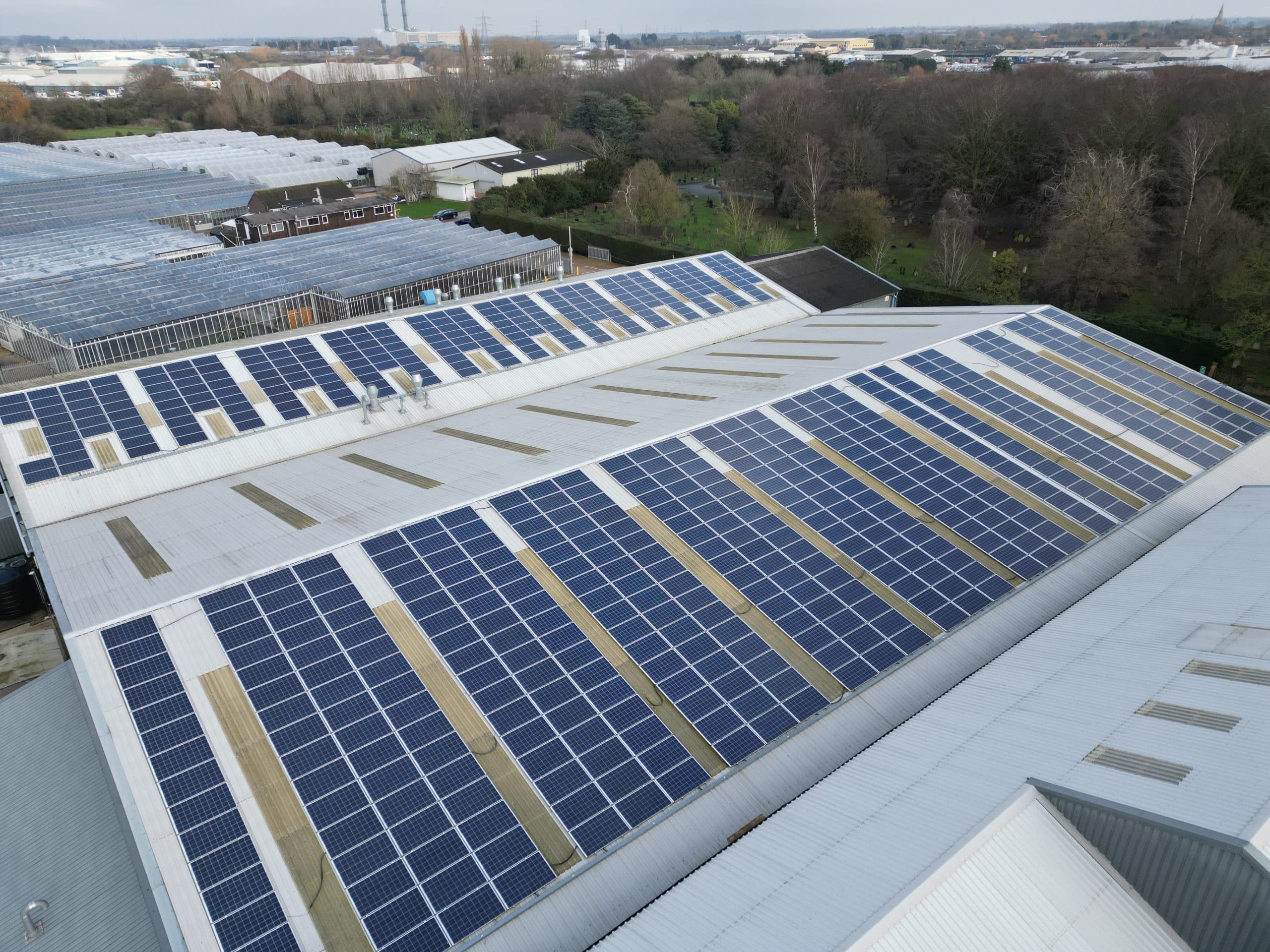
- Purchased electricity fallsSelf-consumed generation from an array like the one pictured directly reduces the grid kilowatt-hours in your energy disclosure, the cleanest line in the whole report.
- Electricity emissions fall with itReported emissions from purchased power are calculated by applying the government's published conversion factors to consumption; less consumption, proportionally less carbon, no methodology debates.
- The intensity metric improvesEmissions per unit of turnover or output, the ratio comparisons run on, moves the right way even as the business grows.
- The measures narrative writes itselfSECR asks what you did this year; a commissioned array is the concrete answer auditors like: dated, metered, material.
Why meters beat certificates
Businesses can also green their reported electricity by buying renewable tariffs backed by certificates, and the reporting frameworks accommodate that through market-based figures alongside the location-based ones. Both approaches have their place; only one of them survives a sceptical stakeholder unbruised. Certificate-based claims have spent years under greenwashing scrutiny, and sophisticated audiences increasingly discount them. On-site generation sits in a different category of credibility: the electrons are made on your roof, measured by your meters, and the grid demand genuinely never happened, a physical reduction rather than a contractual recolouring. When a customer's sustainability team, a lender's ESG screen or an acquirer's due diligence asks how the number was achieved, "we built it, here is the meter data" is the answer that ends the conversation. That reputational robustness is worth something beyond the carbon itself, and boards weighing solar purely on the payback maths should price it in.
The supply-chain squeeze on SMEs
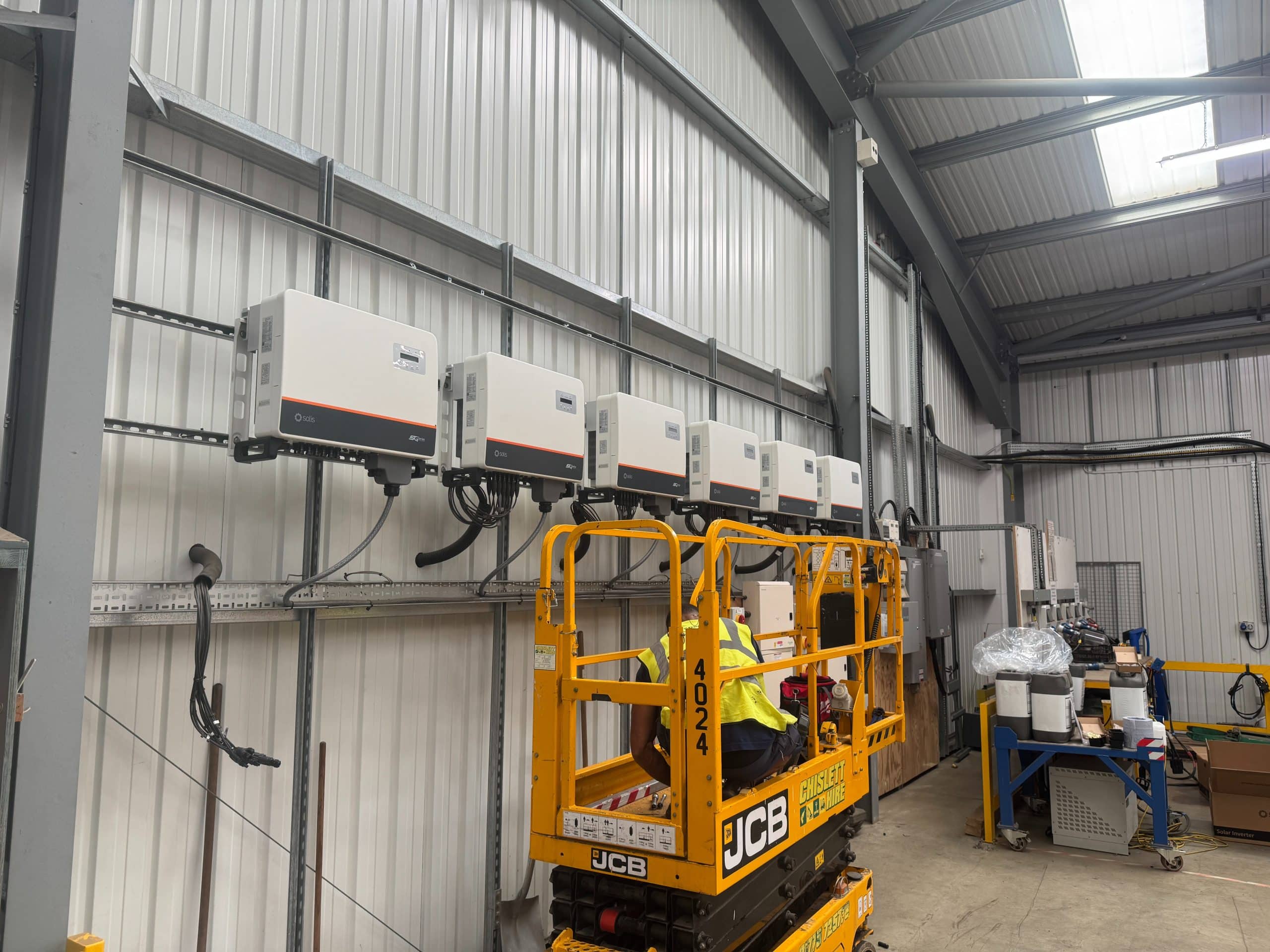
The quiet expansion of carbon reporting is not regulation but procurement. Large reporters must increasingly account for their supply chains' emissions, so their buying teams push questionnaires down to suppliers of every size: what is your footprint, what are you doing about it, show your working. SMEs far below any statutory threshold now find carbon answers standing between them and contract renewals, tenders scored with sustainability weightings, and framework places. A rooftop array gives a small firm the same audit-proof answer the giants buy: reduced grid consumption, metered evidence like the inverters pictured, and a dated capital investment that reads as commitment rather than box-ticking. More than one commercial system we quote is justified by a customer's questionnaire before the energy savings even enter the conversation.
Building the evidence pack
Whether for SECR, a lender or a customer questionnaire, the same modest evidence pack serves: the system's commissioning documentation and capacity, the generation data your inverter monitoring exports (annual kilowatt-hours, ready for the conversion-factor arithmetic your accountants apply), and the split between self-consumed and exported energy from your half-hourly metering. Good commercial installs make this trivial, monitoring is built in, and the numbers drop out of the platform at year end. Two footnotes for completeness: battery storage strengthens the self-consumption share the report reflects, per our commercial storage guide, and the financial stack, capital allowances, the rates exemption, means the carbon line and the finance line improve on the same invoice. The lifecycle carbon of the panels themselves, embodied manufacturing emissions against decades of clean generation, is a fair question with a good answer, and it belongs to our environmental-impact coverage rather than the reporting mechanics here.
Need a carbon number that survives an audit?
Free commercial design and quote: generation modelling, the reporting-ready meter setup, and a real all-in price, with payback in circa 4 years on well-matched buildings doing the financial half. Call 0115 773 7575, 8am to 8pm, Monday to Friday.
Get EstimateFrequently asked questions
Does solar reduce SECR reported emissions?
Directly: self-consumed rooftop generation reduces the purchased electricity in your energy disclosure, and reported emissions fall proportionally when the government's published conversion factors are applied. The array also supplies the year's efficiency-measures narrative with a concrete, metered entry.
Is on-site solar better than a green tariff for ESG?
For credibility, clearly: certificate-backed tariffs recolour purchased electricity contractually, while on-site generation physically removes grid demand, evidenced by your own meters. Sophisticated stakeholders discount certificates and respect meters, which is why the two approaches increasingly complement rather than substitute.
My company is below the SECR thresholds, does this matter?
Commercially, increasingly yes: large customers push carbon questionnaires down their supply chains, and tenders carry sustainability scoring, so SMEs need defensible numbers without the statutory duty. A metered rooftop array is the small-company answer that reads like a big-company one.
What evidence do auditors want for solar carbon claims?
The commissioning documentation, the annual generation from your inverter monitoring, and the self-consumption split from half-hourly metering, all of which a properly monitored commercial install produces automatically. The arithmetic itself is your accountants applying published conversion factors to metered numbers.
Do the panels' own manufacturing emissions undermine the claim?
No, embodied manufacturing carbon is repaid by clean generation early in a panel's decades-long life, which is why lifecycle assessments consistently favour solar. It is a fair question with a well-documented answer, and worth having ready for the sharper questionnaires.
Related reading
- Commercial solar payback: real numbers
- Commercial EPCs and MEES
- Solar and capital allowances
- Commercial solar battery storage
- Commercial solar finance: the four routes
Carbon lines and cost lines, moved together
We are Spectrum Energy Systems, MCS certified (NIC200223), installing commercial solar across the East Midlands, 10+ MW connected, with the metering that makes every claim auditable. Call 0115 773 7575, 8am to 8pm, Monday to Friday.
Get in touch