
Solar PPAs Explained for UK Businesses
A solar power purchase agreement puts a funder's solar system on your roof at their expense: they own it, maintain it, and sell you its output at a rate below your grid price for a long contract, commonly 15 to 25 years. Your electricity gets cheaper from day one with zero capital spent, and in exchange the funder keeps most of the lifetime value of your roof's generation. It is a genuine option for large-roofed, creditworthy businesses whose capital is committed elsewhere, and a worse deal than owning for almost everyone who could fund the system themselves. The contract clauses, not the headline rate, decide which you are signing.
In This Guide
How a PPA actually works
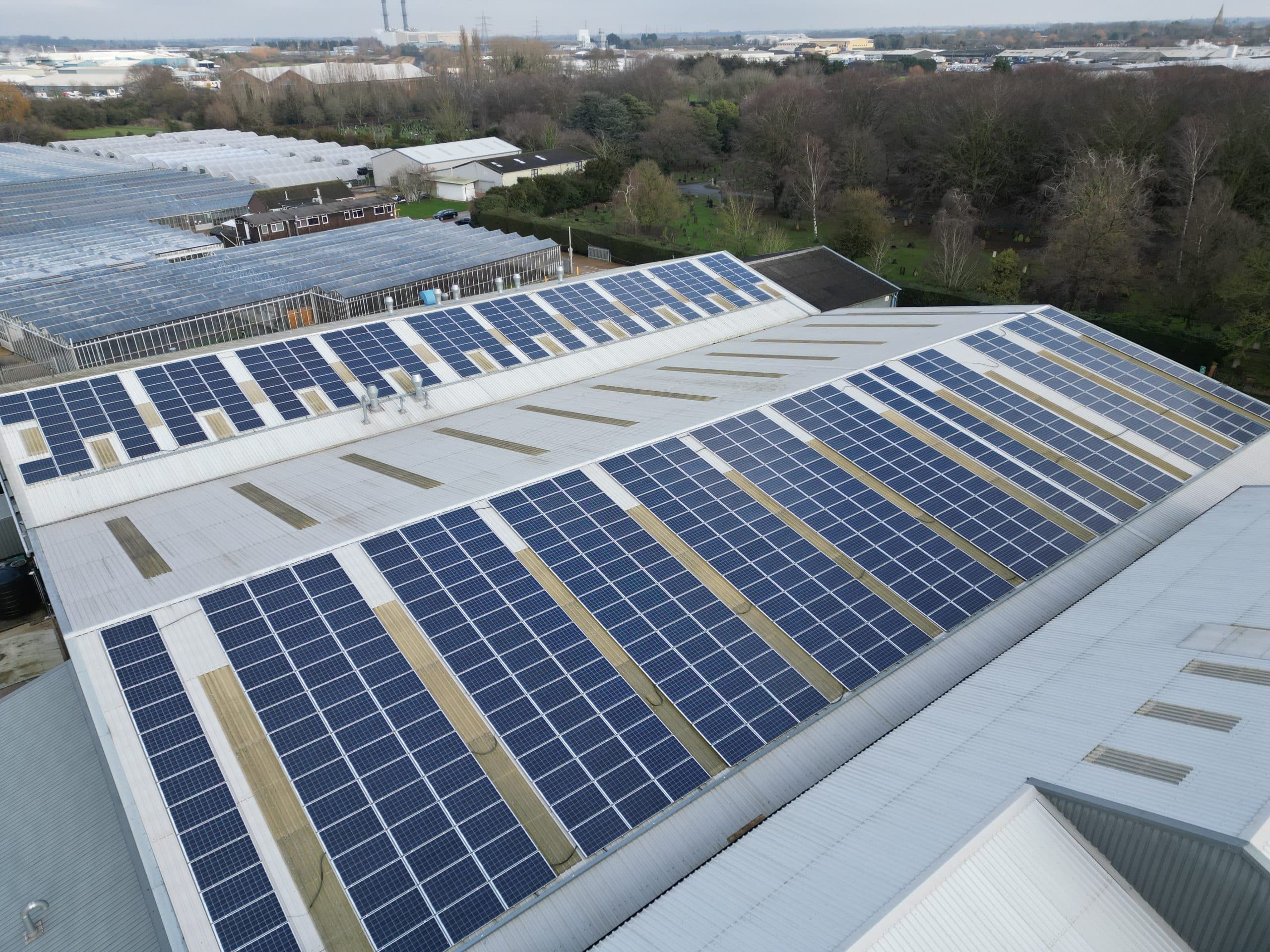
The structure is a three-way arrangement wearing a two-party contract. A funder pays for a solar installation on your roof, sized to your consumption, like the arrays pictured. You grant them a lease over the roof space for the contract term, and commit to buying the system's output at an agreed rate per kilowatt-hour, set below your grid price and typically escalating annually by a formula in the contract. The funder's return is the spread between what the system cost them and what you pay for its power over two decades; your benefit is cheaper daytime electricity without touching your capital budget. Grid surplus is exported and the contract says who keeps that income. Maintenance, insurance and performance risk sit with the funder, it is their asset, which is one of the model's genuine attractions for businesses that do not want to own kit.
The money, honestly
The honest framing: a PPA is the funder buying your roof's best years. On an owned system, our real benchmark 49.68kWp project at £37,000 plus VAT repays in circa 4 years and then generates essentially free power for decades, all of it yours, as our payback guide shows. Under a PPA, the same roof delivers you a discount on grid power, useful, immediate, real, while the deep value beyond year four accrues to the funder. That is not a criticism, it is the price of someone else's capital and risk appetite. The businesses for whom the trade makes sense are the ones whose own capital earns more deployed in their trade than it would saved on electricity, which is a legitimate position and a question for your board, not your installer.
The contract clauses that matter
- The rate and its escalatorThe starting price per kilowatt-hour matters less than the annual escalation formula. Fixed percentage escalators can quietly overtake grid prices in later years; index-linked ones track reality better. Model the full term, not year one.
- Term and what happens at the end15 to 25 years is standard. The end-of-term options, system transfers to you, gets removed, or the contract renews, vary enormously and should be explicit.
- Sale of the buildingThe roof lease binds the property. A buyer inherits the PPA, which most sophisticated buyers accept but every buyer's lawyer will scrutinise. Assignment clauses decide how painful that conversation is.
- Roof access and repairsReroofing under a funder's array needs contractual machinery: who pays for panel removal and reinstatement, and on whose timetable. Get it in writing before signing, not when the roof leaks.
- Underperformance and outage termsIf the system underdelivers, your savings shrink; good contracts carry performance guarantees with remedies rather than sympathy.
- Buyout provisionsCircumstances change; a clean pre-agreed buyout schedule is worth negotiating even if you never use it.
Who PPAs genuinely suit
- Large roofs, large daytime loadsFunders want scale; the model thrives on warehouses, factories and cold stores where generation and consumption are both big.
- Strong covenantsThe funder is underwriting twenty years of your custom, so trading history and creditworthiness are entry requirements.
- Capital committed elsewhereGrowing businesses whose cash earns more in stock, machinery or acquisitions than in energy savings.
- Long-horizon occupiersThe model rewards staying put; short leases and PPAs mix badly, since the roof lease outlives most tenancies.
Small roofs, owner-occupiers with reserves, and anyone allergic to long contracts are better served by the ownership routes in our finance comparison.
PPA vs owning: the comparison
| Factor | PPA | Owned (cash or financed) |
|---|---|---|
| Capital outlay | None | Full, or spread via finance |
| Electricity saving | A discount on grid price | Generation cost falls to near zero after payback |
| Lifetime value | Mostly the funder's | All yours |
| Maintenance and risk | Funder's problem | Yours, or your installer's contract |
| Tax reliefs | Not yours, no asset | Capital allowances apply |
| Property complexity | A roof lease on your title for decades | None beyond the kit itself |
Our position as an installer is unexciting and honest: we design and build the system either way, the engineering is identical, and for businesses that can fund ownership, the numbers usually say own it. Where a PPA is the right structure, insist the installation quality matches what an owner would demand, because in year twelve the difference shows regardless of whose balance sheet the panels sit on.
Weighing up a PPA against owning?
Free commercial design and quote: system design and real generation numbers you can run through both structures before anyone signs anything. Call 0115 773 7575, 8am to 8pm, Monday to Friday.
Get EstimateFrequently asked questions
What is a solar PPA?
A power purchase agreement: a funder installs, owns and maintains solar on your roof, and you buy its output at below-grid rates for a long contract, typically 15 to 25 years, under a lease over the roof space. Zero capital outlay for you; most of the lifetime value for them.
Is a solar PPA worth it for a UK business?
For large-roofed, creditworthy businesses whose capital works harder in their own trade, genuinely yes: cheaper power, no outlay, no maintenance. For businesses that could fund ownership, usually not, since an owned system's savings dwarf a PPA discount once the circa 4 year payback passes. The contract terms decide the rest.
What happens to a PPA if I sell the building?
The roof lease binds the property, so a buyer inherits the arrangement, and their lawyers will examine the assignment clauses closely. Well-drafted PPAs handle transfer cleanly; badly drafted ones complicate sales. Have the sale scenario stress-tested before signing, not during a transaction.
Who maintains the system under a PPA?
The funder: it is their asset and their revenue stream, so maintenance, insurance and performance risk sit with them, one of the model's genuine attractions. Check the contract carries performance guarantees with remedies, so underdelivery costs them rather than just you.
Can I buy the system out of a PPA early?
Only if the contract says so, which is why a pre-agreed buyout schedule is worth negotiating up front even if you never expect to use it. Circumstances change over twenty years, and an exit priced on day one always beats one negotiated from need.
Related reading
- Commercial solar finance: the four routes
- Commercial solar payback: real numbers
- Solar and capital allowances
- Solar panels for warehouses
- Commercial solar battery storage
Commercial solar, whoever owns it
We are Spectrum Energy Systems, MCS certified (NIC200223), designing and installing commercial solar across the East Midlands, 10+ MW connected, built to owner standards under any structure. Call 0115 773 7575, 8am to 8pm, Monday to Friday.
Get in touch