Solar Optimisers: Do You Actually Need Them?
Optimisers are small electronics fitted behind each solar panel that let every panel perform independently, so a shaded or underperforming panel stops dragging its neighbours down. On genuinely shaded, complicated roofs they earn their cost. On clear roofs, which is most UK roofs, they add price and rooftop components for little measurable gain, and modern half-cut panels with well-designed stringing already handle the light shading most homes have. If a quote includes optimisers by default without a shading reason, ask why.
In This Guide
What an optimiser actually does
Panels wired in a series string behave like a chain, and a chain moves at the pace of its slowest link: one shaded panel can pull a whole string down toward its output. An optimiser is a small DC-to-DC converter mounted behind each panel that breaks that dependency, letting every panel deliver its own maximum regardless of what its neighbours are doing, and reporting panel-level data to your monitoring while it is at it. The string inverter still does the DC-to-AC conversion; the optimisers just feed it better.
That is genuinely useful engineering, in the right place. The catch is the phrase "in the right place", because the same electronics cost money, add dozens of powered components to your roof where servicing means scaffolding, and on an unshaded roof have almost nothing to optimise.
Roofs that genuinely benefit
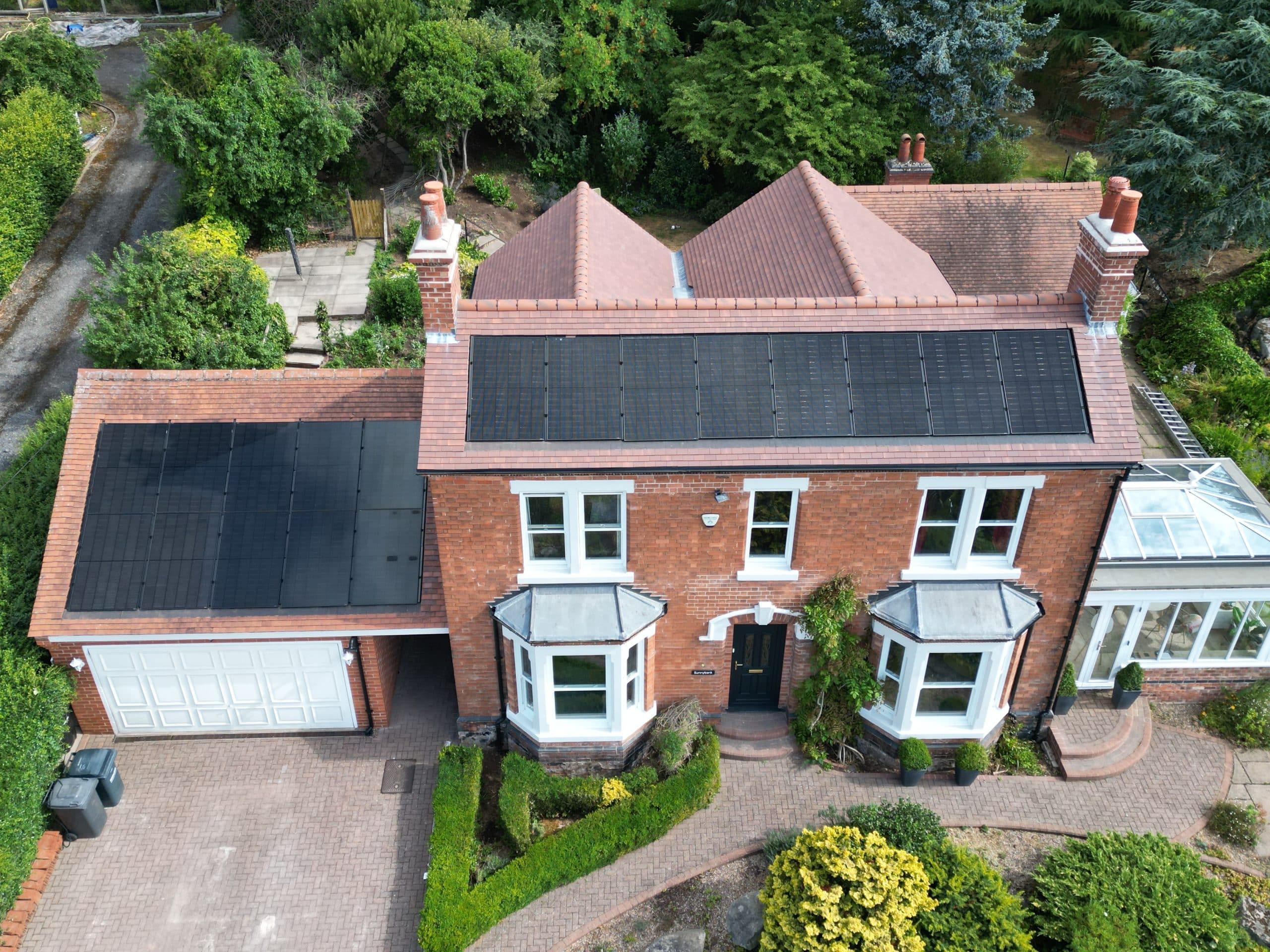
- Hard, moving shadeChimneys, dormers and mature trees casting sharp shadows that track across the array through the day, the sort of setting pictured, where layout and stringing alone cannot isolate the problem.
- Panels facing several waysComplicated roofs where small groups of panels point in three or four directions, more orientations than the inverter has string inputs for.
- Mixed pitches and dormersArrays split across faces with different tilts, where panel-level control genuinely beats string-level compromise.
- Panel-level monitoring as a requirementSome owners want per-panel visibility; optimisers deliver it as a side effect.
Our shade guide covers how we assess whether a roof sits in this category, measured at survey rather than guessed.
Roofs that are better off without
Most UK homes have one or two clean roof faces and light, occasional shading, and on those roofs the honest arithmetic runs against optimisers:
- Nothing to optimiseUnshaded panels on one face all perform alike; panel independence adds nothing measurable.
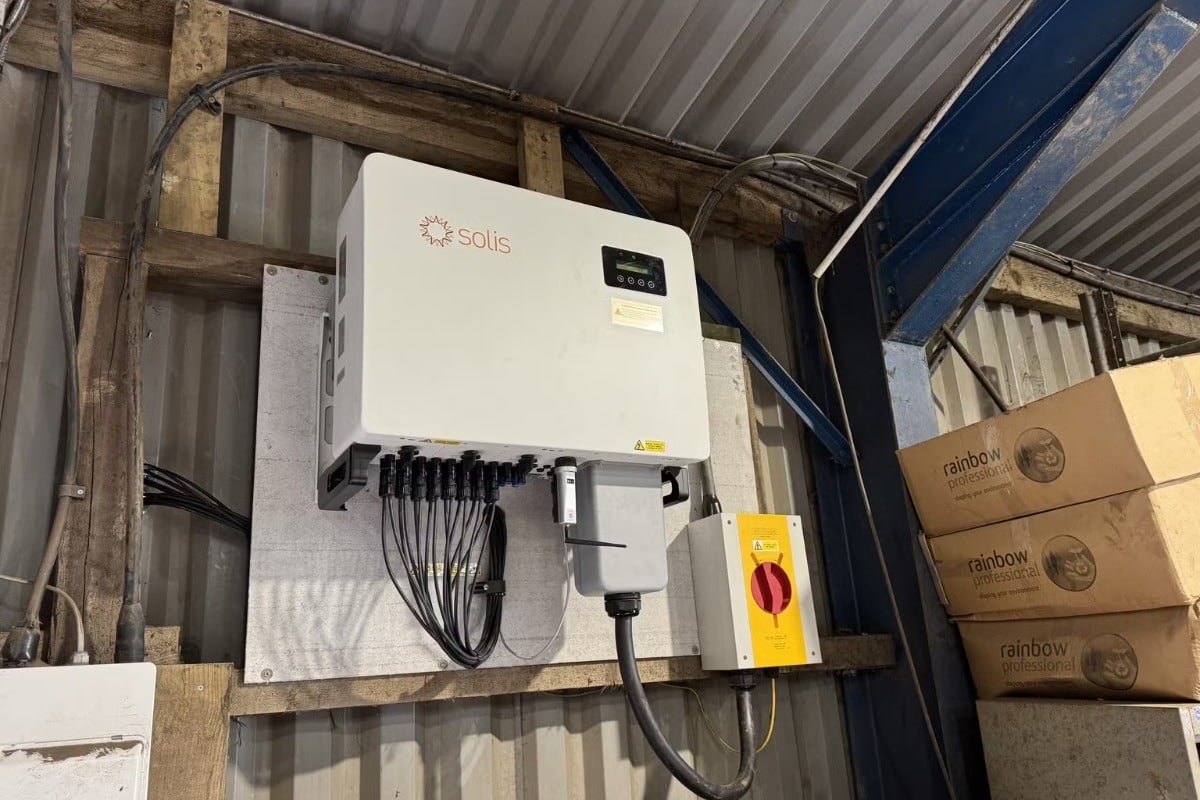
- More components, more failure pointsEvery optimiser is powered electronics on the roof for 25 years, and replacing one means access equipment. A plain string, run by a quality inverter like the one pictured, has nothing up there to fail.
- Cost better spentThe same money buys more battery capacity or more panels, both of which produce measurable returns on a clear roof.
Modern panel design has quietly eaten much of the optimiser's old advantage too: half-cut cells and better bypass diodes handle partial shading far more gracefully than the panels of a decade ago.
The alternatives
| Approach | What it is | Best for |
|---|---|---|
| Layout and stringing | Placing panels away from shade and grouping them sensibly across inverter inputs. Costs nothing | The first answer on almost every roof |
| Optimisers | Panel-level DC electronics under a string inverter | Hard shade and multi-direction roofs, as above |
| Micro-inverters | A small inverter per panel, no central unit at all | The other panel-level route; our micro vs string comparison runs it in full |
Reading your quote
Optimisers appear on quotes for two reasons: because the roof needs them, or because they pad the invoice with plausible-sounding technology. Telling the difference takes one question: "what on my roof do these optimise?" A good installer answers with your chimney, your tree, your three orientations, something visible from the street. A vague answer about "maximising performance" on a clear south-facing roof is a red flag worth adding to the collection in our installer-vetting guide. Our own position is boring and we stand by it: we specify panel-level electronics when the survey shows a reason, and leave them off when it does not, which is most of the time.
Get a design that fits your actual roof
Free survey with a proper shading assessment: optimisers if your roof needs them, honest advice if it does not, one all-in price either way. Design normally within 2 to 4 days depending on workload. Call 0115 773 7575, 8am to 8pm, Monday to Friday.
Book a feasibility assessmentFrequently asked questions
What do solar optimisers do?
They are small DC electronics fitted behind each panel that let every panel perform at its own maximum, so a shaded panel no longer drags down the rest of its string. They also enable panel-level monitoring. The central inverter still handles the conversion to mains power.
Are solar optimisers worth it?
On roofs with hard, moving shade or panels facing several directions, yes, they recover output nothing else can. On clear roofs, no: there is nothing to optimise, and the cost buys more benefit as extra battery capacity or panels. The shading assessment at survey is what settles it.
Do optimisers or micro-inverters handle shade better?
Both solve the same string problem with panel-level electronics, and both do it well; they differ in architecture, optimisers keep a central inverter while micro-inverters abolish it. The trade-offs between them are covered in our micro vs string comparison; for most shaded UK roofs either works.
Can optimisers be added to an existing system?
Technically in some configurations, but it means roof access, per-panel labour and compatibility checks with your inverter, so it rarely makes sense as a retrofit unless shading has genuinely changed, a tree has grown, an extension has gone up. Get the shading measured before spending anything.
Why did my quote include optimisers?
Ask, in exactly those words, what they optimise on your roof. A specific answer naming your shade sources is legitimate; a generic performance pitch on a clear roof usually means invoice padding. Comparing a quote with and without them makes the value question concrete.
Related reading
- Do solar panels work in the shade?
- Micro-inverters vs string inverters
- Hybrid vs string inverters
- How long do solar inverters last?
- Mistakes to avoid when hiring an installer
Kit specified for reasons, not invoices
We are Spectrum Energy Systems, MCS certified (NIC200223), designing solar across the East Midlands since 2011, with every component on the quote there because the survey said so. Call 0115 773 7575, 8am to 8pm, Monday to Friday.
Get in touch