
Are Home Batteries Safe? An Honest Answer from an Installer
Yes, properly specified and properly installed home batteries are safe, and the distinction in that sentence is doing real work. Modern home storage uses LiFePO4 chemistry, the most thermally stable of the lithium family, wrapped in a battery management system that polices every cell, sited to fire-safety guidance and installed by certified engineers. The lithium fires that make headlines overwhelmingly involve a different chemistry in a different context: unregulated e-bike and scooter cells charged indoors. Conflating the two is like judging modern gas boilers by stories about camping stoves.
In This Guide
The chemistry question
"Lithium battery" covers a family of chemistries with genuinely different temperaments. The energy-dense cells in phones, laptops and many e-bikes prioritise packing maximum power into minimum space, and pay for it with lower thermal tolerance. Home storage went a different way: LiFePO4, lithium iron phosphate, trades some energy density (fine, when the battery hangs on a garage wall rather than in a pocket) for a far higher ignition threshold and much better chemical stability under stress. It is the chemistry in the Fogstar units we fit, and its adoption across the home-storage industry is the single biggest reason the safety record is what it is.

The safety layers, from cell to wall
- Stable chemistryLiFePO4 cells resist thermal runaway, the chain reaction behind lithium fires, far better than the energy-dense chemistries in consumer gadgets.
- The battery management systemElectronics monitoring every cell's voltage, current and temperature constantly, disconnecting the battery the moment anything drifts out of range. It cannot be switched off by the user, which is the point.
- Certified hardwareReputable units carry independent safety certification, and the cells inside are the same commodity LiFePO4 used across the industry.
- Sited to guidancePAS 63100 keeps batteries out of bedrooms, escape routes and lofts, so even the rare fault stays a contained incident; our location rules guide covers it.
- Professional electrical workCorrect cabling, protection devices and commissioning, the layer a certified installer contributes.
About those headlines
The lithium fires in the news are real, and worth taking seriously for what they actually are. Fire services have repeatedly flagged e-bike and e-scooter batteries, often unbranded packs or aftermarket chargers bought online, charged in hallways and flats, as a fast-growing incident category. Those cells are energy-dense chemistry with no meaningful management electronics, physically abused daily, and charged next to the sofa. Certified home storage sits at the opposite end of every one of those variables: stable chemistry, managed cells, a fixed installation that nobody drops off a kerb, sited away from living space. Domestic storage fires are correspondingly rare. Not impossible, nothing involving stored energy is at zero, but rare, and the industry's siting guidance exists to make the rare case survivable too. The same honest framing applies to panel fire risk, which we have covered separately.
What proper installation adds
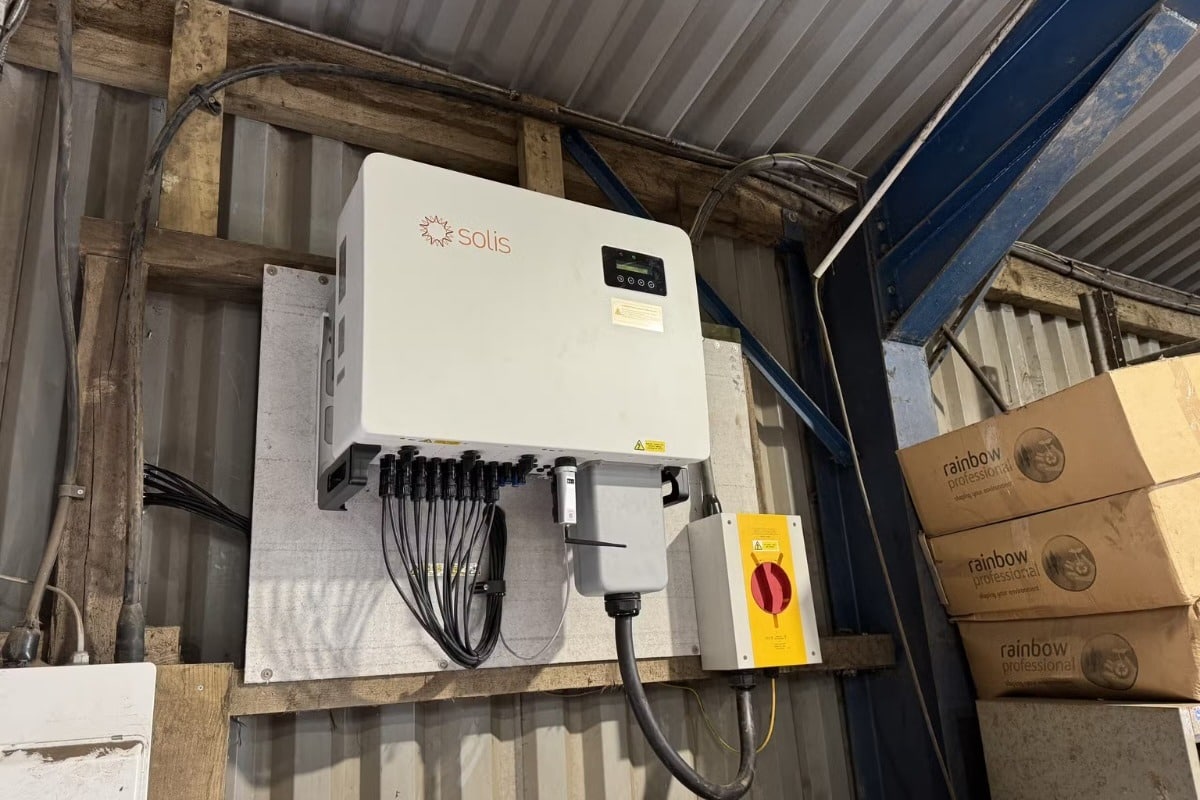
Hardware is half the story; the install like the one pictured is the other half. A certified installer sizes cabling and protection to the battery's real currents, sites the unit to PAS 63100, torques and tests every connection, configures charge limits to the manufacturer's specification, and registers the system with your network operator. Then the paperwork: certification your home insurer may ask about, and an MCS certificate evidencing the standard of work. The cheap route, an uncertified fitter or a DIY kit wired in over a weekend, removes exactly the layers that make the safety record what it is. It is the one corner genuinely not worth cutting.
What owners should and should not do
- Do keep the space around it clearNo stacking boxes against the unit, no storing petrol or gas cylinders within a couple of metres.
- Do glance at the app occasionallyModern systems self-report; an error state or a cell warning is your cue to call the installer, not a drama.
- Do tell your insurerStandard practice for any fixed installation, and covered in our insurance guide.
- Do not modify anythingNo extra cells, no third-party firmware, no relocating the unit yourself. Changes go through an installer.
- Do not ignore physical damageFlood, impact or visible swelling: switch off at the isolator and call your installer before touching anything else.
Storage installed to the standard
Free survey: LiFePO4 batteries sited to PAS 63100, installed and certified by our own crews, one all-in price. Design normally within 2 to 4 days depending on workload. Call 0115 773 7575, 8am to 8pm, Monday to Friday.
Book a feasibility assessmentFrequently asked questions
Are solar batteries safe to have in your house?
Yes, when properly specified and installed. Home storage uses stable LiFePO4 chemistry policed by a battery management system, sited to fire-safety guidance that keeps units out of bedrooms, escape routes and lofts, and installed by certified engineers. Each layer exists so no single fault becomes an incident.
Can a home battery catch fire?
The risk is very low but not zero, which is exactly why the safety layers exist. LiFePO4 cells strongly resist thermal runaway, the management system disconnects anything drifting out of range, and PAS 63100 siting means even a worst-case fault does not sit on your escape route. Domestic storage fires remain rare.
Why do lithium batteries keep making the news then?
Because e-bike and e-scooter packs, often unbranded, unmanaged, energy-dense cells charged indoors, have become a genuine incident category that fire services warn about. Certified home storage differs on chemistry, management electronics, physical treatment and siting. The headline and the garage wall are different technologies in practice.
What is the safest home battery chemistry?
LiFePO4, lithium iron phosphate, which is why it has become the domestic standard and why we fit it. It gives up some energy density compared with the chemistry in phones and e-bikes, irrelevant on a garage wall, in exchange for far greater thermal and chemical stability.
Does a battery need servicing for safety?
Not in the oil-and-filters sense: there are no moving parts, and the management system self-monitors continuously. Good practice is keeping the area clear, glancing at the app now and then, and calling your installer about any error state or physical damage rather than investigating yourself.
Related reading
- Where can a home battery be installed?
- Can solar panels catch fire?
- How long do solar batteries last?
- Solar panels and home insurance
- Solar battery prices UK
1,000+ installs, certified every time
We are Spectrum Energy Systems, MCS certified (NIC200223), installing LiFePO4 battery storage across the East Midlands since 2011, sited and certified properly on every job. Call 0115 773 7575, 8am to 8pm, Monday to Friday.
Get in touch