
Solar Panels or Heat Pump: Which Should You Get First?
For most homes weighing one upgrade this year: solar first. It pays back on its own, works with whatever heating you have, and makes a future heat pump cheaper to run from day one. The exception is a dying boiler: if heating needs replacing anyway, take the heat pump and its £7,500 grant first, sized with solar in mind.
In This Guide
Two different jobs, one budget
People frame this as either-or because the budget is either-or, but the two technologies do different jobs. Solar panels generate electricity and cut the bill you already have. A heat pump replaces your boiler, swapping gas or oil for efficient electric heating. One is an investment that earns; the other is heating plant that spends less than the plant it replaces. That difference drives the whole decision, so let us put the numbers side by side honestly.
The money side by side
| Solar + battery | Air source heat pump | |
|---|---|---|
| Typical all-in cost | £9,000 to £9,995 (0% VAT included) | Varies by home; the grant takes £7,500 off |
| Government support | 0% VAT until 31 March 2027, plus export payments | £7,500 Boiler Upgrade Scheme grant in England and Wales (£9,000 for eligible off-gas-grid homes until 31 March 2027, per gov.uk) |
| Effect on bills | Cuts electricity costs and earns export income | Replaces boiler running costs; savings depend heavily on tariff and the system it replaces |
| Payback character | Circa 8 years on our most installed system (illustrative) | Not really a payback purchase: it is a heating replacement with lower running costs, transformed by cheap electricity |
| Disruption | A day or two, mostly outside | Days, with radiators, cylinder and plumbing potentially in scope |
We fit solar and batteries rather than heat pumps, so read this as the solar side talking its own book if you like, but the framing above is the one heat pump installers we work alongside would recognise too.
The case for solar first
✓ Why solar usually leads
- It works with any heatingPanels do not care whether a boiler or a heat pump sits downstairs. Nothing about going solar now is wasted later.
- It stands on its own economicsCirca 8 year payback, then decades of cheap power. A heat pump's case, by contrast, improves dramatically once cheap solar electricity feeds it.
- It de-risks the heat pumpA heat pump runs on electricity. Generating your own, and buying the rest at off-peak rates through a battery, is what makes heat pump running costs sing.
- The VAT clock0% VAT on solar and batteries is scheduled to end 31 March 2027. The heat pump grant currently runs to 2028.
The case for the heat pump first
Honesty demands the other side, and it is a strong one in two situations. First, the dying boiler: if your heating is on borrowed time, replacing it is not optional, and replacing it with a heat pump while the £7,500 grant exists beats buying one last gas boiler and locking in another 15 fossil-fuelled years. Off-gas-grid homes on oil or LPG have an extra push: a temporary uplift takes the grant to £9,000 until 31 March 2027 for eligible properties. Second, the whole-house renovation: if walls are open and radiators are being rethought anyway, sequencing the heat pump into the building work saves real money.
In both cases, tell the heat pump designer that solar and a battery are coming. It changes nothing about their sizing and everything about your future tariff strategy.
Doing both: the order of operations
The end state is the strong position: solar generating, a battery shifting cheap overnight power, and a heat pump drinking from both. Getting there cleanly:
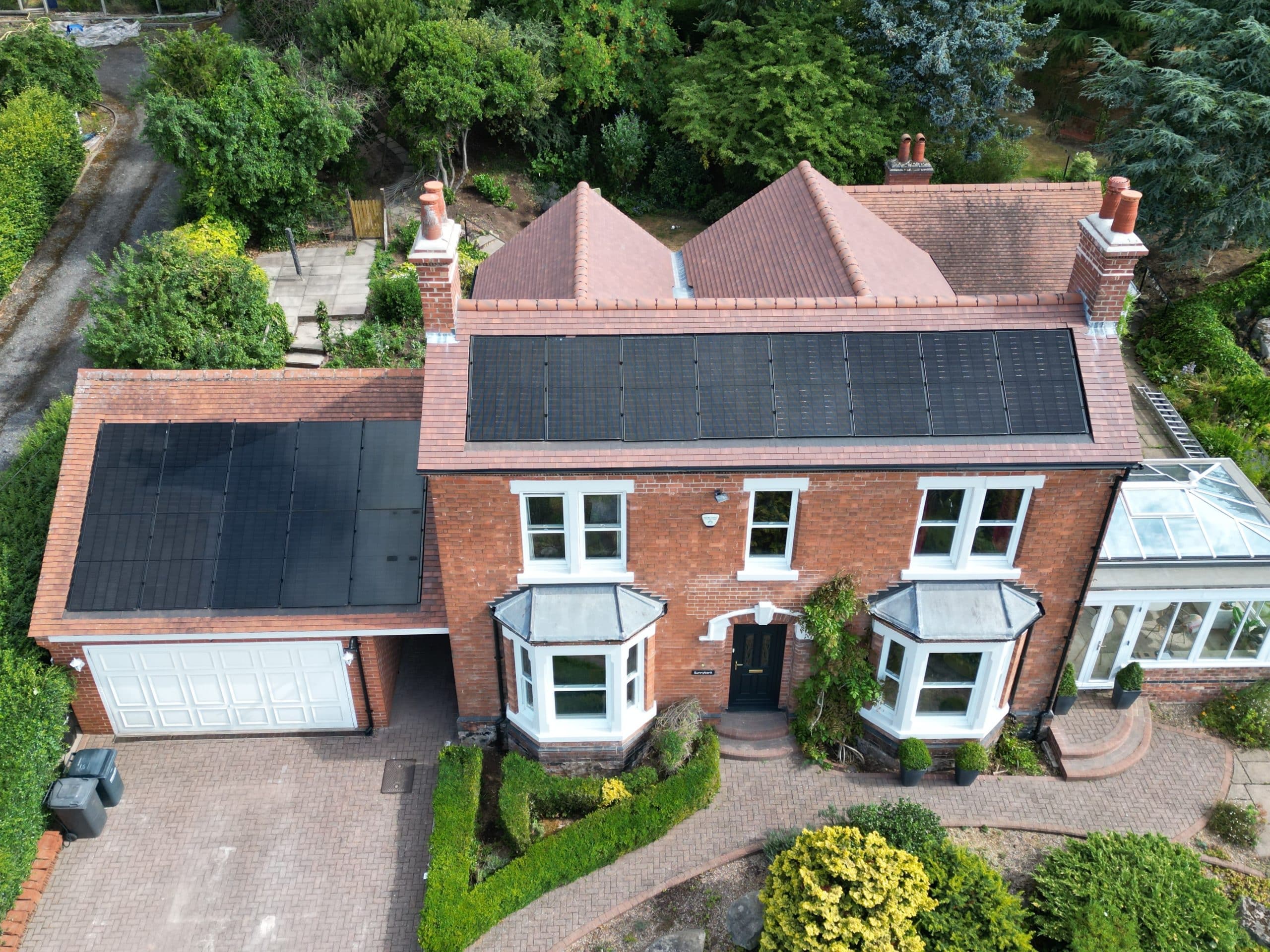
- Size the solar for the future loadA home planning a heat pump should size its array and battery for the bigger electric appetite, not today's. The array in the photo was sized exactly that way.
- Pick the tariff after the heat pump landsHeat-pump-plus-battery households are exactly who two-rate and smart tariffs are built for, per our time-shifting guide.
- The integration detaillives in our solar with a heat pump guide, including what a heat pump does to self-consumption in winter.
Planning the sequence for your house?
Tell us your heating situation and your timeline, and we will size the solar side for where you are heading, not just where you are. Over 1,000 installs across the East Midlands since 2011. Call 0115 773 7575, 8am to 8pm, 7 days.
Book a feasibility assessmentFrequently asked questions
Should I get solar panels or a heat pump first?
Solar first for most homes: it pays back independently, works with any heating, and makes a future heat pump cheaper to run. Heat pump first if your boiler is failing anyway, taking the £7,500 grant now, or if a renovation makes the plumbing work cheap to sequence.
Can solar panels power a heat pump?
Partly, and the partnership is the point. Summer solar covers a big share of a heat pump's modest summer load; winter heating leans on the grid, which is where a battery charging at cheap overnight rates earns its keep. Solar plus battery plus heat pump is the combination that controls costs year-round.
How much is the heat pump grant?
The Boiler Upgrade Scheme currently gives £7,500 towards an air source or ground source heat pump in England and Wales, and eligible off-gas-grid homes get a temporary £9,000 uplift until 31 March 2027, per gov.uk. We are solar installers rather than heat pump fitters, so verify your eligibility with the scheme directly.
Is there a grant if I do solar and a heat pump together?
The supports stack rather than combine: the heat pump attracts its Boiler Upgrade Scheme grant, while the solar and battery side carries 0% VAT until 31 March 2027 plus export payments. Different schemes, different paperwork, both claimable in the same year if you sequence both upgrades.
Should my solar system be bigger if a heat pump is coming?
Usually yes. A heat pump raises annual electricity demand substantially, so an array and battery sized only for today's usage undershoots tomorrow's. Tell your solar installer about the heat pump plan at design stage; roof space permitting, sizing for the future load costs less than extending later.
Do heat pumps and solar batteries work together?
Very well. The battery banks cheap overnight electricity and solar surplus, and the heat pump draws from stored power instead of peak-rate grid. On a two-rate tariff that pairing is what keeps electric heating costs disciplined through winter, which is the season that decides the whole economics.
Related reading
- Solar PV with a heat pump: the full pairing guide
- Battery time-shifting: the other half of the value
- How much battery storage do I need?
- How much do solar panels cost in the UK in 2026?
- Octopus Cosy with solar heating
The solar half, done properly
We are an MCS certified installer (NIC200223) based in Bulwell, Nottingham, sizing systems for all-electric futures across the East Midlands. Call 0115 773 7575, 8am to 8pm, 7 days.
Get in touch