
Commercial Solar Payback Period UK: Five Real Examples
The payback period for commercial solar in the UK is typically circa 5 years on a well-matched rooftop system. Across four Spectrum installations and one 2026 quote, the published paybacks run from 2.5 years to 5. Where your building lands depends on how much of the generation you use on site, your unit rate and the installed price.
In This Guide
Five real paybacks, with the numbers
These are our own projects. Each payback is the figure published in the case study or proposal for that site, worked out on that customer's bills and tariff at the time. They are illustrative and not a guarantee for your building.
| Project | System | The bill | Payback |
|---|---|---|---|
| Jacksons Nurseries, garden centre with a café kitchen, Bagnall | 56kW solar PV, 44,320kWh a year | £3,478 a month down to £1,090 | 2.5 years |
| Linear Insulation, portal frame unit, Nottingham | 66.85kW solar PV, over 55,500kWh a year | £1,193 a month down to £215 | 3.3 years |
| 2026 quote, commercial site, modelled on 40,000kWh a year of use | 49.68kWp with a 51.2kWh Pylontech battery | £37,000 plus VAT installed | Circa 4 years |
| Johns of Nottingham, three-storey flat roof, Mapperley | 35kW with a 20kWh battery, 23,000kWh a year | £18,760 a year, cut by over £6,700 | 4.5 years |
| Keyte Smith, workshop, Kirkby-in-Ashfield | 24kW with 64kWh of Fogstar batteries, 23,000kWh a year | Around £4,000 a year, on course for an 86% cut | 4 to 5 years |
The two quickest are solar-only systems on buildings that use power all day. Jacksons had just extended a café kitchen, so the catering load runs through the hours the panels generate. The other three include batteries and sit between circa 4 and 5 years. At Keyte Smith the brief was to buy as little electricity as practical, and 64kWh of storage is what puts a weekday workshop on course for an 86% lower bill.
Size alone does not decide it. The 177kWp system we installed at Elsoms Seeds in Spalding sits on a site that uses more than 1 million kWh a year. Solar covers 15% of that.
How to work out the payback period for a commercial solar investment
Simple payback is one division: the installed price, excluding VAT, divided by the yearly benefit. The yearly benefit is the electricity you no longer buy, plus export income, less running costs such as cleaning and an annual health check.
Take the £37,000 quote above. A payback of circa 4 years implies a yearly benefit of about £9,250 in bill savings and export income together. The table shows how the same system behaves if that yearly figure moves by a fifth either way. It is arithmetic on one quote, shown to make the point that the yearly benefit matters as much as the price.
| Installed price (ex VAT) | Yearly benefit | Simple payback |
|---|---|---|
| £37,000 | £7,400 (a fifth lower) | 5 years |
| £37,000 | £9,250 (implied by circa 4 years) | 4 years |
| £37,000 | £11,100 (a fifth higher) | 3.3 years |
That is why we ask for a recent bill and, where you have it, half-hourly meter data before we give anyone a payback figure. For installed prices by system size, see our guide to what commercial solar costs.
Why businesses beat domestic payback
A house generates at noon and uses most of its power in the evening, which is why domestic systems lean on batteries. Most businesses are the other way round. Machines, refrigeration, compressors, servers and lighting run while the panels generate, so a commercial building uses most of its solar directly, and every unit used on site replaces electricity bought at the full business rate.
Scale helps too. Scaffolding, design and grid application costs are spread across more panels, so the price per kWp falls as the system grows.
What moves your payback
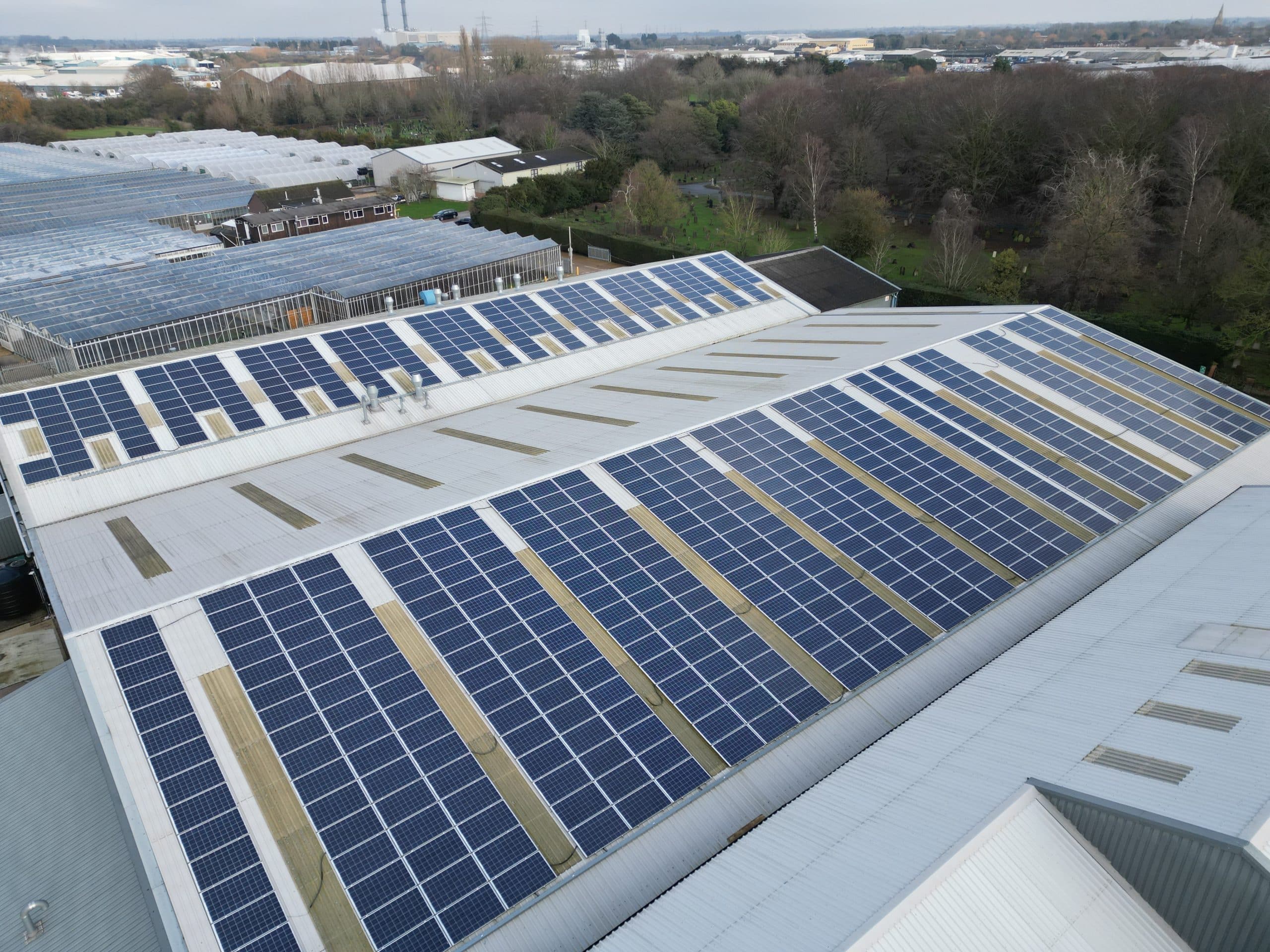
The 177kWp array in the photo spans several warehouse roofs feeding one energy-hungry operation. When we model payback for a site like this, five inputs decide the answer:
- Self-consumption shareThe portion of generation your operation uses directly. Seven-day operations sit highest.
- Your unit rateThe more you pay per kWh, the faster solar repays.
- Roof and install costA clean steel portal frame roof is quick to fit. Complex roofs, ballast systems or reinforcement add cost and months to payback.
- Weekend shutdownsA five-day operation exports its weekend generation at a lower value unless a battery captures it.
- Tax treatmentCapital allowances shorten the real-world payback, covered next.
Tax relief and business rates
None of the paybacks above include tax relief. Capital allowances let a company set qualifying plant against its taxable profits, and GOV.UK puts the Annual Investment Allowance at £1 million. The relief lands early in the project's life, which is when it shortens payback most. We are installers, not tax advisers, so treat this as a pointer: how the allowances apply to solar is set out in our guide to capital allowances on solar PV, and your accountant should confirm your position.
A rooftop array should not push up your rates bill either. The government's Energy Efficiency for Businesses guidance says eligible plant and machinery used for onsite renewable generation and storage is exempt from business rates until 31 March 2035. Our article on solar panels and business rates covers the detail.
Buying outright, loans and PPAs
Every figure on this page assumes the business buys the system and keeps all the savings. Spectrum does not offer or arrange finance. If you are weighing a loan, a lease or a power purchase agreement, the sum changes, because some of the saving goes to whoever funds the system. Our guides compare cash, loan, PPA and lease for commercial solar and explain how a solar PPA works. They are general information, not financial advice.
Where batteries fit the commercial case
A battery pays for itself when there is surplus to move. That means weekend generation on a five-day site, evening or early shifts, a limit on what the network lets you export, or a tariff with a wide gap between cheap and peak hours. The 49.68kWp quote included 51.2kWh of storage for that reason and still came out at circa 4 years. On a site that uses all its solar as it is generated, we would rather leave the battery out. The detail is in our commercial battery storage guide.
What happens after payback
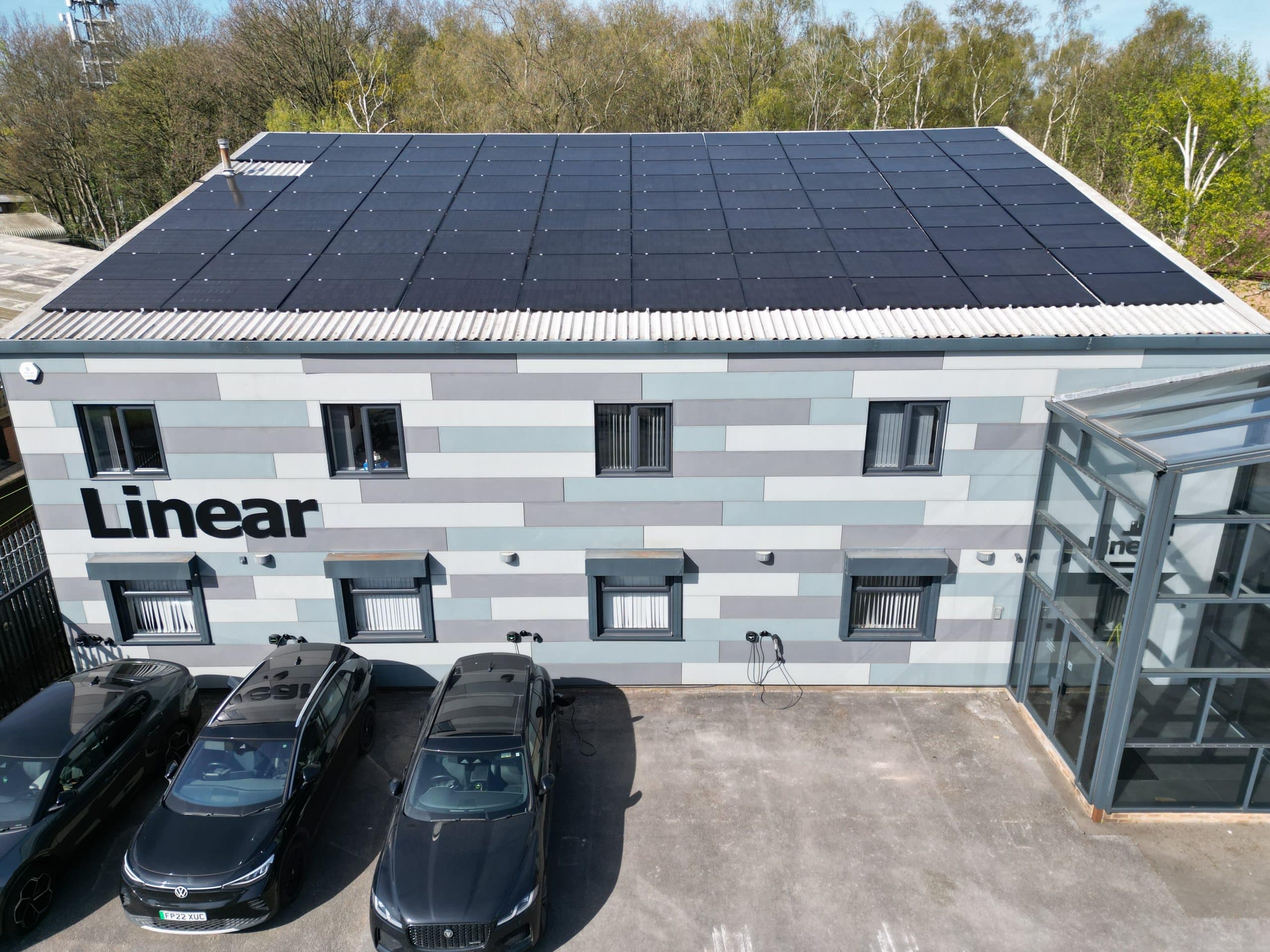
The photo shows our 66.85kW solar panel installation in Nottingham at Linear Insulation, where the published payback was 3.3 years. Once a system has repaid itself, the generation carries on. Tier 1 panels carry 25 to 30 year performance warranties, so a system that repays in circa 5 years then delivers roughly two decades of electricity at very little running cost.
Budget for an inverter replacement at some point in that life, periodic cleaning and an annual health check. Those costs are small against the value of the generation, and they belong in any honest payback model. Whether the whole investment suits your business is a wider question, which we cover in are commercial solar panels worth it.
Want your building's actual payback number?
Send us a recent electricity bill and we will model your site properly: consumption profile, roof, system size and the honest payback figure. It starts with a free remote roof and energy assessment, so we can see what fits and give you an idea of costs. Prefer us to visit first? We can do that too. Spectrum has completed over 1,000 installs since 2011, working from our own Bulwell HQ with in-house crews.
Get EstimateFrequently asked questions
What is the payback period for commercial solar in the UK?
A well-matched commercial rooftop system in the UK typically pays back in circa 5 years. Our own published projects run from 2.5 years on a garden centre with a busy café kitchen to 4 to 5 years on a workshop with a large battery. Every figure is specific to that site's bills and tariff.
How long does commercial solar take to pay for itself through lower energy bills?
It depends on how much of the generation the building uses as it is made. A site that runs all day and uses most of its solar directly can repay in under 4 years. A site that closes at weekends, or exports a lot, takes longer because exported power earns less than it saves.
How do you calculate the payback period for a commercial solar investment?
Divide the installed price, excluding VAT, by the yearly benefit: the electricity you no longer buy plus any export income, less running costs. A £37,000 system that returns £9,250 a year pays back in 4 years. Tax relief shortens the real figure, so ask your accountant to add it.
When does a commercial solar battery pay for itself?
A battery earns its place when there is surplus to move: weekend generation on a five-day site, evening or early shifts, a limit on export, or a tariff with a wide gap between cheap and peak hours. On a site that uses all its solar as it is generated, a battery adds cost without adding much saving.
How much does a 50kW commercial solar system cost?
We quoted a 49.68kWp system with a 51.2kWh Pylontech battery and a Solis 40kW inverter at £37,000 plus VAT in 2026. Commercial pricing is always plus VAT, and each project is priced from the building's roof and consumption. Our commercial cost guide gives the price bands by system size.
Do capital allowances change the payback?
Yes. Capital allowances let a company set qualifying plant against its taxable profits, and GOV.UK puts the Annual Investment Allowance at £1 million. The relief arrives early in the project's life, which is when it shortens payback most. We are installers, not tax advisers, so your accountant should confirm what applies to you.
Is the payback slower if we close at weekends?
Usually a little. Weekend generation is exported at a lower value than weekday self-use, which stretches the payback. A battery can hold weekend energy for Monday morning instead. We model five-day sites with and without storage so you can compare both paybacks before deciding.
Do businesses get paid for the solar power they export?
Yes, once you are on an export tariff. Under the Smart Export Guarantee, suppliers that are SEG licensees must pay eligible generators of up to 5MW for the power they export, and Ofgem says the rate must always be above zero. Each supplier sets its own rate, so use the rate you can actually get in the payback sum.
Related reading
- Commercial solar panel costs: real project numbers
- Are commercial solar panels worth it?
- Capital allowances on solar PV
- Commercial solar battery storage UK
- Solar panels for business premises: an owner's guide
Talk to the team that installs what it models
We are an MCS certified installer (NIC200223) with in-house commercial crews based in Bulwell, Nottingham. Explore the commercial solar overview or call 0115 773 7575, 8am to 8pm, Monday to Friday.
Get in touch