Solar Panel Grants UK 2026: What Is Actually Available
There is no universal solar panel grant in the UK in 2026. ECO4 runs until 31 December 2026, but it only pays for solar in homes heated by a heat pump, high heat retention storage heaters or qualifying electric heating. The main live route is the Warm Homes: Local Grant, which can fund solar for lower income households in England with an EPC of D to G. Everyone else gets 0% VAT until 31 March 2027 plus export payments.
In This Guide
The honest picture in 2026
Every week someone asks us whether the government will pay for their solar panels. The honest answer is: for most households, no. The era of universal solar subsidies ended when the Feed-in Tariff closed to new applicants in 2019. What exists in 2026 is a targeted grant for lower income households in England, a VAT holiday for everyone, and ongoing export payments that reward you for the electricity your panels send to the grid.
That last number matters. Solar stopped needing a grant to make sense some years ago. But if there is any chance you qualify for the one live scheme, check it before you spend a penny. Here is how it works.
The Warm Homes: Local Grant
The Warm Homes: Local Grant is the government's current home energy upgrade scheme for England, delivered through local councils. It funds energy efficiency improvements and low carbon heating for lower income households, and solar panels are one of the measures it can pay for where a home assessment recommends them.
The broad eligibility rules work like this:
- You live in EnglandThe scheme is England only. Scotland and Wales run their own separate schemes through Home Energy Scotland and Nest.
- Your home has an EPC of D, E, F or GYou can check your rating free on the government's EPC register. Homes already at C or above do not qualify.
- Your household income is low enoughHousehold income must usually be £36,000 a year or less. Receiving certain means tested benefits, or living in a qualifying postcode area, can also make you eligible.
- You own the home, or rent privately with your landlord's consentSocial housing is covered by a separate fund through housing providers.
Two important caveats from our experience. First, the scheme is assessment led: the council sends an assessor, and the measures installed are the ones the assessment recommends for your home. You cannot simply request solar panels, and some qualifying homes get insulation or heating measures instead. Second, delivery is run by each local authority, so what is available and how quickly it moves varies from council to council. Apply through your own council's website or energy team, and be patient with the process. If you live in the East Midlands, Staffordshire or South Yorkshire, our East Midlands solar grants guide lists what each council has open, county by county.
Schemes that have closed or are ending
A lot of the grant advice online is out of date, and some of it is out of date on purpose. Here is the current status of every scheme people still search for:
- ECO4Runs until 31 December 2026, and no new supplier scheme replaces it. It only pays for solar where the home is heated by a heat pump, high heat retention storage heaters or qualifying electric heating, so a home that keeps gas heating cannot get solar through it.
- Great British Insulation SchemeClosed on 31 March 2026. It mostly paid for single insulation measures and never covered solar.
- Home Upgrade Grant (HUG)Closed. The government's own page now points applicants to the Warm Homes: Local Grant instead.
- Feed-in TariffClosed to new applicants in April 2019. Existing FIT contracts keep paying, which is why your neighbour with 2012 panels gets cheques you cannot.
- Green Homes GrantClosed in 2021 after less than a year.
What every household gets, grant or no grant
Miss the income or EPC tests and you are in the same position as most of our customers. You still get two pieces of government support worth real money:
| Support | What it is worth | Until when |
|---|---|---|
| 0% VAT on solar and battery installations | Roughly £1,500 to £2,000 saved against 20% VAT on a typical domestic install | 31 March 2027, then 5% is scheduled to return |
| Smart Export Guarantee (SEG) payments | Payment for every kWh you export. Rates vary widely between suppliers, from a few pence to 15p or more on the best solar tariffs | Ongoing, no announced end date |
The 0% VAT relief applies automatically: it is simply built into your quote, which is why our prices carry no VAT line. The detail on what qualifies is in our guide to the zero VAT rules for homeowners. Export payments need an MCS certified installation, which is one of several reasons the certificate matters. Our comparison of current SEG rates shows who pays what, and it changes often enough that we keep it updated.
Grant cold calls: a warning
The word grant does a lot of heavy lifting in solar cold calls. If someone rings you about a government backed solar scheme, a free solar survey your area has been selected for, or ECO4 solar for a home heated by gas, treat it exactly as you would any other cold call. Genuine grant schemes do not cold call, do not need a decision today, and are applied for through your council, not through whoever happens to have your phone number. The government lists its actual schemes on gov.uk, and that is always the place to check a claim.
The maths without a grant
Here is what the numbers look like for a household that qualifies for nothing beyond the standard support, because that is most people. Our most installed domestic system is 5 to 6kWp of Tier 1 panels with a 16.1kWh battery at £9,995 all-in, with the 0% VAT already reflected in the price.
At the Ofgem price cap unit rate of 26.11p per kWh (July to September 2026 cap) and East Midlands generation of 900 to 1,050 kWh per kWp per year (MCS-standard methodology), that system typically pays for itself in circa 8 years, combining the electricity you stop buying with export payments on the surplus. The figures are illustrative rather than guaranteed, and they move with your usage, your tariff and your roof. Our savings calculator lets you try your own numbers, and our full UK cost guide covers every system size.
If spreading the cost matters, some customers use their own bank finance or home improvement borrowing. We are installers, not financial advisers, and nothing here is financial advice: the point is simply that the system's economics stand up in 2026 without a grant behind them.
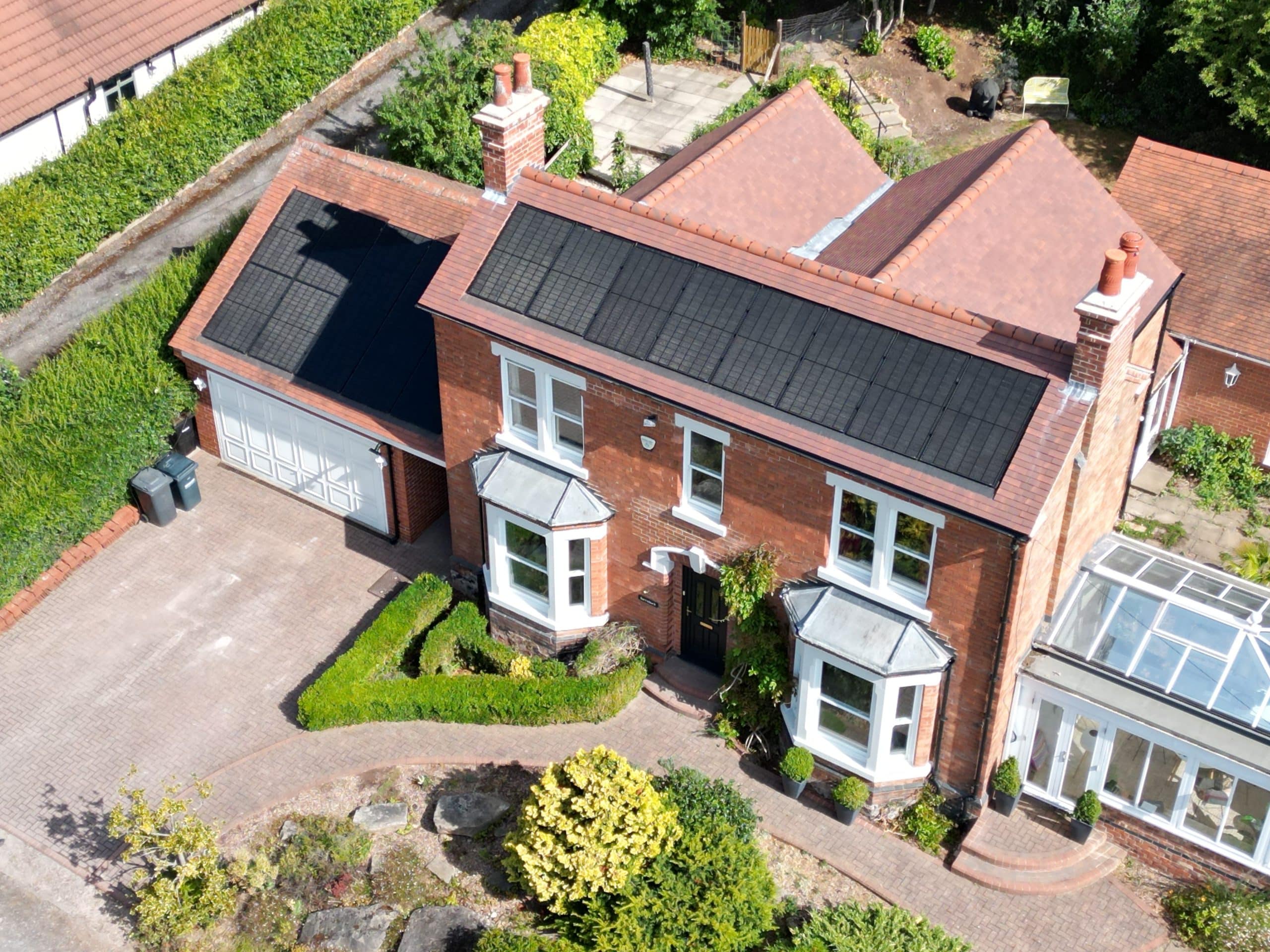
A real installed job
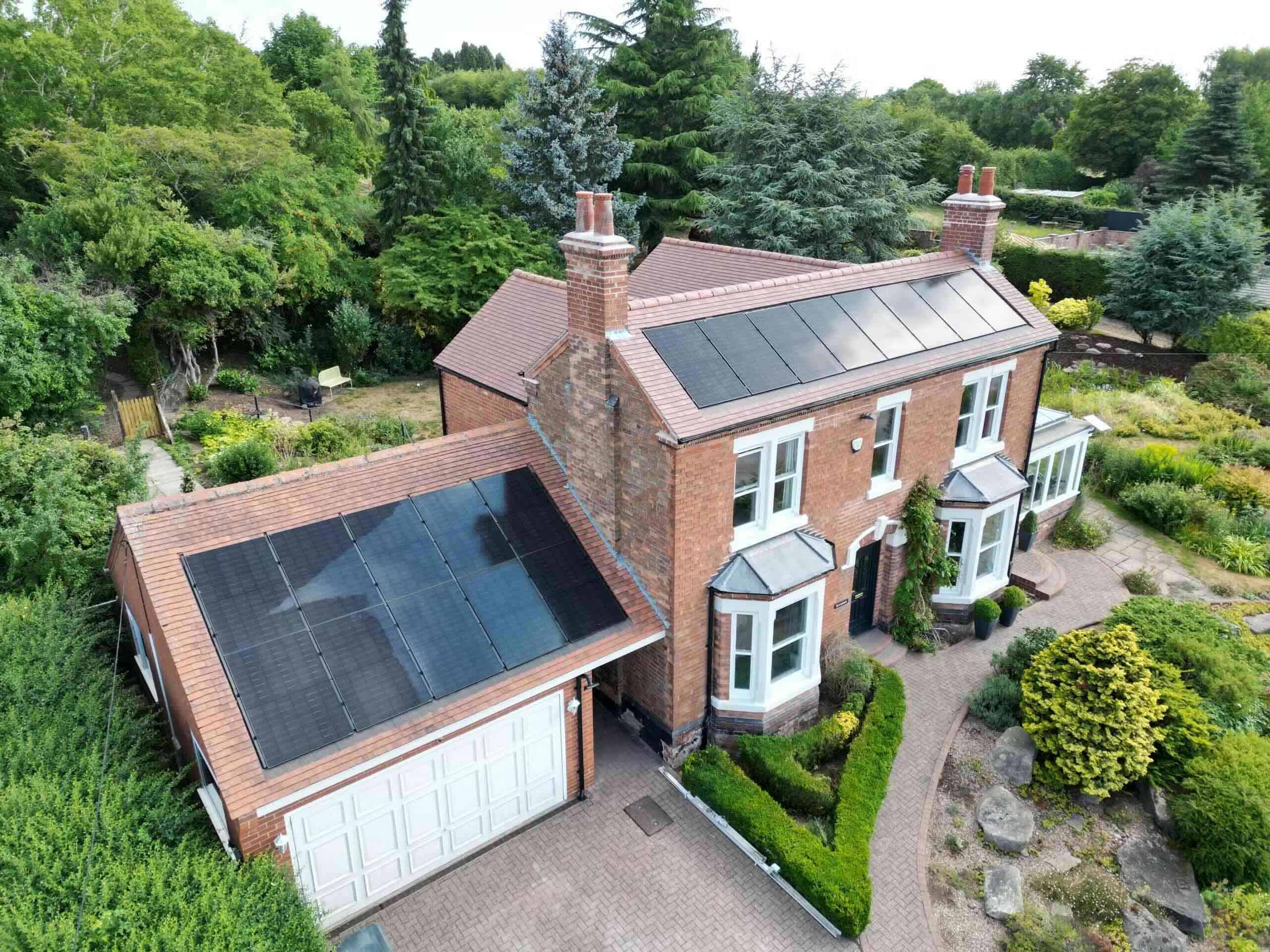
This Nottinghamshire home had no grant funding at all. The owners paid the standard all-in price, claimed nothing except the 0% VAT already in the quote, and signed up to a solar export tariff after handover. The panels sit flush to the roof in an in-roof array, the battery covers the evenings, and the export payments arrive quarterly.
Our Sherwood installation tells the same story with numbers: a 7.2kW system that cut the electricity bill by 96%, with payback at circa 7 years. No grant involved, just the standard support everyone gets.
Not sure if your home qualifies for anything?
Book a feasibility assessment and we will tell you straight: what support applies to you, what your roof can generate, and what the numbers look like either way. Spectrum has installed over 1,000 systems across the East Midlands since 2011.
Book a feasibility assessmentFrequently asked questions
Are there any government grants for solar panels in 2026?
One targeted scheme exists: the Warm Homes: Local Grant in England, for households with an EPC of D to G and a household income usually of £36,000 a year or less (or on certain benefits). It can fund solar where a home assessment recommends it. There is no universal grant, but every household gets 0% VAT until 31 March 2027 and export payments.
Can I still apply for ECO4?
Only until 31 December 2026, and it only pays for solar if your home is heated by a heat pump, high heat retention storage heaters or qualifying electric heating. It is delivered through energy suppliers and councils, and no new supplier scheme replaces it. Be wary of anyone who cold calls offering ECO4 solar for a home heated by gas. The Warm Homes: Local Grant is the main route for eligible households in England, applied for through your local council.
Do pensioners get free solar panels?
Not automatically. Age is not a qualifying test for any current scheme. A pensioner household qualifies for the Warm Homes: Local Grant the same way anyone else does: an EPC of D to G, a household income usually of £36,000 a year or less (or qualifying benefits, or a qualifying postcode), and a home assessment that recommends solar.
Is the Boiler Upgrade Scheme a solar grant?
No. The Boiler Upgrade Scheme funds heat pumps and biomass boilers, not solar panels. The two get mixed up constantly in cold calls. If you are pairing a heat pump with solar, the heat pump may attract that scheme while the solar side follows the rules in this guide.
Do solar grants cover battery storage?
Under the Warm Homes: Local Grant, what gets installed is decided by the home assessment, and batteries are not a standard measure. For everyone else the better news is that the 0% VAT relief covers battery storage as well as panels, whether fitted together or the battery added later.
How do I apply for the Warm Homes: Local Grant?
Through your local council, not through an installer. Search your council's name plus Warm Homes Local Grant, or ring its energy or housing team. The council checks eligibility, arranges the home assessment and appoints the installer. Be wary of any company claiming it can apply on your behalf for a fee.
Is there VAT on solar panels in 2026?
Domestic solar panel and battery installations carry 0% VAT until 31 March 2027 under the energy saving materials relief, after which a 5% rate is scheduled to return. The relief applies to supply and installation together, which is why a professionally installed quote shows no VAT line at all.
Related reading
- 0% VAT on solar panels: what homeowners need to know
- Best SEG rates compared for 2026
- How much do solar panels cost in the UK in 2026?
- Paying for solar: finance options explained
- Are solar panels worth it in 2026?
Talk to an installer, not a call centre
We are an MCS certified installer (NIC200223) based in Bulwell, Nottingham. If a grant applies to you we will say so. If it does not, we will show you the real numbers instead. Call us on 0115 773 7575, 8am to 8pm, Monday to Friday.
Get in touch