
Solar Panel Finance UK: Pay-Monthly Options Explained
UK solar panel finance in 2026 splits into four broad routes: cash purchase (cheapest overall), specialist solar finance via FCA-regulated home-improvement finance lenders (typically 7-12% APR over 5-10 years), general home-improvement loans through your bank, and - for businesses - capital purchase claiming Annual Investment Allowance. Domestic solar PV plus battery currently carries 0% VAT in the UK, which materially improves whichever route you choose.
Important - this is information, not financial advice. Spectrum Energy Systems Ltd installs solar; we are not financial advisers and are not authorised or regulated by the Financial Conduct Authority (FCA). This article is general information on how solar finance works in the UK. It is not financial, credit or tax advice and not a personal recommendation. We do not provide, arrange, broker or introduce finance - any borrowing is arranged solely between you and an FCA-authorised lender of your choosing. The APRs and figures shown are illustrative estimates only, vary by lender and circumstances, and are not an offer of credit. Always check a lender on the FCA Register and take independent financial and tax advice before borrowing.
Cash is still the cheapest way to buy solar - you save the interest. But not everyone has £10,000+ sitting in an account waiting for a roof install. Pay-monthly finance and Annual Investment Allowance (AIA) for businesses both turn solar from a single capex outlay into a manageable monthly figure, often close to the electricity-bill saving the system delivers. That’s the simplest version of why finance can make sense.
The four routes in plain English
1. Cash. You pay the install in full at commissioning. Payback runs 6-8 years for domestic, 4-6 for commercial. After that the system is generating savings outright.
2. Specialist solar finance. A finance company underwrites the install and you pay back over 5-10 years. Typical market rates in 2026 are around 7-12% APR (illustrative figures, not rates offered by Spectrum). Monthly repayments can sit close to the electricity-bill saving the system generates, though whether the install is genuinely cashflow-neutral depends on your tariff, system size and usage.
3. Home-improvement loan. Take an unsecured personal loan or secured home-improvement loan from your bank. Rates are sometimes better than specialist solar finance, especially if your credit is strong. The terms aren’t solar-specific.
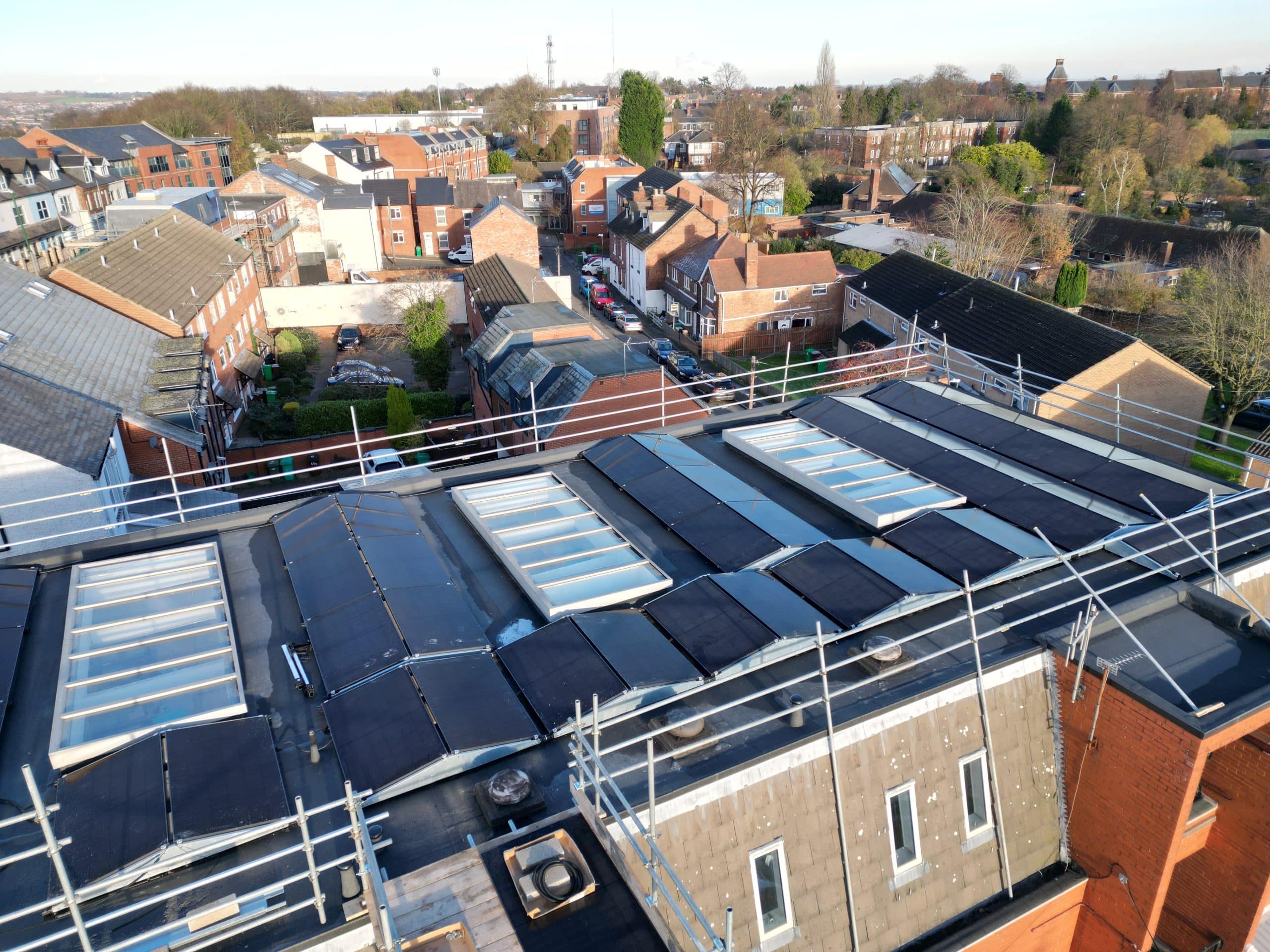
4. Business capital purchase + AIA. A limited company buys the install outright and claims the full cost against profits in year one through the Annual Investment Allowance (AIA). For a profitable company in the 25% corporation tax band, that’s an effective 25% discount on the system. Cash purchase, but tax-efficient.
The 0% VAT detail (domestic)
From April 2022, UK domestic installations of solar PV plus battery storage carry 0% VAT until 31 March 2027. This is a material saving - a £10,000 system that would have carried 20% VAT now carries zero. The 0% rate applies to the install in its entirety, including battery, scaffolding, mounting kit and labour. For full detail see the HMRC notice 708/6.
0% VAT is irrelevant if you’re financing the system - the install price you finance is already net of VAT, so the saving is built into your monthly payment.
Capital allowances for businesses
The Annual Investment Allowance lets businesses deduct the full cost of qualifying plant and machinery from taxable profits in the year of purchase, up to £1 million per year. Solar PV systems qualify. For a profitable trading company in the 25% corporation tax band, AIA delivers an effective 25% discount on the install cost.
Example: a £50,000 commercial install, claimed via AIA, reduces taxable profit by £50,000. Tax saving is 25% × £50,000 = £12,500. Effective net cost: £37,500. Payback maths run on the £37,500 figure, not the £50,000.
What pay-monthly actually looks like
Here is an illustration only - an FCA-authorised lender will give you exact figures. Take a typical 5-6kWp + 16.1kWh Spectrum domestic install at £9,995, financed over 10 years at an assumed 9% APR:
- Monthly repayment: ~£127
- Total cost over 10 years: ~£15,200
- Typical year-1 electricity-bill saving: £1,000 - £1,200 (£83 - £100/month)
- Net monthly cashflow impact: roughly -£27 to -£44 in year 1, narrowing if electricity prices rise (which isn’t guaranteed)
The shape is the point: for many households the system offsets a large part of its own finance from early on. Whether it is genuinely cashflow-neutral depends on the rate you are offered, your tariff and your usage - and the system carries on saving for 15-20 years after the finance ends. Savings figures here are illustrative estimates based on typical East Midlands generation (MCS-standard methodology) and recent Ofgem price-cap unit rates; your actual figures depend on your tariff, usage and system size.
Looking for a solar design and quote?
Tell us about your property and we’ll put together a tailored solar and battery design with a clear written price - no pressure, no obligation.
Request a QuoteHow finance works with a Spectrum install
Spectrum doesn’t offer or arrange finance, and we don’t work with finance brokers - so there’s no introducer commission baked into your install price. If you want to spread the cost, you arrange it directly yourself: a home-improvement loan from your own bank, or an FCA-regulated home-improvement or renewable-energy lender you approach independently. What we give you is a clear written quote with the full install cost, so you (or your lender) have an exact figure to work from.
For commercial customers the usual route is capital purchase - we’ll talk you through AIA and capital-expenditure timing for your year-end so you can plan the spend. Any asset finance is arranged through your own provider, not us.
When NOT to finance
Three situations where we’d push back on a finance offer:
- Your cash savings are earning more than the finance rate. If you’ve a Cash ISA at 4.5% and the finance is 9%, the maths argues for cash purchase.
- You’re selling the property within 18 months. Solar adds property value but the finance contract follows you, not the house, and the savings clock hasn’t had time to deliver.
- The system would otherwise be over-sized. Adding battery capacity just because the monthly payment is ‘only a bit more’ is how customers end up with under-cycled batteries. Size for need, then finance the right size.
Red flags in solar finance pitches
Things that should make you suspicious:
- ‘0% finance’ with a price uplift. The interest is usually baked into a higher install price. Compare the cash price.
- Pressure to sign at the kitchen table. Reputable installers will give you the quote in writing and a cooling-off period.
- Finance that’s only available if you sign tonight. Real lenders don’t work that way.
- Guaranteed savings figures. No installer can guarantee future electricity prices. Honest installers quote ranges.
How RECC and MCS protect you
Spectrum is a RECC member (00080159) and an MCS-certified installer (NIC200223). RECC enforces a 14-day cooling-off period on any contract signed in your home, requires written specifications and protects you against high-pressure sales tactics. MCS gives you access to the Smart Export Guarantee and a complaints route via the MCS scheme operator. Both accreditations are conditions of buying solar through a finance route - many lenders will only finance installs by MCS-certified installers.
FAQs
Can I finance solar panels with no deposit?
Yes - most specialist solar finance products in the UK offer 0% deposit. The lender finances the full install cost over 5-10 years, with monthly repayments often close to the electricity-bill saving the system generates. Eligibility depends on credit check; a soft search confirms what you’d be offered without affecting your credit file.
What APR is normal for solar finance in the UK in 2026?
Specialist solar finance typically runs 7-12% APR over 5-10 year terms in 2026. Personal loans from high-street banks sometimes beat that for strong credit profiles. Always compare like-for-like - some ‘0% finance’ offers carry a hidden install-price uplift, which is more expensive than a higher headline APR on a lower cash price.
Is solar panel finance regulated by the FCA?
Yes, when offered through a regulated lender. UK consumer credit is FCA-regulated under the Consumer Credit Act 1974. If an installer introduces a finance product, RECC rules require it to be FCA-regulated. Spectrum doesn’t arrange or introduce finance - you approach a lender yourself - so always confirm the lender is FCA-registered before signing (check their FRN on the FCA Register).
Do I pay VAT if I finance a domestic solar install?
No. Domestic solar PV plus battery storage carries 0% VAT in the UK until 31 March 2027 (HMRC notice 708/6). The 0% rate applies regardless of payment method - cash, finance, or mixed. You’re financing the post-VAT-zero figure, which makes the monthly figure lower than it would have been pre-2022.
Can my business claim tax relief on solar finance?
Capital purchase plus Annual Investment Allowance gives the strongest tax outcome - full first-year deduction up to £1m. Hire-purchase via finance generally qualifies for AIA too, provided the asset transfers to the business at end of term. Operating lease or rental doesn’t qualify for AIA - speak to your accountant before signing.
What credit score do I need for solar finance?
Most specialist solar finance products accept fair-to-good credit (typically Experian 600+ or Equifax equivalent). A soft search with a lender shows what you’d be offered without affecting your file. If your credit is poor, a secured home-improvement loan from your bank may be the better route - though it puts your property as collateral.
Can I pay off solar finance early?
Most UK regulated consumer credit allows early settlement, though some lenders charge a settlement fee (often capped at one month’s interest). Confirm the settlement terms in writing before signing. Paying off early typically saves a significant chunk of the headline interest, especially in the first half of the term.
Related reading
- Solar PV capital allowances: 25% tax relief for businesses
- 0% VAT on solar panels: what homeowners need to know
- Are solar panels worth it in 2026?
- Best solar battery for Octopus Agile in 2026
- Octopus Agile + solar: 2026 savings guide
For the full Spectrum service overview see a Spectrum quote.
Speak to Spectrum Energy Systems
MCS NIC200223. RECC 00080159. We’ll give you a clear written quote so you can weigh up paying cash, arranging your own finance, or (for businesses) capital allowances - with no pressure. We don’t sell or broker finance.
Request a Quote