Solar for Housing Associations: MEES Compliance Guide
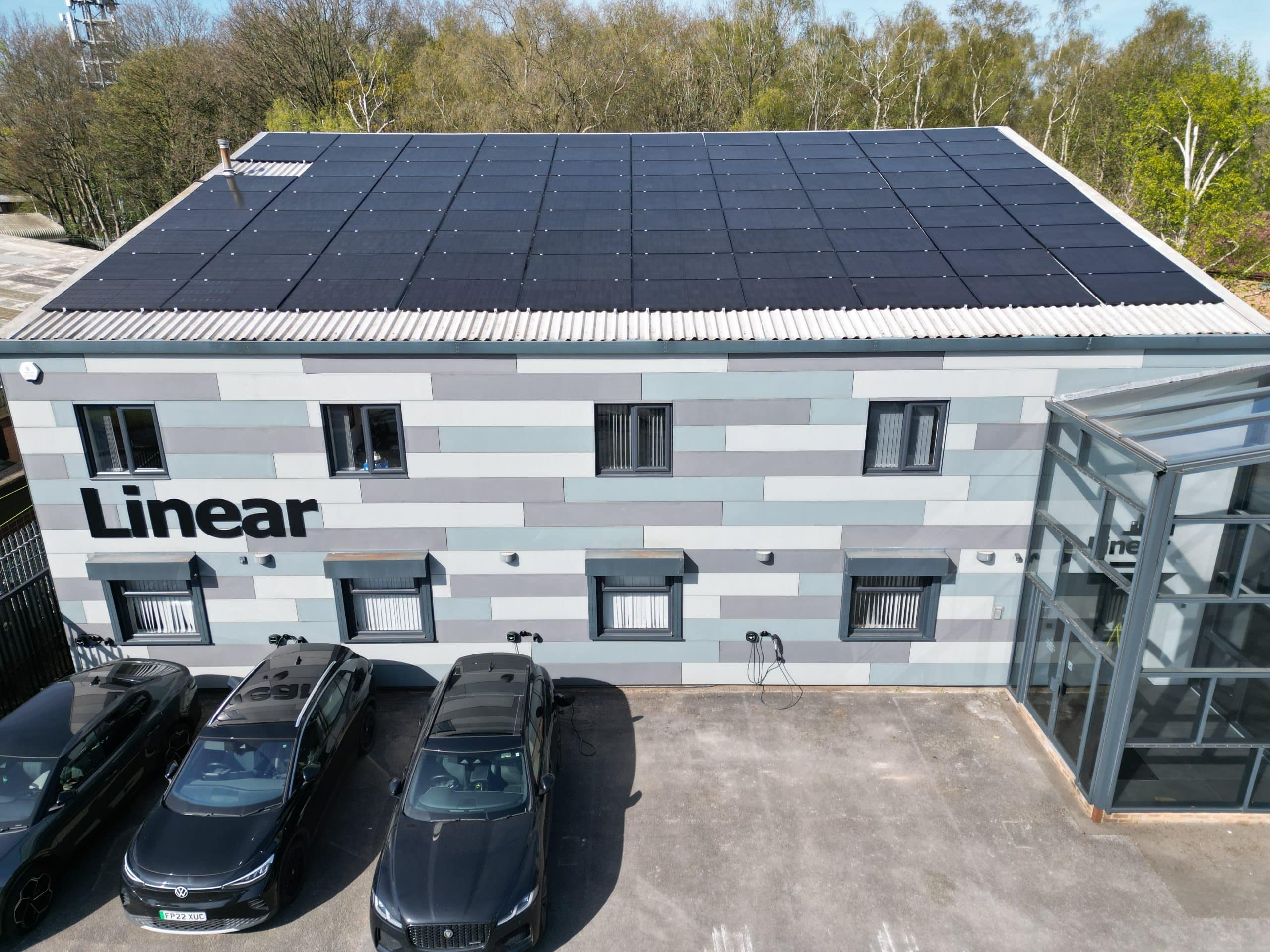
UK housing associations deploy solar PV on social-housing stock to (a) improve EPC ratings toward the Minimum Energy Efficiency Standards trajectory (currently C by 2030 for social rented homes), (b) cut tenant fuel bills and reduce arrears, and (c) hit organisation-wide net-zero targets. Typical stock-level installs are 2-4kWp per dwelling on suitable roofs. Funding routes include the Warm Homes: Social Housing Fund (formerly the Social Housing Decarbonisation Fund), the wider Warm Homes Plan, and self-funded portfolio investment.
Housing associations are among the most strategically important sectors for solar PV in the UK in 2026. The combination of MEES targets, net-zero commitments and tenant fuel-poverty concerns has put solar PV on stock decarbonisation roadmaps across most major UK housing providers.
What MEES actually requires
The Minimum Energy Efficiency Standards (MEES) for residential rented property set the minimum EPC rating a landlord must meet to legally let. For the private rented sector, the current legal minimum is E (since April 2020), with EPC C by 1 October 2030 now confirmed for the private rented sector under the Warm Homes Plan (announced 21 January 2026), backed by a £10,000 per-property cost cap; the regulations are being laid and a new HEM-based EPC metric is under consultation. For the social rented sector, the Decent Homes Standard update and parallel social-housing decarbonisation targets point to EPC C by 2030 across the stock.
Solar PV typically lifts an EPC rating by 5-15 points depending on system size, dwelling type and existing rating. A property at EPC D with the right roof can move to C with a 3-4kWp install. For housing associations with thousands of D-rated properties, solar is a major MEES compliance lever.
Solar economics for housing stock
| Aspect | Detail |
|---|---|
| Typical system size per dwelling | 2.5-4kWp |
| Typical install cost per dwelling | £3,500 - £6,500 |
| Annual generation per dwelling | 2,000-3,500 kWh |
| Annual tenant saving (self-consumption) | £200 - £400 |
| EPC rating uplift | Typically 5-15 points |
| SEG income (to landlord, typically) | £30 - £100/year/dwelling |
Funding routes for housing associations
- Warm Homes: Social Housing Fund (WH:SHF). The main government grant for retrofitting social housing toward EPC C - this is the scheme formerly known as the Social Housing Decarbonisation Fund (SHDF Wave 3), now delivered under the Warm Homes Plan. Solar PV is eligible alongside fabric improvements and heating decarbonisation, and is a commonly installed measure under the fund.
- Warm Homes: Local Grant. A locally-delivered grant supporting lower-income owner-occupiers and private renters; relevant where a housing association also manages mixed-tenure stock. Solar PV qualifies in eligible packages.
- Note on ECO4. The Energy Company Obligation (ECO4) is winding down - it has been extended to 31 December 2026 to give suppliers more time to complete their existing obligations and remediate non-compliant work, with no increase in targets, and is being succeeded by the Warm Homes Plan. Spectrum does not deliver ECO4-funded installs; we treat WH:SHF and self-funded programmes as the live routes for housing-association solar.
- Self-funded portfolio investment. Many housing associations now run solar PV programmes as routine capital investment with payback recovered through tenant value uplift, MEES compliance avoidance cost and SEG income.
- Joint-venture financing. Some HAs partner with specialist solar finance providers who deploy capital across the stock and recover via SEG / partial rent uplift / EPC value.
What Spectrum delivers for housing associations
- Stock-level scoping assessment (which dwellings are PV-suitable based on roof, orientation, shading)
- Per-property design and roof structural check
- G98 or G99 application to the DNO (DNO often handles social-housing batches efficiently)
- MCS-certified install at scale - in-house crews working through a programme of installs week by week
- Tenant engagement support - pre-install briefings, monitoring access, complaints handling
- Documentation pack per property (MCS cert, electrical cert, system specification) for the asset register
- Optional ongoing maintenance contract across the stock
Programme-level deployment differs from single-installs - the procurement, scheduling, tenant access and documentation pipeline all matter. Spectrum’s in-house crews (no franchised network, no subcontracting) deliver consistent install quality across portfolio rollouts.
Planning a stock-level solar PV programme?
We deliver MCS-certified solar at scale for housing associations across the East Midlands. From scoping through to portfolio rollout. It starts with a free remote roof and energy assessment, so we can see what fits and give you an idea of costs. Prefer us to visit first? We can do that too.
Speak to Our TeamTenant considerations
Social housing solar installs require tenant consent or notification depending on tenancy agreement terms. Most modern HA agreements permit landlord-led energy improvements with reasonable notice. Common tenant questions during install briefing:
- Will my electricity bill change? (Yes - lower import, possibly small standing charge change.)
- Who owns the panels? (Almost always the landlord.)
- What about export income? (Usually flows to landlord under social housing arrangements; some HAs split.)
- What happens if the install needs repair? (Landlord arranges through their maintenance programme.)
- Can I add a battery? (Tenant cannot modify the system; landlord may add battery in a future programme.)
Programme vs single-install economics
Programme-scale installs unlock 15-30% cost-per-dwelling reductions versus single-install ad-hoc deployment. Sources of saving:
- Bulk panel and inverter purchasing
- Concentrated crew deployment (no transit time between scattered jobs)
- Batch DNO applications
- Standardised system designs across similar dwelling types
- Programme management overhead amortised across more units
For a 500-dwelling programme, the cost-per-dwelling typically lands at £3,500 - £4,500 versus £5,000 - £6,500 for single installs.
The EPC pathway in practice
An EPC D-rated property (typically 55-68 score) needs to reach band C (69+ score) for MEES compliance. The lift required is 1-14 points. Solar PV alone delivers 5-15 points depending on dwelling and system size. Where solar alone won’t close the gap, paired interventions (insulation, low-energy lighting, smart heating controls) layer on top.
Cost-per-point-of-EPC-uplift is one of the metrics the Warm Homes: Social Housing Fund and other funders score on. Solar PV typically scores competitively versus other interventions on this metric.
FAQs
Does solar PV help meet MEES requirements?
Yes - solar PV typically adds 5-15 EPC points to a residential dwelling, depending on system size and existing rating. For housing associations targeting EPC C across stock, solar is a major compliance lever, often combined with insulation and smart controls.
Who owns the panels on social housing?
Almost always the landlord (housing association or council). Tenants benefit from reduced electricity import bills. SEG export income typically flows to the landlord. Some HAs operate revenue-share arrangements with tenants, though this is less common than landlord-retained income.
Can social housing tenants opt out of solar PV?
Most modern tenancy agreements permit landlord-led energy improvements with reasonable notice. Forced installs are rare; tenant engagement is usually a non-trivial part of the programme. Spectrum supports tenant briefings as part of programme delivery.
Is the social-housing decarbonisation grant still open?
The fund continues, but under a new name: what was SHDF Wave 3 is now the Warm Homes: Social Housing Fund (WH:SHF), delivered under the Warm Homes Plan. Solar PV is a commonly installed measure under it. Funding is allocated to providers in time-bound windows, so always check the live position on gov.uk before assuming funding is available for your specific timeline.
How long does a stock-level solar programme take?
Scoping and procurement typically 3-6 months. Install rollout is then ~4-6 dwellings per crew per week, with multiple crews running in parallel for larger programmes. A 200-dwelling programme typically completes in 9-15 months total. Larger 500-1,000 dwelling programmes take 18-30 months.
Can battery storage be added to social housing solar?
Battery alongside solar is now common on Warm Homes: Social Housing Fund programmes where time-shifting matters for grid impact or fuel-poverty profiles. Adds typically £2,500 - £4,000 per dwelling. For some HAs, battery is in scope; for others, a future-phase upgrade.
Does solar void social housing buildings insurance?
No - modern HA buildings insurance policies routinely cover solar PV installs. The HA should notify their insurer of the new system. Some policies have specific solar endorsements that are no-cost additions to existing cover.
Related reading
- PSDS funding for public sector solar
- Solar PV capital allowances: 25% tax relief for businesses
- Solar PV for UK schools
- Solar PV for cold-storage facilities
For the full Spectrum service overview see commercial solar overview.
Speak to Spectrum Energy Systems
MCS NIC200223. Social housing and stock-level solar programmes across the East Midlands. In-house installation crews, MCS-certified, RECC 00080159.
Speak to Our Team