
Solar for Schools UK: Funding, Sizing and Curriculum Value
UK schools historically funded solar PV through the Public Sector Decarbonisation Scheme (PSDS), administered by Salix Finance, usually bundled with a heat-pump project. Important: PSDS is closed to new applications- Phase 4 closed in November 2024 and the government has committed no further funding beyond awarded projects. So unless your school already holds an award, the practical routes today are capital-budget funding or a Power Purchase Agreement (PPA). Typical school installs are 30-150kWp on flat or low-pitch roofs, with high daytime self-consumption and genuine STEM-curriculum value. Spectrum delivers the design, install and commissioning whichever funding route you take, with MCS certification on systems up to 50kWp.
Solar PV on UK schools matters both for the decarbonisation agenda and for running costs - energy bills are a non-trivial slice of school budgets, particularly for older secondary schools with electric heating or tired gas boilers. While PSDS was open, solar combined with heat-pump replacement was the standard funded pattern; with the scheme now closed to new bids, schools are increasingly funding from capital budget or via a PPA.
Where school solar makes sense
- Flat or low-pitched roofs. Most school buildings have one or both. Esdec-style flat-roof mounting works without penetrating the roof membrane.
- Daytime occupation aligned with solar generation. 8am - 4pm school day matches mid-morning to late afternoon solar peak. Self-consumption is high.
- Predictable demand pattern. Term-time + summer holiday creates a known consumption shape that’s easy to size against.
- Long-term ownership. Schools rarely move premises. Solar PV’s 25-30 year asset life lines up with school estate lifecycles.
- Educational value. Live generation displays in classrooms provide STEM curriculum material.
School load profile typically
| Time of day | Typical load |
|---|---|
| 6am - 8am | Heating ramp, low electrical load |
| 8am - 9am | Lighting, ICT boot-up, kitchen pre-prep |
| 9am - 12pm | Peak load - lighting, ICT, science labs, ventilation |
| 12pm - 2pm | Kitchen peak, hall use |
| 2pm - 4pm | Continuing peak before close |
| 4pm - 6pm | After-school clubs, cleaning, falling load |
| 6pm - 6am | Background loads only - security, freezers, building management |
Typical school solar sizing
| School type | Annual kWh | Recommended kWp | Battery (optional) |
|---|---|---|---|
| Small primary (150 pupils) | 30,000-60,000 | 30-50kWp | 10-20kWh (mainly for resilience) |
| Large primary (400 pupils) | 60,000-120,000 | 60-100kWp | 20-30kWh |
| Secondary school (1,000 pupils) | 200,000-500,000 | 100-250kWp | 30-80kWh |
| FE college (3,000+ students) | 500,000-1,500,000+ | 250-500kWp | 80-200kWh |
PSDS funding mechanics (and its current closed status)
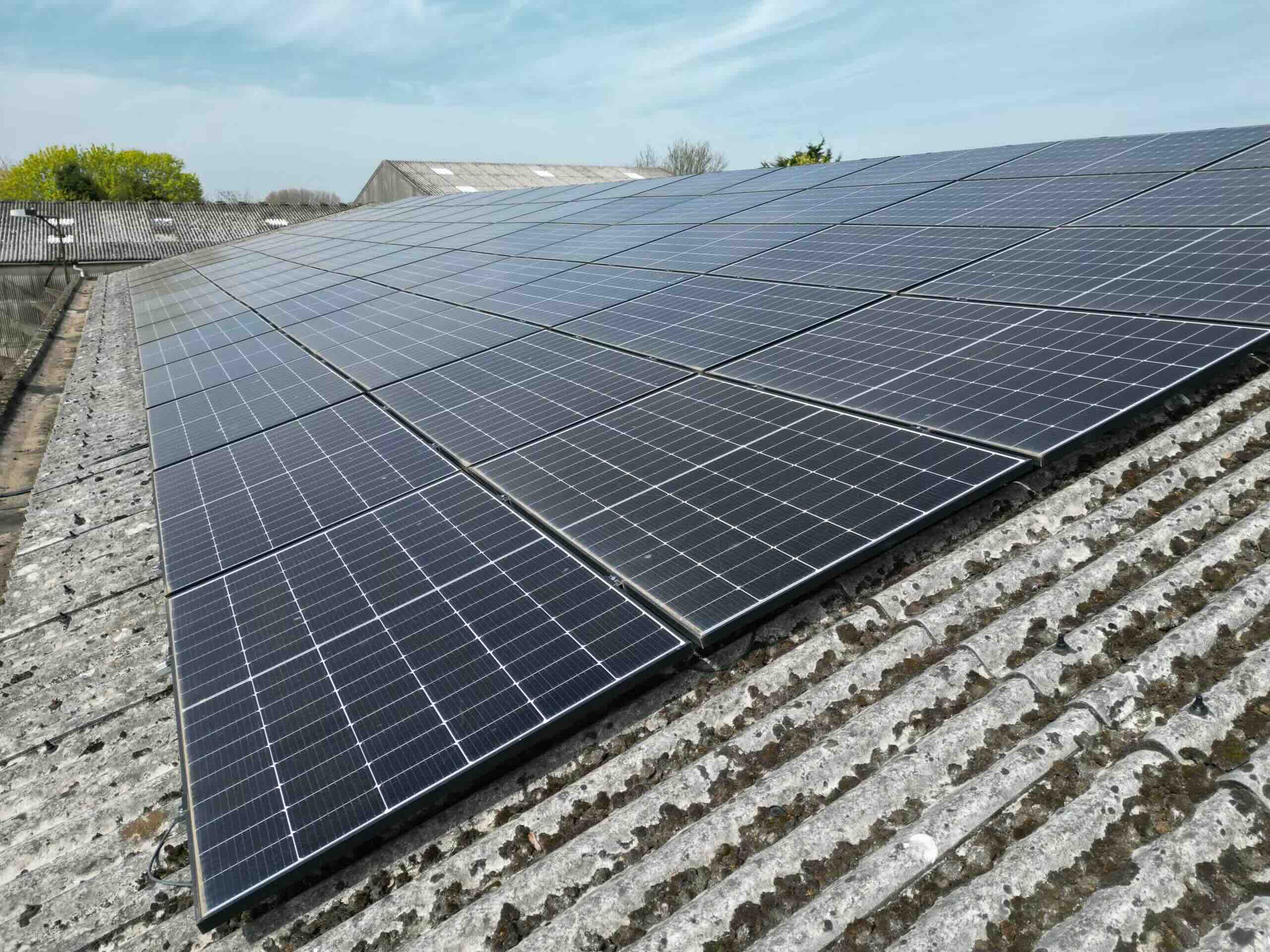
The Public Sector Decarbonisation Scheme was grant funding administered by Salix Finance. It is closed to new applications: Phase 4 closed in November 2024, and in June 2025 the government confirmed no further PSDS investment beyond projects already awarded (Salix continues to deliver those to 31 March 2028). While it was open, PSDS funded heat-decarbonisation projects with solar PV as an enabling/supporting measure - standalone solar bids didn’t score well; solar paired with heat-pump replacement of gas boilers consistently did. If your school secured an award, this is still the package being delivered:
- Air-source heat-pump replacement of existing gas/oil boilers
- Building fabric upgrade (insulation, glazing) where it materially reduces heat demand
- Solar PV sized to provide a meaningful share of the heat-pump’s electricity
- Battery storage where load-shifting helps grid impact
- Smart controls and metering
See our PSDS funding article for the full mechanics.
Planning solar for your school?
Whether you’re delivering an existing PSDS award or funding from capital budget or a PPA, we provide the technical design and firm costs for the solar component - and work alongside any decarbonisation consultant the school appoints. It starts with a free remote roof and energy assessment, so we can see what fits and give you an idea of costs. Prefer us to visit first? We can do that too.
Speak to Our TeamCurriculum integration
Live generation displays in classrooms are a recurring application narrative. The simplest version is a wall-mounted screen in the entrance hall or science department showing real-time generation, total lifetime kWh, CO₂ savings, and a graph of today vs yesterday. Most modern inverter monitoring (SolisCloud, Sungrow, Sunsynk dashboards) supports public-display modes.
Beyond the display, integration with KS3/KS4 physics, geography and design technology curricula creates regular touchpoints with the installation. Real data on UK irradiance, energy units, electricity markets and decarbonisation policy fits into multiple GCSE specifications.
What Spectrum delivers
- Roof condition assessment and structural calc for the proposed array
- Solar PV system design (panel layout, kWp, inverter specification)
- Firm pricing for your capital budget, PPA, or an existing PSDS award (Salix required firm cost evidence at bid stage)
- G99 application to the DNO once funding confirmed
- Procurement-compliant tender response (CCS framework, formal procurement where required)
- Full install during the school’s summer holiday or half-term window where access matters
- Commissioning, MCS certification where the system is 50kWp or under, SEG paperwork
- Optional ongoing maintenance contract
Spectrum is MCS-certified (NIC200223), NICEIC-approved (3182878), RECC member (00080159). All three are typical PSDS / public-sector procurement requirements.
Procurement pathways for schools
- Crown Commercial Service Framework. CCS RM6314 (Demand Management & Renewables) and its Dynamic Purchasing System equivalent RM6313 cover solar PV procurement. Direct award or further competition both possible.
- Local authority frameworks. Some county councils have established renewable energy frameworks academies and maintained schools can use.
- Open OJEU/UK procurement. For larger projects above public procurement thresholds, formal tendering applies.
- Small spend direct award. Below the thresholds, schools can direct-award to a single supplier with basic value-for-money documentation.
Three things to get right
- Roof condition before install. Solar adds 20+ years of asset life expectation to a roof; if the roof itself has <10 years remaining, the structural questions multiply. Re-roof first, then install solar.
- Holiday access. Most school PV installs happen in summer holidays or half-term. Plan procurement timeline backwards from these windows.
- Asset register inclusion. Make sure the installed system is on the school’s asset register, MCS certificate filed with site documentation, and maintenance schedule is in the building manager’s handover pack.
FAQs
Can schools still get solar funded through PSDS?
No - PSDS is closed to new applications. While it was open it was a capital grant covering the eligible cost of a heat-pump-led decarbonisation project that included solar PV. Phase 4 closed in November 2024 and no further funding has been committed, so schools that didn’t secure an award now fund solar from capital budget or via a PPA. Schools already holding an award continue to be delivered through Salix.
What size solar does a UK secondary school need?
A typical 1,000-pupil secondary school uses 200,000-500,000 kWh/year. A 100-250kWp solar PV array covers a meaningful share of daytime consumption with surplus to support a heat pump or feed export. Spectrum models against actual half-hourly meter data at site survey.
Does PSDS fund battery storage at schools?
Under PSDS, battery storage could be funded where it formed part of a coherent decarbonisation package - usually solar PV plus heat pump plus battery sized to time-shift consumption; standalone battery without generation wasn’t typically eligible. With the scheme now closed to new bids, battery is a self-funded or PPA decision, and on a school’s daytime-heavy load profile it’s often optional rather than essential.
How long does school solar take to install?
Typical install duration is 4-8 weeks for systems up to 100kWp, 8-12 weeks for larger systems. Most school installs are scheduled in summer holidays to avoid disrupting site access. Coordinated procurement-to-commissioning timeline is typically 6-9 months from PSDS award.
How do academy trusts approach estate-wide solar?
When PSDS was open, trusts often led applications across multiple schools, treating the estate as a single decarbonisation portfolio to spread fixed bidding costs and aggregate carbon savings. With PSDS now closed to new bids, that same portfolio approach works for capital-budget planning or a multi-site PPA - sizing and procuring across the estate together rather than school by school.
Does solar disrupt school operations during install?
Roof access requires scaffolding or low-roof mounting platforms, which need to be coned off from pupil access. Most installs are scheduled in school holidays for this reason. Electrical commissioning involves a brief power-down of the building - usually managed evening/weekend.
What happens to school solar after a roof refurb?
Panels can be temporarily removed and reinstated post-refurb, though it’s a meaningful cost. Better outcome is to schedule roof refurb before solar install. If a planned refurb is in the next 5-7 years, do the roof first - or have the refurb spec include solar-ready mounting points.
Related reading
- PSDS funding for public sector solar
- Solar PV capital allowances: 25% tax relief for businesses
- Solar for housing associations: MEES compliance guide
For the full Spectrum service overview see solar for schools.
Speak to Spectrum Energy Systems
MCS NIC200223. Commercial and public-sector solar installs across the East Midlands. We provide the solar PV design and firm costs your school project needs - capital-funded, PPA, or an existing PSDS award.
Speak to Our Team