G99 Application Solar: How DNO Approval Works in 2026
A G99 application is the pre-approval your DNO (Distribution Network Operator) requires before connecting a solar PV system that generates above 16A per phase — roughly 3.68kW on a single-phase supply, or about 11kW on three-phase. Below that threshold the simpler G98 ‘connect and notify’ process applies instead. Submission is via the DNO’s online portal with a detailed system design. The DNO’s statutory window to respond is up to 45 working days (a 20-working-day Fast Track applies to smaller, straightforward systems), and larger systems on constrained networks can take longer. Costs vary by DNO — often little or nothing to assess a smaller system, rising to several thousand pounds where network reinforcement is needed. Spectrum offers a £500 refundable standalone DNO application service for commercial prospects who want to confirm grid capacity before committing to a full install.
Connect solar generation to the grid and the grid operator has to know — both to manage local network capacity and to make sure your system meets engineering standards for stability and safety. For systems under 16A per phase (most domestic) the process is G98 (notification after install). For systems above 16A per phase (most commercial and larger residential) the process is G99 (approval before install).
When you need G99
G99 applies when your generation exceeds 16A per phase:
- Single-phase supply: 16A × 230V = 3.68kW maximum. Anything above is G99 territory.
- Three-phase supply: 16A × 230V × 3 = 11kW maximum. Larger commercial installs are G99.
Most UK domestic homes have single-phase supply, so anything exporting above 3.68kW (16A per phase) technically needs G99. In practice, the dividing line is set by inverter export limit, not panel nameplate — you can fit a 5kWp array on a single-phase supply if you cap the inverter export at 3.68kW. This is how many domestic 4–6kWp installs avoid G99 territory altogether.
What DNOs operate in the East Midlands
| Region | DNO |
|---|---|
| Most of East Midlands (Nottinghamshire, Derbyshire, Leicestershire, Lincolnshire) | National Grid Electricity Distribution (formerly Western Power Distribution) |
| South Yorkshire / parts of North Lincolnshire | Northern Powergrid |
Each DNO has its own application portal and engineering team. Spectrum routinely files G99 applications with National Grid Electricity Distribution for East Midlands customers.
What goes into a G99 application
- Site address and MPAN (meter point administration number)
- System designer details
- Inverter make, model and certified G99 compliance certificate
- System single-line diagram (SLD) showing PV, inverter, battery, isolators, consumer unit
- Panel specification
- Battery specification (if fitted)
- Export power limit (in kW)
- Earthing arrangement
- Protection settings — voltage and frequency trip levels per engineering recommendations
- Photos of existing meter setup
Spectrum compiles and submits all of the above. The application is technical engineering documentation, not a customer form.
The typical timeline
| Stage | Working days |
|---|---|
| System design complete | Day 0 |
| G99 application submitted to DNO | Day 1 |
| DNO acknowledgement | Day 2–5 |
| DNO engineering review | Day 5–25 |
| DNO decision issued | Day 20–45 (statutory window) |
| Commencement of install (post-approval) | Approval +1 day onwards |
Larger systems on constrained networks can stretch to 60–90 working days. Very large systems (multi-MW) take significantly longer and are often subject to reinforcement charges.
What ‘refused’ means
The DNO can refuse a G99 application for three main reasons:
- Insufficient local network capacity. The existing cables and transformer can’t accept the proposed export volume. Resolution: smaller system, or pay for network reinforcement.
- Engineering non-compliance. Inverter not on the certified G99 list, protection settings wrong, single-line diagram incorrect. Resolution: amend the design and resubmit.
- Phase imbalance concerns. Single-phase install proposed in an area where local network can’t take more single-phase export. Resolution: upgrade to three-phase or smaller export limit.
See our DNO refused application article for what to do next.
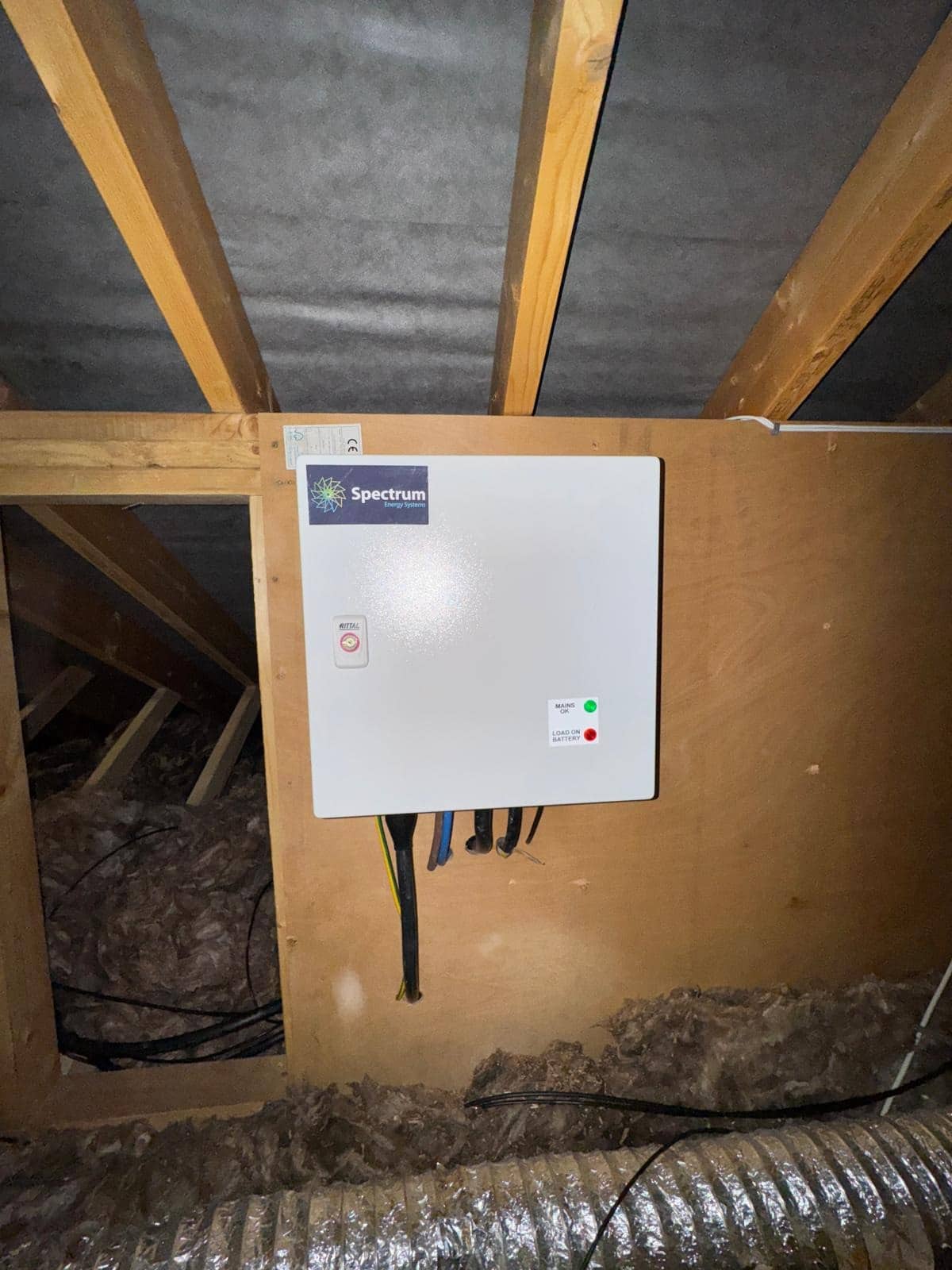
The Spectrum £500 refundable DNO application service
For commercial prospects wanting to confirm grid capacity before committing to a full install. £500 credited against the install if you proceed with Spectrum. Few other UK installers offer this.
Start a DNO CheckHow the £500 refundable DNO service works
The standalone DNO application service is genuinely a Spectrum USP. Most installers won’t touch a DNO application without a full install contract — the application takes engineering time and they don’t want to do that work unless they’re sure of an install.
For commercial prospects, the unknown grid-capacity question is often the blocker to committing. You don’t want to design a 200kWp commercial install only to find the DNO will only approve 80kWp. So Spectrum offers a standalone DNO application:
- Pay £500 (refundable) for the application
- Spectrum designs the indicative system, files G99 with the DNO
- Within around 45 working days (the DNO’s statutory window), the DNO returns capacity confirmation
- If you proceed with Spectrum as installer, the £500 is credited against the install
- If you proceed with a different installer (or don’t install at all), the £500 covers our engineering time
For commercial customers it removes the ‘design risk’ from the decision before they’ve committed capital.
What we can do to maximise approval chance
- Inverter selection from the certified list. Solis hybrids are widely on the G99 certified list. Some older or niche brands aren’t.
- Smart export limiting. Capping export to a level the DNO can accommodate, with the inverter dialled down accordingly. Reduces required headroom.
- Three-phase conversion (where applicable). If single-phase capacity is constrained, upgrading to three-phase opens more options — though it’s a meaningful cost addition.
- Battery storage on the same site. The DNO views battery + solar more favourably than solar-only because battery can absorb local peak generation rather than exporting it.
- Pre-application enquiry. For large installs, we can run a non-binding pre-application enquiry with the DNO to scope likely capacity before doing the full application.
FAQs
How long does a G99 application take?
The DNO’s statutory window is up to 45 working days from a valid submission, and a 20-working-day Fast Track applies to smaller, straightforward systems. Larger systems on constrained networks can run 60–90 working days. Spectrum tracks the application through the DNO portal and chases at the relevant stages.
How much does a G99 application cost?
The DNO’s own application fee is often low or nil for smaller domestic systems; commercial and larger applications can carry a fee (commonly a few hundred pounds) or require paid network studies, and any required network reinforcement is charged separately. Spectrum’s standalone DNO application service is £500, fully refundable if you proceed with Spectrum as installer.
Can I install solar before G99 approval?
No — for systems above 16A per phase, G99 approval must be in place before commissioning. Installing without approval is a regulatory breach and can result in disconnection. The application is technical engineering work; the DNO takes it seriously.
What’s the difference between G98 and G99?
G98 is notification (you notify the DNO within 28 days after install) for systems up to 16A per phase. G99 is pre-approval for systems above 16A per phase. See our G98 vs G99 article for the full comparison.
Do I need G99 for a battery-only install?
A battery-only install that doesn’t export to the grid doesn’t need G99. A battery alongside solar that contributes to export does need G99 if combined export exceeds 16A per phase. The DNO is most interested in what flows back to the grid, not what cycles internally.
Can a DNO refuse my G99 application?
Yes — the most common reason is insufficient local network capacity. The DNO will usually offer alternatives: smaller export limit, paid network reinforcement, or three-phase conversion. Outright refusal with no remediation path is rare for residential and small commercial.
Does Spectrum handle G99 applications for me?
Yes — G99 is part of the standard install for any system above 16A per phase. We file the application, manage the DNO communication and confirm approval before commissioning. The customer doesn’t handle technical documentation directly.
Related reading
- Solar grid connection: G98 vs G99 explained
- Why your DNO refused your solar application
- Solar panel installation cost UK 2026
- Solar panel finance UK
For the full Spectrum service overview see contact our team.
Speak to Spectrum Energy Systems
MCS NIC200223. G99 applications across National Grid Electricity Distribution and Northern Powergrid. Standalone £500 refundable DNO service for commercial prospects.
Start a DNO Check