Home Assistant for Solar PV: 2026 Setup Guide
Home Assistant is the open-source home automation platform that lets you monitor and control solar PV, batteries, EV chargers and heat pumps from a single dashboard, automate them against Octopus tariffs, and run Predbat for half-hourly battery optimisation. Runs on a Mac mini (the always-on host Spectrum includes and sets up) or a ~£100 Raspberry Pi. Free software. Connects to Solis (the Spectrum default), Sungrow, Sunsynk, SolarEdge and most major inverter brands via official integrations. For solar PV households on Octopus Agile in 2026, Home Assistant is the platform that unlocks the maximum savings.
Home Assistant on its own is a generic home automation platform - smart bulbs, security cameras, central heating. What turns it into a solar optimisation engine is the combination of three things: real-time inverter data, Octopus Energy API integration, and Predbat’s battery optimisation algorithm. With those three running, your home becomes an actively-managed energy asset rather than a passive consumer.
What Home Assistant does for solar
- Real-time monitoring. Live dashboards showing solar generation, battery state of charge, home consumption, grid import/export, EV charging, heat pump usage.
- Historical analytics. Day/month/year graphs of all the above, plus cost calculations against your specific Octopus tariff.
- Automation. ‘Charge EV when solar > 4kW’. ‘Run dishwasher when Agile < 5p/kWh’. ‘Pre-heat hot water during 1-4pm Cosy window’.
- Predbat integration. Battery charge/discharge optimisation against half-hourly tariff prices.
- Notifications. ‘Battery charging’, ‘Solar export peak hit’, ‘Tomorrow has 4 hours of negative Agile pricing’.
- Energy dashboard. Home Assistant’s built-in Energy view shows your tariff cost, savings vs flat tariff and self-consumption percentage in one chart.
What you need to start
| Item | Cost | Notes |
|---|---|---|
| Raspberry Pi 4 or 5 (or mini-PC) | £75 - £200 | Pi 5 with 8GB RAM is the best choice |
| microSD card or SSD | £15 - £40 | SSD recommended for long-term reliability |
| Power supply + case | £20 | Buy together with the Pi |
| Home Assistant OS | Free | Open-source operating system |
| HACS (Home Assistant Community Store) | Free | Where Predbat and many integrations live |
| Octopus Mini (optional but recommended) | Free from Octopus | Real-time consumption data feed |
All-in hardware cost: typically £120 - £250. Spectrum includes this hardware and the configuration as part of solar installs for Octopus Agile customers - we don’t make money on the Pi, we include it because the optimisation work needs it.
Key integrations to install
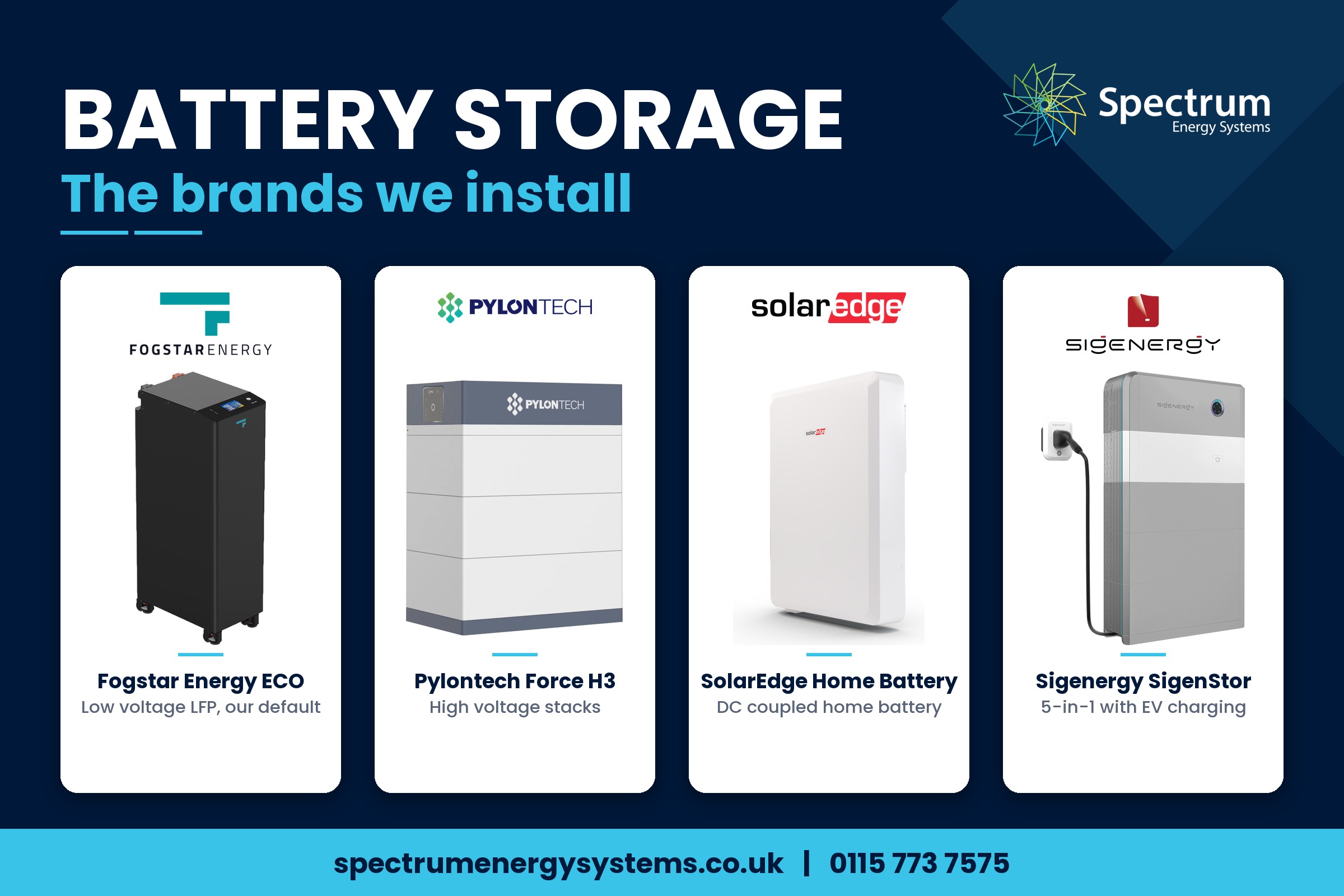
- Your inverter’s integration. Solis Cloud (Solis - the Spectrum default), Sungrow modbus, Sunsynk, SolarEdge Cloud, etc. Search HACS for your inverter brand.
- Octopus Energy integration. Connects Home Assistant to your Octopus account - pulls your tariff, half-hourly prices, current bill, smart meter readings.
- Predbat add-on. The battery optimisation algorithm. Install via HACS, configure for your tariff and inverter.
- Solcast PV forecast. Solar generation forecast based on weather and your panel orientation. Free for up to two roofs, no payment card needed.
- Energy dashboard configuration. Map your sensors (generation, grid import, grid export, battery charge, battery discharge) into Home Assistant’s built-in Energy view.
We’ll set Home Assistant up as part of your install
Spectrum supplies the Pi, configures the integrations and tunes Predbat for your tariff - included in our standard Octopus Agile package.
Request a QuoteCommon Spectrum customer setups
Basic monitoring (no Predbat): Solis Cloud + Octopus integration + Energy dashboard. Shows you what’s happening, doesn’t actively change behaviour. Good first step.
Agile-optimised (with Predbat): Above + Predbat configured for Agile + Solcast PV forecast. Active battery management. The standard Spectrum domestic-Agile install.
Heat-pump optimised: Above + heat-pump integration (most brands have one) + Cosy or Agile schedules. Heat pump pre-heats during cheap windows.
EV-optimised: Above + EV charger integration (Zappi, Ohme, Andersen). EV charges from solar surplus during the day and grid in cheap-window overnight.
Whole-home: All of the above plus smart plugs/switches for individual appliances (dishwasher, washing machine, immersion heater) that can be scheduled to run in cheap windows.
Things that look harder than they are
- Initial Pi setup. Flash the SD card with Home Assistant OS, plug it into the router, follow the on-screen wizard. 30 minutes.
- Adding integrations. Each is a UI-driven install. No coding required.
- Energy dashboard. Once your sensors are integrated, drag them into the Energy dashboard’s configuration screen. 10 minutes.
Things that genuinely need attention
- Predbat tuning. The default Predbat config gets you 70% of the available savings. Tuning the cost-per-cycle, forecast horizon and battery-reserve parameters gets you the rest. Spectrum’s post-commissioning Predbat tuning, included with the install, covers this.
- Solcast accuracy on shaded or unusual roofs. The free Solcast tier handles standard roof orientations well. Complex roof setups may need manual irradiance correction.
- Octopus API rate limits. Polling too frequently triggers rate-limit warnings. The default Predbat polling interval (15 minutes) is well within limits.
Home Assistant for commercial customers
Home Assistant works for commercial sites too, though the configuration is more complex. We’ve deployed Home Assistant + Predbat on commercial installs paired with Octopus Shape Shifters for businesses with daytime-weighted load and battery storage. For commercial customers, see our Octopus Shape Shifters article.
FAQs
Is Home Assistant free?
The software is free and open-source. You’ll need a small always-on host - Spectrum includes and sets up a Mac mini, or a Raspberry Pi 4/5 (~£100) as a lower-cost option. Optional Home Assistant Cloud subscription (£6.50/month) adds remote access and voice control - not needed for solar optimisation, useful for general home automation.
Will Home Assistant work with my existing solar install?
Almost certainly. Solis (the Spectrum default), Sungrow, Sunsynk, SolarEdge, Enphase and most major inverter brands have Home Assistant integrations. Closed-firmware inverters (some older Tesla Powerwall versions) have limited support. Check HACS for your specific inverter before committing.
Do I need to know how to code?
No - most Home Assistant configuration is UI-driven. You install integrations, configure them through a settings screen, and drag widgets onto dashboards. Advanced automations use YAML (text configuration files) but the basics work without it. Predbat tuning is YAML-based but Spectrum configures it for you.
Can Home Assistant control my heat pump?
Yes, on most modern heat pumps with an open API or modbus interface. Daikin, Vaillant, Mitsubishi Ecodan, Samsung have integrations available. The heat pump can be scheduled to run during cheap tariff windows or solar generation peaks - common pattern on Octopus Cosy households.
Does Home Assistant need to be online?
Yes - it polls inverter cloud APIs and Octopus APIs over the internet. Most home broadband is reliable enough. Short outages are tolerated - Home Assistant resumes when connectivity returns. Cellular fallback isn’t needed for typical residential use.
Can I see my solar data on my phone?
Yes - Home Assistant has iOS and Android apps. Connects to your home Pi over local Wi-Fi or remotely via the optional Cloud subscription. Same dashboards, same automations, same energy charts. You don’t need to be on your home network to check generation.
Is the Octopus Mini necessary?
Not strictly - the Octopus API returns half-hourly meter data for free. The Octopus Mini provides sub-second real-time data, which makes Home Assistant’s dashboards much more responsive and Predbat’s short-term decisions sharper. Worth having if Octopus offers you one (they’re free).
Related reading
- What is Predbat? Solar battery optimisation explained
- Octopus Agile + Solar: 2026 guide to maximum savings
- Octopus Shape Shifters commercial tariff + Solar
- how solar fits into a smart home system
For the full Spectrum service overview see domestic solar overview.
Speak to Spectrum Energy Systems
MCS NIC200223. We supply, install and configure Home Assistant + Predbat as part of our standard Octopus Agile package across the East Midlands.
Request a Quote