
Fogstar vs Pylontech: Which Solar Battery Is Right for You?
Fogstar suits low-voltage hybrid systems up to 15kW and gives you the best price-per-kWh on the UK market in 2026. Pylontech suits high-voltage hybrid systems above 15kW where you need a stack that talks cleanly to a HV Solis inverter. We fit Fogstar to almost every domestic install and Pylontech to most large-roof commercial systems — the decision is driven by your inverter, not by which brand is ‘better’.
If you’re researching solar batteries in 2026, Fogstar and Pylontech are two names you’ll see repeatedly. Both are LiFePO₄ (lithium iron phosphate) chemistry. Both are widely deployed across UK homes and businesses. Both pair well with Solis hybrid inverters — the inverter we fit on the majority of Spectrum installs.
The honest answer to ‘which is better’ is: it depends on your inverter voltage class and your kWh budget. This article walks through the decision the way we’d walk through it with you on a site survey.
Why we fit both — and don’t pretend one wins on every install
Spectrum is a kit-loyal installer. That doesn’t mean we use one brand for everything. It means we’ve picked the components that work reliably in our hands, and we don’t swap them out for whichever wholesaler is offering a discount that month.
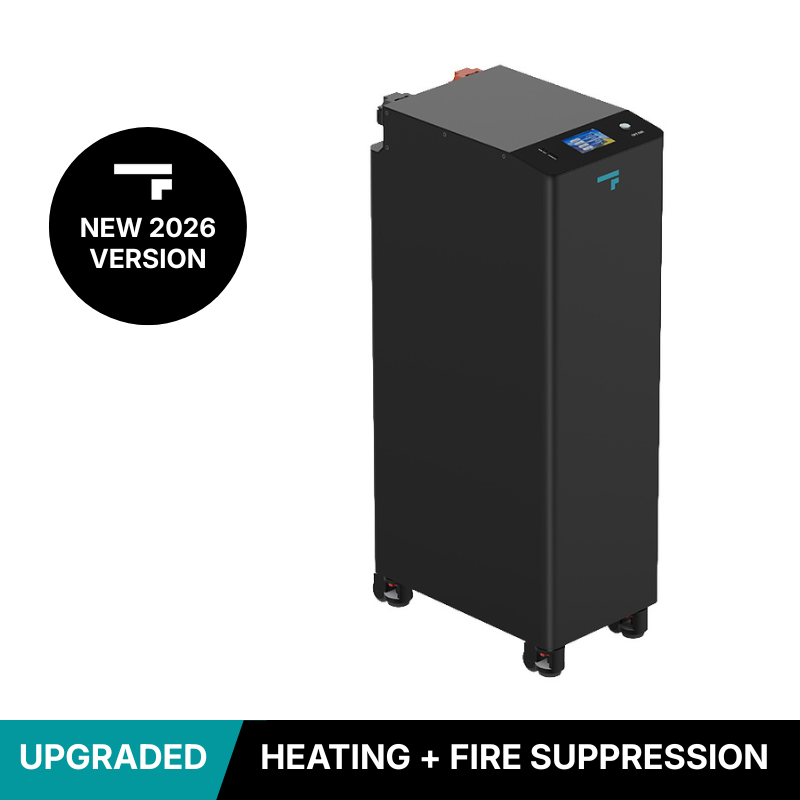
For Solis hybrid inverters up to 15kW (low voltage, LV class), we fit Fogstar. For Solis hybrid inverters above 15kW (high voltage, HV class), we fit Pylontech. That split isn’t marketing. It’s the voltage class the battery is designed to talk to. Trying to wire a low-voltage Fogstar stack to an HV Solis is a non-starter — the battery management system (BMS) won’t communicate properly, and the system either refuses to commission or throws constant errors in the field.
Fogstar at a glance
Fogstar is a UK-based brand that sells direct, with batteries built around prismatic LiFePO₄ cells. Their 16.1kWh 51.2V Solar Battery has become the default residential battery for hybrid Solis installs across the East Midlands — partly because the kWh-per-pound is among the best on the market in 2026, and partly because the BMS firmware updates have been kept current.
- Chemistry: LiFePO₄ (LFP) — safer thermal profile than NMC, no thermal runaway risk under normal operation.
- Voltage class: 48V/51.2V nominal — low voltage, designed for LV hybrid inverters.
- Capacity range: 10kWh, 16.1kWh, 32kWh outdoor unit, 48.3kWh modular stack.
- Warranty: 10 years on most models; the Fogstar Energy 16.1kWh is rated around 8,000 cycles.
- Best for: domestic installs and small commercial sites paired with Solis hybrid inverters ≤15kW.
Pylontech at a glance
Pylontech is a global lithium battery manufacturer with deep penetration in the European residential and light-commercial market. Their Force H3 and US5000 ranges are widely installed alongside Solis, Sunsynk and Victron inverters. Where Spectrum specifies Pylontech, it’s almost always the Force H3 high-voltage stack paired with a HV Solis hybrid inverter on a larger commercial roof.
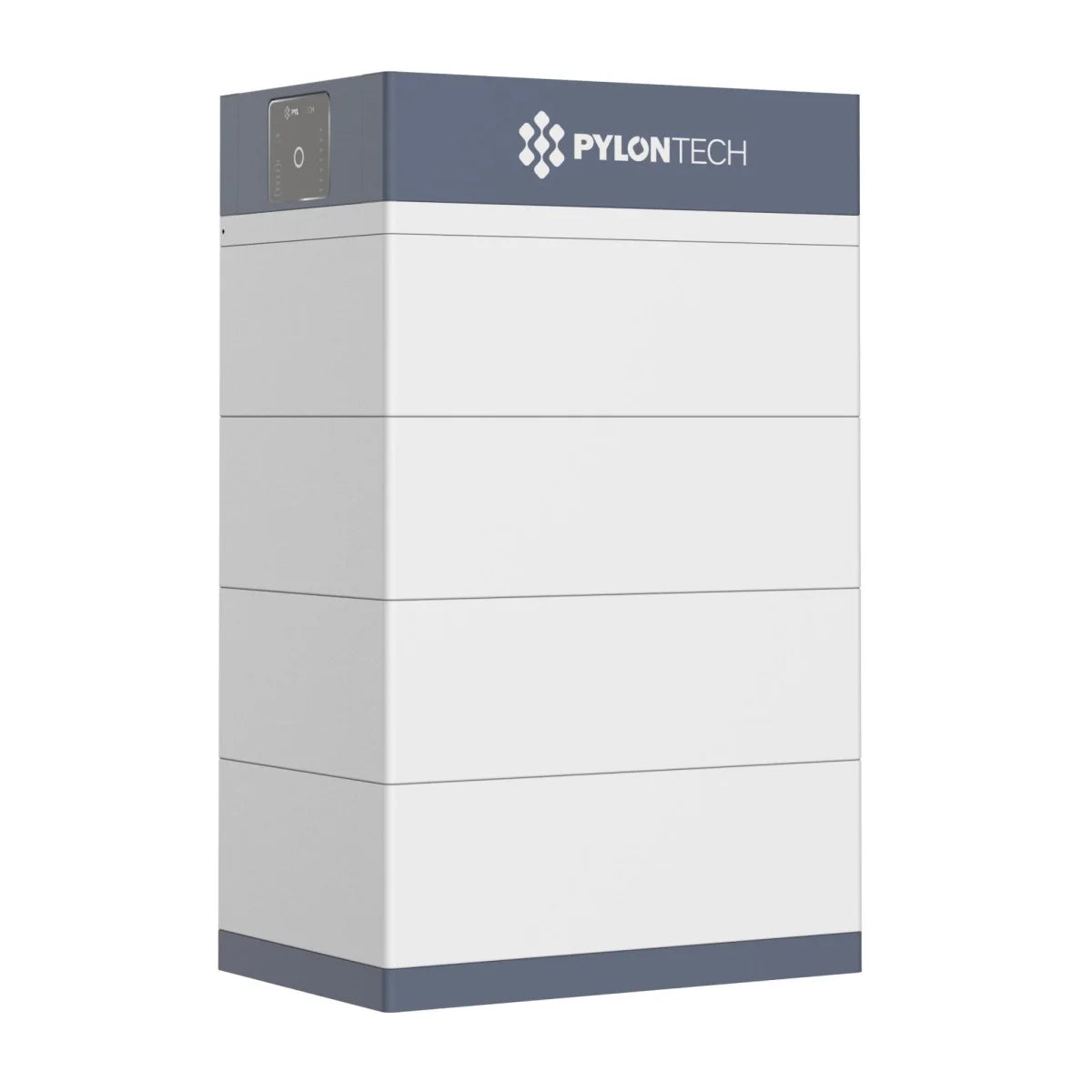
- Chemistry: LiFePO₄ (LFP) — same safe chemistry as Fogstar.
- Voltage class: Force H3 is high voltage (HV), US5000 is low voltage (LV).
- Capacity range: 5.12kWh per module, stackable to ~51.2kWh per tower.
- Warranty: 10 years on Force H3, conditional on ~80% depth of discharge and cycle limits.
- Best for: commercial systems >15kW where an HV Solis is the right inverter choice, or where the customer specifically asks for Pylontech.
The head-to-head table
| Spec | Fogstar 16.1kWh | Pylontech Force H3 |
|---|---|---|
| Chemistry | LiFePO₄ (LFP) | LiFePO₄ (LFP) |
| Nominal voltage | 51.2V (low voltage) | ~400V stack (high voltage) |
| Usable capacity (per module) | 16.1kWh | 5.12kWh per module, stackable |
| Cycles to 80% | ~8,000 | ~6,000 (10 yr warranty) |
| Communication | CAN/RS485 with Solis LV | CAN with Solis HV, Sunsynk HV |
| Origin | UK brand, built around prismatic cells | Pylontech, global manufacturer |
| Typical use case | Domestic & light commercial, ≤15kW inverter | Commercial, >15kW HV inverter |
| Indicative cost (ex-VAT, list) | £1,200–£1,300 | ~£3,000 for a 7.1kWh starter stack |
Which one should you choose?
Choose Fogstar if your system is domestic, sub-15kW, paired with a Solis LV hybrid (the most common Spectrum specification), and you want the strongest kWh-per-pound figure on the UK market. We fit Fogstar on the majority of our residential installs across Nottinghamshire, Derbyshire, Leicestershire and Lincolnshire for exactly this reason.
Choose Pylontech if your system is commercial, the inverter is an HV Solis above 15kW, or you’ve already committed to a specific brand because of warranty or service-network preferences. Our 35kW Johns of Nottingham commercial installation is a typical Pylontech use case.
Not sure which battery your inverter calls for?
Talk to an MCS-accredited installer who designs the system from the inverter outwards — not the other way around.
 Request a Quote
Common mistakes we see on quotes from other installers
- Spec’ing a Fogstar against an HV Solis inverter. The voltage classes don’t match. Either the inverter spec is wrong or the battery spec is wrong — one will need to change before commissioning.
- Quoting Pylontech for a 4kW domestic install. Massive overkill, far above-market pricing per kWh for that scale.
- Comparing ‘total kWh’ without showing usable kWh. Both brands quote usable energy honestly — but some resellers still quote ‘nominal’ figures that overstate real-world capacity by 10–15%.
- Pairing either brand with an inverter the BMS hasn’t been certified against. Communication errors lead to commissioning delays. We check the certified-pairings list on every design.
What our installs actually look like
In a typical Spectrum residential install, we fit a Solis 5kW or 6kW LV hybrid inverter, a 7–10kWp JA Solar or Aiko panel array on the main pitched roof, and a Fogstar 16.1kWh battery in the garage or utility space. Total system cost is typically £9,995–£14,000 depending on roof size, scaffolding, and whether the customer wants EV charging integrated. Payback runs 6–8 years for most domestic customers in the East Midlands at current electricity prices.
For commercial installs above 15kW, the inverter is usually a Solis 25kW or 50kW HV unit, the panel array is JA Solar or Aiko on a trapezoidal or corrugated metal roof, and the battery is a Pylontech Force H3 stack sized to match daytime self-consumption. Our 177kWp Spalding warehouse installation is a representative example.
Warranty and insurance-backed guarantee
Both batteries carry 10-year manufacturer warranties on the headline modules. Spectrum adds a QANW Insurance-Backed Guarantee on top of every install — meaning if Spectrum Energy Systems Ltd were ever to cease trading, your workmanship warranty is still backed by an independent insurer. That’s a real safety net, separately to manufacturer cover.
For a complete walkthrough of how UK solar warranties stack on top of each other, see our domestic battery storage page.
FAQs
Is Fogstar a good solar battery?
Fogstar is a well-regarded UK brand using LiFePO₄ chemistry, the same safe chemistry as Pylontech. Their 16.1kWh battery has a 10-year warranty, around 8,000 charge cycles, and pairs cleanly with Solis low-voltage hybrid inverters — the combination we fit on the majority of Spectrum domestic installs.
Can I mix Fogstar and Pylontech batteries in one system?
No. The two brands run different BMS firmware on different voltage classes. Mixing them on a single hybrid inverter would either fail to commission or throw constant communication errors. If you need more capacity than a single Fogstar module, stack additional Fogstar modules — or specify the next size up at the design stage.
How long do Fogstar and Pylontech batteries last?
Both manufacturers warrant their LFP batteries for 10 years to 80% capacity. The Fogstar Energy 16.1kWh is rated around 8,000 cycles and Pylontech around 6,000, whichever limit comes first — comfortably more than one full charge-discharge per day across the warranty term. Most domestic batteries fall comfortably inside that envelope.
Which is cheaper — Fogstar or Pylontech?
Fogstar is significantly cheaper per usable kWh in 2026, which is one of the main reasons it’s our default LV residential battery. Pylontech’s strength is at HV stack sizes where it’s the right kit for the inverter — not at competing with Fogstar on per-kWh price.
Can I add a battery to existing solar panels?
Yes — an AC-coupled battery can be retrofitted to an existing string-inverter solar PV array without rewiring the panels. Spectrum runs a retrofit-battery service across the East Midlands, including DNO approval where needed. The first step is a site survey to confirm consumer-unit headroom and inverter compatibility.
What size battery do I need for my home?
As a rule of thumb, sized to cover your overnight base load plus one peak-rate window the next morning. For a typical 4-bedroom Nottinghamshire home that’s 10–16kWh. For a home running an EV and heat pump, 16–32kWh is more realistic. Our savings calculator gives a first-pass sizing in under a minute.
Is Pylontech going out of business?
No. Pylontech is a publicly listed global manufacturer with hundreds of thousands of units deployed across Europe. There’s no credible signal of it leaving the UK market. Where Spectrum specifies Pylontech, the QANW Insurance-Backed Guarantee covers Spectrum’s workmanship regardless, so customers have layered protection.
Related reading
- Tesla Powerwall vs Fogstar: why we recommend Fogstar
- Best solar battery for Octopus Agile in 2026
- How much solar battery storage do I need?
- LFP vs NMC solar batteries: what’s the difference?
- Solar battery storage payback time UK 2026
For the full Spectrum service overview see domestic battery storage.
Speak to Spectrum Energy Systems
MCS NIC200223 — we’ve been fitting solar batteries across Nottinghamshire, Derbyshire, Leicestershire and Lincolnshire since 2011. Tell us your roof and your electricity bill, and we’ll tell you which battery your inverter calls for.
Request a Quote