
Tesla Powerwall vs Fogstar in the UK 2026: Why We Recommend Fogstar
Tesla Powerwall 3 is a polished product with a great app, but a Fogstar 16.1kWh battery paired with a Solis hybrid inverter delivers more usable kWh, costs roughly a third of an installed Powerwall, and integrates with open-source automation (Home Assistant + Predbat) for sharper Octopus Agile arbitrage. Spectrum doesn’t fit Powerwall - we’ve made an engineering and economics call to stick with the Solis + Fogstar stack on every domestic install. Here’s the reasoning, in detail.
Tesla Powerwall has been the most-searched home battery brand in the UK for years. We get asked about it on most site surveys: ‘should we be paying more for a Powerwall, or is your Solis + Fogstar setup actually fine?’ This article is the long-form answer.
Both products are safe, both use LiFePO₄ chemistry, and both are installed by qualified MCS installers across the UK. The decision - and Spectrum’s position - comes down to price-per-kWh, the depth of Octopus Agile automation, and battery-stack flexibility for future expansion.
Spectrum’s position upfront
We fit Solis hybrid inverters paired with Fogstar batteries on the majority of domestic installs across Nottinghamshire, Derbyshire, Leicestershire and Lincolnshire. We don’t fit Powerwall. That isn’t a reflection on Tesla’s product quality - Powerwall 3 is one of the most engineered home batteries on the market. It’s a reflection on three things:
- The price gap doesn’t deliver proportional value for the customer once you map system size against real UK consumption patterns.
- The closed Tesla ecosystem limits how aggressively a battery can trade against the Octopus Agile half-hourly market - we use Home Assistant + Predbat as an optional add-on on our battery installs, and that automation depends on an open-API inverter like Solis.
- Going bigger on Fogstar means choosing the right single unit at design stage (16kWh or 32kWh, or the modular 48kWh), while on Powerwall each step is another premium module.
If you specifically want a Tesla Powerwall, we will tell you straight that Spectrum does not fit it. What we will do is quote the closest thing we do install: Solis with Fogstar for value, or a Sigenergy SigenStor if the app-driven tariff automation is what draws you to Powerwall.
What you’re actually buying with each
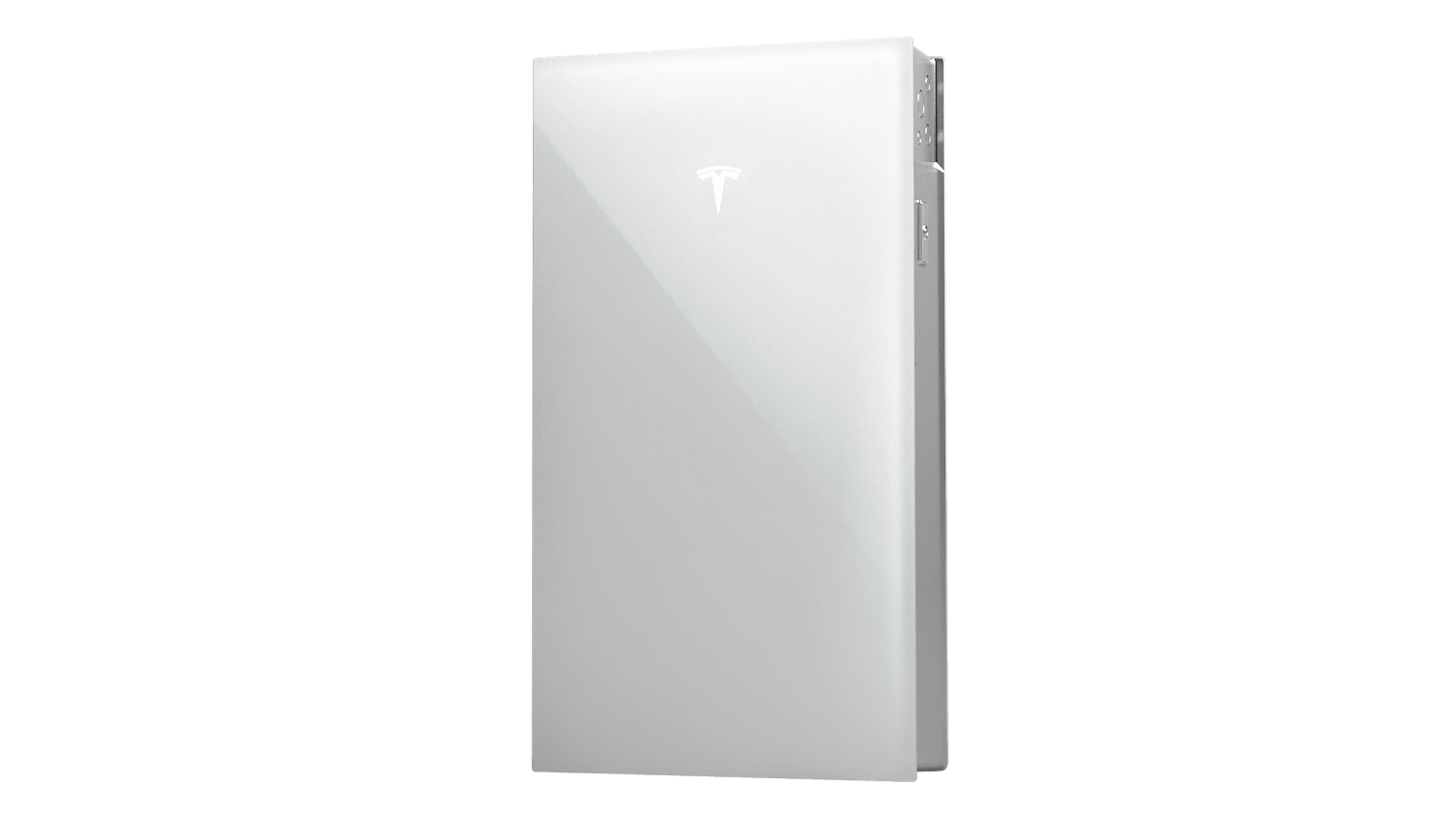
Powerwall 3 is sold as an integrated unit: battery + inverter + gateway, with a built-in 11.5kW solar inverter capable of running up to six MPPTs. You don’t add a separate string inverter - the Powerwall is the inverter. Fogstar is a battery only. You pair it with a separate Solis 5kW or 6kW hybrid inverter (the Spectrum standard) or another LV-compatible hybrid.
That difference matters financially, because the Powerwall price already includes an inverter you’d otherwise be buying separately. The right comparison isn’t ‘Powerwall price vs Fogstar price’. It’s ‘Powerwall installed price vs Solis hybrid inverter + Fogstar installed price’ - same comparable scope, same install scope.
Head-to-head specs (2026)
| Spec | Tesla Powerwall 3 | Fogstar 16.1kWh + Solis 5kW LV |
|---|---|---|
| Usable battery capacity | 13.5kWh | 16.1kWh |
| Chemistry | LiFePO₄ (LFP) | LiFePO₄ (LFP) |
| Continuous AC power | 11.5kW | 5kW (matched to inverter) |
| Solar inverter integrated? | Yes, 11.5kW | No - separate Solis hybrid |
| Backup mode | Whole-home capable (with Gateway) | Whole-home with changeover switch upgrade |
| Monitoring app | Tesla app (industry leading) | SolisCloud + Home Assistant + Predbat |
| Warranty | 10 years, unlimited cycles | 10 years (Fogstar), 10 years (Solis) |
| Indicative installed cost | ~£9,000 - £11,000 | ~£4,000 - £5,000 (battery + inverter installed) |
Where Powerwall 3 wins
- One-box neatness. Single product, single warranty, single point of contact.
- App. Tesla’s monitoring is well-regarded - clean visualisation, fast response, useful storm-watch automations.
- Power output. 11.5kW continuous AC handles heavier loads (electric showers, induction cooking, EV draw on Octopus Go top-ups) without sagging.
- Whole-home backup. With the Tesla Backup Gateway, Powerwall 3 islands the entire home off-grid cleanly. Achievable with Solis + Fogstar too, but requires an automatic changeover switch and extra wiring.
Where Spectrum’s Solis + Fogstar specification wins
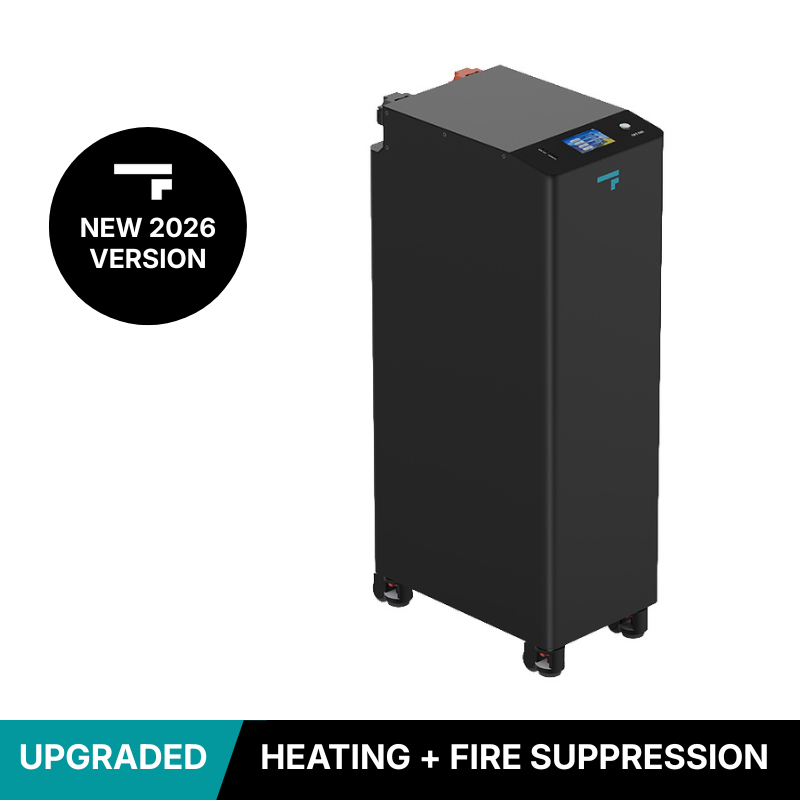
- Price per usable kWh. The Fogstar 16.1kWh battery is roughly a third of the cost of a Powerwall 3 module - for more kWh, not less.
- Capacity options. Need 32kWh? Fogstar make a single 32kWh unit. Need 48kWh+? Step up to the Fogstar 48.3kWh modular stack. Powerwall 3 modules stack too, but each module adds another premium price.
- Inverter flexibility. A separate Solis hybrid lets you upgrade the battery later without touching the inverter, or vice versa. With Powerwall 3, both are inside one chassis.
- Smart-export optimisation depth. Spectrum’s default Solis + Fogstar specification works cleanly with Home Assistant and Predbat for Octopus Agile, Octopus Flux and Octopus Cosy automation. Predbat is the difference between a battery that just shifts daytime solar to evening and one that actively trades wholesale Agile prices. That depth isn’t reachable on the Powerwall’s largely closed ecosystem.
- UK-supported battery brand. Fogstar is a UK-assembled battery brand - relevant to customers who care about UK supply chain for warranty support.
What the financial gap really means
Powerwall 3 sits at roughly £9,000 - £11,000 installed in the UK at the time of writing, depending on the installer and any associated grid works. A Solis 5kW hybrid plus a Fogstar 16.1kWh battery, fitted as part of a full Spectrum domestic install, comes in around £4,000 - £5,000 for that battery-and-inverter portion of the system. On a like-for-like system, you’re looking at roughly a £5,000 - £6,000 gap.
That gap pushes payback time out by 2-3 years on the Powerwall option versus the Fogstar/Solis specification - see our payback time article for the maths. It doesn’t make Powerwall ‘wrong’. It does mean you should be deliberate about why you’d pay for it - you’re paying for design polish, app quality and brand assurance, not for more usable energy.
Get a real comparison on your roof
We’ll quote our Solis + Fogstar build against your actual consumption and tariff, with a Sigenergy SigenStor option if you want the smart tariff automation Powerwall is known for.
Request a QuoteThe Octopus Agile depth point in detail
Most domestic battery customers are interested in Octopus Agile because that’s where the savings step-change happens. A Powerwall 3 can run on Agile via Tesla’s in-app integration - it’s neat, easy and captures perhaps 85% of available Agile savings.
A Solis + Fogstar + Home Assistant + Predbat stack runs a half-hourly forecasting engine that decides charge/discharge per 30-minute slot against the next 24-48 hours of Agile prices. It can charge from grid during a -3p/kWh negative-pricing window on a windy Sunday night, then discharge against a 33p/kWh weekday evening peak. The granularity is sharper because the inverter exposes the control hooks that Predbat needs.
For Spectrum’s most savings-focused customers, that extra 10-15% of Agile income is worth several hundred pounds a year. It’s the strongest single reason we’ve standardised on Solis + Fogstar.
Warranty and insurance-backed guarantee
Both batteries carry 10-year manufacturer warranties on the headline modules. Spectrum adds a QANW Insurance-Backed Guarantee on top of every install - meaning if Spectrum Energy Systems Ltd were ever to cease trading, your workmanship warranty is still backed by an independent insurer. That’s a real safety net separate to manufacturer cover.
For a complete walkthrough of how UK solar warranties stack, see our warranty guide.
Powerwall 2 vs Powerwall 3 - for completeness
Powerwall 2 is still in the field but Tesla has tapered new supply to focus on Powerwall 3. We wouldn’t recommend specifying Powerwall 2 on a new 2026 install - you’d be buying into an older inverter architecture and a smaller usable capacity (13.5kWh nominal, 6.4kW continuous AC). If you’re interested in a Powerwall, Powerwall 3 is the current product.
If you want to skip the maths
The simple version is: most UK homes get more usable battery, sharper Agile income and lower upfront cost from the Solis + Fogstar combination Spectrum installs. Powerwall’s strengths (app polish, one-box design, brand reputation) are real but cost a premium that doesn’t recover in lifetime kWh. That’s why we’ve made the call to stick with Solis + Fogstar - see our Fogstar vs Pylontech comparison for the next decision in the stack.
FAQs
Does Spectrum install Tesla Powerwall?
No. We’ve made an engineering and economics call to standardise on Solis hybrid inverters paired with Fogstar batteries on every domestic install. If you specifically want a Powerwall we will be honest that we don’t fit it, and that the Solis + Fogstar combination delivers more usable kWh for less money on a typical UK home. If it is the smart tariff automation you are after, Sigenergy SigenStor gives you that and we do install it.
Is Tesla Powerwall worth it in the UK in 2026?
Depends on what you’re optimising for. If you want the Tesla product, the app, and the integrated all-in-one design and you’re comfortable with the price premium, yes. If you’re optimising for payback or want modular capacity scaling, no - a Solis hybrid plus Fogstar 16.1kWh delivers more usable energy at lower cost.
Can I add a Tesla Powerwall to existing solar panels?
Yes - Powerwall 3 can be AC-coupled to an existing string-inverter solar array. The Powerwall’s own solar inverter inputs aren’t used in that case; the Powerwall acts as the battery and gateway only. A site survey is needed to confirm consumer-unit and circuit headroom. Spectrum offers retrofit battery installs using Solis hybrid + Fogstar for the same use case.
How long does a Tesla Powerwall last on a UK home?
Tesla warrants Powerwall 3 for 10 years with unlimited cycles. Realistically a Powerwall fitted today will keep useful capacity well beyond the warranty term - LiFePO₄ chemistry degrades slowly. Tesla's warranty guarantees at least 70% capacity retention at year 10, and real-world retention is often comfortably above that. Fogstar is on the same general curve.
Does Fogstar work with the Octopus Agile tariff?
Yes - very well. Spectrum’s default Fogstar + Solis specification pairs cleanly with Home Assistant running the Predbat add-on, which forecasts Octopus Agile half-hourly prices and decides when to import, store, and export. This is the sharpest export-trading setup we’ve fitted, and Predbat support on Solis is the strongest in the open-ecosystem market. See our Octopus Agile + Solar guide.
Can Fogstar provide whole-home backup like a Powerwall?
Yes, with an automatic changeover switch and the right consumer-unit wiring. Spectrum fits this on request as an upgrade - typically £1,500 for full whole-home backup, or around £400 for dedicated essential-circuit backup. It’s genuinely a Powerwall-equivalent function - though Powerwall’s Gateway packaging is neater.
Is Powerwall 3 quieter than Fogstar?
Both are essentially silent in residential operation - Powerwall 3 uses passive cooling, Fogstar has an internal fan that runs rarely at low load. In a typical garage or utility-room install, neither is audible from inside the house. Outside in a still garden you might just catch the Fogstar fan on a hot summer day.
Should I wait for Powerwall 4?
Tesla has not announced a Powerwall 4 product. Waiting for a hypothetical future model means continuing to pay full peak-rate electricity prices in the meantime. The payback clock starts the day the system is commissioned - we’d encourage you to specify based on what’s actually available today.
Related reading
- Fogstar vs Pylontech: which solar battery is right for you?
- Best solar battery for Octopus Agile in 2026
- How much solar battery storage do I need?
- Solar battery storage payback time UK 2026
For the full Spectrum service overview see domestic battery storage.
Speak to Spectrum Energy Systems
MCS NIC200223. We fit Solis hybrid + Fogstar across Nottinghamshire, Derbyshire, Leicestershire and Lincolnshire. Honest design and quote, normally within 2 to 4 days, no pressure, no sales script.
Request a Quote