Solar energy has transformed from an expensive curiosity into the UK's most accessible and financially compelling renewable technology. With electricity prices remaining elevated, panel efficiency reaching record highs of 19-23%, and installation costs down significantly over the past decade, the case for solar has never been stronger.
This guide examines why solar energy stands apart as the best choice for UK homes, businesses, and investment properties—grounded in real financial data, environmental evidence, and practical advantages that matter to property owners making serious investment decisions.
Ready to See What Solar Could Do for Your Property?
Get a free, no-obligation solar assessment tailored to your property and energy needs.
Get Your Free Solar QuoteIn This Guide
- Solar Energy in the UK: Stronger Than You Might Think
- The Financial Case: Why Solar Makes Exceptional Economic Sense
- Environmental Advantages: Why Solar Leads Among Renewable Options
- Practical Advantages That Set Solar Apart
- Why Solar Beats Other Energy Cost Reduction Strategies
- Why Solar Is the Right Choice Right Now
- Addressing the Honest Limitations of Solar
- Making the Case for Different Audiences
- Frequently Asked Questions
- The Evidence Speaks for Itself
Solar Energy in the UK: Stronger Than You Might Think
Challenging the Cloudy Country Myth
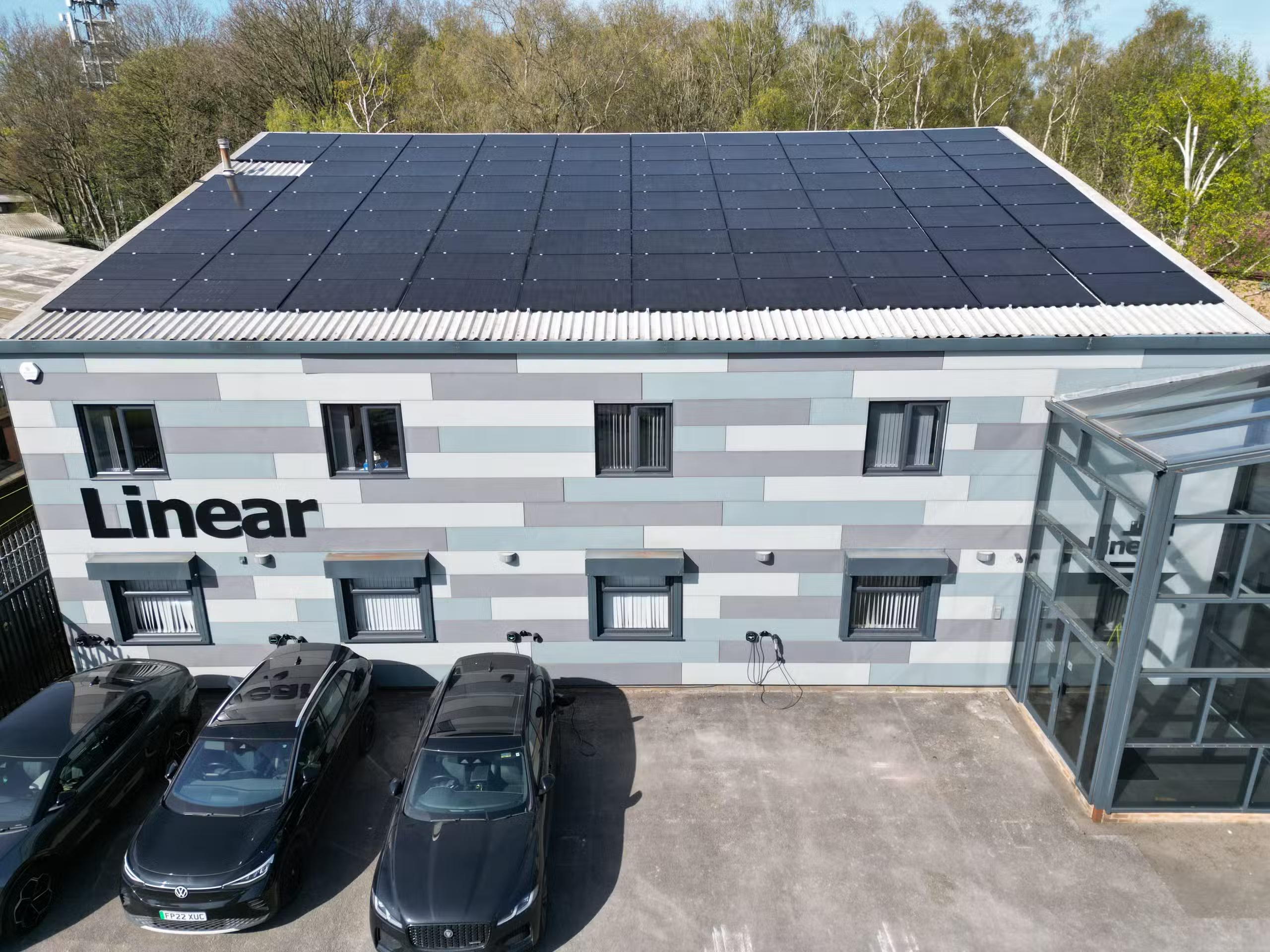
The belief that UK weather makes solar impractical is one of the most persistent misconceptions in renewable energy. The reality tells a different story: 2025 was the UK's sunniest year on record, and solar generated a record 18.3 TWh of electricity—approximately 30% higher than the previous year. UK properties typically generate between 850 and 1,100 kWh per kWp annually depending on location, making solar commercially viable across the country.
Solar panels don't require direct sunshine to generate electricity—they work effectively on diffuse light, which is abundant even on overcast days. This means consistent, reliable output throughout the year, with peak generation during longer summer days and continued contribution through autumn and winter. For a comprehensive understanding of performance factors, explore our guide on how efficient solar panels are in UK conditions.
The UK now has over 21 GW of installed solar capacity, with more than 1.6 million homes equipped with panels. This isn't experimental technology for early adopters—it's mainstream infrastructure delivering proven returns for millions of property owners.
How Solar Has Changed in the Last Decade
The solar industry has undergone a remarkable transformation. Panel efficiency has improved from around 14% to over 22% for premium monocrystalline panels, meaning more electricity from smaller roof areas. Installation costs have fallen dramatically since 2010, making solar accessible to a far broader range of properties and budgets.
Battery storage technology has matured to the point where storing solar electricity for evening use is now cost-effective for most residential and commercial applications. Smart energy management systems can automatically prioritise solar power for EV charging, heating, and high-consumption appliances, maximising the value of every unit generated.
Why Now Is the Right Time: Panel technology is at peak efficiency, installation costs are at historic lows, electricity prices remain elevated, and battery storage finally makes economic sense. Waiting for "better technology" means missing out on years of benefits available today.
The Financial Case: Why Solar Makes Exceptional Economic Sense
Locking In Your Energy Costs for 25+ Years
Solar generation has zero fuel cost once installed. Unlike grid electricity, which has seen significant price increases in recent years, solar converts an unpredictable ongoing expense into a fixed capital investment. With panels lasting 25-30+ years and degradation rates of just 0.3-0.5% annually, you're effectively securing decades of electricity generation at today's installation cost.
Current UK electricity prices remain elevated, with forecasts suggesting continued volatility. Every kWh your solar system generates is a kWh you don't purchase at these rates—and that advantage grows if prices rise further. This budget certainty is valuable for homeowners, businesses, and landlords alike.
Strong and Proven Return on Investment
Solar systems deliver attractive returns over their operational lifespan, with the investment typically recovered well within the 25-30 year panel life. Commercial installations often see faster returns, benefiting from higher daytime consumption that aligns with peak solar generation and available capital allowances.
With a 25-year asset life, systems continue generating returns for many years after the initial investment is recovered. When compared against typical savings account interest rates, ISA returns, or bond yields, solar frequently delivers superior annualised returns whilst simultaneously reducing carbon footprint and protecting against energy price volatility. Review our detailed analysis in the smart solar investment guide for businesses.
Immediate Savings from Day One
Solar systems begin reducing grid electricity purchases from the moment they're commissioned. There's no waiting period for returns—savings start immediately. Additional financial benefits include:
- Smart Export Guarantee (SEG) payments for surplus electricity exported to the grid, providing additional income from your system
- 0% VAT on residential installations, a significant government incentive currently available
- Capital allowances for businesses, allowing 100% first-year deduction of solar investment against taxable profits
- Reduced demand charges for commercial properties with high peak consumption
For comprehensive information on available incentives, see our guides on solar incentives for homeowners and funding solutions for businesses.
Increasing Property Value
Solar panels demonstrably improve EPC ratings, which are increasingly important for property values. Higher EPC ratings correlate with higher sale prices, whilst tenant demand for energy-efficient properties continues growing. For landlords, solar addresses upcoming EPC regulation tightening whilst adding a genuine income-generating asset to the property.
Commercial properties with solar often command stronger rental yields, particularly as corporate tenants prioritise premises that support their own sustainability commitments. This makes solar a valuable consideration for property developers and investors looking to future-proof portfolios.
Calculate Your Solar Investment Return
Our team can provide a detailed financial analysis specific to your property, consumption, and goals.
Request Your Free AssessmentEnvironmental Advantages: Why Solar Leads Among Renewable Options
The Lowest Lifecycle Carbon Footprint
Solar PV has one of the lowest lifecycle carbon emissions of any electricity generation technology. According to IPCC data, rooftop solar produces approximately 41g CO2 equivalent per kWh generated—roughly 12 times less than natural gas (490g) and 20 times less than coal (820g). The carbon payback period—the time needed to offset emissions from manufacturing—is typically 1-3 years.
After carbon payback, panels generate near-zero carbon electricity for another 22-27+ years. For businesses tracking Scope 2 emissions, solar provides a direct, measurable reduction method. For homeowners, it's one of the most impactful individual actions for reducing household carbon footprint. Learn more about the benefits of solar panels for homes and businesses.
Solar vs Other Renewable Energy Sources
When comparing renewable energy options for individual properties, solar stands distinctly apart in accessibility and practicality:
Wind Energy
- Effective at large scale (offshore/onshore farms)
- Small turbines face strict planning restrictions
- Noise concerns in residential areas
- Poor performance in urban turbulence
- Not suitable for most individual properties
Hydropower
- Excellent where geography permits
- Requires flowing water source
- Available to tiny fraction of UK properties
- Significant civil engineering requirements
- Not a realistic option for most owners
Solar PV
- Works on virtually any suitable roof
- No planning permission needed for most homes
- Silent operation, no moving parts
- Scalable from 3kWp to multi-megawatt systems
- The only renewable most properties can install
For detailed comparison methodology, see our article on grid-tied vs off-grid solar systems.
No Noise, No Emissions, No Disruption
Solar panels operate completely silently with no moving parts in standard installations. There are no on-site emissions or pollutants during operation, no fuel deliveries or storage required, and minimal visual impact compared to wind turbines. This makes solar the most neighbour-friendly and community-acceptable renewable option—important for both residential areas and commercial premises in mixed-use locations.
Practical Advantages That Set Solar Apart
Exceptionally Low Maintenance Requirements
The absence of moving parts means very low mechanical failure risk. Most solar systems require only annual visual inspection and periodic cleaning—typically sufficient to maintain optimal performance throughout their operational life. Modern monitoring systems flag faults automatically before they escalate, enabling proactive maintenance and support.
Inverter replacement is typically needed once during a 25-year system life, representing the main expected maintenance cost. Compare this to virtually any other energy generation technology, and solar's ongoing cost advantage becomes clear. For comprehensive maintenance information, see our solar panel maintenance guide and cleaning guide.
Proven and Reliable Technology
Solar PV has been commercially deployed for over 40 years, with billions of panels installed globally. This isn't experimental technology—it's mature, tested infrastructure with extensive performance track records. Panel manufacturers typically provide performance guarantees of 25-30 years, with degradation rates of 0.3-0.5% annually meaning panels retain 85-90% of original output after 25 years. Understand more about how long solar panels last in the UK.
Scalable for Any Property Size
Solar accommodates virtually any property scale. Residential systems typically range from 3kWp for smaller homes to 10kWp+ for larger properties. Commercial installations scale from 50kWp to multiple megawatts for large commercial buildings, manufacturing facilities, and agricultural operations.
The modular design allows future expansion as energy needs grow. Battery storage, EV charging infrastructure, and smart home integration can all be added alongside or after initial solar installation. There's no minimum property size requirement for a worthwhile installation—if you have a suitable roof, solar can work for you.
Energy Independence and Security
Solar reduces reliance on the grid and wholesale energy market fluctuations, insulating your household or business from geopolitical energy supply disruptions. Recent years have demonstrated how exposed UK energy consumers are to international gas prices and supply chain issues. Solar provides a degree of control and security that grid-only properties simply don't have.
Battery storage extends this independence into evenings and overnight periods. Emerging technologies including vehicle-to-grid and peer-to-peer energy trading offer future pathways to even greater autonomy. For businesses, energy security increasingly factors into continuity planning and risk management.
Why Solar Beats Other Energy Cost Reduction Strategies
Solar vs Energy Efficiency Measures Alone
Energy efficiency measures—insulation, LED lighting, efficient appliances—reduce consumption but don't generate income or create an appreciating asset. Solar generates a financial return on top of cost reduction. The two approaches are complementary: efficiency measures first reduce your baseline demand, then solar maximises returns on remaining consumption. However, only solar creates a tangible asset that can increase property value whilst delivering ongoing returns.
Solar vs Power Purchase Agreements from Third Party Suppliers
Purchasing "green" electricity from a supplier still exposes you to price increases and market volatility. You remain dependent on external pricing decisions. Solar generation has zero ongoing fuel cost regardless of market conditions. Owning your generation asset builds long-term value rather than representing ongoing expenditure with no equity accumulation. For capital-constrained businesses, solar PPAs offer a middle ground—but ownership remains the optimal long-term strategy where financing allows.
Solar vs Other Renewable Installations
Ground source heat pumps involve significant excavation, high installation costs, and address heating rather than electricity generation. Small wind turbines face planning restrictions, noise issues, and deliver inconsistent output in most locations. Micro-hydro requires geography available to a tiny fraction of UK properties. Solar is widely accessible, planning-friendly for most installations, delivers proven ROI, and can be deployed on virtually any property with a suitable roof. For most property owners, there is simply no practical renewable alternative.
Why Solar Is the Right Choice Right Now
The Regulatory Direction of Travel
Minimum EPC standards for rental properties continue tightening, with further restrictions anticipated. The Future Homes Standard requires low-carbon heating and energy in new builds. Building regulations increasingly favour renewable energy integration. Acting now avoids future compliance costs, captures current incentive structures, and positions properties ahead of regulatory changes.
For landlords and property investors, solar is becoming less of an optional improvement and more of a compliance necessity. Installing proactively allows time for proper system design and installation rather than rushed compliance work. See our guide on the Nottingham City Council decarbonisation grants for local funding opportunities.
Energy Prices Are Not Going Down
UK electricity prices remain significantly elevated compared to historical averages, with forecasts suggesting continued volatility rather than meaningful reductions. Every unit of solar generated avoids paying current and future grid rates. The financial case for solar strengthens with every energy price increase, whilst early installers lock in today's installation costs.
Technology and Costs Have Never Been Better
Panel efficiency is at an all-time high whilst installation costs continue falling. Battery storage is now genuinely cost-effective for most applications. Next-generation solar technology continues advancing, but current technology delivers excellent returns—waiting for "perfect" technology means missing years of savings available today.
Installer quality and industry standards are stronger than at any previous point. MCS accreditation ensures installations meet rigorous quality standards, protecting your investment and ensuring eligibility for SEG payments and other incentives. Spectrum Energy Systems has delivered expert solar installations across the East Midlands since 2011.
Addressing the Honest Limitations of Solar
Solar Is Not Right for Every Property
Transparency strengthens credibility. Solar isn't suitable for heavily shaded roofs with no viable alternative mounting location, properties with very poor roof condition requiring significant work before installation, or some properties where planning restrictions create genuine barriers. See our guide on common problems with solar panels for a balanced assessment.
A professional site survey identifies these issues early. Honest assessment of property suitability ensures realistic expectations and optimal system design where installation is viable. For properties with challenging roof conditions, alternative mounting solutions may be available.
Important Considerations
Solar requires upfront capital investment or a financing arrangement. Multiple routes exist—outright purchase, loans, leases, and commercial PPAs—and the investment is recovered well within the typical 25-30 year panel lifespan. The investment case holds up clearly, but solar is a long-term investment rather than an instant return.
Making the Case for Different Audiences
For Homeowners
Solar delivers immediate bill reductions, SEG income for exported electricity, and long-term energy security for your family. Systems continue generating essentially free electricity for 25-30+ years after the initial investment. Your home's EPC rating improves, supporting property value ahead of tightening standards. Protection from energy price volatility means budget certainty for decades.
Explore our homeowner's guide to solar panels and choosing the right solar panel guide for detailed information.
For Business Owners
Commercial solar offers excellent returns due to daytime consumption alignment with peak generation. Carbon reduction supports ESG commitments and supply chain requirements, whilst energy cost certainty improves business planning and profitability. Capital allowances provide immediate tax relief on investment. Contact us for a tailored commercial assessment.
Read our complete business solar guide and innovative solar projects for enterprises case studies. Industry-specific guidance is available for retail, offices, schools, and public sector buildings.
For Landlords and Property Investors
Rising EPC requirements make solar both a compliance investment and a value enhancement. Tenant attraction improves with energy-efficient properties, reducing void periods and supporting rental values. Solar adds a long-term income-generating asset to portfolio value whilst future-proofing against regulatory changes. The combination of compliance benefit, rental premium, and property value increase creates a compelling investment case.
Review detailed guidance in our ultimate guide to installing solar PV.
Frequently Asked Questions
The Evidence Speaks for Itself
Solar energy delivers financial returns, environmental benefits, and energy security in a single investment. Proven technology, falling costs, and persistently elevated energy prices make the case stronger than it has ever been. For the vast majority of UK homes, businesses, and investment properties, solar represents the clear choice among available options.
The question isn't whether solar works in the UK—2025's record generation figures demonstrate it does. The question is whether you want to continue paying rising electricity prices, or invest in an asset that protects your budget for 25+ years whilst delivering genuine returns.
Start Your Solar Journey Today
Spectrum Energy Systems has been designing and installing solar PV systems across the East Midlands since 2011. Our MCS-accredited team provides honest, expert guidance tailored to your property and goals—no pressure, just practical advice on what solar could do for you.
Get Your Free Solar Quote Book a Site AssessmentAbout Spectrum Energy Systems: Established in 2011, we're MCS-accredited solar installers serving Nottingham, Derby, Leicester, Lincoln and the wider East Midlands. Our experienced engineers design and install tailored solar solutions for homes and businesses, ensuring maximum performance and return on investment. Learn more about our expertise or explore our case studies showcasing completed projects across the region. We also provide ongoing maintenance and servicing to protect your investment for decades to come.