Types of Solar Panels — Explained for UK Homes & Businesses
Choosing the right type of solar panel directly affects how much electricity your system generates, how it looks on your roof, and how quickly you'll see returns on your investment. With multiple technologies available—each suited to different situations—understanding your options helps you make a confident, informed decision.
At Spectrum Energy Systems, established in 2011, we've installed hundreds of solar systems across the East Midlands using various panel technologies. This guide breaks down each type in plain English, helping you understand which panels might work best for your home or business.
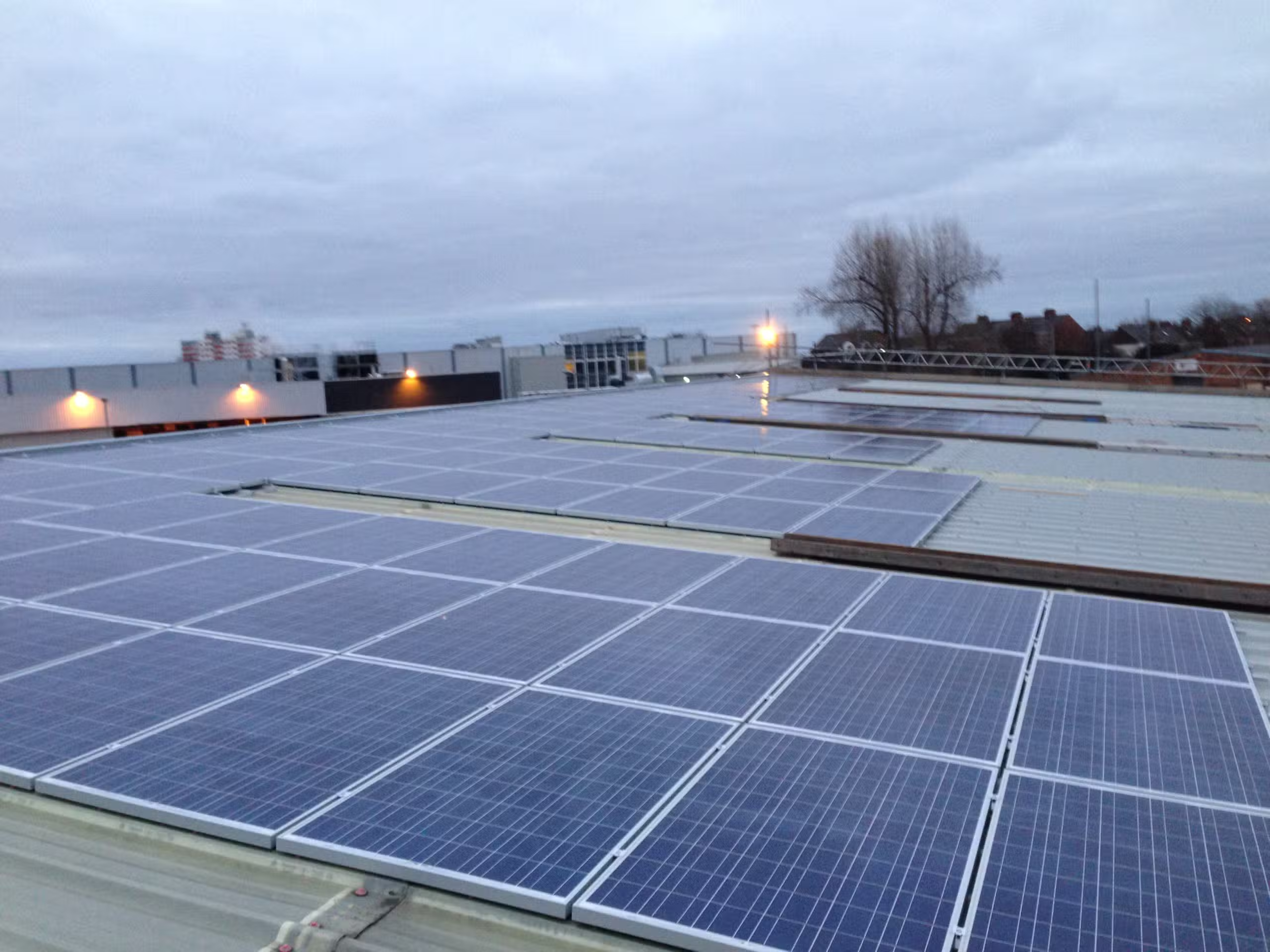
Solar panel technology has advanced dramatically over the past decade. Efficiency ratings have climbed from around 15% to over 22% for premium panels, whilst reliability has improved significantly. However, not all panels suit every situation—roof space, shading, and performance expectations all influence which type delivers the best results for your specific property.
Whether you're a homeowner exploring domestic solar options or a business owner considering commercial solar installation, understanding panel types helps you evaluate quotes, ask the right questions, and ultimately choose a system that performs reliably for decades.
In This Guide
What Are the Main Types of Solar Panels?
Solar panels fall into three main categories based on how they're manufactured. Each technology offers distinct advantages depending on your installation requirements:
- Monocrystalline panels: Made from single silicon crystals; highest efficiency; sleek black appearance
- Polycrystalline panels: Made from multiple silicon fragments; reduced efficiency compared to mono; blue speckled finish
- Thin-film panels: Flexible, lightweight technology; lower efficiency but excellent for specific commercial applications
Beyond these core types, modern innovations have introduced enhanced technologies that improve performance further. Half-cut cell panels reduce electrical losses and perform better in partial shade, whilst bifacial panels generate electricity from both sides—ideal for certain commercial installations.
Understanding how solar panel efficiency works helps contextualise why these differences matter. Let's examine each type in detail.
Not Sure Which Panel Type Suits Your Property?
Our MCS-accredited engineers assess your roof, shading, and energy needs to recommend the optimal panel technology
Get Your Free Assessment Speak to Our TeamMonocrystalline Solar Panels
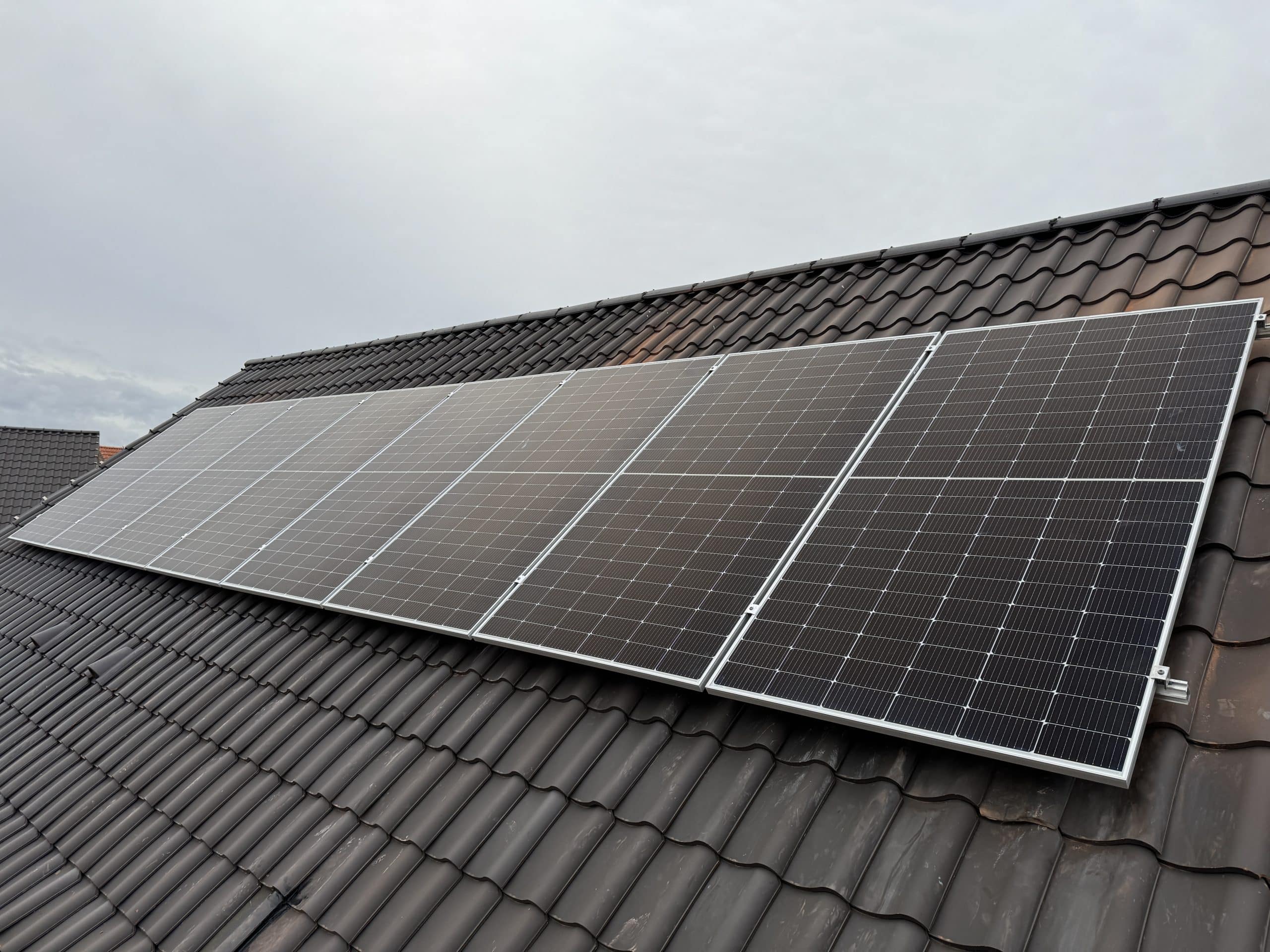
Monocrystalline panels represent the premium standard for modern solar installations. Manufactured from single, pure silicon crystals using the Czochralski process, these panels achieve the highest efficiency ratings available for residential and commercial use.
The manufacturing process creates uniform crystal structures that allow electrons to flow more freely, maximising electricity generation from available sunlight. This efficiency advantage proves particularly valuable in the UK, where we often experience diffuse light conditions rather than direct sunshine.
How to Identify Monocrystalline Panels
Monocrystalline panels are easy to recognise by their distinctive appearance:
- Uniform black or dark colour: The consistent crystal structure creates an even, sleek finish
- Rounded cell corners: Individual cells have characteristic clipped corners from the cylindrical crystal cutting process
- Premium aesthetic: The dark, uniform appearance integrates well with most roof types
Efficiency and Performance
Modern monocrystalline panels typically achieve efficiency ratings between 19% and 23%, with some premium models exceeding 22%. This means they convert a higher percentage of sunlight into electricity compared to other technologies.
For UK installations, monocrystalline panels offer several performance advantages:
- Better low-light performance: Generate more electricity during cloudy conditions common in British weather
- Superior temperature coefficient: Lose less efficiency in cooler temperatures, suiting UK climate
- Higher power density: Generate more watts per square metre, ideal for limited roof space
- Lower degradation rates: Typically 0.3-0.5% annually, maintaining higher output over decades
✓ Advantages
- Highest efficiency (19-23%)
- Best performance in low light
- Sleek, uniform appearance
- Longest lifespan (25-30+ years)
- Lower degradation rates
- Maximum output from limited space
✗ Considerations
- Premium option requiring quality installation
- Marginal benefit if ample roof space available
Who Should Choose Monocrystalline?
Monocrystalline panels suit most UK installations, particularly properties with limited roof space, high energy demands, or aesthetic concerns. They're the standard choice for domestic solar installations and increasingly popular for commercial projects where maximising generation per square metre matters.
For detailed guidance on panel selection, explore our guide to choosing the right solar panel.
Polycrystalline Solar Panels
Polycrystalline panels, also known as multicrystalline, were historically the alternative to monocrystalline technology. Made by melting multiple silicon fragments together and allowing them to cool in moulds, these panels contain numerous crystal structures rather than a single continuous crystal.
Important Market Update
As of 2023-2024, major manufacturers have largely discontinued polycrystalline panel production. Monocrystalline technology now accounts for approximately 98% of global solar cell production, as manufacturing advances have made higher-efficiency panels the standard. This guide includes polycrystalline information for understanding existing installations or evaluating older systems.
Characteristics and Appearance
Polycrystalline panels have a distinctive blue, speckled appearance resulting from the multiple crystal boundaries within each cell. Unlike monocrystalline's uniform black finish, polycrystalline panels reflect light in varied patterns, creating a more fragmented visual effect.
Efficiency Range
Polycrystalline panels typically achieved efficiency ratings between 15% and 18%—notably lower than monocrystalline alternatives. This efficiency gap translated to requiring more roof space to generate equivalent electricity output.
✓ Historical Advantages
- Simpler manufacturing process
- Reliable performance in direct sunlight
- 25-30 year lifespan
✗ Limitations
- Lower efficiency (15-18%)
- Requires more roof space
- Higher degradation rates
- Less effective in low-light conditions
- Now discontinued by major manufacturers
For a comprehensive comparison of these technologies, see our detailed monocrystalline vs polycrystalline comparison guide.
Thin-Film Solar Panels
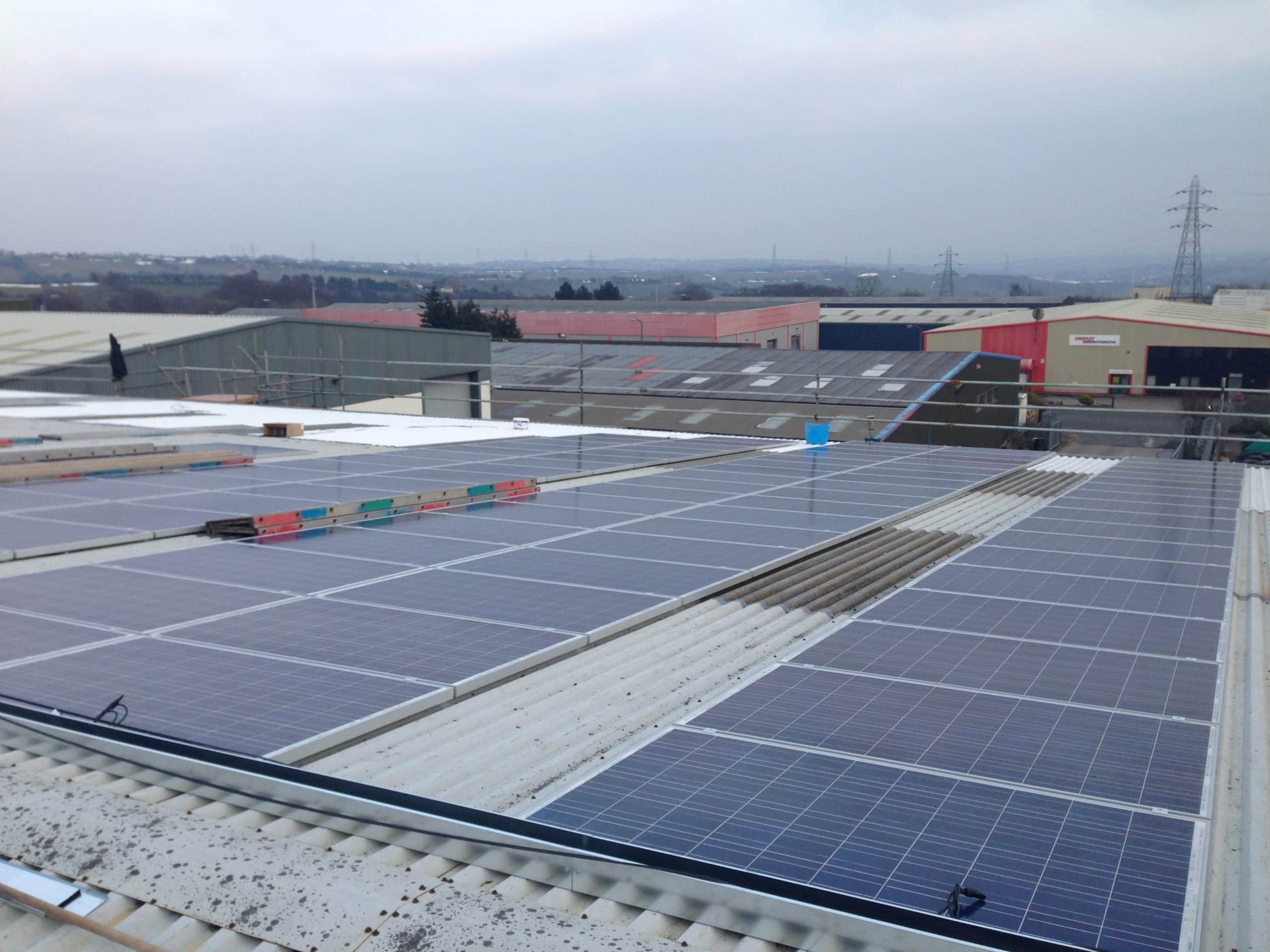
Thin-film solar panels use a fundamentally different manufacturing approach, depositing thin layers of photovoltaic material onto substrates like glass, metal, or plastic. This creates lightweight, flexible panels suited to applications where traditional crystalline panels aren't practical.
Types of Thin-Film Technology
Several thin-film technologies exist, each with specific characteristics:
- Amorphous Silicon (a-Si): Most common thin-film type; uses non-crystalline silicon
- Cadmium Telluride (CdTe): Second most common; good efficiency for thin-film
- Copper Indium Gallium Selenide (CIGS): Highest thin-film efficiency; specialist manufacturing
Performance Characteristics
Thin-film panels typically achieve efficiency ratings between 10% and 13%—significantly lower than crystalline alternatives. However, they offer distinct advantages in specific situations:
- Excellent low-light performance: Often outperform crystalline panels in diffuse light conditions
- Flexible application: Can conform to curved surfaces or integrate into building materials
- Lightweight construction: Suit roofs with weight restrictions
- Better shade tolerance: Performance degrades more gradually when partially shaded
✓ Advantages
- Lightweight and flexible
- Good low-light performance
- Better partial-shade tolerance
- Suitable for BIPV applications
- Lower manufacturing carbon footprint
✗ Limitations
- Lowest efficiency (10-13%)
- Requires double the roof space
- Faster degradation rates
- Shorter warranties typically
- Not suitable for most homes
Commercial Applications
Thin-film technology suits large commercial roofs, solar carports, building-integrated photovoltaics (BIPV), and structures with weight limitations. For typical domestic installations, crystalline panels remain the practical choice due to limited roof space.
Bifacial Solar Panels
Bifacial panels represent an advanced evolution of monocrystalline technology, designed to capture sunlight from both the front and rear surfaces. This dual-sided generation can increase energy yield by 5-15% in suitable installations, making them increasingly popular for commercial projects.
How Bifacial Panels Work
Traditional solar panels only capture light hitting the front surface. Bifacial panels feature transparent or reflective backsheets that allow rear-side cells to generate electricity from light reflected off surrounding surfaces (albedo effect). The amount of rear-side generation depends on:
- Ground surface reflectivity: White or light-coloured surfaces reflect more light
- Panel mounting height: Higher mounting allows more reflected light to reach rear cells
- Tilt angle: Optimal angles vary by installation type
- Surrounding environment: Snow, sand, and concrete improve rear-side generation
Best Applications for Bifacial Panels
Bifacial panels deliver the best returns in specific installation scenarios:
- Ground-mount systems: Elevated mounting over reflective surfaces maximises rear generation
- Solar carports: Light-coloured car park surfaces provide good albedo
- Flat commercial roofs: White membrane roofing reflects light effectively
- Agricultural installations: Open ground-mount arrays benefit from natural ground reflection
✓ Advantages
- 5-15% higher energy yield in suitable conditions
- Better performance in reflective environments
- Excellent for ground-mount and carports
- Premium build quality and durability
- Strong performance in diffuse light
✗ Considerations
- Benefits minimal on standard pitched roofs
- Requires careful installation design
- Returns depend on specific site conditions
For commercial projects considering bifacial technology, our next-generation solar technology page provides detailed specifications. We also explore bifacial applications in our floating solar guide.
Half-Cut Cell Solar Panels
Half-cut cell technology has become standard on premium solar panels, offering meaningful performance improvements. Rather than using full-size solar cells, these panels use cells cut in half, reducing electrical resistance and improving shade tolerance.
How Half-Cut Cells Improve Performance
When solar cells are halved, several beneficial changes occur:
- Reduced resistive losses: Smaller cells carry lower current, reducing power losses as heat
- Improved shade tolerance: Panel wiring splits into independent sections, so shading affects fewer cells
- Lower hot-spot risk: Reduced current flow minimises overheating in shaded cells
- Higher power output: Typically 2-3% more generation than equivalent full-cell panels
Benefits for UK Installations
Half-cut cell panels prove particularly valuable for UK properties where:
- Chimneys, dormers, or aerials create partial shading
- Nearby trees cause intermittent shade during certain times
- Roofs face multiple directions requiring split installations
- Maximum generation is needed from available space
Industry Standard
Half-cut cell technology is now standard across most quality panel manufacturers. When requesting quotes, confirm panels use half-cut or similar advanced cell configurations for measurable performance gains, particularly in real-world UK conditions with variable shading.
Understanding how different technologies handle shading helps optimise system design. Our guide on micro inverters vs string inverters explores additional solutions for shaded installations.
Comparing Solar Panel Types: Quick Reference
This comparison table summarises key characteristics across all major panel types, helping you quickly evaluate which technology might suit your requirements:
| Panel Type | Efficiency | Lifespan | Best For | UK Suitability |
|---|---|---|---|---|
| Monocrystalline | 19-23% | 25-30+ years | Most installations | Excellent |
| Polycrystalline | 15-18% | 25-30 years | Legacy systems (discontinued) | Good |
| Thin-Film | 10-13% | 15-20 years | Large commercial roofs, BIPV | Specialist use |
| Bifacial | 19-23% (+5-15% rear) | 25-30+ years | Ground-mount, carports | Commercial applications |
| Half-Cut Cell | 19-23% | 25-30+ years | Shaded or complex roofs | Excellent |
Compare Panel Options for Your Property
Our detailed quotations explain exactly which panels we recommend for your specific situation and why
Request Your Free QuoteHow to Choose the Right Solar Panel for Your Property
Selecting the optimal panel type requires balancing several factors specific to your property and goals. Rather than simply choosing the "best" panel, focus on finding the technology that delivers the best results for your situation.
Key Selection Factors
Available Roof Space
Roof space often determines which panel technology makes sense. Limited space demands higher-efficiency monocrystalline panels to meet generation targets, whilst larger roofs offer more flexibility. A typical 4kW system requires approximately:
- Monocrystalline (20% efficiency): 18-22m² of roof space
- Polycrystalline (16% efficiency): 23-28m² of roof space
- Thin-film (12% efficiency): 30-40m² of roof space
Shading Considerations
Shading significantly impacts solar performance. Properties with partial shading from trees, chimneys, or neighbouring buildings benefit from:
- Half-cut cell panels for better shade tolerance
- Micro inverters or power optimisers for panel-level control
- Careful panel positioning to minimise shadow impact
Generation Expectations
Your energy consumption and generation goals influence panel selection. High-consumption households or businesses should prioritise maximum efficiency, whilst moderate users might find mid-range panels perfectly adequate.
Understanding how panel efficiency affects real-world generation helps set realistic expectations.
Professional Site Survey
A professional site survey assesses all relevant factors—roof condition, orientation, shading patterns, structural capacity, and electrical infrastructure—to recommend appropriate panel technology. MCS-accredited installers use software to model expected generation for different options, helping you make informed decisions. Our experienced team provides detailed, personalised recommendations.
Domestic vs Commercial Considerations
For homes: Monocrystalline panels with half-cut cell technology suit most domestic installations. They maximise generation from typically limited roof space whilst maintaining aesthetic appeal. Consider battery storage and EV charging integration when planning your system.
For businesses: Panel selection depends on roof type and available space. Large warehouse roofs might accommodate any technology effectively, whilst space-constrained commercial properties benefit from premium efficiency. Explore our complete business solar guide for detailed commercial guidance.
Our homeowner's guide to solar panels provides comprehensive domestic installation information, whilst the ultimate guide to installing solar PV covers technical details for both sectors.
Panel Longevity and Maintenance
Quality solar panels provide decades of reliable service with minimal maintenance requirements. Understanding degradation rates and care needs helps maximise your investment's lifespan.
Expected Lifespans by Panel Type
- Monocrystalline: 25-30+ years with 0.3-0.5% annual degradation
- Polycrystalline: 25-30 years with 0.5-0.8% annual degradation
- Thin-film: 15-20 years with higher degradation rates
After 25 years, quality monocrystalline panels typically retain 85-90% of original efficiency, continuing to generate useful electricity well beyond warranty periods. Learn more about how long solar panels last in the UK.
Maintenance Requirements
All panel types require similar minimal maintenance:
- Annual visual inspections for damage or soiling
- Periodic cleaning in dusty or heavily soiled areas
- Monitoring system checks for performance issues
- Inverter maintenance (typically 10-15 year replacement cycle)
Our complete solar panel cleaning guide covers proper maintenance techniques, whilst our maintenance and support services ensure your system operates optimally throughout its lifespan.
Be aware of common solar panel problems and how to address them promptly to maintain performance.
Frequently Asked Questions
Monocrystalline panels are typically the best choice for UK weather conditions. Their superior low-light performance means they generate more electricity during cloudy days, which are common throughout the year. They also maintain better efficiency in cooler temperatures, making them well-suited to the UK climate. For most domestic and commercial installations, monocrystalline panels offer the best balance of performance and long-term value.
Thin-film panels can technically be installed on homes but are rarely recommended for residential use in the UK. Their lower efficiency (10-13%) means you'd need roughly double the roof space to match crystalline panel output. They're better suited to large commercial roofs, building-integrated applications, or situations where weight restrictions prevent standard panel installation.
Both monocrystalline and polycrystalline panels typically last 25-30+ years. However, monocrystalline panels generally have lower degradation rates (0.3-0.5% annually versus 0.5-0.8% for polycrystalline), meaning they retain more of their original efficiency over time. After 25 years, a quality monocrystalline panel might retain 87-90% efficiency compared to 80-85% for polycrystalline.
The right panel depends on several factors: available roof space, shading patterns, and energy generation goals. A professional site survey assesses these factors and recommends the optimal panel type. MCS-accredited installers use software to model expected generation for different panel options, helping you make an informed decision based on your specific property.
Half-cut cell panels use solar cells that have been divided in two, reducing electrical resistance and improving performance in partial shading. They typically generate 2-3% more energy than traditional full-cell panels and are now standard on most premium installations. For roofs with chimneys, dormers, or nearby trees, half-cut cell panels offer measurable performance advantages.
Bifacial panels are generally more suited to commercial applications, particularly ground-mounted arrays, carports, or flat roofs with reflective surfaces. For typical pitched residential roofs, the rear-side generation benefits are minimal since panels sit close to the roof surface. However, on certain installations with good albedo (reflected light), bifacial panels can increase yields by 5-15%.
Making Your Panel Decision
Understanding the different types of solar panels empowers you to evaluate quotes confidently and choose technology suited to your specific situation. For most UK installations in 2026, monocrystalline panels with half-cut cell technology represent the optimal choice, offering the best combination of efficiency, durability, and long-term value.
Key takeaways for your panel selection:
- Monocrystalline dominates the market for good reason—superior efficiency and excellent UK weather performance
- Half-cut cell technology is now standard on quality panels and particularly benefits shaded installations
- Bifacial panels suit specific commercial applications where rear-side generation adds meaningful value
- Thin-film remains specialist technology for weight-restricted or building-integrated applications
- Professional design matters as much as panel selection for optimal system performance
At Spectrum Energy Systems, established in 2011, our MCS-accredited engineers specify panels from tier-one manufacturers with proven UK track records. We maintain manufacturer independence, recommending technology based solely on your requirements rather than commercial relationships.
View our installation case studies to see how we've helped homes and businesses across the East Midlands achieve their energy goals with carefully selected panel technology.
Ready to Choose the Right Panels for Your Property?
Our Nottingham-based team provides expert guidance on panel selection, tailoring recommendations to your specific roof and energy needs. Get started with a free, no-obligation assessment.
Get Your Free Quote Contact Our TeamAbout Spectrum Energy Systems: Established in 2011, we're MCS-accredited and NICEIC-certified solar installers serving Nottingham, Derby, Leicester, Lincoln, and the wider East Midlands. From initial design through to ongoing maintenance, we deliver complete solar solutions for homes and businesses. Learn more about our expertise or explore our homeowner resources and business resources for comprehensive solar guidance.