Types of Solar Panel Mounting Systems: Complete Guide for Homes and Businesses
Choosing the right mounting system is fundamental to your solar installation's performance, longevity, and safety. The mounting structure secures your panels for 25+ years, positions them for optimal energy capture, and must withstand UK weather conditions including wind, rain, and snow loading. This guide explains every major mounting option, helping you understand which system suits your property.
In This Guide
- Quick Overview of Mounting Types
- What Is a Solar Panel Mounting System?
- Roof-Mounted Solar Panel Systems
- Flat Roof Solar Mounting Systems
- Ground-Mounted Solar Panel Systems
- Pole-Mounted Solar Panel Systems
- Solar Tracking Mounting Systems
- Building-Integrated Solar (BIPV)
- Mounting for Different Roof Types
- Residential vs Commercial Mounting
- Structural and Planning Considerations
- Choosing the Right Mounting System
- Common Mistakes to Avoid
- Frequently Asked Questions
Whether you're a homeowner with a pitched roof, a business owner with a flat-roofed warehouse, or a farmer considering ground-mounted arrays, there's a mounting solution designed for your situation. At Spectrum Energy Systems, established in 2011, we've installed solar systems across every property type throughout the East Midlands—from Victorian terraces to modern commercial warehouses—giving us deep experience in selecting and installing the optimal mounting system for each unique situation.
Understanding mounting options before installation helps you make informed decisions about system design and positioning. This comprehensive guide covers roof-mounted systems (pitched and flat), ground-mounted arrays, pole mounts, tracking systems, and building-integrated solutions, with honest assessments of each approach's advantages and limitations. For a broader overview of the installation process, see our ultimate guide to installing solar PV.
Need Expert Mounting System Advice?
Our MCS-accredited engineers assess your property and recommend the optimal mounting solution for your specific requirements
Get Your Free Assessment Speak to Our TeamQuick Overview of Solar Panel Mounting Types
Solar panel mounting systems fall into several distinct categories, each suited to different property types and installation requirements. Here's a summary of the main options available in the UK:
| Mounting Type | Space Required | Best For | Efficiency Potential |
|---|---|---|---|
| Pitched Roof | Existing roof | Most UK homes | Good (fixed orientation) |
| Flat Roof (Ballasted) | Existing roof | Commercial buildings | Good (adjustable tilt) |
| Flat Roof (Penetrating) | Existing roof | High-wind locations | Good (adjustable tilt) |
| Ground-Mounted | Available land | Farms, large properties | Excellent (optimal positioning) |
| Pole-Mounted | Minimal footprint | Rural properties | Good-Excellent |
| Single-Axis Tracking | Available land | Large commercial/utility | 20-25% gain over fixed |
| Dual-Axis Tracking | Available land | Utility-scale only | Up to 35% gain over fixed |
| BIPV (Building-Integrated) | Replaces materials | New builds, aesthetics | Moderate |
What Is a Solar Panel Mounting System?
A solar panel mounting system is the structural framework that secures your panels in position and connects them to your roof, the ground, or another surface. Far more than simple brackets, solar panel installation mounting methods perform several critical functions that directly affect your system's long-term success.
Purpose of Mounting Systems
Every mounting system must accomplish four essential tasks:
- Secure panels safely: Withstand wind loads, snow loading, and seismic forces for 25+ years without loosening or failure
- Position panels optimally: Achieve the best possible angle and orientation for solar energy capture in UK conditions
- Protect the mounting surface: Preserve roof waterproofing integrity or ground stability throughout the system's lifespan
- Ensure compliance: Meet UK building regulations, MCS standards, and structural requirements
Why the Right Mount Matters
The mounting system directly influences your solar installation's performance and longevity. A poorly chosen or incorrectly installed mount can reduce energy generation by 10-20% through suboptimal panel positioning, or cause premature failure through wind damage or water ingress. Quality mounting systems from reputable manufacturers, properly installed by expert solar installers, ensure your panels perform optimally for decades.
Key Insight
The mounting system is a critical component that influences 100% of your system's performance over its 25+ year lifespan. Choosing quality mounting components and professional installation protects your entire solar system and ensures optimal energy generation.
Roof-Mounted Solar Panel Systems
Roof-mounted systems are the most common choice for UK solar installations, utilising existing roof space without requiring additional land. The specific mounting approach depends on your roof type, pitch, and structural characteristics.
Pitched Roof Mounting Systems
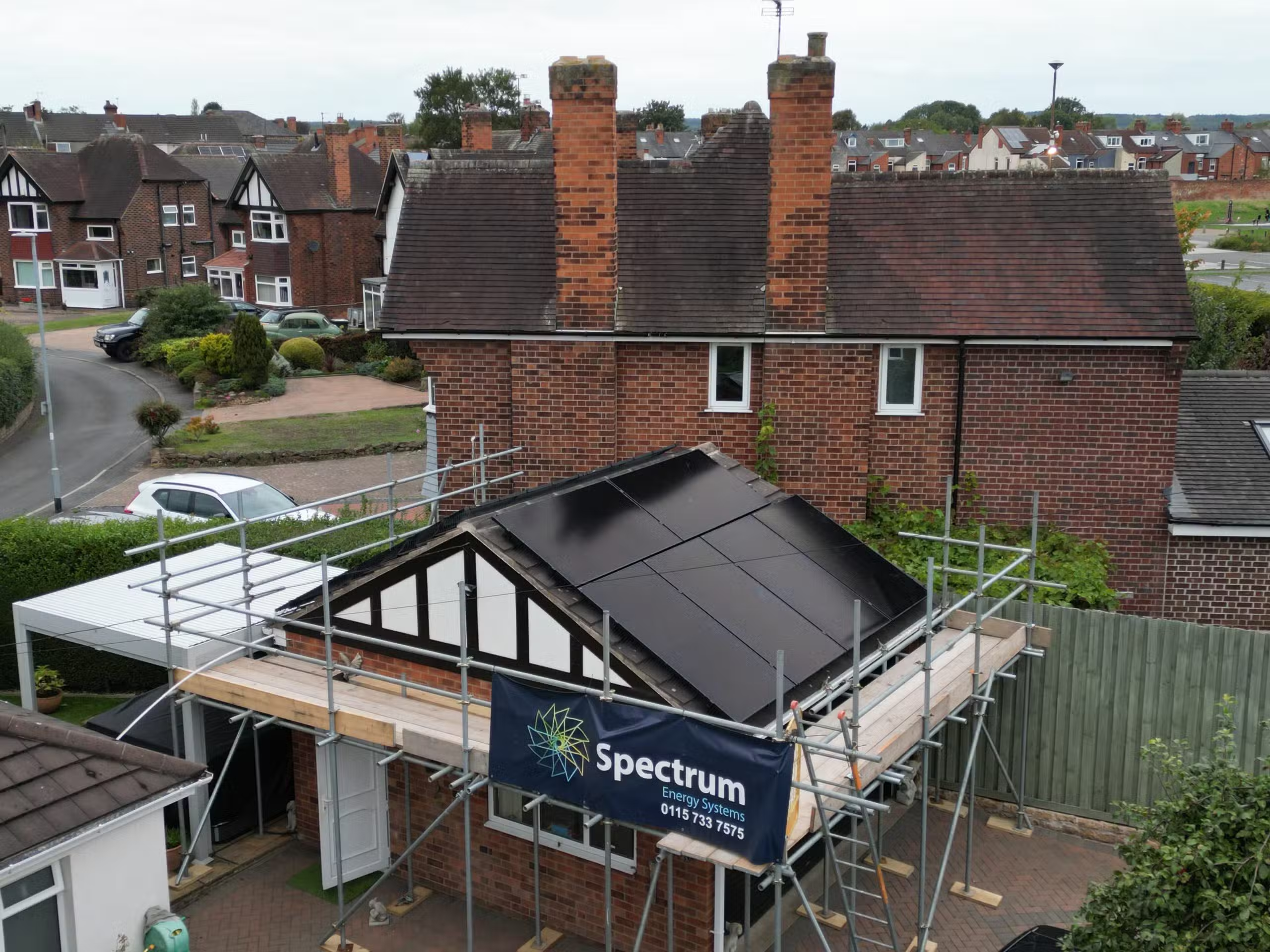
Pitched roof mounting is the standard approach for most UK homes. Panels are installed flush with the roof slope using rails secured to the roof structure via hooks or brackets. This method works with tile, slate, and metal roofing materials, with specific hardware designed for each roof type.
The installation process involves lifting individual tiles or slates, securing hooks to rafters, replacing the roof covering, then attaching aluminium rails and panel clamps. When properly installed, the system is virtually weatherproof and adds minimal visual impact to the property. Understanding the difference between monocrystalline and polycrystalline panels helps inform decisions about which panels to mount.
✓ Pitched Roof Advantages
- Most straightforward installation
- Clean, flush appearance
- No land required
- Utilises otherwise unused space
- Generally permitted development
✗ Pitched Roof Limitations
- Fixed tilt and orientation
- Roof condition must be sound
- Access for maintenance can be difficult
- Shading from dormers or chimneys
- Limited to available roof space
For most UK homes, pitched roof mounting delivers excellent results. The typical UK roof pitch of 30-40° is close to optimal for solar generation, and south, east, or west-facing roofs all produce strong energy yields. Our domestic solar installation services include comprehensive roof assessments to ensure suitability.
Flat Roof Solar Mounting Systems Explained
Flat roof solar panel mounting systems present different challenges and opportunities compared to pitched roof installations. Since flat surfaces don't provide natural tilt, mounting systems must create the optimal angle for solar generation—typically 10-30° in the UK. Two main approaches exist: ballasted (non-penetrating) and penetrating systems.
Ballasted (Non-Penetrating) Systems
A ballasted solar mounting system uses weighted frames—typically concrete blocks or purpose-made weights—to secure panels without penetrating the roof membrane. This approach preserves roof waterproofing integrity, making it popular for commercial buildings with membrane or felt roofing where penetrations create leak risks.
Panels sit on angled frames arranged in rows, with sufficient spacing to prevent self-shading. The ballast weight is calculated based on wind loading for the specific location—coastal or exposed sites require more weight than sheltered inland positions. East-West configurations, where alternating rows face opposite directions, have become increasingly popular as they maximise roof coverage whilst minimising wind uplift.
✓ Ballasted System Advantages
- No roof penetrations—waterproofing preserved
- Faster installation
- Easier to relocate or remove
- Suitable for membrane roofs
- Adjustable tilt angles
✗ Ballasted System Limitations
- Added roof load (ballast weight)
- Requires structural assessment
- May not suit lightweight structures
- Higher wind exposure in some locations
Penetrating Flat Roof Systems
When comparing penetrating vs non-penetrating solar mounts, the key difference lies in how they attach to the roof structure. Penetrating systems anchor directly into the roof structure through weatherproofed fixings. This approach provides stronger wind resistance with less ballast weight, making it suitable for lightweight roof constructions or high-wind locations where ballasted systems would require excessive weight.
Professional installation includes proper weatherproofing around each penetration point using appropriate flashings and sealants. When correctly installed, penetrating systems are fully waterproof and extremely secure. This method is common on industrial buildings with profiled metal roofing where the structure can accommodate fixing points.
Flat roof systems are particularly suitable for commercial solar installations on warehouses, factories, and office buildings. The ability to optimise tilt angles often compensates for any efficiency loss compared to perfectly oriented pitched roofs.
Ground-Mounted Solar Panel Systems
Ground-mounted systems install panels on frames fixed into the ground, independent of any building. This approach offers maximum flexibility for orientation and tilt optimisation, making it popular for agricultural properties, large estates, and commercial sites with available land.
Standard Ground-Mounted Arrays
Standard ground mounts use driven posts or concrete foundations to support aluminium or steel frameworks holding the panel array. The structure can be precisely positioned for optimal south-facing orientation at the ideal tilt angle (typically 30-35° in the UK), potentially generating 5-15% more energy than compromised roof positions.
Ground-mounted systems also offer easier maintenance access—cleaning, inspections, and any repairs don't require working at height. This simplifies long-term maintenance and system monitoring. Our agricultural solar solutions frequently incorporate ground-mounted arrays on farmland.
✓ Ground Mount Advantages
- Optimal orientation and tilt possible
- Easy maintenance access
- No roof structural concerns
- Scalable to large capacities
- Can utilise otherwise unused land
✗ Ground Mount Limitations
- Requires available land
- More complex installation requirements
- Planning permission often needed (over 9m²)
- Potential visual impact
- Land use considerations
Concrete-Based Ground Mounts
Where ground conditions prevent driven posts—such as rocky terrain or contaminated land—concrete-based foundations provide an alternative. Pre-cast concrete blocks or poured foundations support the mounting framework without deep excavation. This approach also suits temporary or semi-permanent installations where future removal is anticipated.
Concrete-based systems require more preparation than driven-post alternatives but offer flexibility for challenging ground conditions. They're sometimes used for commercial installations where the land may have future development potential.
Pole-Mounted Solar Panel Systems
Pole-mounted systems attach panels to single or multiple poles, creating a compact installation with a small ground footprint. This approach suits properties where ground space is limited but roof mounting isn't suitable, or where aesthetic considerations favour a freestanding structure.
How Pole Mounts Work
A single sturdy pole—typically steel or aluminium—supports a mounting frame holding multiple panels. The pole is either driven into the ground or secured in a concrete foundation. Some designs allow manual or motorised tilt adjustment to optimise seasonal angles, whilst others maintain a fixed position.
Top-of-pole mounts position panels above the pole, whilst side-of-pole configurations attach panels to the pole's side. The choice depends on aesthetic preferences, wind loading considerations, and the number of panels being mounted.
Advantages of Pole Mounting
- Small footprint: Minimal ground disturbance compared to standard ground mounts
- Adjustable angles: Some systems allow seasonal optimisation
- Elevated position: Avoids ground-level shading from vegetation or obstacles
- Visual statement: Can serve as a visible commitment to renewable energy
- Rural suitability: Works well on farms and large properties
Limitations of Pole Mounting
Pole mounts require more structural engineering than standard ground-mounted arrays due to single-point support requirements. They also have capacity limitations—most pole systems suit smaller arrays of 4-12 panels rather than large commercial installations. Planning permission may be required depending on height and location.
Solar Tracking Mounting Systems
Solar panel tracking systems use motors and controllers to move panels throughout the day, following the sun's path across the sky. Whilst significantly increasing energy capture, the added complexity limits their application to specific scenarios.
Single-Axis Trackers
Single-axis trackers rotate panels from east to west, following the sun's daily path. This movement typically increases energy generation by 20-25% compared to fixed systems, capturing more direct sunlight during morning and evening hours when fixed panels receive oblique light.
Single-axis systems are mechanically simpler than dual-axis alternatives, with fewer moving parts and lower maintenance requirements. They're increasingly used in utility-scale solar farms where the increased generation justifies the additional infrastructure complexity.
Dual-Axis Trackers
Dual-axis trackers adjust both horizontally (east-west) and vertically (north-south), maintaining perpendicular orientation to the sun throughout the day and across seasons. This can increase generation by up to 35% compared to fixed systems, maximising energy capture in all conditions.
However, dual-axis systems are significantly more complex, with more moving parts requiring maintenance. They're primarily used in concentrated solar power applications or research installations rather than standard commercial or residential projects.
Are Trackers Worth It in the UK?
For most UK installations, fixed mounting systems are more practical than tracking alternatives. The UK's frequently overcast conditions reduce the advantage of direct sun tracking, whilst the mechanical complexity adds maintenance requirements and potential failure points. Tracking systems are typically only suitable for large utility-scale installations where marginal efficiency gains translate to significant absolute energy increases.
UK Tracking System Reality
The additional complexity and maintenance requirements of tracking systems rarely justify the 20-35% generation increase for residential or commercial installations in the UK. Fixed systems with optimal orientation deliver superior performance and reliability for most UK properties.
Building-Integrated Solar Mounting (BIPV)
Building-integrated photovoltaics (BIPV) replace conventional building materials with solar-generating alternatives—solar roof tiles, façade panels, or glazing that produces electricity whilst serving structural or aesthetic functions.
What Is BIPV?
Unlike conventional solar panels mounted on top of existing structures, BIPV products become part of the building envelope itself. Solar roof tiles replace standard tiles, solar façades replace cladding, and transparent solar glazing can replace conventional windows or skylights. The result is seamless integration without the visual impact of traditional panel arrays.
When BIPV Makes Sense
BIPV is most compelling for:
- New builds: Where the solar element can be integrated during construction planning
- Listed buildings or conservation areas: Where conventional panels may face planning restrictions
- Architecturally sensitive projects: Where aesthetics are paramount
- Complete roof replacements: Where the existing roof requires renewal anyway
BIPV solutions generally achieve lower efficiency per square metre than conventional panel installations. However, for projects where aesthetics matter or where conventional panels aren't permitted, BIPV provides a viable solar solution. Our solar for modern constructions service includes BIPV consultation for suitable projects.
Mounting Systems for Different Roof Types
Each roof covering material requires specific mounting hardware and installation techniques. Proper component selection and installation protects both the roof structure and the solar system's long-term performance.
Tile Roofs
Clay and concrete tile roofs use hook-based mounting systems. Hooks slide beneath lifted tiles and secure to rafters or battens, with the tiles replaced over the hook stems. Rail systems then attach to the protruding hook tops. Properly installed, tile roof mounts are virtually invisible from ground level and maintain complete weatherproofing.
Slate Roofs
Slate requires more careful handling due to its brittleness. Special slate hooks or flashing kits replace individual slates with weatherproof mounting points. Installation is more labour-intensive than tile systems, and working with traditional slate demands experienced installers to avoid damage. Reclaimed slate matching can be challenging if breakages occur.
Metal Roofs
Standing seam metal roofs can use clamp-based systems that grip the seams without any roof penetration—ideal for maintaining warranties on relatively new roofing. Trapezoidal and corrugated metal roofs typically use penetrating fixings through the sheet peaks, with weatherproof sealing ensuring watertight installation. Our commercial building solar installations frequently involve metal roof mounting.
Residential vs Commercial Mounting Systems
Whilst the fundamental principles remain consistent, residential solar mounting systems and commercial solar mounting systems differ in scale, priorities, and typical mounting approaches.
Residential Systems
Domestic installations typically prioritise:
- Visual appearance: Flush roof mounting that complements the property
- Space efficiency: Maximising generation from available roof space
- Simplicity: Proven mounting systems with minimal maintenance requirements
- Compliance: Meeting permitted development rules to avoid planning applications
Most UK homes are well-suited to standard pitched roof mounting. Choosing the right solar panel for your mounting system ensures optimal performance and appearance.
Commercial Systems
Commercial installations often involve:
- Larger scale: Arrays of 50kW to several MW requiring robust mounting infrastructure
- Flat roof dominance: Most commercial buildings have flat or low-pitch roofs
- Wind loading priority: Large arrays face significant wind forces requiring careful engineering
- Row spacing optimisation: Balancing coverage density against self-shading
- Access requirements: Maintaining roof access for maintenance of HVAC and other equipment
Commercial projects require detailed structural assessments, wind loading calculations, and often G99 grid connection applications. Our commercial solar installation services include comprehensive engineering and project management.
Structural and Planning Considerations (UK)
UK solar installations must comply with structural requirements and planning regulations. Understanding these considerations helps avoid problems during and after installation.
Structural Load Requirements
Every mounting system adds load to the supporting structure. Roof-mounted systems add 15-20 kg/m² for panels and mounting hardware, plus any ballast weight for flat roof systems. Ground-mounted systems create point loads at foundation locations. Structural assessments verify that the building or ground can safely support these loads, including dynamic forces from wind.
Older buildings, lightweight structures, and flat roofs with limited load capacity may require structural reinforcement or alternative mounting approaches. Professional installers conduct or commission appropriate structural assessments before finalising system designs.
Planning Permission
Most domestic roof-mounted solar installations qualify as permitted development, requiring no planning application. However, planning permission is typically needed for:
- Ground-mounted arrays exceeding 9m² within the curtilage of a dwelling
- Installations on listed buildings or within conservation areas
- Roof-mounted systems that protrude significantly above the roof plane
- Commercial installations in some circumstances
Local planning authorities may have specific requirements, particularly in sensitive areas. Checking with your local authority before proceeding avoids potential enforcement issues.
MCS and Building Regulations
MCS (Microgeneration Certification Scheme) accreditation ensures installers meet competence standards and installations comply with industry requirements. MCS certification is essential for eligibility for the Smart Export Guarantee (SEG) payments for exported electricity.
Building regulations apply to solar installations, particularly regarding structural safety, electrical safety, and fire considerations. Competent person schemes, including those covering electrical work (like NICEIC), allow certified installers to self-certify compliance without separate building control applications. Our MCS-accredited, NICEIC-registered team ensures all installations meet regulatory requirements.
Choosing the Right Mounting System
Selecting the optimal mounting system requires balancing multiple factors against your specific circumstances and priorities. This solar panel mounts comparison guide helps you match the right system to your property type.
Key Decision Factors
- Roof type and condition: Determines which roof-mounted options are viable
- Available land: Opens ground-mounted possibilities if roof isn't suitable
- Project scope: Influences choice between standard and advanced options
- Energy goals: Maximum generation vs practical generation targets
- Aesthetic preferences: Visible impact on property appearance
- Maintenance access: Long-term serviceability considerations
- Planning constraints: Conservation areas, listed buildings, permitted development limits
Matching Mount Type to Property
Terraced and Semi-Detached Homes
Standard pitched roof mounting is typically the only practical option, utilising available south, east, or west-facing roof sections. Chimney and neighbouring property shading may influence panel positioning. Understanding solar panel efficiency factors helps optimise system design for constrained spaces.
Detached Houses with Gardens
Roof mounting remains the most practical option for most properties, but ground-mounted arrays become possible where garden space permits (subject to the 9m² permitted development limit or planning permission).
Commercial Warehouses and Industrial Units
Flat roof ballasted or penetrating systems suit most commercial buildings. Large roof areas allow significant capacity, and the typically lower roof pitch of commercial buildings makes angled mounting frames essential. Our manufacturing solar installations demonstrate effective commercial mounting solutions.
Farms and Rural Properties
Multiple options are often available: barn roofs, farmhouse roofs, ground-mounted arrays on agricultural land, or combinations. Ground-mounted systems on agricultural land may qualify for specific planning considerations. See our solar solutions for growers for agricultural mounting approaches.
Common Mistakes to Avoid
Learning from others' errors helps ensure your mounting system delivers long-term performance and reliability.
Ignoring Roof Condition
Installing solar panels on a roof nearing end-of-life creates future problems. If the roof requires replacement within the next 10-15 years, you'll need to remove and reinstall the solar system. Always assess roof condition before installation—replacing an aging roof first, then installing solar, avoids the disruption of double-handling later.
Overlooking Wind Loading
The UK experiences significant wind forces, particularly in coastal areas, elevated locations, and exposed sites. Underspecified mounting systems or insufficient ballast can fail during storms, potentially causing panel damage and roof or ground damage. Professional wind loading calculations are essential, especially for flat roof and ground-mounted systems.
Prioritising Low Quality Components
Mounting systems must last 25+ years to match panel lifespans. Low-quality mounting components may use inferior materials that corrode, weaken, or fail prematurely. Cutting corners on mounting systems can result in panel damage, safety hazards, or the need for early replacement. Quality mounting components from established manufacturers offer the best long-term reliability.
Important Consideration
Mounting system failures can void panel warranties if damage results from inadequate support or installation. Always use mounting systems rated for your panels and installation conditions, installed by competent professionals who take responsibility for the complete system.
Frequently Asked Questions
The best mounting system depends on your property type and circumstances. For most UK homes, pitched roof mounting offers the best balance of simplicity and performance. Flat roof properties benefit from ballasted or penetrating systems that achieve optimal tilt angles. Ground-mounted systems suit properties with available land and offer maximum flexibility for orientation and maintenance access.
Ground-mounted systems can achieve optimal orientation and tilt angles, potentially generating 5-15% more energy than compromised roof positions. They also offer easier maintenance access. However, they require available land, involve more complex installation, and may need planning permission for arrays over 9m². Roof-mounted systems remain the most practical option for most UK properties.
Not always. Ballasted systems use concrete blocks to secure panels without penetrating the roof membrane, preserving waterproofing. However, penetrating systems anchor directly into the roof structure, requiring less ballast weight. The choice depends on roof load capacity, wind exposure, and waterproofing considerations. A structural assessment determines the most suitable approach.
Yes. Ballasted flat roof systems use weighted frames without any roof penetration. Some metal roof systems use clamps that grip standing seams without drilling. However, pitched roof installations on tiles or slates typically require hooks or brackets secured to rafters. Non-penetrating options exist for most situations, though they may have limitations in high-wind areas.
For most UK installations, fixed mounting systems are more practical. Single-axis trackers can increase generation by 20-25%, but the additional complexity and maintenance requirements rarely justify the installation for residential systems. Tracking systems are typically only suitable for large commercial or utility-scale installations where the increased output justifies the added infrastructure.
Quality fixed mounting systems—whether roof or ground-mounted—typically last 25-30+ years, matching solar panel lifespans. Aluminium and stainless steel components resist corrosion effectively. Tracking systems have more moving parts requiring maintenance and may need component replacement within 15-20 years. The key to longevity is proper installation, quality materials, and appropriate wind load calculations.
Changing mounting systems after installation is technically possible but involves significant disruption. It requires removing all panels, replacing the mounting infrastructure, and reinstalling the array. This is rarely practical unless the existing system has failed or the property undergoes major renovation. Choosing the right mounting system during initial installation avoids this disruption.
Conclusion: Selecting the Best Solar Panel Mounting System
There's no single "best" mounting system—only the best solution for your specific property and energy goals. The key principles for successful mounting system selection are:
- Roof-mounted systems suit most UK homes and are the most practical choice for typical domestic installations
- Flat roof systems (ballasted or penetrating) work well for commercial buildings, providing flexibility to optimise panel angles
- Ground-mounted arrays offer maximum performance potential where land is available
- Tracking systems are rarely practical for UK residential or commercial installations
- BIPV solutions serve niche applications where aesthetics or planning constraints preclude conventional panels
The right mounting system, properly installed, ensures your solar panels perform optimally for 25+ years whilst protecting your roof structure or land. Professional assessment identifies the best approach for your circumstances, accounting for structural requirements, wind loading, planning considerations, and long-term maintenance needs.
At Spectrum Energy Systems, established in 2011, our MCS-accredited engineers have installed solar systems across every property type throughout Nottinghamshire, Derbyshire, Leicestershire, and Lincolnshire. We assess each property individually, recommending mounting solutions that balance performance and practicality for your specific situation.
Ready to Find Your Ideal Mounting Solution?
Our expert team provides free property assessments, recommending the optimal mounting system for your home or business
Get Your Free Quote Speak to Our TeamFor more information about solar panel technology and installation, explore our technical articles or browse our case studies to see real installations across the East Midlands. Whether you're a homeowner planning your first solar installation or a business owner evaluating commercial options, understanding mounting systems helps you make confident decisions about your renewable energy project.