
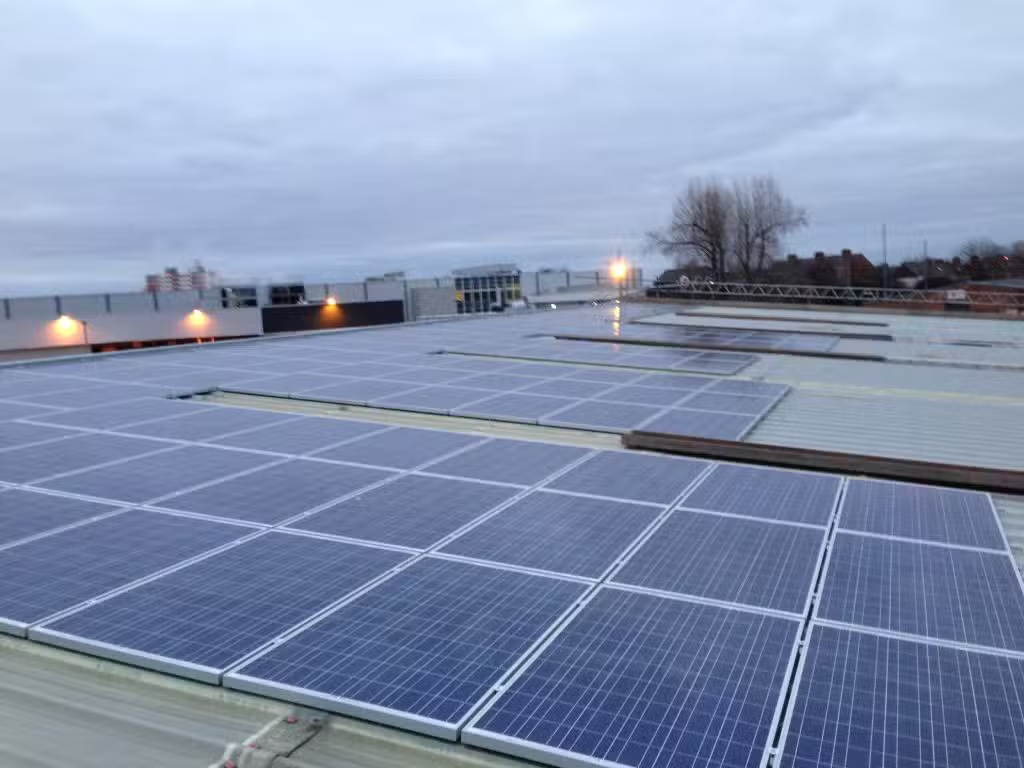
Solar Panels on a Flat Roof in UK: 10 Things to Know
Flat roofs offer unique advantages for solar installations, from flexible panel orientation to easier maintenance access. Whether you're considering solar panels on a flat roof for a commercial building or domestic extension, understanding the specific requirements—from mounting systems and structural assessments to the December 2023 planning rule changes—ensures your investment delivers optimal performance and long-term value.
At Spectrum Energy Systems, established in 2011, we've installed solar PV systems on hundreds of flat roofs across the East Midlands. This comprehensive guide shares the 10 most important things you need to know before investing in flat roof solar panels.
In This Guide

Contrary to common misconceptions, solar panels for flat roofs work exceptionally well in the UK climate. In fact, they often offer advantages that pitched roofs cannot match, including the flexibility to orient panels in any direction and the ability to optimise tilt angles for maximum energy generation throughout the year.
The UK has seen significant growth in both commercial flat roof solar UK installations and residential flat roof solar panels, particularly on commercial buildings, manufacturing facilities, and agricultural buildings. With the right mounting system and professional design, a flat roof solar system UK installation can deliver excellent returns whilst reducing your carbon footprint.
This flat roof solar installation guide UK covers everything from mounting systems and structural requirements to planning permission and maintenance considerations. Whether you're exploring domestic solar solutions or commercial solar installations, these 10 essential facts will help you make informed decisions about installing solar panels on a flat roof.
Considering Solar for Your Flat Roof?
Our MCS-accredited engineers specialise in flat roof solar design and installation across the East Midlands
Get Your Free Assessment Speak to Our TeamFlat Roofs Require Specialised Mounting Systems
Unlike pitched roof installations where panels lay flush against the roof surface, flat roof solar mounting UK projects require specialised systems that create the optimal tilt angle for energy generation. Understanding your mounting options is crucial for system performance, longevity, and roof protection—these are the key flat roof solar panel requirements that determine installation success.
Types of Flat Roof Mounting Systems
Ballasted (Non-Penetrating) Systems
The most popular choice for UK flat roofs, a flat roof solar ballasted system uses weighted frames to secure panels without penetrating the roof membrane. Concrete blocks or other heavy materials provide the necessary weight to resist wind uplift. This approach preserves waterproofing integrity and is typically preferred for modern membrane roofs.
Fixed Penetrating Mounts
These systems bolt directly through the roof structure, providing maximum security against wind loading. Whilst offering superior stability, penetrating mounts require careful waterproofing around each fixing point. They're often specified for older roofs, lightweight structures, or areas with extreme wind exposure.
Hybrid Mounting Solutions
Some installations combine elements of both approaches, using minimal penetrations with supplementary ballast. This can reduce overall weight whilst maintaining security in challenging conditions.
Mounting System Selection
The choice between ballasted and penetrating mounts depends on several factors: roof membrane type, structural capacity, wind exposure, and existing warranty conditions. Our expert solar fitting team assesses each property individually to recommend the optimal mounting solution.
Your Flat Roof Must Support the Additional Weight

Structural capacity is one of the most critical considerations for flat roof solar installations. Unlike pitched roofs where the load distributes along rafters, flat roofs must bear concentrated loads from panels, mounting systems, and ballast weights.
Understanding Flat Roof Solar Panel Weight
A typical flat roof solar installation adds the following loads:
- Solar panels: 15-22 kg per panel (approximately 11-15 kg/m²)
- Mounting frames: 3-8 kg/m² depending on system type
- Ballast weights: 30-80 kg/m² for non-penetrating systems
- Total system weight: Typically 25-50 kg/m² for penetrating systems, 50-100 kg/m² for ballasted systems
Professional Structural Assessment
Before any flat roof solar installation, a structural survey determines whether your roof can safely support the additional load. This assessment examines roof construction type, existing load-bearing capacity, condition of structural elements, and any existing equipment already on the roof.
Most modern flat roofs are designed to accommodate maintenance access and temporary loads, typically rated for 1.5 kN/m² or more. However, older buildings, lightweight constructions, or roofs already supporting HVAC equipment may require reinforcement before solar installation.
Important Consideration
Never assume your roof can support solar panels without professional assessment. Even buildings that appear structurally sound may have hidden limitations that only a qualified structural engineer can identify. All our installations include comprehensive structural evaluation as standard.
Optimal Tilt Angle Is Different on Flat Roofs
One of the key advantages of flat roof solar is the ability to choose your flat roof solar tilt angle, rather than being constrained by existing roof pitch. However, selecting the optimal flat roof solar panel angle involves balancing energy generation against practical considerations.
Tilt Angle Trade-offs
| Tilt Angle | Annual Output | Row Spacing | Wind Load | Best For |
|---|---|---|---|---|
| 10-15° | 90-95% | Minimal | Low | Maximum panel density |
| 20-25° | 95-98% | Moderate | Moderate | Good compromise |
| 30-35° | 100% | High | Higher | Maximum efficiency |
| 40°+ | 98-100% | Very high | Highest | Winter optimisation |
For UK installations, the theoretical optimum is approximately 35° facing due south. However, many flat roof installations use 10-15° tilts to maximise the number of panels that fit on the available roof space. This lower angle typically achieves 90-95% of the output of an optimally-tilted system whilst significantly increasing total generation capacity.
Understanding how efficient solar panels are helps contextualise these tilt angle decisions. The choice between monocrystalline and polycrystalline panels also affects optimal system design for flat roofs.
Planning Permission May or May Not Be Required
Planning permission flat roof solar UK requirements depend on property type, location, and installation characteristics. Understanding when permission is needed prevents delays and ensures your installation is fully compliant.
Permitted Development Rights
Most residential and many commercial flat roof solar installations fall under permitted development rights, meaning no planning application is required. However, specific conditions must be met:
- Height restriction: Panels must not protrude more than 600mm above the highest part of the roof surface (excluding chimneys) — this limit was increased from 200mm in December 2023
- Wall-mounted systems: Must not protrude more than 200mm from the wall surface
- Conservation areas: Panels must not be installed on principal elevations visible from the highway
- Listed buildings: Planning permission is typically required
December 2023 Regulation Change
The UK Government updated permitted development rules in December 2023 (The Town and Country Planning (General Permitted Development etc.) (England) (Amendment) Order 2023 - SI 2023/1279), increasing the height allowance for flat roof solar from 200mm to 600mm above the roof surface. This significant change makes it easier to install tilted mounting systems without planning permission, improving energy generation potential for flat roof installations.
When Planning Permission Is Required
You'll typically need planning permission for flat roof solar if your property is a listed building, located in a conservation area with visible installations, in an Area of Outstanding Natural Beauty (AONB), or if the installation exceeds permitted development limits.
Our team handles all planning considerations and can advise whether your proposed installation requires formal approval. Learn more in our ultimate guide to installing solar PV.
Waterproofing Protection Is Critical
Protecting your roof's waterproofing integrity is paramount for any flat roof solar installation. Water ingress can cause serious structural damage, so proper precautions must be taken regardless of mounting system type.
Ballasted System Waterproofing
Non-penetrating ballasted systems offer inherent waterproofing advantages since they don't create holes in the roof membrane. However, protection measures are still essential:
- Protective matting: Cushioning layers between ballast blocks and membrane prevent abrasion damage
- Weight distribution: Proper spreading of loads prevents membrane punctures
- Drainage maintenance: System layout must not impede water flow to existing drainage points
- Membrane inspection: Pre-installation survey identifies any existing damage requiring repair
Penetrating Mount Waterproofing
Where penetrating mounts are necessary, multiple waterproofing measures protect your building:
- Flashing systems: Purpose-designed flashings create watertight seals around each penetration
- EPDM gaskets: Compression gaskets provide secondary waterproofing
- Sealant application: Professional-grade sealants add additional protection
- Raised mounting plates: Elevating penetrations above standing water level
Proper installation by experienced solar installers ensures waterproofing remains intact throughout your system's 25+ year lifespan. Understanding common solar panel problems helps identify potential issues early.
Shading and Spacing Affect System Performance
Flat roof installations require careful consideration of inter-row shading—where one row of panels casts shadows on the row behind. This factor significantly influences flat roof solar panel spacing, system layout, capacity, and overall performance.
Understanding Inter-Row Shading
When panels are tilted on a flat roof, they create shadows that extend northward (in the UK). The length of these shadows varies throughout the year, being longest in winter when the sun is lowest. System designers must calculate appropriate spacing to minimise shading losses during productive months.
Spacing requirements depend on panel tilt angle (steeper angles create longer shadows), row height, latitude (UK locations require more spacing than southern countries), and acceptable shading losses.
Optimising Roof Space Utilisation
Professional system design balances panel density against shading losses. Sometimes accepting minor winter shading allows significantly more panels on a given roof area, resulting in higher total annual generation despite slightly reduced per-panel output.
The choice between micro inverters and string inverters also affects how shading impacts system performance. Micro inverters can mitigate partial shading effects more effectively than traditional string configurations.
Battery Storage Integration Works Well with Flat Roof Solar
Flat roof solar installations pair exceptionally well with battery storage systems, allowing you to maximise self-consumption of the energy you generate. Unlike the panels themselves, batteries are typically installed indoors, making flat roof buildings ideal candidates for complete solar-plus-storage solutions.
Benefits of Adding Battery Storage
Combining flat roof solar with battery storage solutions offers several advantages:
- Increased self-consumption: Store excess daytime generation for evening use, raising self-consumption from typical 30-50% to 70-80%
- Reduced grid dependence: Draw less electricity from the grid during expensive peak periods
- Backup power capability: Some systems provide emergency power during grid outages
- Future tariff flexibility: Prepared for time-of-use tariffs and smart grid integration
Installation Considerations for Flat Roof Properties
Flat roof buildings often have convenient spaces for battery installation:
- Commercial properties: Plant rooms, storage areas, or dedicated energy centres
- Domestic properties: Garages, utility rooms, or external weatherproof enclosures
- Temperature requirements: Batteries perform best in controlled environments (5-25°C)
- Ventilation needs: Some battery types require adequate airflow
For commercial applications, explore our commercial battery storage solutions. Understanding the benefits of solar panel battery storage helps determine whether this addition suits your needs.
Smart Energy Management
Modern battery systems include intelligent management that learns your usage patterns and optimises charging/discharging cycles automatically. Combined with smart home energy solutions or commercial building management systems, you can maximise the value of every kilowatt-hour your flat roof solar generates.
Wind Loading and Weather Resistance Are Major Factors
Flat roofs experience higher wind loading than pitched roofs, making wind resistance a critical design consideration. UK weather patterns demand robust mounting solutions that can withstand extreme conditions throughout the system's 25+ year lifespan.
UK Wind Considerations
Wind speeds across the UK vary significantly by region and elevation. Design standards account for:
- Basic wind speed: Varies from 21 m/s in sheltered inland areas to 30+ m/s in exposed coastal regions
- Building height: Wind loading increases with height above ground
- Terrain category: Urban, suburban, or open country classifications
- Roof edge effects: Wind acceleration at parapets and edges creates uplift zones
Design Standards and Safety Factors
Professional flat roof solar installations comply with BS EN 1991-1-4 for wind loading calculations. Mounting systems must resist uplift forces (wind attempting to lift panels from the roof), lateral forces (horizontal wind pressure), and dynamic loading (gusting and turbulence effects).
Ballasted systems calculate required weight based on these forces, with safety factors ensuring panels remain secure even in extreme storms. The difference between monocrystalline and polycrystalline panels can affect weight considerations for ballasted systems.
Regional Variations
Installations in exposed locations across Lincolnshire's coastal areas or elevated Peak District sites may require additional ballast or alternative mounting strategies. Our engineers calculate exact requirements for each site.
Seasonal Weather Challenges
Beyond wind, flat roof solar systems must account for snow loading (panels may accumulate snow more than pitched installations), rain drainage (mounting layouts must not impede water flow to drainage points), and hail resistance (panels are tested to withstand 25mm hailstones at 83 km/h).
Maintenance Access Is Easier but May Be More Frequent
Flat roof solar panel maintenance UK requirements differ from pitched roofs, offering significant maintenance advantages with safer and simpler access for inspections and cleaning. However, the lower tilt angles mean less natural self-cleaning, potentially requiring more frequent attention.
Maintenance Advantages of Flat Roof Solar
✓ Easier Maintenance
- Safe walking access across the roof
- No scaffolding typically required
- Simpler visual inspections
- Faster cleaning operations
- Easier component replacement
✗ Increased Frequency
- Less natural rainwater cleaning
- More debris accumulation
- Quarterly inspections recommended
- Bi-annual professional cleaning
- Ballast stability checks needed
Recommended Maintenance Schedule
- Quarterly: Visual inspection of panels, mounting system, and ballast
- Bi-annually: Professional cleaning and detailed system check
- Annually: Complete system performance review and electrical testing
- After storms: Check for damage, debris, and ballast displacement
Learn more about proper solar panel cleaning techniques and comprehensive maintenance practices to maximise system longevity.
Flat Roof Specific Maintenance Tasks
Beyond standard panel cleaning, flat roof systems require drainage pathway checks (ensuring water flows freely to roof drains), ballast inspection (confirming blocks haven't shifted or degraded), membrane inspection (checking for damage beneath mounting systems), and edge seal verification (maintaining weather protection around penetrations).
Our solar panel maintenance support services include comprehensive flat roof system care, ensuring your installation continues performing optimally year after year.
Efficiency Can Match or Exceed Pitched Roof Installations
A common misconception is that flat roof solar panel efficiency is inherently lower than pitched roof alternatives. When comparing flat roof solar vs pitched roof installations, properly designed flat roof systems can actually match or even exceed the performance of fixed pitched roof systems.
Efficiency Advantages of Flat Roof Solar
Optimal Orientation Freedom
Unlike pitched roofs where panel direction is fixed by roof orientation, flat roofs allow panels to face any direction. This means every panel can be oriented due south (optimal for UK locations) regardless of building orientation. When selecting the best solar panels for flat roofs UK, this flexibility allows you to maximise generation potential.
Improved Ventilation
The raised mounting systems used on flat roofs create natural airflow beneath panels. This ventilation reduces operating temperatures, improving efficiency by 2-5% compared to flush-mounted pitched roof installations, particularly during warm summer months.
Reduced Soiling Impact
Whilst flat roof panels may require more frequent cleaning, the easier access means cleaning actually happens. Neglected pitched roof systems can suffer 10-20% output losses from accumulated soiling that's difficult to address safely.
Real-World Performance
Our flat roof installations across Nottinghamshire, Derbyshire, Leicestershire, and Lincolnshire consistently achieve 850-1,000 kWh per kWp annually—comparable to well-designed pitched roof systems. Factors like panel quality, inverter efficiency, and professional installation often influence output more than roof type.
For detailed performance expectations, explore how efficient solar panels really are and learn about how long solar panels last in the UK.
Ready to Explore Flat Roof Solar?
Our experienced team provides free site assessments for flat roof properties across the East Midlands
Get Your Free Quote Contact Us TodayConclusion: Is Flat Roof Solar Right for You?
Flat roof solar installations offer excellent opportunities for UK property owners, combining flexibility in system design with practical maintenance advantages. The ability to optimise panel orientation and tilt angles often results in superior long-term performance compared to fixed pitched roof installations.
The 10 key points to remember:
- Specialised mounting systems are essential, with ballasted options protecting roof membranes
- Structural assessment is non-negotiable for any flat roof solar project
- Tilt angles of 10-30° balance efficiency with practical considerations
- Planning permission is usually not required but verify for your specific situation
- Waterproofing protection should be the top priority during installation
- Spacing and layout significantly affect total system output
- Battery storage pairs excellently with flat roof solar for maximum self-consumption
- Wind loading design is critical for UK weather conditions
- Maintenance is easier but may be needed more frequently
- Efficiency can match pitched roofs with proper design and installation
For homeowners considering domestic solar panels or businesses exploring commercial solar investment, flat roof installations represent a proven, effective route to renewable energy generation.
Spectrum Energy Systems brings over 14 years of experience to every flat roof project. From initial survey through design, installation, and ongoing support, our MCS-accredited team ensures your system delivers optimal performance for decades to come.
Frequently Asked Questions
About Spectrum Energy Systems: Established in 2011, Spectrum Energy Systems is an MCS-accredited solar installer serving Nottinghamshire, Derbyshire, Leicestershire, Lincolnshire and the wider East Midlands. With over 10MW of connected solar capacity, our experienced engineers deliver comprehensive flat roof solar solutions for homes and businesses. Learn more about our expertise or explore our solar installation case studies.