
Removing Solar Panels for Roof Repairs: The Remove and Refit Guide
Panels come off for roof work and go back on afterwards, unharmed: remove and refit is routine, coordinated work between an MCS installer and your roofer. The installer handles the live DC disconnection and safe removal, the roofer does the roof, the installer refits and recommissions, ideally all inside one scaffold hire. Never let anyone but a solar professional touch the electrical side.
In This Guide
When panels have to come off
Roofs need work on their own schedule: full re-covering at end of life, chimney repairs and repointing, storm damage under the array's neighbouring tiles, new velux windows, structural work in the loft. Where the work touches the covering under or immediately around the array, the panels come off so the roofer can do a proper job rather than working around obstacles. Partial jobs sometimes only need part of an array lifted, which the survey establishes; whole re-roofs mean the whole system off and back.
The reassuring headline: this is scheduled maintenance choreography, not a crisis. Panels are designed to be demounted, the system recommissions to its old self, and the generation lost is measured in days.
The process, step by step
1. The installer disconnects and removes
DC strings stay live in daylight whatever you switch off, so disconnection is qualified work. Panels unclamp, rails and hooks come off, and everything stacks safely on site or goes into storage for longer projects.
2. The roofer does the roof
With a clear deck, the roofer works faster and better: no reaching under arrays, no compromises around brackets. For re-roofs, this is also the moment membrane and battens get renewed under where the array will return.
3. The installer refits and recommissions
New fixings into the fresh covering, panels back, strings reconnected, system tested and monitoring confirmed. Done properly the system performs exactly as before, with photographs of the new penetrations for your records.
4. One scaffold, if you sequence it right
The single biggest saving is sharing the scaffold between both trades: removal at the start of the hire, roofing in the middle, refit at the end. Book the installer and roofer together and tell each about the other.
What remove and refit costs
Priced at survey rather than off a rate card, because the drivers are specific:
- Array sizeTen panels off and on is a different day from twenty-four across three faces.
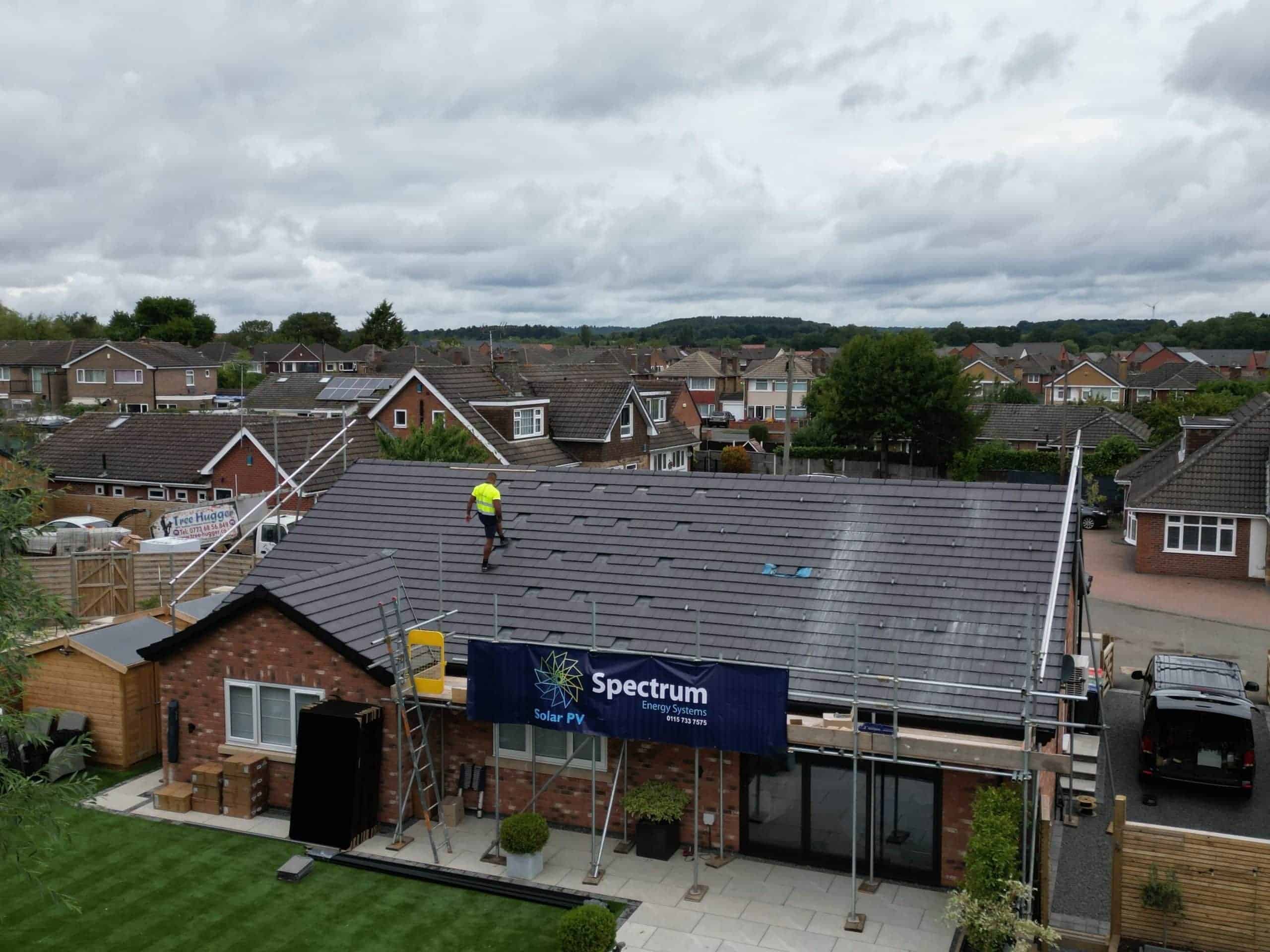
- Scaffold arrangementsShared with the roofer's hire, the solar side gets much cheaper. Standalone scaffold for a solar-only visit is the expensive version.
- Storage durationSame-week refits need no storage; month-long renovations do.
- System age and conditionOlder systems sometimes surface tired connectors or an ailing inverter at disconnection, better discovered now than later.
Against the cost of a roofer working badly around a live array, or of leaks from a compromised roof job, proper remove and refit consistently earns its invoice.
The mistakes that cause the damage
The remove and refit horror stories almost all begin with the wrong trade touching the wrong part. Roofers are excellent at roofs and not qualified for live DC: strings disconnected wrongly endanger people first and equipment second. Panels stacked carelessly crack cells invisibly, failing months later. Connectors left exposed to weather corrode. Refits reusing tired fixings into a new covering waste the fresh roof underneath. And unregistered changes leave the system's paperwork wrong for any future sale. Every one is avoided by the same decision: solar professionals for the solar parts, coordinated with the roofer rather than replaced by them. If your original installer is gone, takeover servicing covers exactly this work.
The upgrade opportunity while panels are off
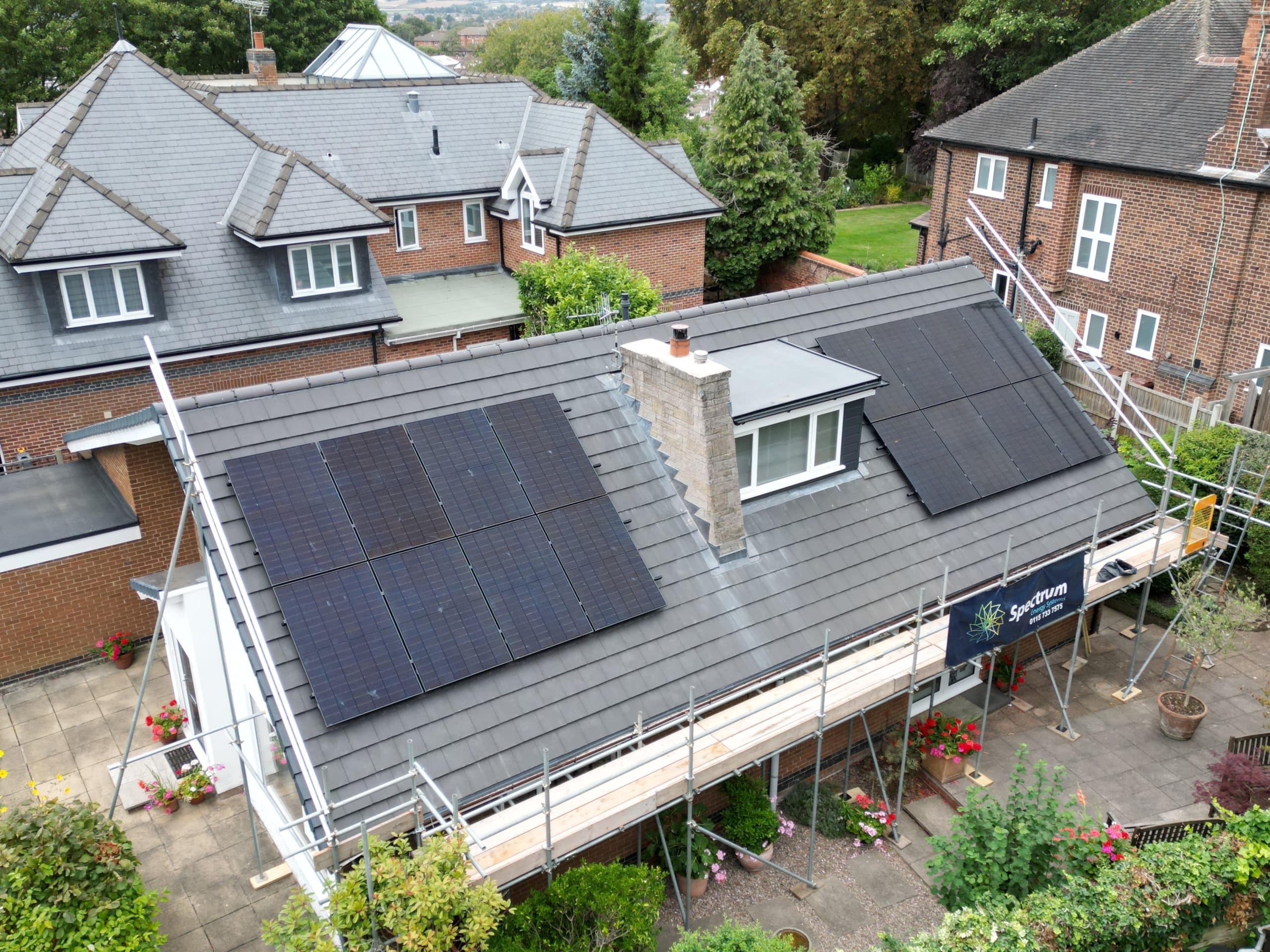
Panels off plus scaffold up is the cheapest moment your system will ever have for improvements:
- Go in-roof on a re-roofWith the covering off anyway, in-roof mounting is at its most economical, and the pigeon gap disappears.
- Add panelsIf the roof has room the original install did not use, the refit can be bigger than the removal.
- Swap a tired inverterAn older string inverter near end of life is cheapest to replace while everything is accessible.
- Fit bird proofingMesh installed at refit costs a fraction of a return visit, per our bird proofing guide.
Roof work coming up?
We remove, store and refit systems around roofing projects, ours and other installers' alike, coordinated with your roofer inside one scaffold hire wherever possible. Call 0115 773 7575, 8am to 8pm, Monday to Friday.
Get in touchFrequently asked questions
Can solar panels be removed and reinstalled?
Yes, routinely: panels are designed to demount, and remove and refit around roof work is standard installer business. The system recommissions to its previous performance, with fresh fixings into the repaired covering. The rule that matters is that the electrical work belongs to solar professionals, not the roofer.
How much does it cost to remove and refit solar panels?
It depends on array size, scaffold sharing and storage time, which is why we price it at survey. The cheapest version shares the roofer's scaffold in one coordinated hire; the expensive version is a standalone visit with its own access. Either way it beats the cost of a compromised roof job.
Can my roofer just take the panels off?
No, and a good roofer will say so themselves: DC strings stay live in daylight and disconnection is qualified electrical work. The safe pattern is installer removes, roofer roofs, installer refits. We coordinate directly with roofers on shared jobs so the sequencing is their friend, not their obstacle.
Will removal damage the panels?
Handled properly, no: unclamping and stacking with care is part of the trade. The damage stories come from careless stacking that cracks cells invisibly and from connectors left weathering. Ask how panels will be stored, especially on longer renovations, and expect a straight answer.
Should I upgrade anything while the panels are off?
It is the cheapest moment you will ever have: in-roof conversion during a re-roof, extra panels if the roof has room, an ageing inverter swap, and bird proofing at refit all cost less with scaffold up and the array in hand. Ask for the options priced alongside the basic refit.
Does removing panels affect my warranties or export payments?
Not when done properly and documented: the panels' warranties follow the panels, and your export registration continues once the same system recommissions. Keep the paperwork trail, photographs and the recommissioning record with your system documents, particularly with a future sale in mind.
Related reading
- Will solar panels damage my roof?
- In-roof vs on-roof solar panels
- Why are people removing their solar panels?
- What to do when your installer goes bust
- Bird proofing solar panels: costs and options
Two trades, one tidy job
We are an MCS certified installer (NIC200223) based in Bulwell, Nottingham, coordinating remove and refit with roofers across the East Midlands. Call 0115 773 7575, 8am to 8pm, Monday to Friday.
Book a feasibility assessment