Off-Grid vs On-Grid Solar Systems: Complete UK Comparison Guide 2025
Choosing between off-grid and on-grid solar systems is one of the most important decisions you'll make when investing in solar energy. Each approach offers distinct advantages depending on your location, energy needs, and goals for energy independence. This comprehensive guide examines both options to help you determine which solar system type best suits your circumstances.
In This Guide
- What Is an On-Grid Solar System?
- What Is an Off-Grid Solar System?
- Key Differences Between Off-Grid and On-Grid
- On-Grid Solar: Pros and Cons
- Off-Grid Solar: Pros and Cons
- Maintenance Requirements
- Power Reliability and Backup Options
- Best Use Cases for Each System
- Hybrid Solar Systems
- Required Components
- Environmental Impact
- How to Choose the Right System
- Frequently Asked Questions
Whether you're a homeowner exploring domestic solar options, a rural property owner considering complete energy independence, or simply researching the best solar investment for your situation, understanding the fundamental differences between these system types is essential.
At Spectrum Energy Systems, established in 2011, we've designed and installed hundreds of solar systems across the East Midlands—from straightforward grid-connected domestic installations to complex off-grid solutions for agricultural and remote properties. This experience informs our practical guidance on matching system types to real-world requirements.
Need Help Choosing the Right Solar System?
Our MCS-accredited engineers provide expert guidance on system selection tailored to your property and energy goals
Get Your Free Assessment Speak to Our TeamWhat Is an On-Grid Solar System?
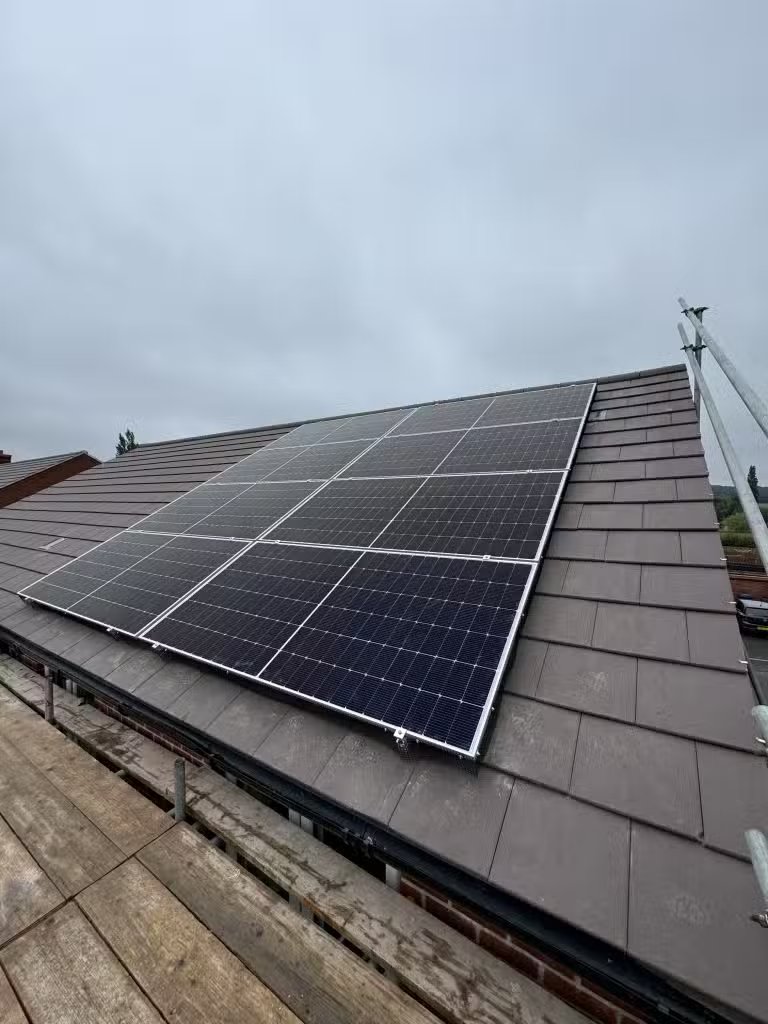
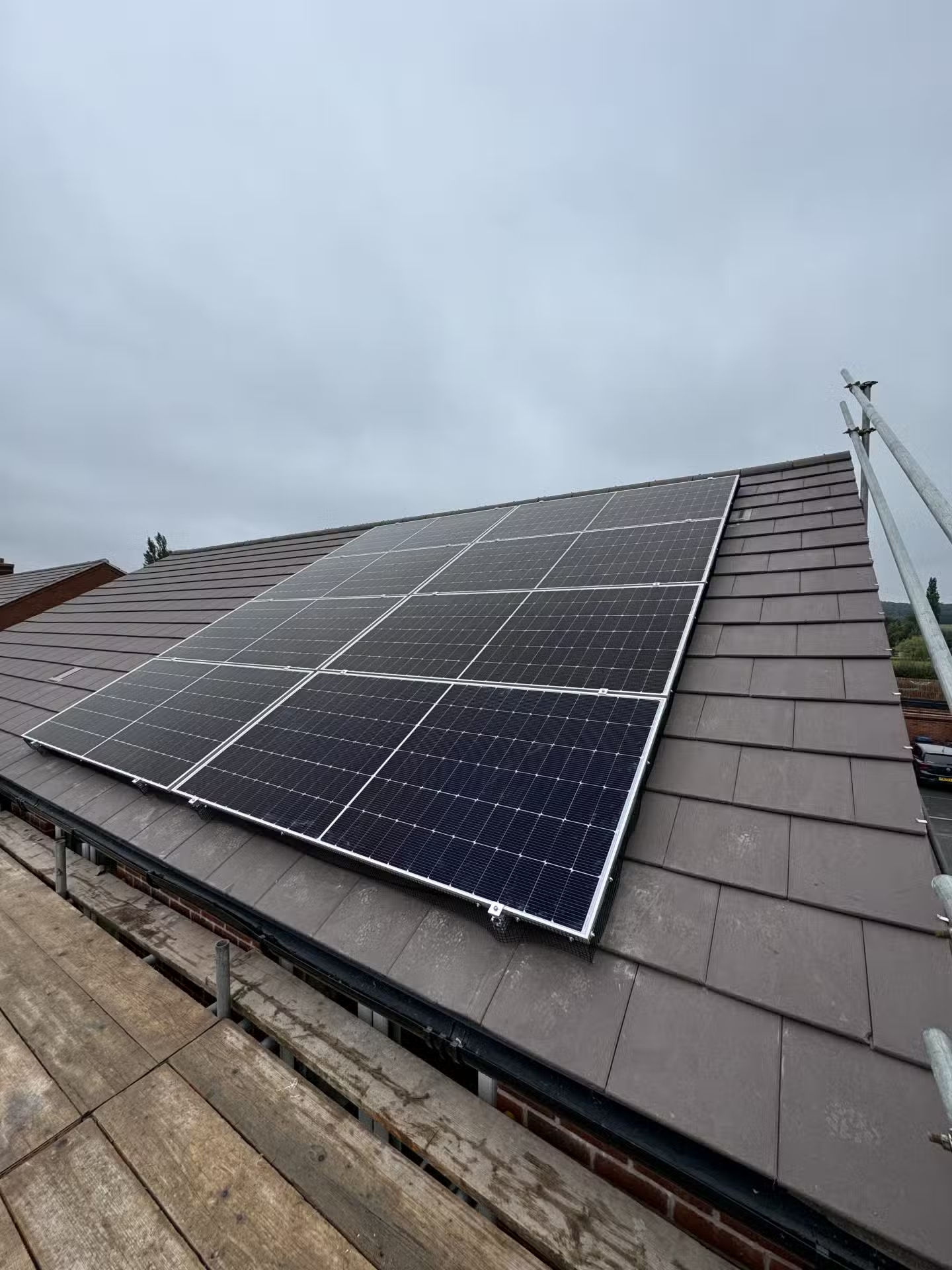
An on-grid solar system—also called a grid-tied or grid-connected system—connects directly to the national electricity grid. This is the most common type of solar installation in the UK, representing over 95% of domestic and commercial solar systems.
How Grid-Tied Solar Works
Grid-connected solar panels generate electricity during daylight hours. A grid-tied inverter converts the DC power from your panels into AC electricity matching grid specifications. This electricity flows into your property's electrical system, powering appliances and reducing grid consumption.
When your panels generate more electricity than you're using, the surplus automatically exports to the grid. When generation is insufficient—during evenings, cloudy weather, or high-demand periods—you seamlessly draw electricity from the grid as normal. This bidirectional relationship eliminates concerns about energy shortfalls.
Net Metering and Smart Export Guarantee
In the UK, the Smart Export Guarantee (SEG) enables grid-connected solar owners to receive payment for electricity exported to the grid. SEG tariffs vary depending on your energy supplier, providing additional value from excess generation.
Understanding how to maximise self-consumption whilst benefiting from export payments forms a key part of system design. Our homeowner's guide to solar panels covers optimisation strategies in detail.
Key On-Grid Components
- Solar panels: Monocrystalline panels are standard for modern installations
- Grid-tied inverter: Converts DC to grid-compatible AC electricity
- Generation meter: Tracks total electricity produced
- Export meter: Measures electricity sent to the grid (smart meters often handle this)
- Mounting system: Secures panels to roof or ground mount
- Monitoring system: Tracks performance and identifies issues
Safety Feature: Anti-Islanding Protection
All UK grid-tied inverters include anti-islanding protection. This safety feature automatically disconnects your system during grid outages, preventing electricity from feeding back into the grid whilst engineers work on repairs. This is why standard on-grid systems don't provide power during blackouts.
What Is an Off-Grid Solar System?
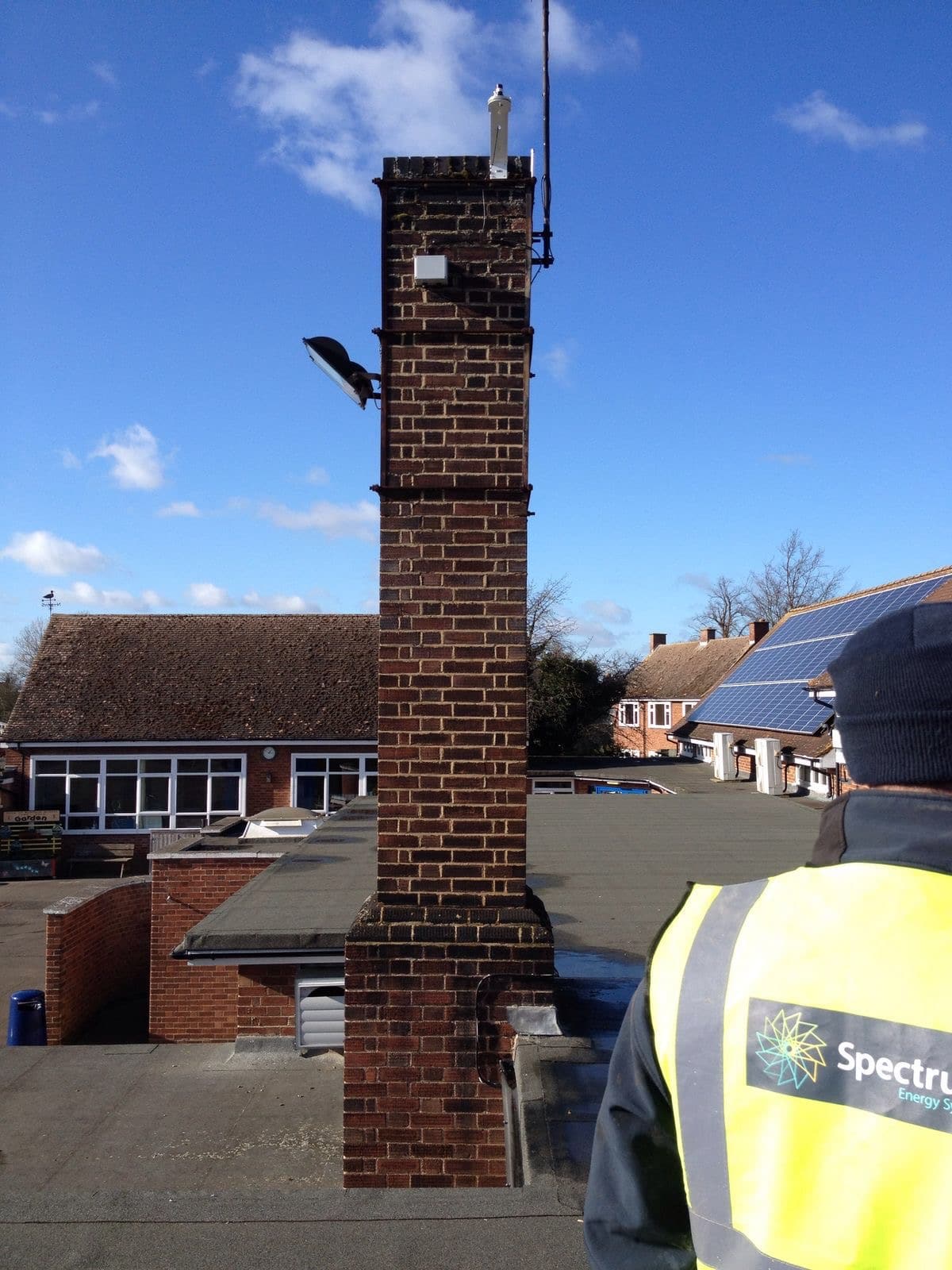
An off-grid solar system—also called a standalone system—operates completely independently from the national electricity grid. These systems store all generated electricity in batteries for use whenever needed, providing complete energy autonomy.
How Standalone Solar Works
Off-grid systems capture solar energy during daylight hours, directing electricity first to immediate loads and then to battery storage. A charge controller manages battery charging to prevent damage from overcharging. When you need electricity—day or night—the system draws from battery reserves.
An off-grid inverter converts stored DC battery power into AC electricity for household appliances. Unlike grid-tied inverters, off-grid models must handle variable battery voltages and manage energy flow without grid support.
Complete Energy Independence
The primary appeal of off-grid solar is freedom from utility companies and complete energy independence. Once installed, your system generates all required electricity autonomously. This independence proves particularly valuable in remote locations where grid connection is impractical or unavailable, especially when new transformers, poles, or extensive cabling would be required.
However, energy independence demands careful management. Unlike grid-connected systems where shortfalls draw from infinite grid capacity, off-grid users must balance generation, storage, and consumption carefully—especially during UK winters when solar generation drops significantly.
Key Off-Grid Components
- Solar panels: Typically oversized compared to on-grid systems to ensure adequate winter generation
- Charge controller: Regulates battery charging to prevent damage (MPPT controllers maximise efficiency)
- Battery bank: Stores electricity for use when panels aren't generating—battery storage systems are essential
- Off-grid inverter: Converts battery DC power to AC electricity
- Backup generator: Provides emergency charging during extended low-generation periods
- System monitor: Tracks battery state, generation, and consumption
Key Differences Between Off-Grid and On-Grid Solar
Understanding the fundamental differences helps determine which system type suits your situation. The comparison extends beyond simple grid connection to encompass complexity, reliability, and lifestyle implications.
| Factor | On-Grid System | Off-Grid System |
|---|---|---|
| Grid Connection | Connected to national grid | Completely independent |
| Battery Storage | Optional (for hybrid systems) | Essential—typically 2-5 days capacity |
| Grid Electricity Usage | Reduced significantly | Not required |
| Power During Outages | No (unless hybrid with backup) | Yes—fully independent |
| Grid Export Capability | Yes (Smart Export Guarantee) | No—no grid connection |
| System Complexity | Simpler design and installation | More complex with multiple components |
| Maintenance Level | Lower—annual checks typical | Higher—regular battery monitoring |
| Energy Management | Minimal—grid handles shortfalls | Active management required |
| Ideal For | Urban/suburban properties with grid access | Remote locations, energy independence seekers |
Grid Connection Implications
Grid connection fundamentally shapes system design and operation. On-grid systems benefit from grid stability—the utility company manages frequency, voltage, and supply security. Your system simply contributes to or draws from this managed resource.
Off-grid systems must manage everything independently. This requires more sophisticated equipment, larger capacity margins, and active user involvement in energy management. The trade-off is complete independence from utility companies, grid outages, and infrastructure limitations.
Battery Requirements
For on-grid systems, battery storage is optional—the grid provides unlimited backup capacity. Adding batteries creates a hybrid system, increasing self-consumption and potentially providing backup power.
Off-grid systems require substantial battery capacity—typically enough to power your property for 2-5 days without solar generation. This accounts for extended cloudy periods common in UK winters. Battery storage represents the largest component of off-grid system investment.
On-Grid Solar System: Pros and Cons
Grid-connected solar remains the most popular choice for UK properties with reliable grid access. Understanding its advantages and limitations helps determine if this approach suits your needs.
✓ Advantages of On-Grid Solar
- Simpler installation: Fewer components, faster commissioning
- No battery concerns: Avoid replacement and maintenance requirements
- Export income: Earn from surplus generation via SEG
- Unlimited backup: Grid supplies power when generation insufficient
- Minimal management: System operates automatically
- Proven technology: Established, reliable, widely supported
✗ Disadvantages of On-Grid Solar
- No power during outages: System shuts down when grid fails
- Ongoing electricity needs: Still require grid electricity at times
- Grid dependency: Subject to utility policies and regulations
- Potential future changes: Network policies may evolve over time
- Limited in remote areas: Requires existing grid connection
For most UK homeowners and businesses with reliable grid access, on-grid solar delivers the best balance of simplicity, convenience, and performance. Our expert solar installation services focus primarily on grid-connected systems for this reason.
Off-Grid Solar System: Pros and Cons
Off-grid solar suits specific circumstances where grid independence outweighs the additional complexity. Understanding both sides helps determine if standalone solar meets your needs.
✓ Advantages of Off-Grid Solar
- Complete independence: No utility reliance whatsoever
- Blackout immunity: Power continues during grid outages
- Remote viability: Works where grid connection is impossible
- Energy security: Immune to grid disruptions and supply issues
- Self-sufficiency: Aligned with sustainable living goals
- No export limits: Use all generated electricity yourself
- Planning flexibility: Some installations avoid grid-related permissions
✗ Disadvantages of Off-Grid Solar
- Greater complexity: More components and system design considerations
- Battery replacement: Batteries require replacement every 10-15 years
- Active management: Must monitor and balance energy usage
- Lifestyle constraints: May limit high-consumption appliances
- Winter challenges: UK's limited winter sun requires careful planning
- Generator dependency: Backup often needed for extended cloudy periods
- Higher maintenance: More components requiring regular attention
- No export income: Cannot sell surplus electricity
Off-grid solar works best for agricultural properties, remote buildings, or those prioritising complete energy independence. Success requires realistic expectations about energy management and lifestyle adjustments.
Which System Requires More Maintenance?
Maintenance requirements differ significantly between system types. Understanding these differences helps set realistic expectations.
On-Grid Maintenance Requirements
Grid-connected systems require minimal maintenance. Annual tasks typically include:
- Visual panel inspection for damage or soiling
- Monitoring system check for performance anomalies
- Inverter display/status verification
- Occasional panel cleaning (rain handles most soiling in the UK)
- Professional inspection every 2-3 years
Most on-grid owners spend 2-4 hours annually on maintenance, plus occasional professional servicing. Our solar panel maintenance support ensures systems continue performing optimally with minimal owner involvement.
Off-Grid Maintenance Requirements
Off-grid systems demand more attention due to battery management and system complexity:
- Regular battery state-of-charge monitoring (daily or weekly)
- Battery terminal cleaning and connection checks
- Electrolyte level monitoring (lead-acid batteries)
- Charge controller and inverter function verification
- Generator maintenance (oil, filters, test runs)
- Panel cleaning—more critical without grid backup
- System balance monitoring—consumption vs generation
Expect to spend 1-2 hours weekly on off-grid system management, plus professional servicing 1-2 times annually. This commitment reflects the responsibility of managing your entire electricity supply. Learn more about ongoing requirements in our solar panel maintenance guide.
Power Reliability and Backup Options
Reliability considerations differ fundamentally between system types, with each approach offering distinct advantages and limitations during normal operation and emergencies.
On-Grid Reliability
Grid-connected systems offer excellent reliability during normal conditions—the grid provides infinite backup capacity, ensuring power availability regardless of weather or time of day. However, standard on-grid systems cannot provide power during grid outages due to anti-islanding safety requirements.
For properties requiring backup power, hybrid systems combining grid connection with battery backup offer a solution. These systems can disconnect from the grid during outages and continue supplying stored electricity to critical loads. This requires specific inverter configurations and additional equipment.
Off-Grid Reliability
Off-grid systems provide power independently of grid status—blackouts elsewhere don't affect you. However, reliability depends entirely on your system's capacity, battery health, and energy management. Extended cloudy periods can deplete batteries, making backup generators essential for UK off-grid installations.
Proper off-grid design includes redundancy: oversized generation, substantial battery reserves, and generator backup. This comprehensive approach ensures reliable power but requires careful planning and ongoing maintenance.
UK Winter Reality
UK solar generation drops significantly during winter—a December day might produce only 10-20% of June's output. Off-grid systems must account for this seasonal variation through oversized generation, substantial battery reserves, and backup generation. Underestimating winter requirements is the most common off-grid design failure.
Best Use Cases for Each System
Matching system type to your specific circumstances ensures optimal results. Each approach excels in particular situations whilst proving unsuitable for others.
When to Choose On-Grid Solar
On-grid solar suits most UK properties and represents the sensible default choice when:
- You have reliable grid access: Existing connection to the national grid
- You want minimal hassle: Set-and-forget operation appeals
- Space is limited: No room for substantial battery banks
- You want export income: SEG payments provide additional value
- Outage backup isn't essential: Grid reliability meets your needs
Our smart home energy solutions help maximise on-grid system value through intelligent energy management and storage integration.
When to Choose Off-Grid Solar
Off-grid solar makes sense for specific situations where independence outweighs complexity:
- Remote locations: Grid connection is impractical or unavailable
- Unreliable grid power: Frequent outages affect your area
- Complete independence goal: Self-sufficiency matters to you
- Agricultural buildings: Barns, field shelters, or remote facilities
- Mobile applications: Narrowboats, off-grid cabins, caravans
- New rural construction: Building where no grid exists
- Energy security priority: Business continuity requires guaranteed power
Properties in Lincolnshire and rural Derbyshire sometimes find off-grid economics compelling where grid infrastructure is distant or inadequate.
Hybrid Solar Systems: The Best of Both Worlds?
Hybrid systems combine grid connection with battery storage, offering benefits from both approaches. This increasingly popular option addresses some limitations of pure on-grid installations whilst avoiding full off-grid complexity.
How Hybrid Systems Work
Hybrid systems connect to the grid like standard on-grid installations but include battery storage. During daylight hours, solar generation powers your home, charges batteries, and exports surplus to the grid. In the evening, stored battery power reduces grid consumption. The grid remains available as backup when batteries deplete.
Advanced hybrid inverters can also provide backup power during grid outages—switching to "island mode" and running essential circuits from stored electricity. This feature requires specific equipment but delivers genuine backup capability.
Hybrid System Benefits
- Increased self-consumption: Use more of your generation rather than exporting
- Reduced grid dependence: Less reliance on grid electricity
- Optional backup power: Some systems provide outage protection
- Time-of-use optimisation: Charge from grid during off-peak periods
- Grid export preserved: Still benefit from SEG payments for surplus
- Lower complexity than off-grid: Grid backup eliminates careful energy management
Explore Battery Storage Options
Discover how battery storage can enhance your solar investment with increased self-consumption and backup capability
Domestic Battery Storage Commercial Battery SolutionsRequired Components for Each System
Understanding component requirements helps compare system complexity and plan installations effectively. Each approach requires specific equipment tailored to its operational mode.
On-Grid System Components
- Solar panels: Matched to energy needs and roof space
- Grid-tied inverter: Converts DC to grid-compatible AC
- Mounting system: Roof or ground mount hardware
- AC/DC cabling: Connects system components
- Generation meter: Tracks electricity produced
- Monitoring system: Performance tracking
- Consumer unit integration: Connection to property electrics
Off-Grid System Components
- Solar panels: Typically oversized for UK conditions
- Charge controller: MPPT controller for battery charging
- Battery bank: 15-30kWh+ for typical homes
- Off-grid inverter: Handles variable battery voltage
- Battery management system: Protects battery health
- Backup generator: Emergency charging capability
- Advanced monitoring: Tracks all system parameters
- DC distribution: Some loads run directly on DC
The component count difference reflects system complexity. On-grid installations typically involve 5-8 major components, whilst off-grid systems require 10-15 or more, each adding potential failure points and maintenance needs.
Environmental Impact Comparison
Both system types deliver substantial environmental benefits by displacing fossil fuel electricity generation. However, some differences affect overall sustainability.
Carbon Footprint Reduction
All solar systems reduce carbon emissions by generating clean electricity. A typical 4kW system prevents 1.5-2 tonnes of CO2 annually compared to grid electricity. This benefit applies equally to on-grid and off-grid systems based on generation capacity.
However, off-grid systems requiring backup generators introduce some fossil fuel consumption during extended low-generation periods. Propane or diesel generators, whilst used sparingly, partially offset solar's carbon benefits. Careful system sizing minimises generator reliance.
Battery Environmental Considerations
Battery production carries environmental costs—mining lithium and other materials, manufacturing processes, and eventual disposal or recycling. These impacts apply more significantly to off-grid systems with larger battery requirements.
Modern lithium batteries typically achieve net carbon benefit within 2-3 years of operation, offsetting production impacts through reduced grid consumption. Battery recycling infrastructure continues developing, improving end-of-life sustainability. Understanding how long solar panels last helps assess total lifecycle impacts.
How to Choose Between Off-Grid and On-Grid Solar
Making the right choice requires honest assessment of your circumstances, priorities, and willingness to manage system complexity. This decision framework helps structure your evaluation.
Decision-Making Checklist
Location Assessment
- Do you have existing grid connection? → On-grid likely better option
- Grid connection is impractical or unavailable? → Off-grid worth considering
- Rural location with frequent power cuts? → Consider off-grid or hybrid
- Remote agricultural building? → Off-grid often practical choice
Lifestyle Considerations
- Prefer set-and-forget operation? → On-grid requires minimal attention
- Willing to actively manage energy use? → Off-grid viable
- High energy consumption household? → On-grid or large hybrid
- Energy independence is priority? → Off-grid aligns with goals
Future Planning
- Considering EV charging? → Smart EV charging integrates with both
- Planning property expansion? → Factor increased energy needs
- Concerned about grid reliability? → Hybrid provides backup option
Most UK properties benefit from on-grid solar, potentially with battery storage for increased self-consumption. Off-grid installations suit specific circumstances where grid connection is impractical or independence holds particular value. Our ultimate guide to installing solar PV covers the complete installation process for both approaches.
Frequently Asked Questions
The fundamental difference is grid connection. On-grid (grid-tied) systems connect to the national electricity grid, allowing you to export excess power and draw electricity when solar generation is insufficient. Off-grid (standalone) systems operate independently with battery storage, providing complete energy autonomy but requiring careful energy management and more complex system design.
No, batteries are optional for on-grid systems. The grid acts as your backup, supplying electricity when solar generation is low. However, adding battery storage to an on-grid system (creating a hybrid system) allows you to store excess generation for evening use, increase self-consumption rates, and potentially provide backup power during grid outages with appropriate equipment.
Standard on-grid solar systems automatically shut down during grid outages for safety reasons—this prevents electricity feeding back into the grid whilst engineers work on repairs. However, hybrid systems with battery backup and appropriate switchgear can provide emergency power during outages. Dedicated backup functionality requires specific inverter configurations.
Yes, though it requires careful planning. Off-grid living in the UK is feasible but challenging due to limited winter sunlight. You'll need substantial battery storage, potentially a backup generator, and willingness to manage energy consumption carefully. Off-grid systems work best for rural properties, agricultural buildings, or locations where grid connection is impractical.
A hybrid solar system combines on-grid connection with battery storage, offering benefits of both approaches. You remain connected to the grid for backup and export opportunities whilst storing excess generation in batteries for evening use. Some hybrid systems can also provide backup power during grid outages, offering greater energy security than standard grid-tied installations.
Modern lithium-ion batteries typically last 10-15 years with proper management, retaining 70-80% capacity throughout their warranty period. Lead-acid batteries, sometimes used in off-grid systems, typically last 3-7 years. Battery lifespan depends on depth of discharge cycles, temperature management, and overall system design. Plan for eventual battery replacement when considering off-grid system longevity.
Off-grid systems require more maintenance than on-grid installations. Regular tasks include monitoring battery health and charge levels, checking electrolyte levels in lead-acid batteries, cleaning panels, inspecting connections, and maintaining backup generators. Professional annual inspections are recommended to ensure optimal performance and identify issues before they affect system reliability.
Conclusion: Making Your Solar System Decision
The choice between off-grid and on-grid solar depends on your specific circumstances, priorities, and willingness to manage system complexity. For most UK properties with reliable grid access, on-grid solar—potentially enhanced with battery storage—delivers the best combination of value, convenience, and performance.
Key takeaways for your decision:
- On-grid suits most situations: Simpler operation and grid backup make this the sensible default
- Off-grid serves specific needs: Remote locations or strong independence goals
- Hybrid offers middle ground: Grid security with increased self-consumption and optional backup
- Off-grid requires more planning: Larger systems with battery storage and backup generation
- UK winters challenge off-grid: Substantial battery reserves and backup generation essential
- Lifestyle implications matter: Off-grid requires active energy management
At Spectrum Energy Systems, established in 2011, our MCS-accredited engineers design optimal solar solutions for properties across Nottinghamshire, Derbyshire, Leicestershire, and Lincolnshire. Whether you're considering straightforward grid-connected solar or exploring off-grid possibilities, we provide honest guidance based on decades of installation experience.
Don't let uncertainty delay your solar journey. Professional assessment reveals the best approach for your specific property and energy needs—ensuring your solar installation delivers expected results for decades to come.
Start Your Solar Journey Today
Get expert guidance on the right solar system type for your property with a free, no-obligation assessment
Request Your Free Quote Contact Our TeamReady to explore your options further? Our comprehensive homeowner's guide covers everything from choosing the right solar panel to understanding solar incentives for UK homeowners. For business installations, our complete business solar guide provides detailed commercial perspectives.