Solar panels typically last 25–30 years, losing around 0.5% efficiency each year. Most homeowners only need to upgrade when panels are significantly degraded, physically damaged, or when energy needs increase due to appliances like electric vehicles or home expansions. Inverters often require replacement first, typically after 10–15 years.
In This Guide
If you've had solar panels on your home for several years, you might be wondering whether they still perform as well as when first installed—and whether an upgrade could deliver improved performance. It's a sensible question, especially as solar technology continues to advance.
The good news is that solar panels are remarkably durable. Unlike most home appliances, they contain no moving parts and are designed to withstand decades of British weather. However, understanding when upgrades genuinely make practical sense—versus when your existing system remains fit for purpose—helps you make informed decisions about your home energy system.
This guide examines solar panel lifespan, degradation rates, and the specific circumstances where upgrading your solar panel system makes practical and economic sense. We'll also explore the often-overlooked inverter lifespan and help you understand whether adding capacity or replacing panels offers better value for your situation.
Average Lifespan of Solar Panels
Modern solar panels are engineered to last far longer than most people realise. Quality solar panels typically operate effectively for 25–30 years, with many systems continuing to generate useful electricity well beyond this timeframe.
Manufacturer warranties provide useful guidance on expected performance. Most quality panel manufacturers offer two types of warranty: a product warranty covering manufacturing defects (typically 10–12 years) and a performance warranty guaranteeing at least 80% output after 25 years.
Important distinction: Warranty periods represent minimum guaranteed performance, not actual lifespan. Many solar panels continue operating effectively at 85–90% capacity after their warranty period ends. The 25-year mark is not a replacement deadline but rather a benchmark for expected degradation.
The longevity of your panels depends significantly on installation quality, component selection, and ongoing maintenance. Panels installed by MCS-accredited engineers using tier-one components typically outlast lower-quality installations with inferior materials.
Do Solar Panels Need to Be Replaced?
The short answer: rarely before 20–25 years, and even then, replacement isn't always necessary. Solar panel replacement should be driven by actual performance rather than arbitrary timescales.
Unlike boilers or heat pumps that require regular servicing and eventual replacement due to mechanical wear, solar panels have no moving components to fail. The primary degradation mechanism—gradual reduction in semiconductor efficiency—occurs slowly and predictably over decades.
When Replacement Typically Makes Sense
Genuine replacement scenarios tend to fall into specific categories:
- Significant physical damage—cracked glass, delamination, or visible degradation affecting multiple panels
- Severe performance decline—output dropping below 70–75% of original capacity
- Roof replacement—planned re-roofing provides an opportunity to upgrade older panels
- Technology incompatibility—very old systems incompatible with modern battery storage or smart energy management
Conversely, panels performing at 80–85% capacity—entirely normal after 20+ years—generally don't warrant replacement unless your energy needs have substantially increased.
Signs It May Be Time to Upgrade Your Solar System
Whilst solar panels rarely require emergency replacement, certain indicators suggest your system may benefit from assessment or upgrade. Recognising these signs early helps you plan effectively rather than react to sudden performance drops.
Rising Electricity Bills Despite Solar
If your grid electricity consumption is increasing despite unchanged usage patterns, your system's output may be declining faster than expected. Compare current generation with historical data from your monitoring system.
Significant Panel Damage
Storm damage, falling debris, or animal interference can compromise multiple panels simultaneously. Whilst individual panel replacement is possible, widespread damage may justify full system upgrade.
Increased Energy Needs
Adding an electric vehicle, heat pump, home office, or extension significantly increases electricity demand. Your existing system may no longer cover household requirements.
Roof Replacement Scheduled
Re-roofing requires panel removal anyway. If your panels are 15+ years old, this presents an ideal opportunity to upgrade during the same project.
Repeated Inverter Failures
If your inverter has failed multiple times, the underlying system design may warrant review. Modern inverter technology offers improved efficiency and better panel-level optimisation.
Unsure About Your System's Performance?
Our MCS-accredited engineers can assess your existing solar installation and advise whether maintenance, expansion, or upgrade offers the best value for your situation.
Request a System Assessment Speak to Our TeamSolar Panel Degradation Explained
Understanding solar panel efficiency loss helps set realistic expectations for your system's long-term performance. All solar panels experience gradual degradation—it's an inherent characteristic of photovoltaic technology rather than a fault.
How Solar Panel Degradation Works
The solar panel degradation rate for modern monocrystalline panels typically averages 0.3–0.5% per year. This means panels producing 400W when new might generate approximately 380W after ten years and 340–360W after 25 years—still substantial output for most household needs.
| System Age | Typical Output Retention | 400W Panel Output | Action Recommended |
|---|---|---|---|
| New | 100% | 400W | Baseline monitoring |
| 5 years | 97–98% | 388–392W | Routine maintenance |
| 10 years | 94–96% | 376–384W | Inverter check, consider battery |
| 15 years | 90–93% | 360–372W | Inverter replacement likely |
| 20 years | 87–90% | 348–360W | Full system assessment |
| 25 years | 82–87% | 328–348W | Evaluate upgrade options |
Factors Affecting Degradation Rate
Several environmental and installation factors influence how quickly panels degrade:
- Temperature cycling—repeated heating and cooling causes minor stress to cell connections
- UV exposure—prolonged ultraviolet radiation gradually affects semiconductor materials
- Humidity—moisture ingress through damaged seals accelerates degradation
- Panel quality—tier-one monocrystalline panels typically degrade slower than lower-tier alternatives
- Installation quality—proper ventilation and secure mounting reduce stress-related degradation
The UK's moderate climate actually favours solar panel longevity. Unlike hotter regions where thermal stress accelerates degradation, British temperatures help panels maintain efficiency over longer periods.
Solar Inverter Lifespan (Often Replaced First)
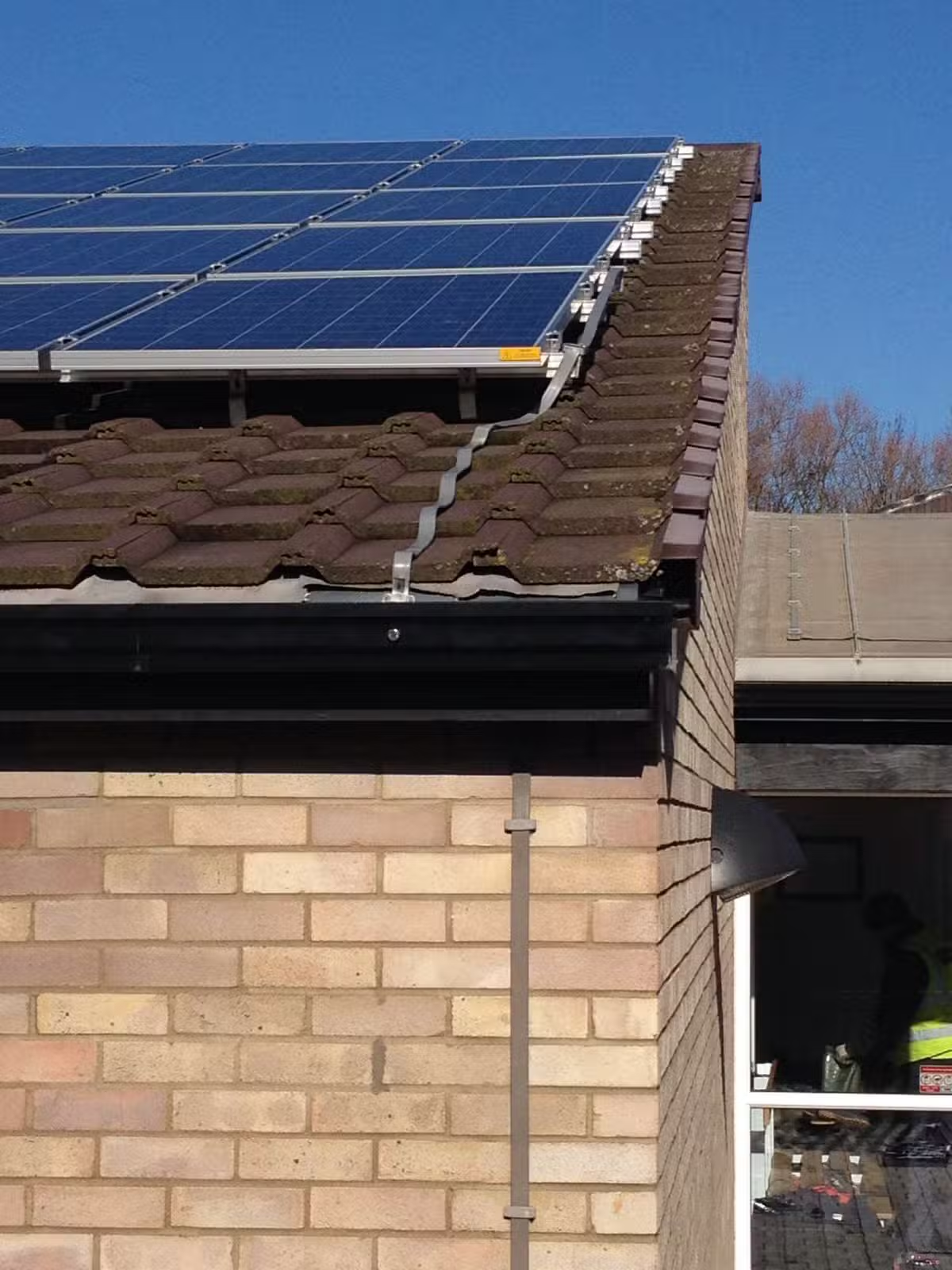
One of the most commonly overlooked aspects of solar system longevity is the inverter—the component that converts DC electricity from your panels into AC power for household use. The solar inverter lifespan is typically 10–15 years, significantly shorter than panel lifespan.
Why Inverters Fail Before Panels
Unlike panels, inverters contain electronic components that experience wear from continuous operation, heat cycling, and electrical stress. Capacitors, in particular, have finite lifespans that limit overall inverter durability.
This means most solar panel owners will need at least one inverter replacement during their system's lifetime—typically around the 10–15 year mark. Planning for this expense ensures it doesn't come as an unwelcome surprise.
Inverter replacement vs system upgrade: Replacing a failed inverter doesn't necessarily mean upgrading panels. If your panels still perform adequately, a new inverter can restore full system functionality for another decade. However, if panels are also showing significant degradation, combined upgrade may offer better value.
Modern Inverter Advantages
When inverter replacement becomes necessary, modern alternatives offer several improvements over older models:
- Higher conversion efficiency—modern inverters achieve 97–98% efficiency versus 90–95% for older units
- Better monitoring—integrated WiFi connectivity and app-based performance tracking
- Battery compatibility—hybrid inverters enable future battery storage integration
- Panel-level optimisation—some modern systems include optimisers that maximise individual panel output
Consider inverter replacement as an opportunity to modernise your system's control and monitoring capabilities, even if panels remain serviceable.
Are New Solar Panels More Efficient?
Solar panel technology has advanced substantially over the past decade. If your panels were installed 10–15 years ago, modern alternatives offer notable efficiency improvements that may justify upgrade consideration.
| Characteristic | Older Panels (2010–2015) | Modern Panels (2024–2026) |
|---|---|---|
| Typical panel output | 250–300W | 400–450W |
| Cell efficiency | 15–17% | 20–23% |
| Panels for 4kW system | 14–16 panels | 9–10 panels |
| Degradation rate | 0.5–0.8% per year | 0.3–0.5% per year |
| Low-light performance | Moderate | Enhanced |
| Warranty period | 10–20 years | 25–30 years |
These improvements mean modern solar panels can generate significantly more electricity from the same roof space—particularly valuable if your energy needs have grown since original installation.
Technology Advances Worth Noting
Beyond raw efficiency gains, modern panel technologies offer practical advantages:
- Half-cut cells—improved shade tolerance and reduced hot-spot risk
- PERC/TOPCon technology—enhanced electron capture for higher output
- Bifacial options—can capture reflected light from beneath for additional generation
- Better temperature coefficients—less efficiency loss during warm weather
Upgrade Solar Panels vs Add More Panels
One of the most practical decisions facing solar panel owners is whether to upgrade existing panels or simply add additional capacity. When weighing up whether to add more panels vs upgrade solar equipment entirely, the right choice depends on your specific circumstances, existing system condition, and available roof space.
Making the Right Decision
Consider Upgrading Panels When:
- Existing panels are 20+ years old with significant degradation
- Roof replacement is scheduled anyway
- Multiple panels have failed or show damage
- Original technology is incompatible with modern batteries
- Limited roof space means maximising output per panel matters
- Inverter replacement is also needed
Consider Adding More Panels When:
- Existing panels still perform at 85%+ capacity
- Adequate unused roof space available
- Energy needs have increased (EV, heat pump, etc.)
- Current inverter can handle additional capacity
- Original system is less than 15 years old
- Expansion is more practical than full replacement
Expansion Considerations
Adding panels to an existing system requires careful planning. Ideally, expansion panels should match or closely align with existing panel specifications to ensure electrical compatibility. Mixing significantly different panel types can create performance issues where the lowest-performing panel limits the entire string.
Modern solutions like microinverters or power optimisers can overcome some compatibility challenges, allowing different panel types to operate independently. Your installer can assess whether expansion is technically feasible and suitable for your specific system.
How to Know If Your Solar System Needs an Upgrade
Before committing to upgrading solar panel system components, systematic assessment ensures you're making decisions based on actual system performance rather than assumptions.
Solar System Health Checklist
Professional solar system health checks provide detailed performance analysis, identifying specific issues and recommending appropriate solutions. This objective assessment often reveals that maintenance or minor repairs can restore performance without full system replacement.
Frequently Asked Questions
Making Informed Upgrade Decisions
Solar panels represent one of the most durable home energy solutions available, with most systems delivering 25–30 years of reliable electricity generation. Understanding when to upgrade your solar panels—versus when to maintain, repair, or expand—ensures you get the most from your renewable energy system.
Key principles for solar system decision-making:
- Performance-based decisions—base upgrade choices on actual output data rather than arbitrary age thresholds
- Inverter planning—expect inverter replacement around 10–15 years and plan accordingly
- Changed circumstances—reassess system adequacy when energy needs increase significantly
- Opportunistic upgrades—roof replacement provides natural upgrade opportunity
- Professional assessment—objective evaluation prevents premature replacement or continued operation of failing systems
For homeowners across Nottinghamshire, Derbyshire, Leicestershire, and Lincolnshire, Spectrum Energy Systems provides honest, expert guidance on solar system assessment, maintenance, and upgrade planning. Our MCS-accredited engineers focus on practical solutions that deliver genuine value rather than unnecessary expenditure.
Get Expert Guidance on Your Solar System
Whether you're wondering about your existing system's performance or considering upgrade options, our experienced team can help. We provide thorough assessments and honest recommendations tailored to your specific situation.
Request Your Free Assessment Read Our Homeowner's GuideExplore our comprehensive guide to solar PV installation for detailed insights into modern solar technology, or learn about the benefits of solar panels for homes and businesses. For specific technical questions, our articles section covers topics from maintenance best practices to battery storage benefits.
About Spectrum Energy Systems: Established in 2011, we're MCS-accredited solar installers serving Nottingham, Derby, Leicester, Lincoln and the wider East Midlands. Our experienced engineers provide honest, practical guidance on solar system assessment, upgrade planning, and new installations. We've connected over 10MW of solar capacity across domestic and commercial projects, helping homeowners and businesses make informed decisions about renewable energy. View our case studies or explore available solar incentives for UK homeowners.