Do Solar Panels Increase Home Value in the UK? An Installer's Honest Answer
Usually, yes. An owned, MCS certified solar system adds value three ways: lower running costs that buyers price in, a better EPC rating, and paperwork that transfers cleanly on sale. Research by Solar Energy UK and the University of Cambridge put the uplift at roughly 2% on a typical home. Leased-roof systems are the exception.
In This Guide
Do solar panels increase home value in the UK? In our experience, yes, provided the system is owned outright, professionally installed and properly documented. Buyers pay attention to running costs in a way they simply did not ten years ago, and a house with a low electricity bill and a good EPC has a real edge over the identical house next door without one.
We are Spectrum Energy Systems, an MCS certified installer (NIC200223) based in Bulwell, Nottingham, fitting solar across the East Midlands since 2011. We also service and take over systems fitted by other installers, which means we see what happens to solar installs when homes change hands. This guide gives you the honest picture: where the value comes from, and the specific cases where solar can actually make a house harder to sell.
What the research actually shows
Two pieces of published UK research are worth trusting on this question, and both point the same way.
The Value of Solar Property report, produced by trade body Solar Energy UK with the University of Cambridge in 2021, analysed millions of property transactions and found homes with solar PV sold for roughly 2% more than comparable homes without, around £1,800 on a typical property at the time. Separately, Rightmove's Greener Homes Report 2023 analysed over 200,000 homes that sold twice with an improved EPC the second time: moving from a D to a C banked sellers an average of 4% on top of local house price growth, and bigger jumps earned more.
You will see bigger percentages quoted elsewhere. We would treat those with caution. The honest position is that estate agents and buyer surveys consistently report solar as a plus, the published research supports a modest but real premium, and the effect is strongest where the system is owned, tidy and documented. No installer can promise your house will sell for a specific amount more, and we will not pretend otherwise.
The three ways solar adds value
The premium is not magic. It comes from three concrete things a buyer gets with the house.
- Lower running costs the buyer inherits from day oneA well-sized system covers a large share of a home's annual electricity, and with a battery it covers more. The saving is attached to the house, not the seller, so buyers rationally price it in. On a two-rate tariff a battery also lets the new owner charge cheap overnight electricity and use it at peak times, which stacks a second saving on top of self-consumption.
- A better EPC ratingSolar PV raises the SAP score behind your EPC band, and the Rightmove data above shows band improvements carry a measurable price premium. A stronger EPC also widens your buyer pool: it matters to mortgage affordability checks, to buyers comparing running costs, and especially to landlords facing minimum energy efficiency standards on rental property.
- Clean, transferable paperworkAn owned system with an MCS certificate, DNO notification, electrical certification and live warranties transfers to the buyer with no strings. Their conveyancer sees a documented asset, not a question mark. This is the part of the value story that DIY and undocumented installs miss completely.
Solar and your EPC rating
Solar PV is one of the few home improvements that directly lifts the SAP calculation behind your EPC. On many of the homes we survey, adding a solar array moves the property up a band, most commonly from D into C.
That matters twice over. For owner-occupiers, the Rightmove analysis puts an average 4% premium on a D to C improvement. For landlords, government proposals to tighten minimum energy standards on rented homes make a C-band property a safer long-term asset than one sitting at D or E. Solar is often the most practical route there for a house that already has decent insulation.
The honest bit: when solar panels hurt saleability
Solar can work against a sale, and it is better you hear that from an installer than from your buyer's solicitor. The problems come in two flavours.
✓ What adds value
- System owned outright, no roof lease
- MCS certificate, DNO notification and electrical certs in a handover pack
- Live manufacturer warranties and an insurance-backed workmanship guarantee
- Tidy, flush install: all-black or in-roof panels, neat cable runs
- A battery and smart tariff setup the buyer can take over
✗ What can hurt it
- A legacy rent-a-roof lease on the property title
- DIY or non-MCS installs with no paperwork
- Missing certificates, lapsed or unclaimable warranties
- Failed or orphaned systems left unrepaired on the roof
- Messy installs: visible conduit, mismatched panels, poor layout
Leased-roof schemes are the big one. Between roughly 2010 and 2015, rent-a-roof companies fitted panels for nothing in exchange for a 25-year lease over the roof and the feed-in tariff income. Some mortgage lenders are wary of those leases, and a buyer whose lender refuses the lease terms can be forced to renegotiate or walk away. If you are buying or selling a home with one of these systems, get the lease in front of a conveyancer early. The important context: that era is over. The schemes died with the feed-in tariff, and every system Spectrum installs is owned outright by the homeowner from day one. There is no lease, no third party on your title, nothing for a lender to object to.
Paperwork gaps are the quiet one. An unbadged install with no MCS certificate adds little or nothing, because the buyer cannot verify what is on the roof, cannot register for export payments without the certificate, and cannot claim on warranties that were never properly registered. This is why we put so much weight on the handover pack: MCS certificate, DNO notification, electrical certification, warranty documents and a QANW insurance-backed guarantee covering our workmanship. If you have inherited a system with missing paperwork or an installer that has gone bust, our team can inspect it and take over the servicing; start with a solar system health check.
Why the look of the install matters
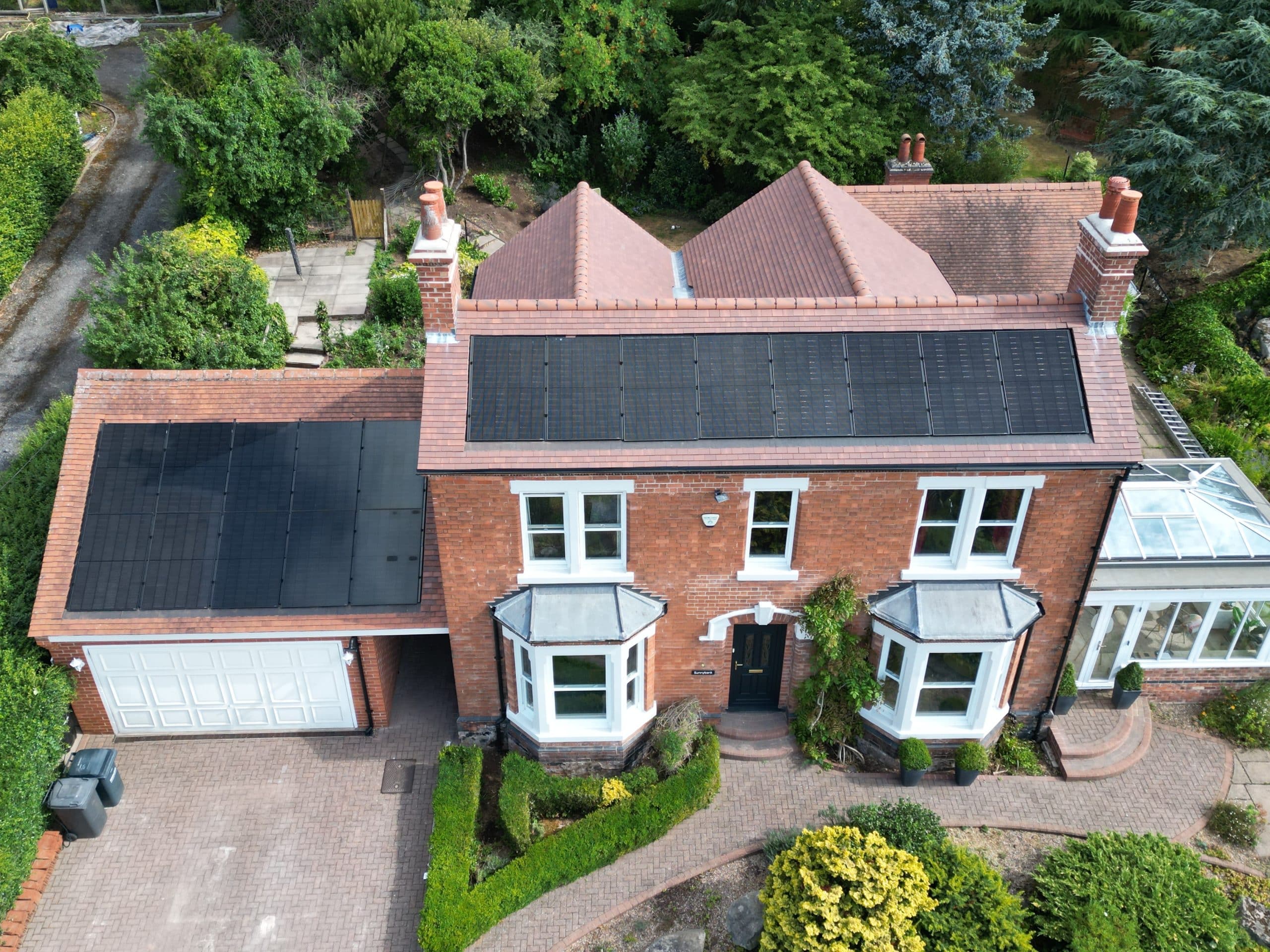
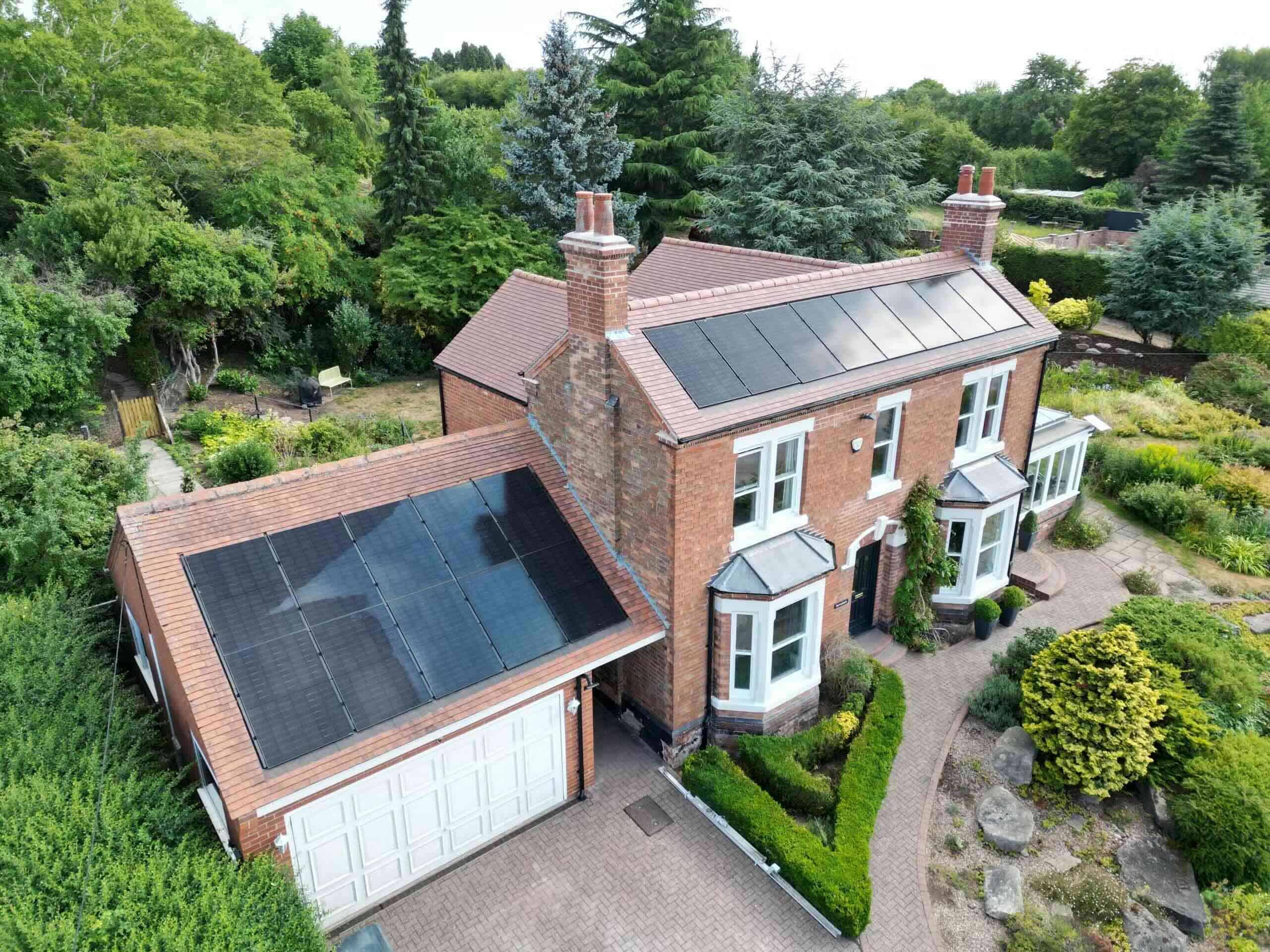
Kerb appeal counts, and panels are the first thing a viewer sees from the drive. All-black panels sit low and flush against dark tiles, and on the right roof an in-roof (integrated) system replaces the tiles entirely so the array finishes level with the roofline.
The install pictured is a Spectrum job in Kimberley, Nottinghamshire: all-black modules in a clean rectangular layout across the house and garage. Compare that with a patchwork of silver-framed panels and surface conduit and you can see why two systems of identical output can read very differently to a buyer. Layout is part of our 3D design stage, not an afterthought on install day.
What actually transfers to the buyer when you sell
A common worry from sellers is whether the benefits survive the sale. With an owned system, they do.
| Item | Does it transfer? | What to do |
|---|---|---|
| The system itself | Yes, it is a fixture of the property | Include the handover pack in your sale documents |
| Manufacturer warranties | Yes on the equipment we fit; panel performance warranties typically run 25 years | Pass registration details to the buyer |
| Workmanship guarantee | Yes, Spectrum's 5-year workmanship guarantee is insurance backed through QANW | Hand over the QANW certificate |
| Export payments (SEG) | Not automatically; export tariffs are per person, not per house | The buyer registers with a SEG supplier using the MCS certificate |
| Smart tariff setup | Yes in practice; the buyer signs up with their own supplier | Leave the monitoring login details and tariff notes |
The one step a buyer must take themselves is registering for a Smart Export Guarantee tariff, because export payments are a contract between the supplier and the account holder rather than something attached to the house. It is a straightforward application, and the MCS certificate in the handover pack is the document that unlocks it. Buyers weighing up what those export earnings look like can see current rates in our guide to SEG rates.
And if you have just bought a house with solar already on the roof, you do not need the original installer. We take over servicing of systems fitted by other companies, including inspections, repairs and battery retrofits, which is an increasingly common request as smaller installers leave the market.
Thinking about solar with resale in mind?
Book a feasibility assessment and we will design your system in 3D from a real survey, with an all-in price and the full paperwork pack that protects your home's value.
Request a QuoteFrequently asked questions
Do solar panels make a house harder to sell?
An owned, MCS certified system with full paperwork does not; the research points to it helping. The exception is a legacy rent-a-roof lease, which some mortgage lenders dislike and which can slow or complicate a sale. Modern purchased systems have no lease, so the problem does not arise.
How much value do solar panels add to a house in the UK?
Research by Solar Energy UK and the University of Cambridge found homes with solar sold for roughly 2% more than comparable homes without. The uplift varies with the property, the system and the local market, so treat any single figure as indicative rather than a promise. Nobody can guarantee a specific premium.
Does a solar battery add value too?
A battery strengthens the running-cost case a buyer inherits: it lifts self-consumption of your own generation and, on a two-rate tariff, lets the household charge cheap overnight electricity for peak-time use. Most of our installs pair the array with a Fogstar battery, and the whole setup transfers with the house.
Do solar panels improve my EPC rating?
Yes. Solar PV raises the SAP score that sets your EPC band, and on many homes it is the difference between a D and a C. Rightmove's 2023 analysis of over 200,000 re-sold homes found a D to C improvement carried an average 4% price premium on top of local growth.
What happens to my SEG export payments when I sell?
Export payments do not transfer automatically because the Smart Export Guarantee is a contract with the account holder, not the property. Your buyer registers with a SEG supplier in their own name using the system's MCS certificate, which is one more reason the handover paperwork matters so much.
I am buying a house with a rent-a-roof solar lease. Should I walk away?
Not necessarily, but get the lease in front of your conveyancer before you commit. Some leases meet lender requirements and transfer without fuss; others need a deed of variation or negotiation with the leasing company. The panels themselves are usually fine; it is the legal agreement that needs checking.
Do buyers actually care about solar panels?
Increasingly, yes. Rightmove's Greener Homes research found energy efficiency is a major factor for a growing share of buyers, and green features such as solar panels have been climbing its keyword search rankings. High electricity prices have turned running costs into a genuine line item in buying decisions.
The company that installed my solar has gone bust. Does that hurt my house value?
Only if the system is left unsupported. Manufacturer warranties on panels, inverter and battery still stand, and an insurance-backed guarantee survives the installer. We take over servicing of systems fitted by other companies, so a health check and a tidy documentation file will restore the story a buyer wants to see.
Related reading
- Are solar panels worth it in 2026?
- The downsides of solar panels, honestly assessed
- Solar panel installation prices in Nottingham
- SEG rates: what export actually pays
For the wider picture on system options for your home, start with our domestic solar overview.
Speak to Spectrum Energy Systems
MCS certified (NIC200223), NICEIC approved (3182878) and RECC member (00080159), installing across the East Midlands since 2011 with in-house crews from our Bulwell HQ. Every install comes with the full handover pack and a QANW insurance-backed guarantee.
Book a Feasibility Assessment