Commercial Solar PV Panels: The 2026 UK Business Guide
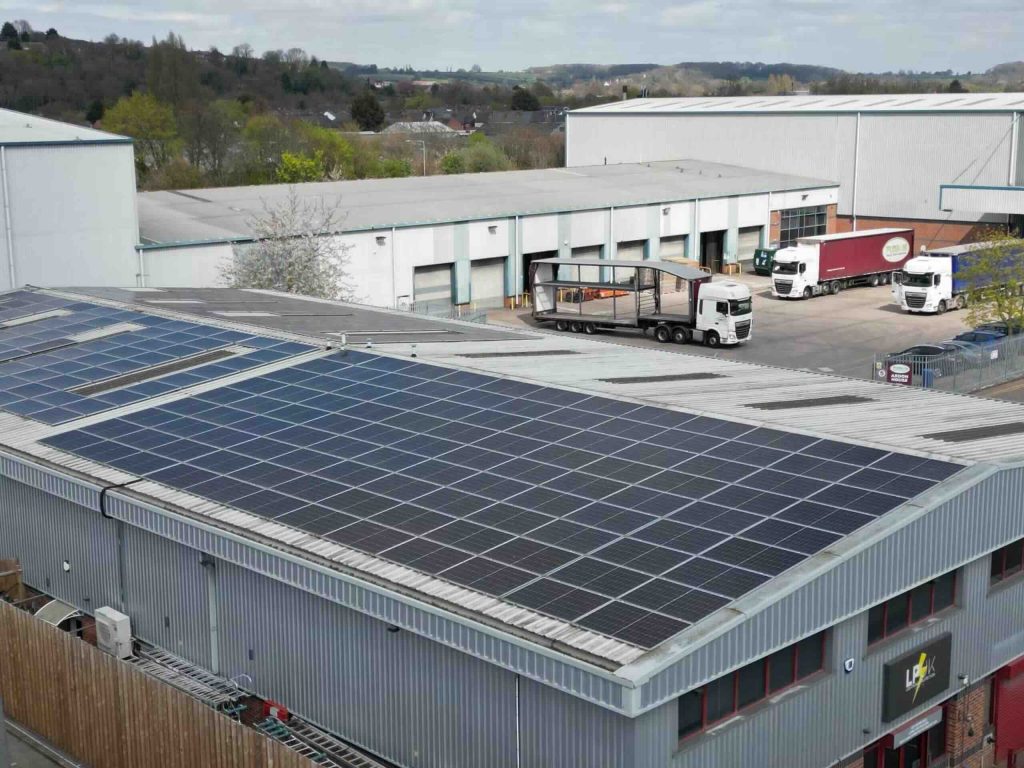
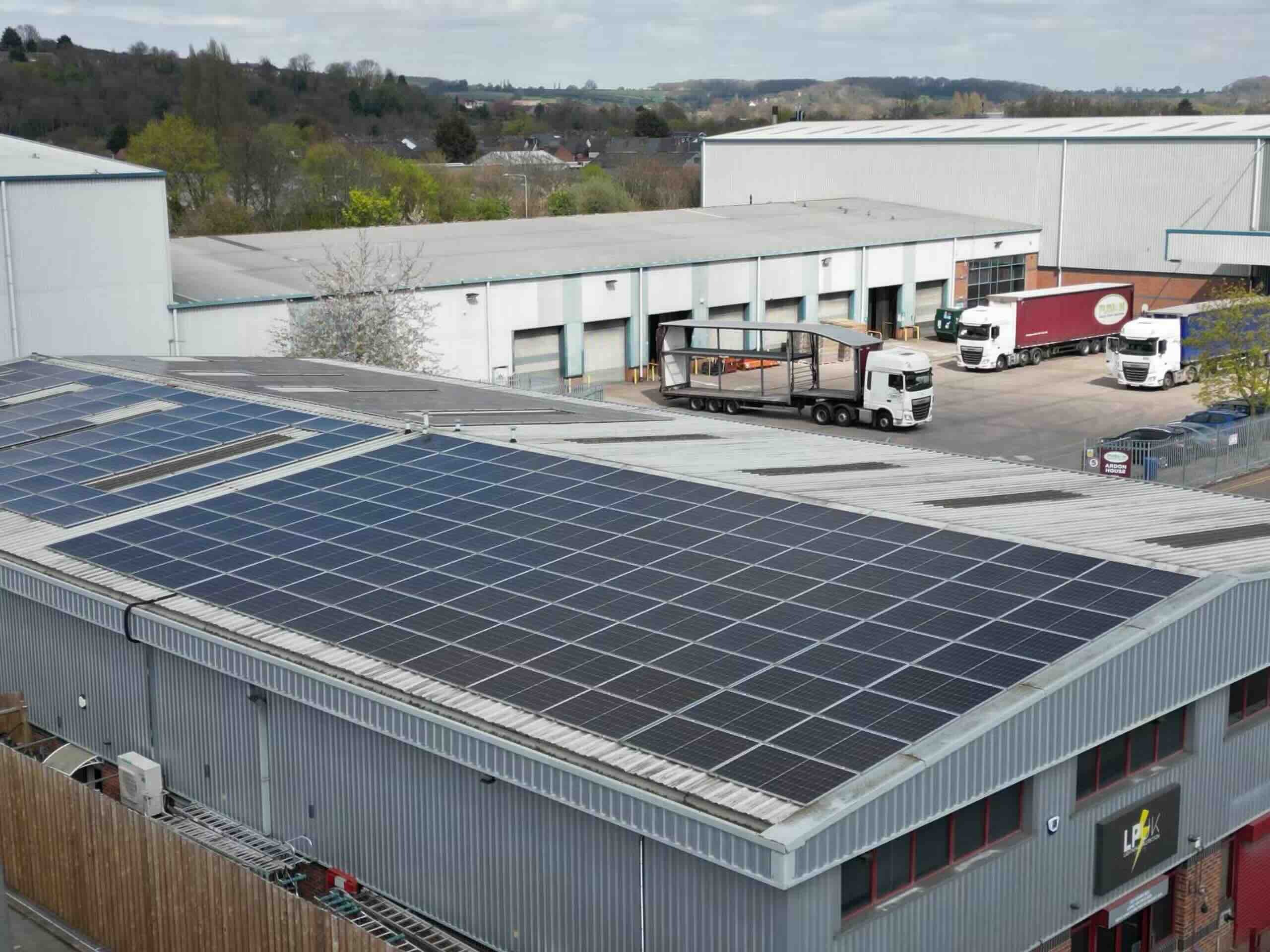
Commercial solar PV is the same proven technology used on homes, scaled up for business premises — warehouses, factories, offices, farms and retail units. Systems run from ~20kWp to several hundred kWp, use three-phase inverters, and are designed around your building's daytime demand. Cost: ~£700–£1,100/kWp installed (falling per-kWp at scale). Payback: typically 4–7 years — faster than domestic because businesses use most power in daylight. The biggest returns come from sizing the system (and any battery) around your actual load profile and the right commercial tariff. This is a six-figure decision where expert design pays for itself.
Why commercial solar pays back faster than domestic
The single biggest advantage commercial solar has over domestic: businesses consume most of their electricity during the day — exactly when solar generates. A home exports much of its midday surplus; a warehouse, office or factory uses it on the spot, displacing expensive grid power at 25–35p/kWh. That alignment of generation and demand is why commercial payback (4–7 years) typically beats domestic, and why high-daytime-use businesses see the strongest returns of all.
In This Guide
What are commercial solar PV panels?
Commercial solar PV panels use the same photovoltaic technology as domestic systems — Tier 1 monocrystalline modules (JA Solar, Aiko, Longi) converting sunlight to electricity — deployed at larger scale on business premises. A commercial installation is defined less by different panels and more by scale, inverter type, mounting approach, grid connection, and the commercial tariff economics around it.
How commercial differs from domestic
| Factor | Domestic | Commercial |
|---|---|---|
| System size | 3–10 kWp | 20kWp–500kWp+ |
| Inverter | Single-phase hybrid | Three-phase, often parallel units |
| Demand alignment | Low (out during day) | High (uses power in daylight) |
| VAT | 0% (current regime) | Standard VAT (capital allowances apply) |
| Grid approval | G98 notification | Often G99 Type B (50kW+) |
| Mounting | Pitched roof (VarioSol) | Flat/trapezoidal (MetaSol), ground-mount |
| Payback | 8–10 years | 4–7 years |
| Tariffs | Octopus Agile etc | Octopus Business / Shape Shifters: Export |
Types of panels & system sizes
Commercial installs use the same Tier 1 monocrystalline panels as domestic — 500W+ JA Solar, Aiko or Longi modules. The decision points are mounting and scale:
- Flat-roof (warehouse/factory): Renusol MetaSol ballasted/angled frames, typically 10–15° tilt
- Trapezoidal metal roof: crest-fixed MetaSol mounting
- Pitched roof (offices/retail): VarioSol rail system
- Ground-mount: where there's land but limited roof — common on farms
For the full mounting breakdown see our mounting systems guide.
UK performance & cost
A commercial array generates the same per-kWp as domestic — roughly 900–1,000 kWh per kWp per year in the UK. The difference is how much of that you use. A 50kWp warehouse system generating ~47,000 kWh/year, where the business uses 70–90% on-site, displaces grid power worth £13,000–£16,000/year at commercial rates.
| System size | Annual generation | Indicative cost | Typical payback |
|---|---|---|---|
| 30 kWp | ~28,000 kWh | £25,000–£33,000 +VAT | 5–7 years |
| 50 kWp | ~47,000 kWh | £40,000–£55,000 +VAT | 4–6 years |
| 100 kWp | ~94,000 kWh | £75,000–£100,000 +VAT | 4–6 years |
| 250 kWp | ~235,000 kWh | From £175,000 +VAT | 4–5 years |
Add battery storage and the economics improve further on the right tariff — see our commercial battery storage guide. For a deeper ROI breakdown, see are commercial solar panels worth it.
Key components of a commercial system
- Panels — Tier 1 monocrystalline, 500W+ (JA Solar, Aiko, Longi)
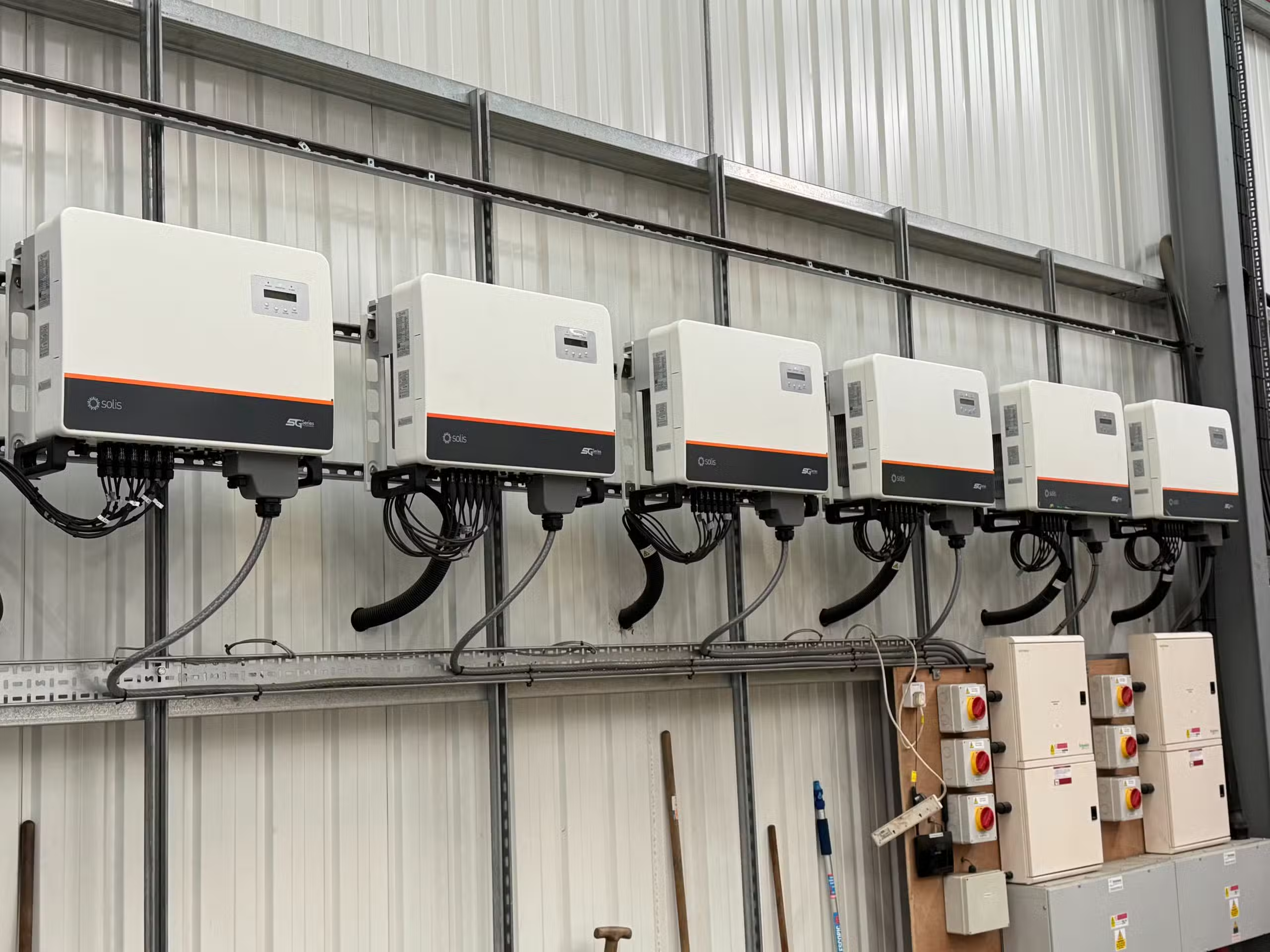
- Three-phase inverter — Solis commercial range, often in parallel for larger arrays
- Mounting — Renusol MetaSol (flat/trapezoidal) or VarioSol (pitched)
- Battery (optional) — Pylontech Force H3 stacks for HV systems; unlocks export arbitrage
- Monitoring — per-string commercial monitoring, BMS integration, optional Home Assistant + Predbat
- Grid connection — DNO approval (G99 Type B for 50kW+)
Benefits by business type
The strongest commercial solar cases share one trait: high daytime electricity use. Where your business sits on that spectrum determines the return:
Strongest cases (high daytime use)
- Manufacturing — machinery runs through daylight, huge self-consumption
- Cold storage / refrigeration — constant high load, perfect solar match
- Offices — HVAC, lighting, IT load aligns with generation
- Agriculture — barns, grain drying, dairy — see our farm solar guide
Need a battery to work well
- Retail (evening peak) — battery time-shifts solar to trading hours
- Warehousing (low base load) — battery + export arbitrage carries the return
- Hospitality (evening-heavy) — storage essential to capture daytime solar
- Low-occupancy units — size carefully or export-optimise
Beyond the financials, commercial solar delivers measurable ESG and corporate-sustainability benefits — verifiable carbon reduction for reporting, a visible commitment for customers and staff, and resilience against grid price volatility. For many businesses these now weigh alongside the payback maths.
Why expert installation matters
A commercial install is a six-figure asset involving three-phase electrics, structural roof loading, DNO approval and tariff/finance decisions that materially shape the ROI. This is not a job to award on headline price alone. A specialist MCS-accredited commercial installer earns their fee through:
1 Load-profile-led design
Sizing the array (and any battery) around your actual half-hourly consumption, not a rule of thumb — the difference between a 4-year and an 8-year payback.
2 Grid & compliance
Handling the G99 application, structural sign-off, and MCS certification — getting any of these wrong stalls or sinks the project.
3 Tariff & value-stream strategy
Choosing the right export tariff and sizing storage for arbitrage, triad avoidance or flexibility markets — not just self-consumption.
4 Risk mitigation & aftercare
Insurance-backed guarantee, ongoing maintenance and monitoring so a fault doesn't cost you a week of lost generation.
For the full vetting checklist, see our guide to hiring a solar installer.
UK regulations & grid connection
- MCS certification — required for standards, warranties and export eligibility
- DNO approval — G98 for small systems; G99 (often Type B) for 50kW+ aggregate
- Structural survey — confirming the roof carries the panel + mounting (+ ballast) load
- Planning — most commercial rooftop is permitted development; ground-mount and listed/conservation sites may need permission
- Building regs & insurance — electrical compliance, fire considerations, insurer notification
The G99 step is where commercial projects stall
Larger commercial systems need DNO approval before connection, and the G99 Type B process can take weeks. A good installer starts it early and handles it for you. Spectrum also offers a standalone commercial DNO application service — useful if you're scoping feasibility before committing to an install.
The installation process
1 Site survey & load assessment
Roof inspection, structural check, and analysis of your half-hourly consumption data.
2 Design & proposal
PV*SOL model, system sizing, ROI projection, tariff strategy, named equipment.
3 Grid application
DNO G98/G99 submission and approval.
4 Installation
Scaffold/access, mounting, panels, three-phase inverters, battery if specified — typically phased to minimise disruption.
5 Commissioning & handover
Testing, MCS certification, monitoring setup, staff handover, and a maintenance plan.
Considering commercial solar for your premises?
Spectrum designs commercial solar around your actual load profile — Solis three-phase, Pylontech storage, Renusol mounting, full G99 handling. MCS NIC200223. Honest ROI projections, not sales fiction.
Request a feasibility assessmentFAQs
What are commercial solar PV panels?
Commercial solar PV panels are the same photovoltaic technology used on homes, deployed at larger scale on business premises — warehouses, factories, offices, farms and retail units. A commercial system is typically 20kWp to several hundred kWp, uses three-phase inverters, and is designed around the building's daytime electricity demand. The panels themselves are Tier 1 monocrystalline (JA Solar, Aiko, Longi); the difference from domestic is scale, inverter type, mounting, and the commercial tariff economics.
How much do commercial solar panels cost in the UK?
Commercial solar costs roughly £700–£1,100 per kWp installed in 2026, falling per-kWp as the system gets bigger. A 50kWp warehouse system runs around £40,000–£55,000; a 250kWp system proportionally less per kWp. Add battery storage and the figure rises but so does the return. Commercial installs attract VAT (unlike 0% domestic) but qualify for capital allowances. ROI is typically 4–7 years when sized for self-consumption plus export.
What's the payback on commercial solar?
Typically 4–7 years for a well-sized UK commercial system — faster than domestic because businesses use most of their power during daylight when solar generates. Payback is quickest where daytime consumption is high (manufacturing, cold storage, offices) and where a battery is sized for export arbitrage on a tariff like Octopus Shape Shifters: Export rather than just self-consumption. After payback, you have 18–25 years of near-free generation.
Why use a professional commercial solar installer?
Commercial installs involve three-phase electrics, DNO approval (often G99 Type B for larger systems), structural roof surveys, and tariff/finance decisions that materially affect ROI. A specialist MCS-accredited installer designs the system around your actual load profile, handles the grid application, and sizes any battery for the right value streams. Getting the design wrong on a six-figure asset is expensive — expertise pays for itself.
Conclusion
Commercial solar PV is one of the strongest capital investments a UK business can make in 2026 — 4–7 year payback, decades of near-free generation, and measurable ESG benefits, all from roof space you already own. The returns hinge on getting the design right: sizing around your real load profile, handling the grid approval, and choosing the right tariff and storage strategy. That's where a specialist MCS-accredited installer earns their place. Spectrum has connected 10+ MW across the East Midlands. For the service itself, see our commercial solar installation page, or our dedicated solar panel installation for business service — we'll model your premises honestly and tell you exactly what the numbers look like.
Related reading
- Are commercial solar panels worth it?
- Commercial battery storage for solar
- Benefits of solar panels on your farm
- Energy saving tips for UK businesses
- Commercial solar installation (our service)
- Solar panel installation for your business
- Solar pergolas for business
Speak to Spectrum Energy Systems
MCS NIC200223. Commercial solar designed, installed and maintained across the East Midlands — Solis three-phase, Pylontech storage, full G99 handling, honest ROI.
Request a feasibility assessment