
Can Solar PV Pave the Way to Net Zero? Exploring Its Role in the UK's Energy Transition
The UK has committed to reaching net zero greenhouse gas emissions by 2050—a legally binding target requiring fundamental transformation of how we generate and consume energy. Solar PV has emerged as one of the fastest-growing technologies in this solar energy transition UK, but can it really help deliver net zero?
This analysis examines the role of solar energy in net zero, its limitations, and how it works alongside other technologies to create a cleaner energy future for UK homes and businesses.
Quick Navigation
- What Does Net Zero Mean?
- UK Energy and Emissions Landscape
- What Is Solar PV and How Does It Work?
- How Solar PV Contributes to Net Zero
- Solar PV Deployment in the UK Today
- Solar PV for Homes and Buildings
- Can Solar PV Alone Deliver Net Zero?
- Technologies That Complement Solar PV
- Policy, Regulation, and Incentives
- Solar PV's Role for Businesses
- Real-World Impact: Case Studies
- The Future of Solar PV
- Common Myths About Solar PV
- Frequently Asked Questions
- Conclusion
With the UK now over halfway to its 2050 net zero target—territorial emissions have fallen by over 50% since 1990—the next phase requires accelerating the deployment of proven clean technologies. Understanding the role of solar energy in net zero is crucial, as solar PV stands out as one of the most accessible and scalable options available to homeowners, businesses, and developers across the country.
At Spectrum Energy Systems, established in 2011, we've witnessed solar technology transform from a niche solution into a mainstream energy choice. Having connected over 10MW of solar capacity across the East Midlands, we understand both the remarkable potential and practical realities of solar PV and net zero UK goals. Understanding how efficient solar panels really are helps contextualise their net zero contribution.
What Does Net Zero Mean?
Net zero refers to achieving a balance between the greenhouse gases emitted into the atmosphere and those removed from it. For the UK, this means reducing emissions across all sectors—power generation, transport, heating, industry, and agriculture—while using carbon removal technologies and natural carbon sinks to offset any remaining emissions.
UK Net Zero Targets and Carbon Budgets
The Climate Change Act 2008 (amended in 2019) established the UK's legally binding net zero target for 2050. To ensure steady progress, the government sets five-year carbon budgets limiting total emissions:
- 2030 target: 68% reduction compared to 1990 levels
- 2035 target: 81% reduction compared to 1990 levels
- 2050 target: Net zero emissions (100% reduction)
The Climate Change Committee's 2025 Progress Report confirmed the UK's net zero target is "within reach, provided the government stays the course." Progress has been driven primarily by decarbonising electricity generation—precisely where solar PV and net zero UK strategies intersect most effectively.
UK Progress to Net Zero
Over 50% — Territorial emissions reduction achieved since 1990
34 years — Time taken to reach the halfway point
26 years — Remaining to achieve net zero by 2050
The UK's Current Energy and Emissions Landscape
Understanding where UK emissions come from reveals why electricity decarbonisation—and solar PV specifically—plays such a crucial role in the net zero transition. Meeting solar PV net zero targets requires understanding the current energy mix and where improvements can be made.
Where Emissions Come From
UK greenhouse gas emissions originate from several sectors, each requiring different decarbonisation approaches:
- Transport: Currently the largest emitting sector, dominated by road vehicles
- Energy supply: Electricity and heat generation from fossil fuels
- Residential buildings: Heating, hot water, and domestic energy use
- Business and industry: Manufacturing processes and commercial operations
- Agriculture: Livestock, fertilisers, and land management
Electricity supply has achieved the most dramatic emissions reductions, with renewables now regularly providing over 50% of UK electricity. This renewable energy net zero UK success demonstrates what's possible when policy, investment, and technology align—and why expanding solar capacity remains central to further progress. For businesses exploring their options, our complete business solar guide provides detailed information.
What Is Solar PV and How Does It Work?
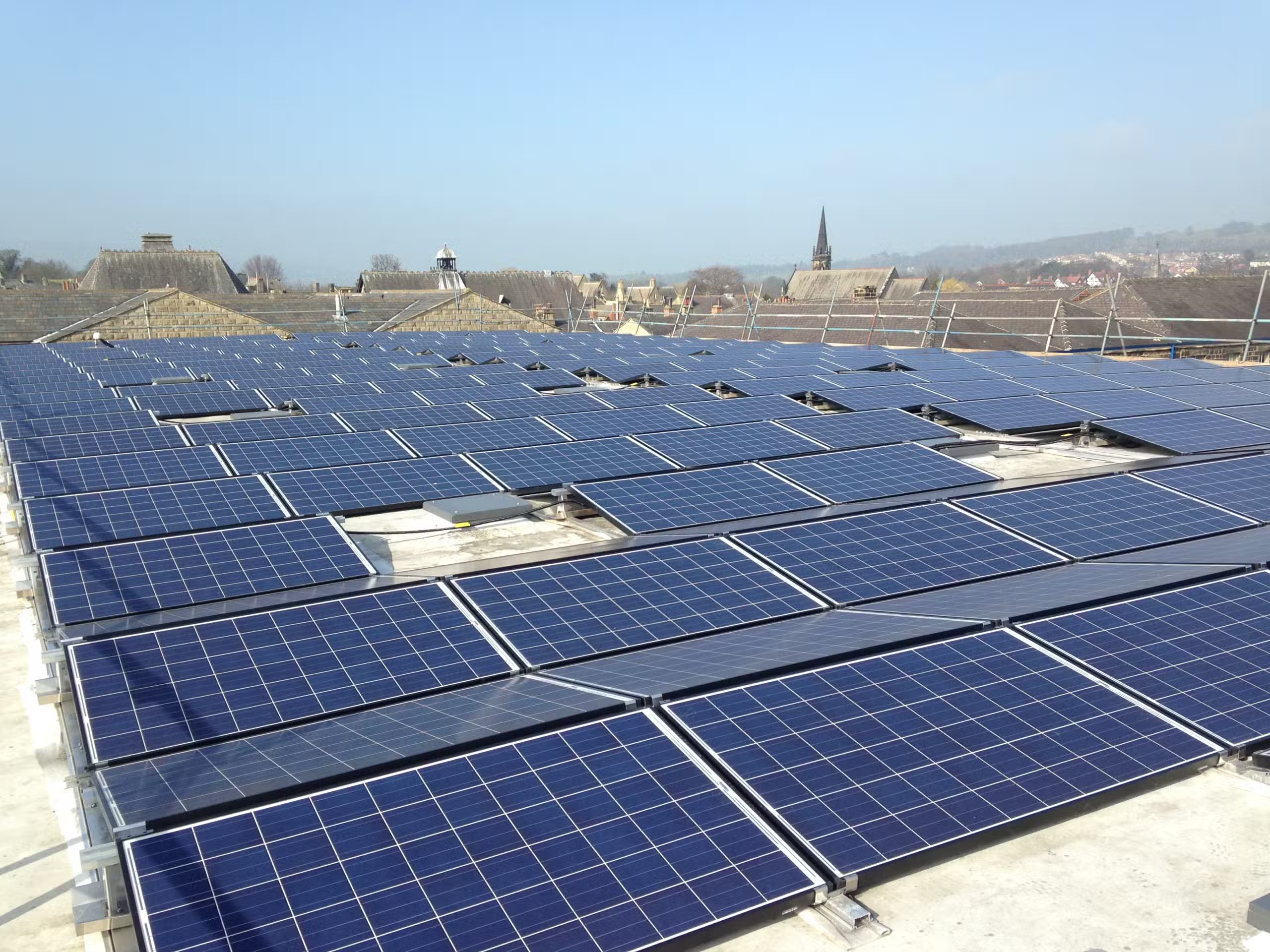
Solar photovoltaic (PV) technology converts sunlight directly into electricity using semiconductor materials—typically silicon cells arranged in panels. When photons from sunlight strike these cells, they knock electrons loose, creating an electrical current that can power homes, businesses, and feed into the national grid.
Solar PV in the UK Context
Despite perceptions of limited sunshine, the UK climate is well-suited to solar generation. Modern panels work effectively in diffuse light conditions, and cooler temperatures actually improve efficiency compared to hotter climates. The UK receives sufficient solar irradiation to generate between 850-1,100 kWh per kWp of installed capacity annually—enough to make solar financially viable and environmentally meaningful.
Technology has improved dramatically, making solar power net zero UK's most accessible renewable option. Decarbonisation with solar PV is now a proven strategy, combined with rapid deployment capability that makes solar a cornerstone of UK climate policy. Understanding the differences between solar panel types helps in selecting the right technology.
How Solar PV Contributes to Net Zero
Solar PV delivers carbon reductions through several mechanisms, making the solar PV contribution to net zero substantial rather than merely symbolic. Understanding how solar PV carbon reduction works helps quantify its genuine environmental impact.
Direct Carbon Emission Reductions
Solar PV carbon reduction begins immediately upon installation. Solar panels generate zero emissions during operation, and every kilowatt-hour of solar electricity displaces power that would otherwise come from the grid—which, despite increasing renewable share, still includes gas-fired generation. A typical 4kW domestic system saves approximately 1.5-2 tonnes of CO2 annually, while commercial installations deliver proportionally greater benefits.
Lifecycle Emissions and Energy Payback
Critics sometimes question whether manufacturing emissions undermine solar's climate benefits. The evidence firmly refutes this concern:
- Energy payback period: 1-3 years (panels operate for 25-30+ years)
- Carbon payback: Typically 1-2 years in UK conditions
- Lifecycle emissions: Approximately 20-50g CO2/kWh (compared to 400-500g for gas generation)
Over their operational lifetime, solar panels produce significantly more clean energy than was used in their manufacture, transport, and installation. The solar power carbon footprint is remarkably low compared to fossil fuel alternatives, and as manufacturing becomes greener and panel efficiency improves, this ratio continues to improve. Learn more about how long solar panels last to understand their long-term value.
Solar PV Deployment in the UK Today
The UK net zero solar energy sector has experienced remarkable growth, with 2025 marking a record year for installations. Understanding current deployment helps contextualise how solar PV net zero targets are being achieved across the country.
Current Installed Capacity
Total UK solar capacity reached 21.6 GW at the end of 2025—a 13.6% increase on the previous year. This capacity comprises:
- Large-scale solar farms: Approximately 58% of total capacity, including the 373 MW Cleve Hill plant
- Commercial rooftop: Warehouses, factories, offices, and retail premises
- Residential installations: Around 31% of capacity across individual homes
The 2.6 GW added in 2025 represents the strongest deployment since 2015, driven by both utility-scale projects and a record 262,000 rooftop installations. This demonstrates growing recognition of solar's value across all sectors.
Growth Trajectory and Future Targets
Government targets call for tripling solar capacity to approximately 60 GW by 2030 and reaching 70 GW by 2035. Achieving this requires installing roughly 5 GW annually—an acceleration from current rates but entirely feasible given industry capacity and technological improvements.
Contribute to the UK's Net Zero Goals
Whether you're a homeowner reducing your carbon footprint or a business meeting sustainability targets, solar PV offers immediate, measurable environmental benefits
Get Your Free Quote Speak to Our TeamSolar PV for Homes and Buildings
Buildings account for a significant portion of UK emissions through heating, electricity use, and embodied carbon. Solar PV addresses the electricity component directly while supporting wider electrification of heat and transport.
Residential Solar PV
Domestic solar installations enable homeowners to generate clean electricity and contribute to national decarbonisation. A typical household can offset 70-100% of electricity consumption depending on system size and usage patterns. The key benefits of solar panels extend beyond environmental impact to include energy security and reduced grid dependence.
With panels operating effectively for 25-30+ years, domestic solar provides decades of clean electricity generation. Our homeowner's guide to solar panels provides comprehensive information for those considering installation.
Commercial and Public Sector Solar
Commercial buildings with large roof areas and daytime electricity demand are particularly well-suited to solar PV. Warehouses, factories, schools, hospitals, and offices can achieve significant electricity self-sufficiency while demonstrating environmental leadership.
For businesses with net zero commitments, on-site solar provides Scope 2 emission reductions that directly improve carbon reporting. Unlike purchasing green tariffs or offsets, solar generation represents genuine, additional renewable capacity. Explore our commercial solar installation services for UK businesses.
Net Zero Buildings and Future Standards
The Future Homes Standard (being finalised in 2025 for implementation from 2027) will require new homes in England to be "zero-carbon ready," with solar panels for net zero buildings effectively mandatory on new builds. This regulatory direction confirms solar's central role in achieving decarbonisation across the building stock. Property developers can learn more about solar solutions for new developments.
Can Solar PV Alone Deliver Net Zero?
While solar PV is essential to the net zero transition, it cannot deliver decarbonisation single-handedly. Solar PV climate change UK solutions work best as part of a broader energy system, and understanding solar's limitations helps set realistic expectations.
Intermittency and Seasonal Variation
Solar generation varies with weather and seasons. UK solar output peaks in summer (producing 40-45% of annual generation between June and August) while winter months contribute just 5-10%. Daily generation depends on cloud cover, with overcast conditions reducing output to 10-25% of peak capacity.
This intermittency means solar cannot provide guaranteed, on-demand power without storage or grid backup. However, the UK's climate creates natural complementarity: windy days tend to be cloudier, while sunny days are typically less windy—meaning wind and solar together provide more consistent combined output than either alone.
Space Constraints
Scaling solar to meet the 70 GW target requires significant land and roof area. While rooftop solar exploits existing surfaces with minimal land-use impact, utility-scale solar farms compete with agriculture and other uses. Thoughtful planning balances solar deployment with food production and biodiversity—including agrivoltaics (combining solar with farming) and prioritising brownfield sites.
Grid Integration Challenges
Connecting large amounts of distributed generation creates challenges for electricity networks designed around centralised power stations. Grid capacity constraints can limit solar export in some areas, and network upgrades are essential for accommodating planned growth. These infrastructure investments are underway but add complexity to rapid deployment.
A Balanced Perspective
Solar PV is a cornerstone technology, not a silver bullet. Its limitations are real but manageable through complementary technologies, storage, and grid modernisation. The question isn't whether solar can deliver net zero alone—it's how solar fits within the broader clean energy system the UK is building.
Technologies That Complement Solar PV
Net zero requires a portfolio of solutions working together. Solar PV's effectiveness increases substantially when combined with other technologies that address its intermittency and extend its benefits.
Battery Energy Storage
Battery storage transforms solar from an intermittent resource into a flexible energy source. Domestic batteries increase self-consumption from typical 30% to 70-80%, storing daytime surplus for evening use. Grid-scale batteries smooth supply fluctuations and provide services that help balance the electricity system.
The UK battery storage market is expanding rapidly, with government targets to double capacity by 2030. For solar installations, integrating storage maximises both financial returns and carbon benefits by reducing grid dependency. Learn more about the benefits of solar battery storage or explore our commercial battery storage solutions.
Wind Power and Renewable Mix
Wind provides the UK's other major renewable electricity source, with offshore wind particularly prominent. The complementary generation patterns of wind and solar mean just 2% of days experience both low wind and low solar output simultaneously. A balanced renewable mix, supported by storage and flexible demand, creates a reliable clean power system.
Heat Pumps and Electrification
Decarbonising heat—responsible for around 37% of UK emissions—requires shifting from gas boilers to electric heat pumps. Solar PV supports this transition by providing clean electricity to power heat pumps, particularly during summer when heating demand is lower but solar generation peaks. The combination of solar, batteries, and heat pumps creates highly efficient, low-carbon homes.
Policy, Regulation, and Incentives
Government policy significantly influences solar deployment rates and investment attractiveness. Understanding the regulatory landscape helps businesses and homeowners navigate available support.
UK Solar and Net Zero Policies
The 2024 Solar Roadmap confirmed government commitment to tripling solar capacity, identifying 62 actions to accelerate deployment. Key policy drivers include:
- Contracts for Difference (CfD): Government-backed support mechanism for utility-scale renewable projects
- Smart Export Guarantee (SEG): Requiring energy suppliers to accept exported solar electricity
- Planning reforms: Streamlined approvals for large-scale solar projects
- Building regulations: Future Homes Standard requiring solar on new builds
- Warm Homes Plan: Government support for domestic solar and battery installation
Available Support and Incentives
Various government incentives support solar investment:
- Smart Export Guarantee (SEG): Payments for exported electricity to the grid
- VAT reduction: 0% VAT on residential solar and battery installations
- Business rates: Exemptions for certain commercial installations
- Capital allowances: Tax relief for business investments in qualifying equipment
Our funding solutions guide details available options for businesses, while the homeowner incentives page covers domestic support.
Solar PV's Role for Businesses and Industry
Commercial and industrial solar installations deliver multiple solar PV sustainability benefits beyond direct carbon reduction, making them increasingly central to corporate environmental strategies.
Corporate Net Zero Commitments
Many UK businesses have committed to net zero targets, often more ambitious than national goals. On-site solar provides verifiable Scope 2 emission reductions that directly improve carbon reporting and ESG performance. Unlike purchasing renewable energy certificates alone, self-generation represents genuine additional clean capacity.
Sectors with large roof areas and consistent electricity demand—warehouses, manufacturing, retail, offices—are particularly well-positioned for solar investment. Our commercial solar services support businesses across these sectors.
Energy Independence and Resilience
Solar provides greater energy independence, reducing reliance on grid electricity. Once installed, systems generate clean power for 25+ years with minimal maintenance. This energy security supports business continuity and operational planning.
Businesses evaluating solar should consider our guide to smart solar investment for detailed information.
| Sector | Typical System Size | Annual CO2 Savings | Self-Consumption Rate |
|---|---|---|---|
| Warehouse/Logistics | 100-500 kW | 40-200 tonnes | 60-80% |
| Manufacturing | 50-300 kW | 20-120 tonnes | 70-90% |
| Office Buildings | 30-150 kW | 12-60 tonnes | 50-70% |
| Retail | 50-200 kW | 20-80 tonnes | 60-80% |
| Schools/Public Sector | 30-100 kW | 12-40 tonnes | 40-60% |
← Scroll horizontally to view full table →
Real-World Impact: Case Studies
Practical examples demonstrate solar PV's genuine contribution to decarbonisation across different property types and scales.
Commercial Solar Installations
Linear Insulation's 67 kW installation in Nottingham generates approximately 55,500 kWh annually, cutting emissions by approximately 22 tonnes of CO2 per year. The project demonstrates how commercial solar delivers meaningful environmental impact whilst reducing grid dependence.
Similarly, Elsoms Seeds' 177 kW array in Spalding generates 165,000 kWh annually—covering approximately 15% of their substantial electricity consumption while reducing reliance on grid power. The company described it as "one of the best investments the company has made in its 180-year history."
View more examples in our case studies section.
Residential Installations
The Liley family in Papplewick installed an 11.65 kW system with 20 kWh battery storage to support their air source heat pump and two electric vehicles. The system covers 73% of their substantial 12,000 kWh annual consumption, significantly reducing grid dependence and providing whole-house backup power.
These examples illustrate how properly designed solar systems deliver meaningful carbon reductions across different contexts—contributing directly to the UK's net zero trajectory.
The Future of Solar PV in a Net Zero UK
The solar PV future UK is bright, with continued technological advancement and policy support positioning solar for significant expansion in the coming decades.
Technological Advancements
Ongoing improvements in panel efficiency, durability, and manufacturing processes will further improve solar's economics and environmental performance:
- Higher efficiency panels: Premium modules now exceed 22% efficiency, with laboratory cells reaching 29%+
- Bifacial technology: Panels capturing reflected light from both sides for 5-15% additional output
- Lower degradation rates: Modern panels maintain 88-90% output after 25 years
- Building-integrated PV: Solar tiles and façades expanding deployment opportunities
Our next-generation solar technology page details emerging innovations.
Smart Grids and Flexibility
Digitalisation of the electricity system enables more sophisticated integration of variable renewables. Smart inverters, demand-side response, and time-of-use tariffs allow solar generation to be optimised within the broader energy system—maximising value and minimising grid strain.
Common Myths About Solar PV and Net Zero
Myth: "Solar Doesn't Work in the UK"
Reality: The UK received enough sunshine to generate a record 18,314 GWh of solar electricity in 2025—6.3% of national electricity supply. Modern panels work effectively in diffuse light, and cooler UK temperatures actually improve efficiency compared to hotter climates. Germany, with similar solar irradiation to the UK, has the most installed solar capacity in Europe.
Myth: "Solar Has Too High a Carbon Footprint"
Reality: Solar panels achieve carbon payback within 1-2 years and then generate clean electricity for 25-30+ years. Lifecycle emissions are approximately 20-50g CO2/kWh—around 10 times lower than gas generation. As manufacturing decarbonises, this ratio improves further.
Myth: "Net Zero Means 100% Renewables Overnight"
Reality: Net zero is a 2050 target with interim milestones allowing gradual transition. The 68% reduction target for 2030 is achievable with current technology deployment rates. Solar's contribution grows progressively as capacity expands and complements other clean technologies.
Frequently Asked Questions
Conclusion: Solar PV as a Net Zero Pathway
Can solar PV pave the way to net zero? The evidence confirms that solar is not merely helpful but essential to the UK's decarbonisation journey. While it cannot achieve net zero alone, solar PV provides:
- Immediate carbon reductions: Zero-emission generation displacing fossil fuels from day one
- Proven scalability: Record deployment in 2025 demonstrates capacity for rapid expansion
- Accessibility: Available to homes, businesses, and utility-scale developers
- Complementarity: Works with wind, storage, and electrification for reliable clean power
- Long-term reliability: Panels operate effectively for 25-30+ years with minimal maintenance
The UK's 2050 net zero target is "within reach" according to the Climate Change Committee—but achieving it requires sustained deployment of proven technologies including solar PV. Every installation, whether a 4kW domestic system or a 400 MW solar farm, contributes to this collective effort.
At Spectrum Energy Systems, we've supported the net zero transition since 2011, helping homes and businesses across the East Midlands generate clean electricity and reduce their carbon footprints. Our MCS-accredited team designs systems optimised for UK conditions, ensuring maximum contribution to both individual sustainability goals and national climate targets.
Start Your Net Zero Journey
Whether you're a homeowner, business owner, or property developer, solar PV offers a practical pathway to meaningful carbon reduction. Request your free assessment today.
Get Your Free Quote About Our TeamAbout Spectrum Energy Systems: Established in 2011, we're MCS-accredited solar installers serving Nottinghamshire, Derbyshire, Leicestershire, Lincolnshire, and the wider East Midlands. With over 10MW of solar capacity connected, our experienced team delivers commercial and domestic installations designed for maximum performance and long-term value. View our case studies or explore our ultimate guide to solar PV installation.