
Black vs Blue Solar Panels: What's the Difference?
When comparing solar panels, colour is more than just aesthetics—it reveals the underlying technology that affects efficiency, cost, and long-term performance. Black panels use monocrystalline silicon whilst blue panels use polycrystalline silicon, with each offering distinct advantages for UK properties.
What's in This Guide

If you're researching how to choose the right solar panel for your home or business, understanding the difference between black and blue panels is essential. At Spectrum Energy Systems, established in 2011, we've installed hundreds of systems across the East Midlands and can help you navigate these technology choices.
This guide provides a clear, unbiased comparison of black (monocrystalline) and blue (polycrystalline) solar panels, covering efficiency, cost, durability, and appearance to help you make an informed decision.
Need Expert Advice on Solar Panel Selection?
Our MCS-accredited engineers provide tailored recommendations based on your property and energy needs
Get Your Free Quote Speak to Our TeamOverview of Black and Blue Solar Panels
What Are Black Solar Panels?
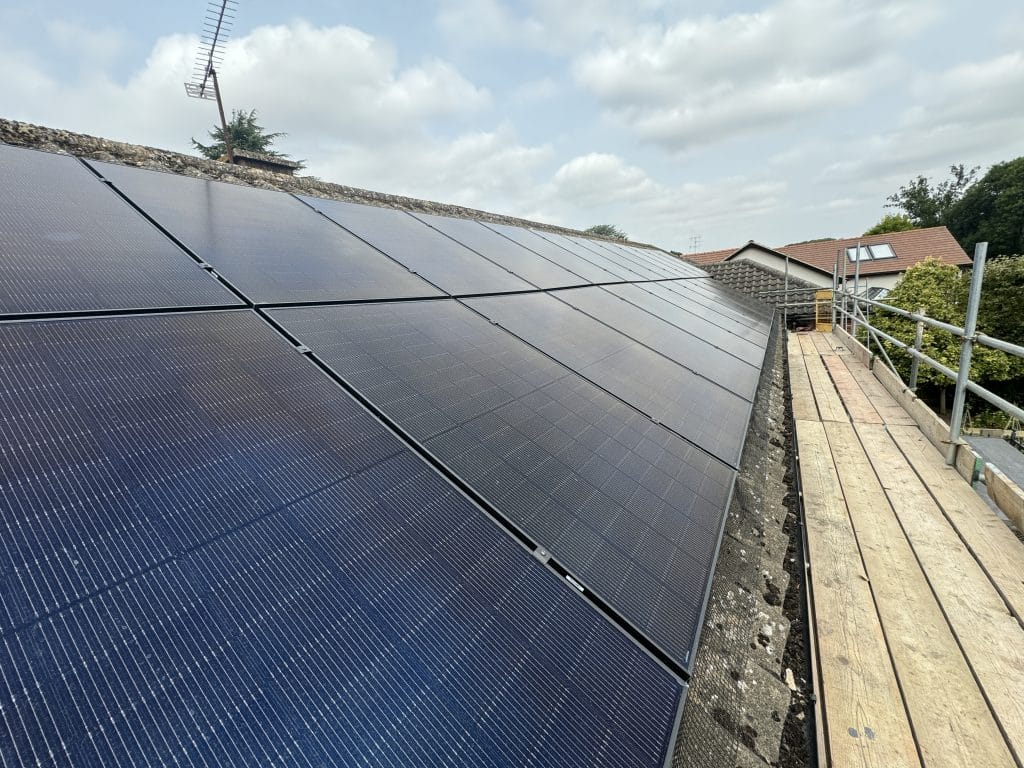
Black solar panels are made from monocrystalline silicon—single, pure silicon crystals grown using the Czochralski process. The uniform crystal structure absorbs light efficiently, giving these panels their distinctive dark black appearance with a sleek, consistent finish.
Modern black panels typically achieve efficiency ratings between 19% and 23%, making them the preferred choice for domestic solar installations where maximising output from limited roof space matters.
What Are Blue Solar Panels?
Blue solar panels use polycrystalline silicon, created by melting multiple silicon fragments together and allowing them to cool in moulds. The resulting multiple crystal structures reflect light at different angles, producing the characteristic blue, speckled appearance.
Polycrystalline panels historically achieved efficiency ratings between 15% and 18%, offering a budget-friendly option for larger installations with ample roof space.
Important Market Update
As of 2024, polycrystalline (blue) solar panels are no longer manufactured by major producers. According to the International Energy Agency, monocrystalline technology now accounts for approximately 98% of global solar cell production. This guide remains valuable for understanding existing blue panel installations and why black panels became the industry standard.
How They Are Made
Manufacturing Process
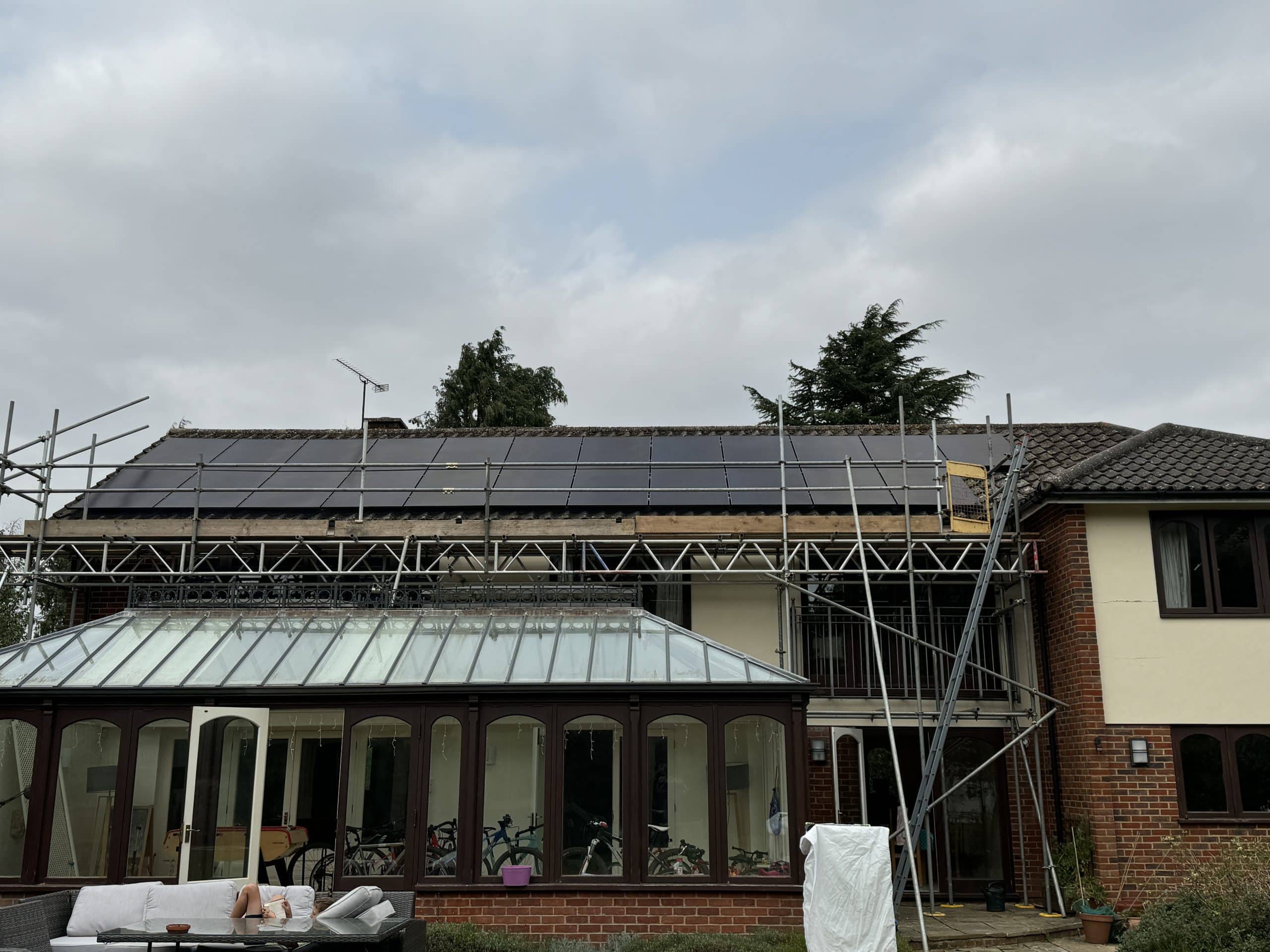
Black panels (monocrystalline): Silicon is melted and slowly drawn into cylindrical ingots using seed crystals. These ingots are sliced into thin wafers, creating cells with a perfectly uniform crystal lattice. The single-crystal structure allows electrons to flow freely, maximising energy conversion.
Blue panels (polycrystalline): Molten silicon is poured into square moulds and cooled. This simpler process creates cells containing many small crystals with visible boundaries. Whilst more cost-effective to produce, the crystal boundaries slightly impede electron movement, reducing overall efficiency.
Material Differences
Both technologies use silicon as their semiconductor material, but the purity and structure differ significantly. Monocrystalline cells require higher-grade silicon and more energy-intensive manufacturing, historically making them more expensive. However, manufacturing advances have largely eliminated this cost gap, contributing to polycrystalline's market decline.
Efficiency Comparison
Understanding how efficient solar panels are helps you estimate energy generation and financial returns.
Why Black Panels Are Usually More Efficient
Black monocrystalline panels achieve higher efficiency because their uniform crystal structure provides an unobstructed path for electron movement. This translates to more electricity generated from the same amount of sunlight.
| Feature | Black (Monocrystalline) | Blue (Polycrystalline) |
|---|---|---|
| Typical Efficiency | 19-23% | 15-18% |
| Annual Output (4kW system) | 3,600-4,000 kWh | 3,200-3,600 kWh |
| Space Required (4kW) | ~18-20m² | ~22-25m² |
| Low-Light Performance | Superior | Good |
Performance in Low-Light Conditions
Black panels perform notably better in the UK's frequently overcast conditions. Their superior low-light performance means they maintain reasonable output even on cloudy days, typically generating 10-25% of rated capacity in diffuse light. This advantage proves particularly valuable across the East Midlands, where we install systems in Nottingham, Derby, Leicester, and Lincoln.
Cost Comparison
Price Range of Black vs Blue Panels
Historically, blue polycrystalline panels cost 10-20% less than black monocrystalline alternatives. However, manufacturing improvements and economies of scale have made this distinction largely irrelevant for new installations.
Current Pricing Reality
With polycrystalline production discontinued, price comparisons are no longer meaningful for new purchases. Modern monocrystalline panels offer excellent value, with complete domestic systems typically ranging from £5,000-£8,000 for 3-4kW installations. Explore solar incentives for UK homeowners to improve returns further.
Cost-to-Efficiency Ratio
When polycrystalline panels were available, they offered a lower cost per panel but higher cost per kWh generated over their lifetime due to reduced efficiency. Black panels' higher output typically delivered better long-term value, especially for space-constrained properties.
Aesthetic Differences
Appearance and Design
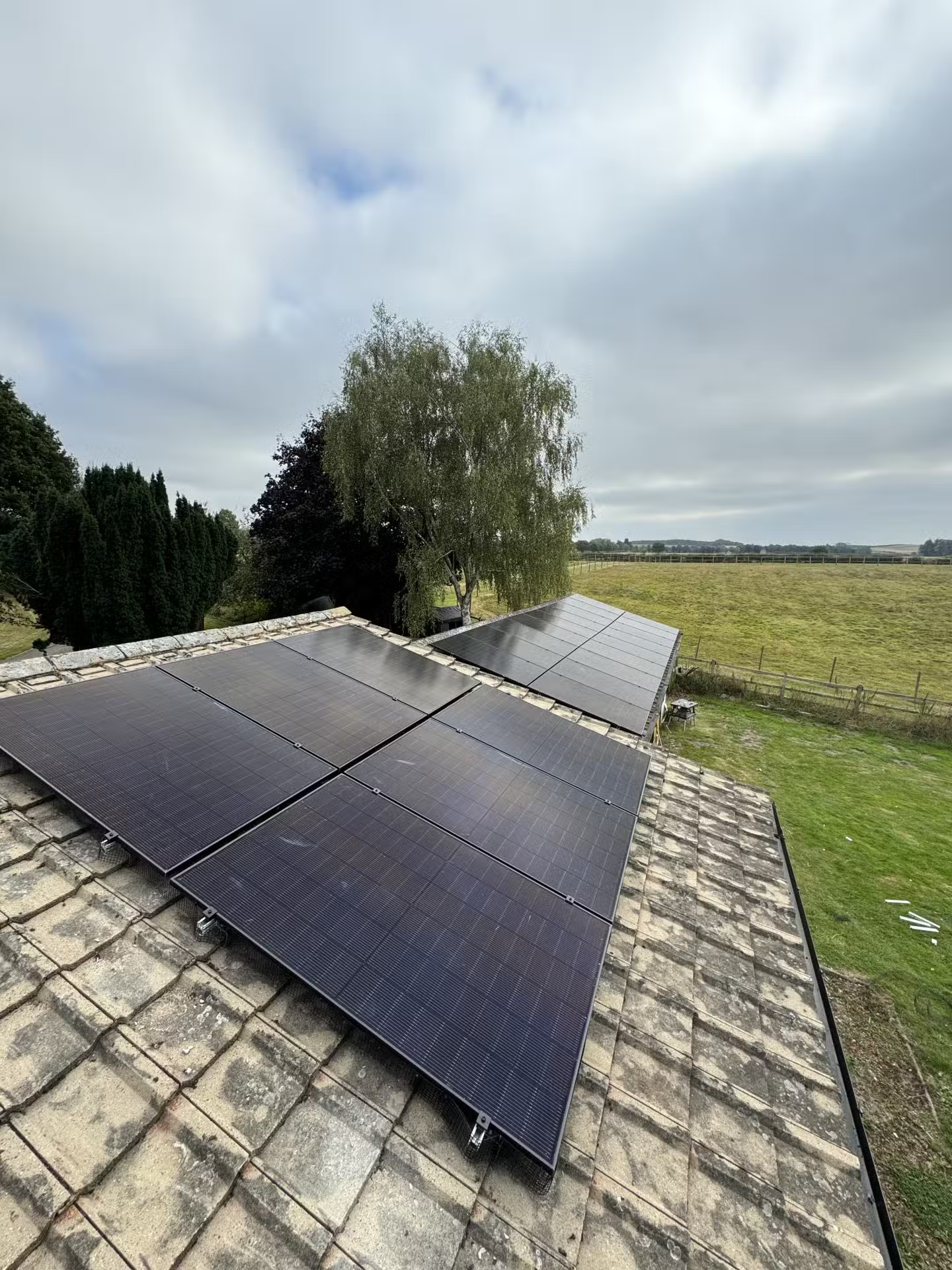
Black panels: Uniform dark appearance with a sleek, modern finish. The consistent colour integrates seamlessly with darker roof tiles and contemporary architecture. Many homeowners prefer this subtle, sophisticated look.
Blue panels: Distinctive blue colour with a speckled, fragmented pattern caused by light reflecting off multiple crystal boundaries. Some find this appearance less visually appealing, particularly on traditional UK properties.
Which Panels Look Better on Rooftops?
Aesthetic preference is subjective, but surveys consistently show homeowners prefer black panels' understated appearance. For properties in conservation areas or where visual impact matters, black panels typically gain easier planning approval. Our expert installation services include design consultations to ensure your system complements your property's appearance.
Durability and Lifespan
Heat Tolerance
Both panel types lose efficiency as temperatures rise, but their response differs. Black panels have better temperature coefficients (typically -0.3% to -0.4% per °C above 25°C) compared to blue panels (-0.4% to -0.5% per °C). Despite absorbing more heat due to their darker colour, black panels maintain efficiency better during UK summer conditions.
Weather Performance
Both technologies handle UK weather conditions effectively. Quality panels from either type withstand:
- Heavy rain and hail
- Wind loads up to 2,400 Pa
- Snow accumulation
- Temperature cycling from frost to summer heat
Regular solar panel cleaning and maintenance helps both types perform optimally throughout their lifespan.
Real-World Lifespan
Quality black panels typically last 25-30+ years with degradation rates of 0.3-0.5% annually. Blue panels offer similar longevity (25-30 years) but degrade slightly faster at 0.5-0.8% per year. After 25 years, black panels typically retain 85-90% of original output versus 80-85% for blue panels. Learn more about how long solar panels last in the UK.
Pros and Cons
✓ Black Panel Advantages
- Higher efficiency (19-23%)
- Better low-light performance
- Sleek, uniform appearance
- Superior temperature coefficients
- Lower degradation rates
- Extended warranties (25-30 years)
- Industry standard for 2025
✗ Black Panel Disadvantages
- Historically higher cost (now comparable)
- Absorb more heat
- May show dust/debris more visibly
✓ Blue Panel Advantages
- Lower historical cost
- Good performance in bright conditions
- Proven technology
- Square cells minimise waste
✗ Blue Panel Disadvantages
- Lower efficiency (15-18%)
- Requires more roof space
- No longer manufactured
- Higher degradation rates
- Less attractive appearance
Which One Should You Choose?
Best Option for Homeowners
For new home solar installations, black monocrystalline panels are the clear choice—they're the only option available from major manufacturers and offer superior efficiency, aesthetics, and longevity. If you have existing blue panels, they'll continue performing effectively throughout their design life.
Best for Budget Buyers
Whilst blue panels historically offered budget savings, modern monocrystalline panel pricing has become highly competitive. Focus on system sizing and funding solutions rather than panel colour to optimise your budget.
Best for Efficiency-Focused Users
Black monocrystalline panels maximise energy generation from limited roof space—essential for properties with shading, multiple orientations, or aesthetic constraints. Pair with the right inverter technology and battery storage to optimise self-consumption.
Expert Recommendation
For all new installations in 2025, we recommend modern monocrystalline panels from tier-one manufacturers. Combined with professional design from MCS-accredited installers like Spectrum Energy Systems, these deliver optimal performance, reliability, and long-term value for UK properties.
Frequently Asked Questions
Conclusion
The black vs blue solar panel debate has been largely settled by market forces—monocrystalline (black) panels have become the universal standard due to superior efficiency, improved aesthetics, and competitive pricing following manufacturing advances.
For UK homeowners and businesses planning new solar installations, black monocrystalline panels offer the best combination of performance, longevity, and value. Those with existing blue polycrystalline systems can rest assured their panels will continue generating clean energy effectively throughout their 25-30 year lifespan.
The key factors for any solar investment now focus on system sizing, component quality, installation expertise, and integrations like battery storage and EV charging—rather than panel colour.
Ready to Start Your Solar Journey?
Our MCS-accredited team has been installing solar systems across the East Midlands since 2011. Get expert advice on the right panels for your property.
Get Your Free Quote View Our ProjectsAbout Spectrum Energy Systems: Established in 2011, we're MCS-accredited solar installers serving Nottingham, Derby, Leicester, Lincoln and the wider East Midlands. From initial design through to ongoing maintenance services, we deliver complete solar solutions for homes and businesses. Explore our technical articles or read the ultimate guide to installing solar PV.