
Can You Add a Battery If You're on the Feed-in Tariff?
Yes. Ofgem says a battery can be added to a Feed-in Tariff (FIT) system without affecting its accreditation, and your FIT payments carry on as long as your generation meter still records only what your panels generate (and, if your export is metered, your meters can still separate FIT export). In practice that means wiring the battery so electricity it takes from the grid never counts as solar generation. Deemed export payments can continue too. You must tell your FIT supplier about the battery, and your installer notifies the network operator.
In This Guide
Why FIT owners worry about adding a battery
Ofgem estimates around 3% of households in Great Britain have solar panels on the FIT, and for many of them that income is the reason they bought the panels. So when a FIT household asks us about a battery, the first worry is nearly always the same: will I lose my FIT? Adding storage to a FIT system is a job we do a lot, and the payments carry on when it is wired correctly.
The worry is fair, because there is a wrong way to do it. FIT pays you for what your panels generate, measured by a meter. Put a battery in the wrong place and that meter can count electricity your panels never made. Getting that right is the installer's job, not yours.
What FIT actually pays for
A FIT system earns two separate payments from your FIT supplier (Ofgem's term is your FIT licensee: the energy company that sends your FIT statements, which may not be the company that supplies your electricity):
- The generation tariffA rate for every kWh your panels generate, read from your generation meter. Estimates are not allowed, so the meter reading is everything.
- The export tariffA rate for electricity sent to the grid. On most home systems of 30kW or less this is not measured: it is deemed, and for solar it is paid on 50% of your generation meter reading.
If your export is deemed, neither payment depends on how much of your solar you use in the house. That is why a battery suits a FIT system so well: it keeps more of your daytime electricity at home without touching what FIT pays you for.
The one rule: the generation meter only counts your panels
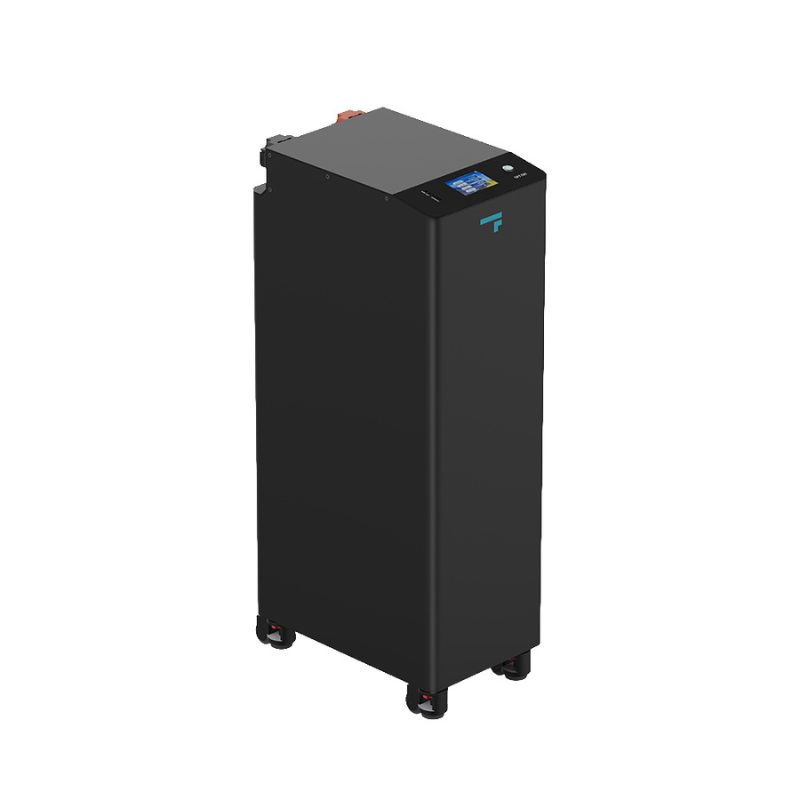
Ofgem's storage guidance says generation payments can be made when your FIT supplier is satisfied the generation meter measures only electricity generated by your FIT panels. It singles out batteries that can charge from the grid and sit before the generation meter as the case to watch.
A battery charged overnight from the grid and emptied in the evening could push that grid electricity through your generation meter, where it would look like solar generation. Electricity imported from the grid is not eligible for FIT, and Ofgem's example of a battery wired that way with ordinary meters gets no generation payments at all.
So every FIT battery job comes down to one design question: where does the battery sit relative to the generation meter, and what can that meter see?
Two ways we fit a battery to a FIT system
Route 1: a battery with its own inverter, after the generation meter
This is usually called AC coupling. The battery gets its own inverter, connected on the house side of your generation meter. Your panels, your old inverter and your FIT meter stay exactly as they are. Ofgem's guidance covers this set-up directly: the battery can charge from the grid, and generation and deemed export payments can both still be made. Our AC vs DC coupled guide explains the wiring difference.
Route 2: a new hybrid inverter running panels and battery together
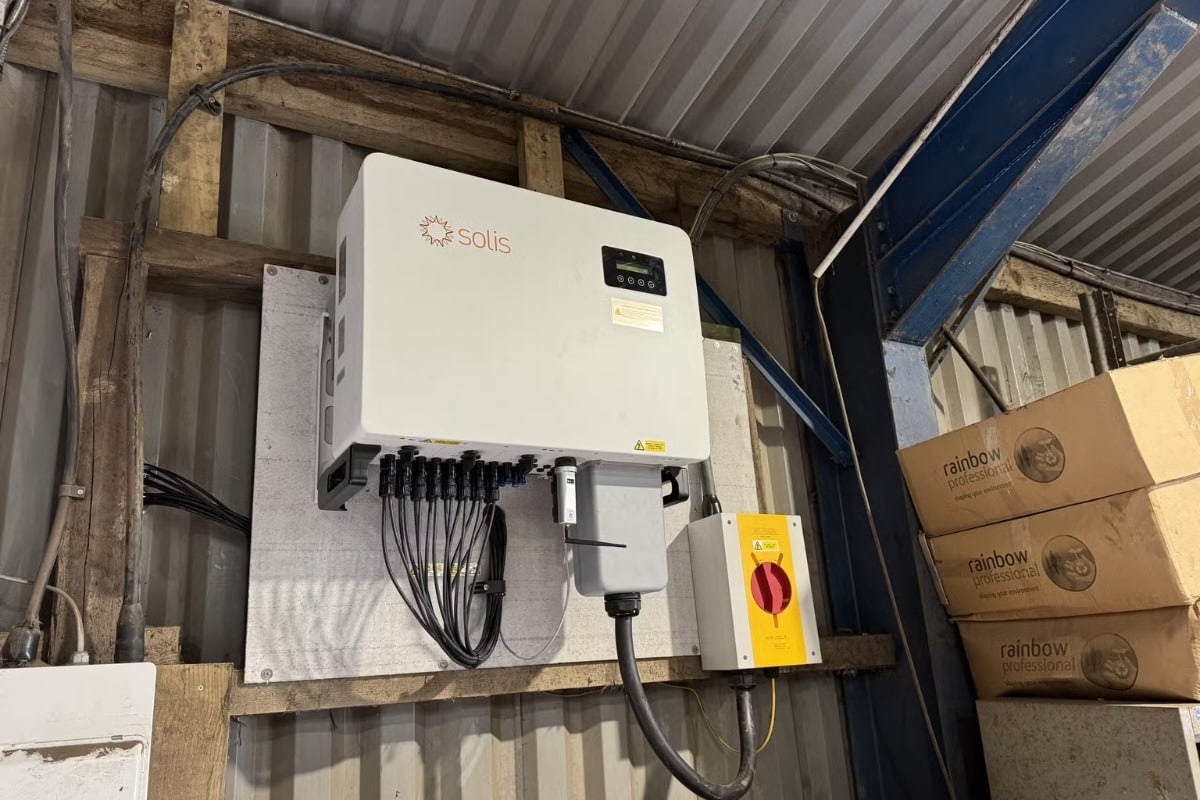
If your old inverter is tired, we replace it with a Solis hybrid that runs the panels and the battery. The battery now sits before the generation meter, so Ofgem needs one of two things: either the battery is set so it cannot charge from the grid, or the generation meter is an approved bi-directional meter that works out a net figure for your panels alone. On a hybrid swap we supply and fit an approved bi-directional generation meter as part of the price, so you are not left chasing your energy company for it. Ofgem works out your FIT capacity from your panels, not your inverter, so the new inverter can be bigger than the old one; the panels stay the same, because adding panels changes your FIT installation.
A separate battery inverter suits you if
- Your inverter is working and has years left in it
- You want the FIT system physically untouched
- You plan to charge a big battery from a cheap overnight rate
A hybrid swap suits you if
- Your inverter is old, faulty or out of warranty
- You would rather have one inverter running everything
- You accept a slightly lower recorded generation (see below)
The hybrid route has one trade-off. A bi-directional generation meter records the difference between what goes out and what comes in each month, so the energy a battery loses when it charges and discharges comes off your recorded generation. Ofgem says FIT payments in this set-up are likely to be reduced, and a month where the net figure falls to zero or below pays nothing. With a separate battery inverter after the generation meter, those losses never touch your FIT reading. When we quote, we tell you which route suits your inverter and how you plan to use the battery.
If your inverter needs replacing anyway, our inverter replacement service covers FIT systems too.
Deemed export and smart meters
If your FIT export is deemed, adding a battery does not change it. Ofgem's guidance says deemed export payments can be made wherever the generation meter measures only your FIT generation, and that this remains the case with a battery. Your export payment is still worked out as 50% of your generation reading, however much of your solar the battery keeps in the house.
The thing that can change deemed export is a meter that measures export. Ofgem's guidance says that once an export meter is commissioned on a system of 30kW or less, export can normally no longer be deemed, although its guidance for suppliers allows deemed export to continue where a battery means FIT export cannot be separated out. If you have a smart meter, or are getting one, ask your FIT supplier how they will treat your export before the battery goes in.
Who you need to tell
- Your FIT supplierThis one is yours, and it is required. Ofgem says co-locating storage must be reported to your FIT licensee, usually with an updated wiring diagram, the battery details, its commissioning date and meter readings. We give you the paperwork they ask for.
- Your network operatorA battery adds equipment that can export to the grid, so it needs a G98 notification or a G99 application depending on the combined size. We handle it on every job; our G99 guide explains the thresholds.
- Your home insurerWorth a call so the battery is on your policy.
Getting a battery quote for a FIT system
We design and price the battery from your details first and survey once you have accepted the quote; every price is subject to that survey. Retrofitted batteries also carry 0% VAT on homes until 31 March 2027 under HMRC's energy-saving materials relief. For what storage is likely to cost, see our solar battery prices guide.
What to have ready
- Your system size in kWp and the year it went in (your FIT paperwork has both)
- The make and model of your inverter: a photo of its label is quickest
- Photos of your meters and fuse board, and the spot you have in mind for the battery
- Your annual electricity use in kWh and your unit rate, plus the off-peak rate if you have one
On the Feed-in Tariff and want a battery?
Tell us about your system on our property form: choose battery storage, tell us your panels are on the Feed-in Tariff and add your inverter details. We design the battery around your FIT meter and email a full quote, normally within 2 to 4 days.
Get a FIT battery quoteFrequently asked questions
Will I lose my Feed-in Tariff if I add a battery?
No. Ofgem says a battery can be added without affecting your FIT accreditation. Payments continue as long as your generation meter still records only what your panels generate, and your export meter can still separate FIT export if your export is metered. That is how a correctly wired battery is installed. The risk comes from a battery that can push grid electricity through an ordinary FIT generation meter.
Can I charge my battery from the grid on cheap overnight electricity?
Yes. Ofgem's guidance allows grid charging when the battery sits after the generation meter, or before it with an approved bi-directional generation meter. With the second set-up, battery losses come off your recorded generation, so a battery on its own inverter is often the better choice for heavy overnight charging.
Does a battery reduce my FIT export payment?
Not if your export is deemed. Deemed export is 50% of your generation meter reading, and Ofgem says it can continue with a battery as long as that meter records only your FIT generation. If your export is metered, it is different: a battery that can charge from the grid can stop FIT export payments unless the meters can separate them, and your supplier may move you back to deemed export. Ask your FIT supplier before the battery goes in.
Can I make my inverter bigger when I add the battery?
Usually, yes. Ofgem works out your FIT capacity from your panels, not your inverter, so a larger hybrid inverter does not change it, and it fills a big battery faster from a cheap overnight rate. What changes your FIT installation is adding panels or swapping them for higher-wattage ones.
Do I need to tell my FIT supplier I have added a battery?
Yes. Your Statement of FIT Terms requires you to tell your FIT licensee when storage is connected, normally with an updated wiring diagram, the battery details and meter readings. A supplier that cannot see a compliant set-up can suspend payments until it is put right, so do it as soon as the battery is commissioned.
Is a separate battery inverter always the safest choice on FIT?
It is the simplest, because the FIT system is not touched and battery losses never reach your FIT reading. A hybrid swap is compliant too when the battery cannot charge from the grid or the generation meter is an approved bi-directional one, and it makes sense when your old inverter is near the end of its life.
Sources: Ofgem, Feed-in Tariffs guidance for generators (version 19, April 2026) Ofgem's FIT guidance for licensed electricity suppliers (version 18, April 2026) and Ofgem's guidance on co-location of electricity storage under the FIT scheme (version 6.2, May 2025); Ofgem FIT annual report, scheme year 15; HMRC VAT Notice 708/6.
Related reading
- Adding a battery to an existing solar system
- How battery time-shifting works
- Inverter replacement on Feed-in Tariff systems
Batteries on FIT systems across the East Midlands
We are Spectrum Energy Systems, MCS certified (NIC200223), fitting solar and batteries across Nottinghamshire, Derbyshire, Leicestershire and Lincolnshire since 2011 with our own crews and a 5-year workmanship guarantee. Call 0115 773 7575, 8am to 8pm, Monday to Friday.
Tell us about your system